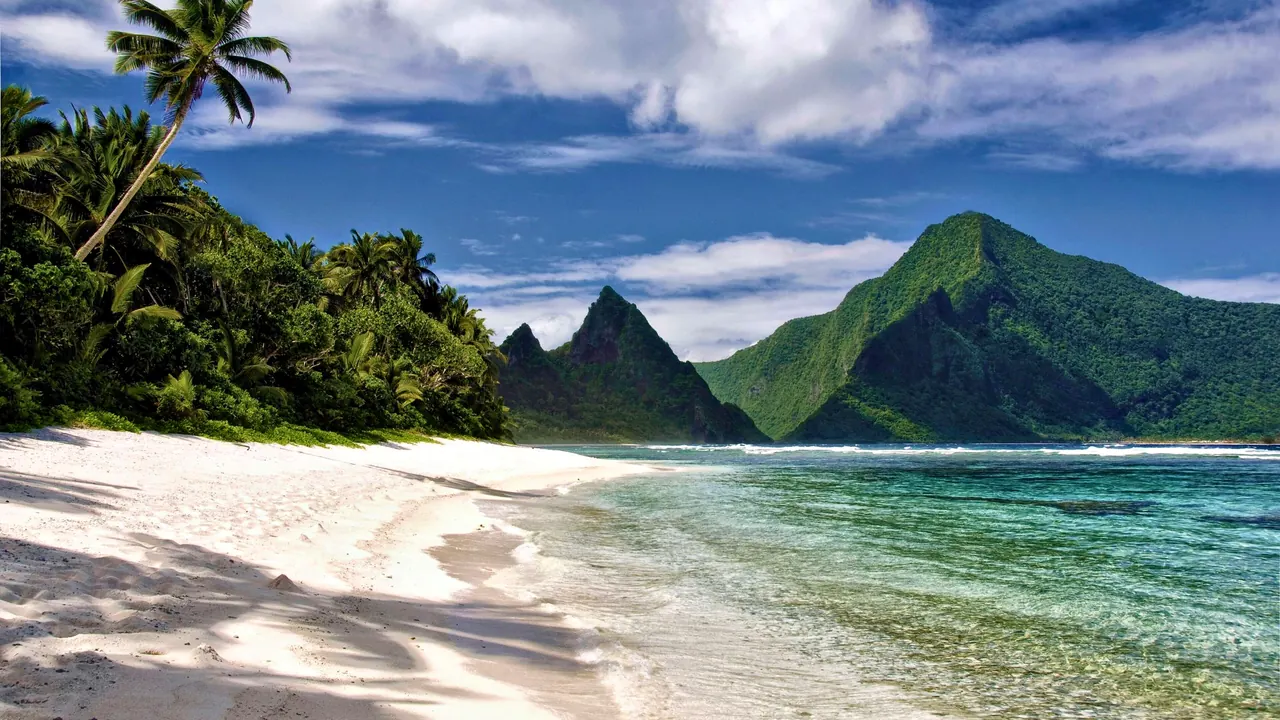
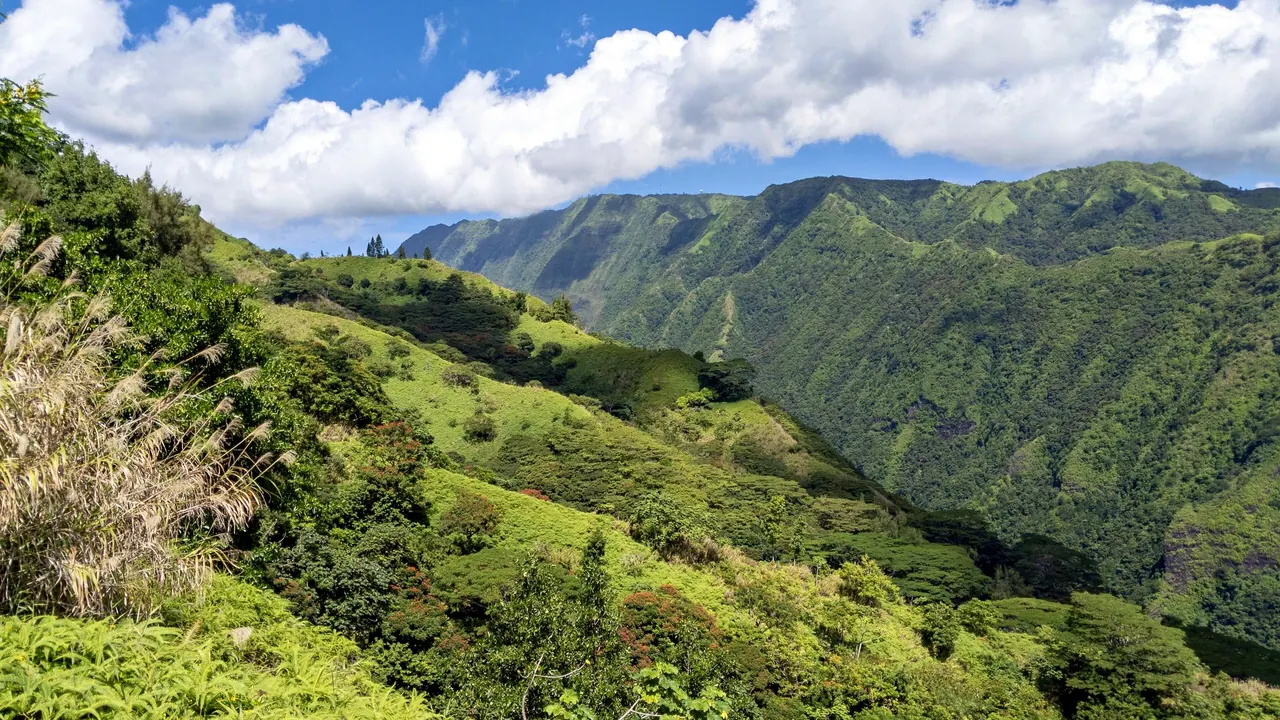
Photos: American Samoa by The U.S. National Park Service (public domain), Public domain; Tahiti by Matthew Dillon from Hollywood, CA, USA, CC BY 2.0, cropped.
American Samoa or Tahiti?
Our verdict in twelve categories, each scored against the same fixed benchmark cities, and the climate month by month, so you can choose for your trip.
Choose American Samoa for
- prices
American Samoa suits travellers who want the South Pacific almost to themselves: the national park's rainforest ridges, the reef lagoon at Ofu, and village life along Tutuila's coast road, where Sunday church singing is the main event of the week. Once you have arrived it costs less day to day than Tahiti. In return it asks for patience and a hire car, and you have to manage with very few restaurants, bars or shops.
Choose Tahiti for
- food and drink
- shopping
- day trips
Tahiti is the stronger all-round choice and the easier vacation. Its interior is wilder and easier to explore, its lagoons are better for a casual swim, the roulottes in Papeete give the evenings some life, and Moorea is a short ferry ride away for whiter sand. The catch is the cost, well above European levels, so it rewards people who can pay for comfort and want more to fill each day.
Scoreboard
Twelve categories on one fixed scale from 0 to 100. The shaded stretch is the gap between the two.
Your match
Pick a travel style or drag the sliders, and both match scores follow your weighting.
Wins on prices with your weighting.
Wins on food and drink and shopping with your weighting.
What matters to you?
Category by category
What the scores mean for a trip.
Beaches & swimming
Both islands offer warm reef lagoons rather than great sand, but Tahiti makes swimming easier. American Samoa's finest beach, the white strand on Ofu, is only reached by small plane. On Tutuila, the coves at Alega and Avaio often sit on shallow reef flats that only work at the right tide, and you need the village's permission and should not swim there on a Sunday.
Tahiti's own beaches are modest too, with black sand around Pointe Venus and paler lagoon beaches near Punaauia. The water inside the reef is calm and clear, though, and Moorea's wider, whiter beaches are a short ferry ride away, for a day or a longer stay.
Food & drink
Food is one of the widest gaps between them. In American Samoa, the best cooking (umu-baked taro, palusami and oka) mostly reaches visitors through an invitation to a Sunday meal. Day to day, the choice around Pago Pago is diners, fast food and imported goods, with the fish and fruit at Fagatogo market as the bright spot.
Tahiti's mix of Polynesian, French and Chinese cooking is something you can simply walk up to: poisson cru, grilled mahi-mahi, the roulottes on the Papeete waterfront and proper baguettes in every village. It is still not a food destination, but eating becomes one of the pleasures of the trip rather than a matter of finding something to eat.
Culture & sights
American Samoa's heritage is lived rather than displayed. Driving Tutuila's coast road you pass fale meeting houses and church after church, in villages still organised around chiefly titles. Its formal sights are few: the small Jean P. Haydon Museum in Fagatogo, the Navy-era buildings by the harbour and the star mounds in the hills.
Tahiti gives the sightseer more to visit. The Musée de Tahiti et des Îles at Punaauia is the stronger museum, covering navigation, tapa and tattoo. The restored marae at Arahurahu and Cook's landmark at Pointe Venus make a short circuit of the coast. On either island the sights fill a day or two.
Nightlife
Evenings in American Samoa wind down early. A few bars and karaoke spots around Pago Pago harbour and Nu'uuli serve mostly locals and fishing crews, many villages pause for evening prayer, and Sundays are silent.
Papeete gives Tahiti a small but real weekend scene, with waterfront bars and a few clubs that fill with locals and sailors on Friday and Saturday nights. It is the only place on either island where a night out goes beyond a drink after dinner.
Nature & outdoors
American Samoa's national park is the main reason to go there. It covers parts of Tutuila and the Manu'a islands, from the Mount Alava ridgeline above Pago Pago to Ta'u's towering sea cliffs and Ofu's coral garden, which is healthy enough to rank with the best in the Pacific. It is wilder and less visited than anything on Tahiti, but the trails are steep, muddy and often overgrown, and there are few guides.
Tahiti's wild interior is bigger and easier to reach. Its jagged ridges rise above 2,000m, a rough track for four-wheel drives crosses the Papenoo valley, the Fautaua valley leads to a tall waterfall and Mount Aorai is a serious ridge hike, with local guides for many routes. The famous wave at Teahupo'o, shark and ray dives in the passes and Moorea's peaks widen the choice. Both islands have humpback whales offshore in the southern winter.
Day trips
Tahiti has much the better day out. Moorea is half an hour away by ferry and easy to tour by hire car in a day, and the drive around Tahiti Iti to Teahupo'o and boat trips to Tetiaroa give you two more outings.
From Tutuila, the classic trip is the small boat to car-free Aunu'u and its crater lake. After that, once you have driven the coast road, there is little left, since Apia and the Manu'a islands both need overnight stays.
Good for families
Both islands are warm towards children, and neither has an aquarium, zoo or play attractions, so the lagoon has to provide the fun. Tahiti makes this easier, with calm water for first snorkels, waterfalls, outrigger canoe outings and resorts with pools. American Samoa suits older children who enjoy rock pools and spotting fruit bats, but sharp reef flats, heavy rain and few hotels make it hard going with little ones.
Getting around
In practice the two work much the same way: one coast road, buses of little use to visitors, and a hire car for almost everyone. The differences are in the detail. Tutuila's aiga buses are cheap and colourful but run without timetables and mostly stop on Sundays. Reaching Manu'a means infrequent small-plane flights that bad weather easily cancels.
On Tahiti, the traffic into Papeete at rush hour is heavier. But ferries to Moorea leave often from the waterfront, and domestic flights from Faa'a make it the easier base for reaching other islands.
Shopping & style
Tahiti has one thing really worth taking home, black pearls, and you can compare them in jewellers across Papeete. The handicraft floor of the Marché de Papeete adds pareos, vanilla and monoi oil, so there is at least a proper browse. American Samoa's shopping is practical, mostly supermarkets and the Fagatogo market, where siapo bark cloth, woven mats and lavalava sarongs are the souvenirs to look for.
Affordability
American Samoa runs at roughly US mainland prices, which makes it the gentler of the two bills. Hotels around Pago Pago are fairly simple for what they charge, and imported food keeps meals and groceries dear, but the buses, market food and village beach fees cost very little.
Tahiti is very expensive in almost every respect: groceries, meals, alcohol and car hire, with the west-coast resorts costing far more again. Family-run pensions and the roulottes where local people eat bring the bill down, but they never make the island cheap.
Live music & performing arts
The performance most visitors to American Samoa hear is Sunday church, where village congregations sing in harmony. Siva, slap dance and fire knife dancing turn up at the occasional fiafia evening, and Flag Day in April brings dance competitions and fautasi longboat races to Pago Pago harbour.
Tahiti's dance tradition is easier to catch. Ori Tahiti, with its fast hip movement and pounding toere drums, is staged at hotel dinners all year. In July, the Heiva i Tahiti fills Papeete with competing troupes, singers and choirs for several weeks, a festival worth planning a trip around.
Wellness & relaxation
Tahiti is the place to be pampered, with lagoon-facing spas at the west-coast hotels around Punaauia and taurumi, a firm massage given with warm monoi oil. American Samoa has little beyond the odd hotel massage, but its slow pace is real. A guesthouse on Ofu or a fale on Tutuila's quiet east end cuts you off from the world more completely than the busy west coast of Tahiti does.
When should you go?
Pick your month. The climate figures are measured averages, not a forecast.
American Samoa in July
Tahiti in July
Daytime high, °C
Rainfall in the month, mm
Temperature and rainfall are climate normals, averaged over the years shown. American Samoa: 1991-2020 normals, Pago Pago / Int. Airport (6.6 km from centre). Tahiti: 1991-2020 normals, Tahiti-Faaa (5.3 km from centre).
Both islands are hot all year, with daytime highs of around 30°C in every month, and the sea is warm enough to swim in any time. The real difference is the rain. Where most visitors stay in American Samoa, it is wet all year, peaking at about 385mm in January. June to September are the least wet months but still far from dry, and there is less sunshine than on Tahiti. The trails stay muddy whichever month you choose.
Tahiti has a true dry season. From May to October rainfall drops to about 43mm a month in July and August, the sunshine is at its most reliable and the hiking is at its best. December and January bring heavy downpours of around 280mm. The sea cools slightly to 26°C in August and September, which is still comfortable for snorkelling. On both islands the heat and humidity make early mornings the best time for walking around a town.
Which traveller are you?
On a trip on a tight budget, American Samoa is the better bet, though neither island is cheap. The flight is the largest single cost, so a long, slow stay makes the most of it. On Tahiti, keeping costs down means giving up the lagoon resorts that most visitors go for.
For a food and nightlife trip, Tahiti wins clearly. Plan your stay around a Friday or Saturday, when supper at the roulottes can lead on to the waterfront bars of Papeete. In American Samoa, a good dinner is about as far as a night out goes.
On an outdoors trip, Tahiti gives you more for the effort. Guided ridge hikes, a 4x4 crossing of the interior, surfing and shark dives all start from one coast road, and there is a dry season to plan around. American Samoa suits self-reliant hikers who want rainforest and reef with few other people about.
Before you go
| Measure | American Samoa | Tahiti |
|---|---|---|
| Official language | English, Samoan | French |
| Currency | US Dollar (USD) | CFP Franc (XPF) |
| Sockets | ABFI120 V, 60 Hz | - |
| Driving side | Right | Right |
| Time zone | UTC-11 | UTC-10 |
| Emergency number | 911 | 112 |
| Main airport | Pago Pago International Airport (PPG)2 non-stop destinations | Fa'a'ā International Airport (PPT)30 non-stop destinations |
| Public holidays this year | - | 16 days |
By the numbers
| Measure | American Samoa | Tahiti |
|---|---|---|
| Population | 49,710 | 178,133 |
| People per km² | 250 | 171 |
| Swim season, months above 21 °C | 12 months | 12 months |
Where else could you go?
Every comparison below shares a destination with this one, so you can follow American Samoa or Tahiti somewhere new.
- Mooreavs Tahiti
- Bora Boravs Tahiti
- Cook Islandsvs Tahiti
- Cook Islandsvs American Samoa
- New Caledoniavs Tahiti
- Hawaiivs Tahiti