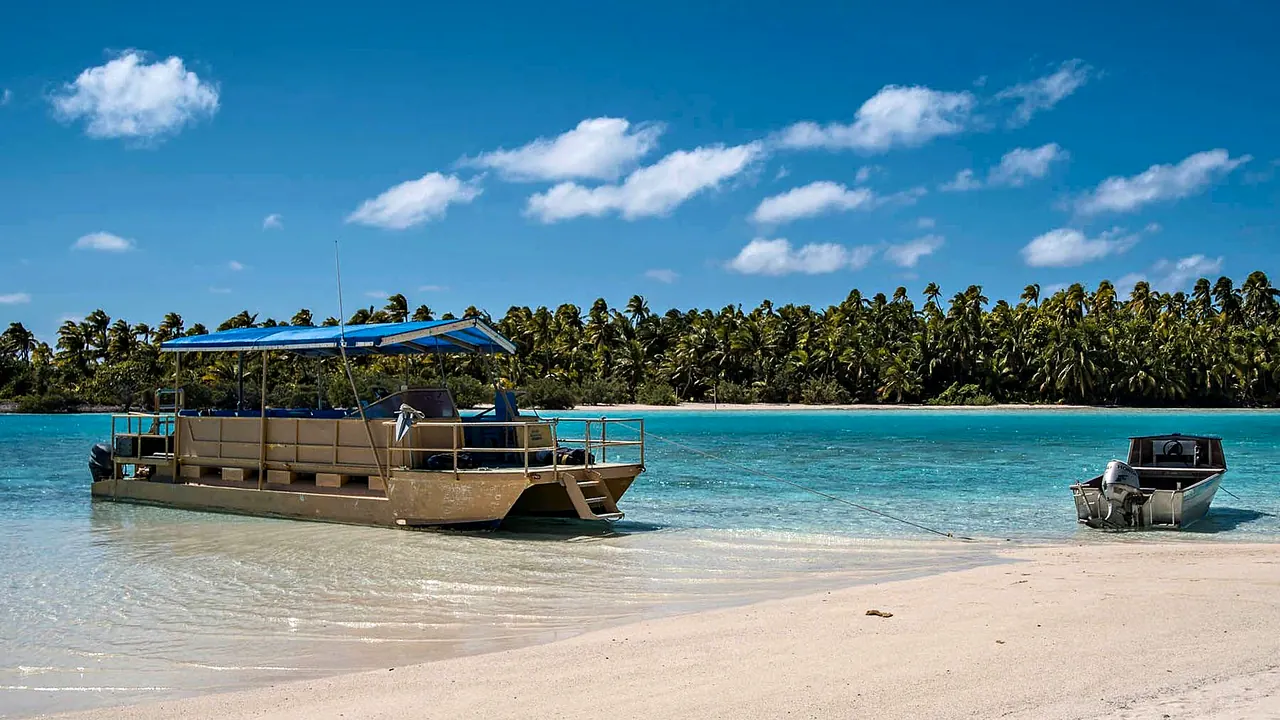
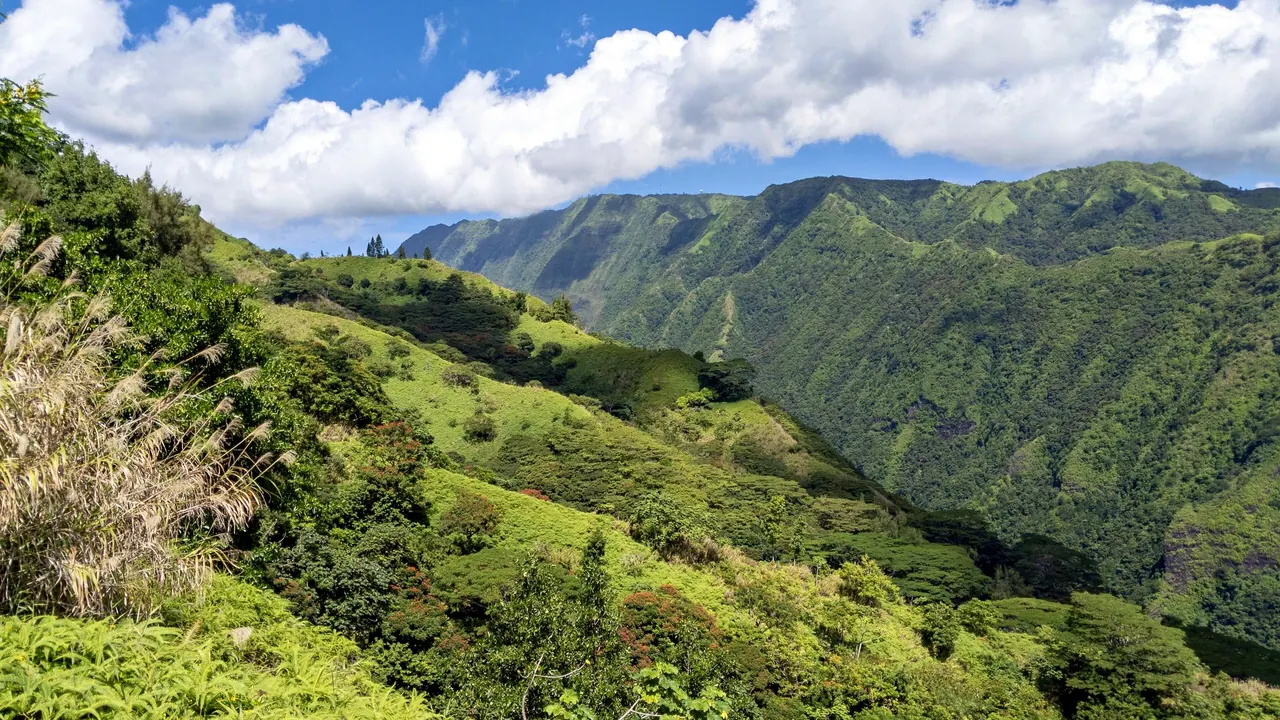
Photos: Cook Islands by Frank Winkler, CC BY-SA 4.0, cropped; Tahiti by Matthew Dillon from Hollywood, CA, USA, CC BY 2.0, cropped.
Cook Islands or Tahiti?
Our verdict in twelve categories, each scored against the same fixed benchmark cities, and the climate month by month, so you can choose for your trip.
Choose Cook Islands for
- beaches
- getting around
- prices
The Cook Islands suit travellers who want the lagoon to be the whole point. Rarotonga's reef-sheltered south-east coast and Aitutaki's sandbar islets give easier, prettier swimming than anything on Tahiti itself, the island is simple to loop by bus or scooter, and families with young children will find the shallow water and small scale hard to beat. It is also the less punishing of two expensive places.
Choose Tahiti for
- nature and the outdoors
- day trips
- food and drink
Pick Tahiti if you want more than a beach. Its interior of high ridges, rainforest valleys and waterfalls is far wilder than Rarotonga's, Teahupo'o draws surfers, and Moorea makes a proper day out by ferry. The food is better too, thanks to French bakeries and the roulottes of Papeete, though you will pay more for everything and probably need a hire car.
Scoreboard
Twelve categories on one fixed scale from 0 to 100. The shaded stretch is the gap between the two.
Your match
Pick a travel style or drag the sliders, and both match scores follow your weighting.
Too close to call, 1 point apart
Wins on beaches and getting around with your weighting.
Wins on nature and the outdoors and day trips with your weighting.
What matters to you?
Category by category
What the scores mean for a trip.
Beaches & swimming
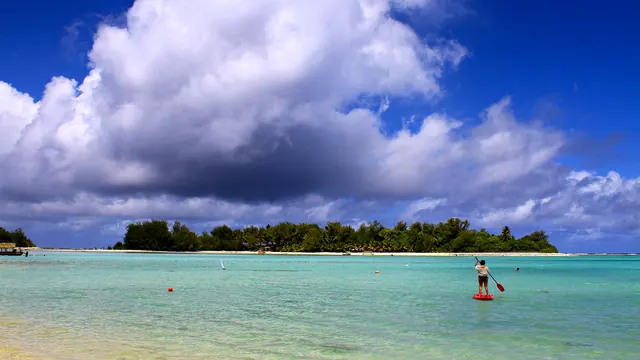
The Cook Islands have the better beaches by some way. Rarotonga's whole south-east coast, from Muri to Titikaveka, gives calm, clear lagoon water right off pale sand, with motu islets to wade out to, and Aitutaki's vast turquoise lagoon is one of the main reasons to come.
Tahiti's water is just as warm and its lagoon is fine for snorkelling, but the sand is the weak point: black volcanic beaches in the north and east, a few pale stretches near Punaauia, and Plage de Maui on Tahiti Iti. Most visitors save their beach days for Moorea.
Food & drink
Both islands put raw fish in lime and coconut at the centre of the table, ika mata in Rarotonga and poisson cru on Tahiti, but Tahiti eats more widely. French and Chinese influences add bakeries in every village, competent French-leaning restaurants and the evening roulottes at Place Vaiete, where steak frites sits beside chow mein.
In the Cook Islands the best eating is the Saturday Punanga Nui market and umu feasts, with beach cafés and resort dining rooms for the rest. You will eat well enough in either place, but Tahiti gives more choice across a week.
Culture & sights
Neither is a sightseeing destination, and both show their Polynesian past through marae, the stone ceremonial grounds. Tahiti has the stronger single stop in the Musée de Tahiti et des Îles, with its collections on navigation, tapa and tattoo, plus Pointe Venus and its link to Cook's 1769 observation. The Cook Islands offer less to visit but a culture that feels more present in daily life, from the coral-lime mission churches of Rarotonga's villages to the older ways still kept on Atiu and Mangaia.
Nightlife
Evenings are quiet on both, and Friday is the night that matters. Papeete has a few clubs as well as bars, busy on Saturdays too with locals and sailors off the harbour. Avarua offers a Friday crawl between waterfront bars and little else, and Sunday rest shuts things down across the Cook Islands.
Nature & outdoors
Tahiti is much the bigger outdoor destination. Its interior rises in jagged ridges far higher than anything on Rarotonga, cut by deep rainforest valleys and waterfalls. There are serious hikes such as the ridge climb to Mount Aorai, a four-wheel-drive crossing through the Papenoo valley, world-famous surf at Teahupo'o and diving with sharks and rays in the reef passes.
Rarotonga is a smaller version of the same volcanic landscape. The Cross-Island Track to the Needle takes half a day, and beyond that the outdoors means gentle kayaking and snorkelling in the lagoon, or Atiu's caves and birds if you fly out. Both have humpback whales offshore from about July to October.
Day trips
Tahiti has the easier escapes. Moorea lies about half an hour away by frequent ferry and fills a full day by hire car, and the drive round Tahiti Iti to the road's end beyond Teahupo'o makes a second outing.
From Rarotonga the only real day out is the flight to Aitutaki with a lagoon cruise, and even that island deserves a few nights. The other outer islands in both groups need overnight stays.
Good for families
The Cook Islands are the easier family choice. The water around Muri and Titikaveka is warm, shallow and sheltered right off the beach, resorts often have kids' clubs and family rooms, and the small island with its round-island bus keeps days simple.
Tahiti welcomes children just as warmly and adds waterfall walks and outrigger outings for older ones, but its main-island beaches are less inviting and costs are steeper. Neither has zoos, aquariums or theme parks.
Getting around
Rarotonga is far simpler. The coastal road loops the island in about 32km, buses run both ways and stop when flagged, and scooters or bicycles cover the rest, with nowhere more than about forty minutes away.
Tahiti has the same one-road layout but a bigger island, infrequent buses and rush-hour traffic into Papeete, so a hire car is close to essential. In its favour, the Moorea ferry runs often, whereas the Cook Islands' outer islands depend on fewer flights.
Shopping & style
Black pearls are the main buy in both, but Papeete is the better place to shop for them, with many jewellers to compare loose and set stones. Its market adds an upper floor of crafts, vanilla and tiare-scented monoi oil. Avarua offers a few pearl shops and the Saturday market for pareu, pandanus weaving and carvings, then little beyond a short souvenir street.
Affordability
Both are costly, as almost everything is shipped in, but the Cook Islands hurt less. Self-catering bungalows, a few backpacker lodges, market food and the cheap local bus make a careful budget workable on Rarotonga.
Tahiti is the more expensive of the two, with car hire a near necessity and west-coast resorts priced very high. Family-run pensions and meals at the roulottes are the main ways to keep costs down.
Live music & performing arts
Both islands are known across the Pacific for drumming and dance, so the difference is in the setting. In the Cook Islands, island-night shows run several evenings a week, Sunday imene tuki hymn singing is open to visitors, and Te Maeva Nui in late July and early August is the year's peak. Tahiti's Heiva i Tahiti in July is a weeks-long competition of real weight, and the Maison de la Culture hosts occasional performances outside the festival.
Wellness & relaxation
Rest on both comes more from the place than from spas, and neither has a bathing tradition. The Cook Islands are slightly calmer overall: Rarotonga has no building taller than a palm and Aitutaki is slower still, with coconut-oil massage widely offered.
Tahiti's lagoon-facing hotel spas around Punaauia and its firm taurumi massage are the main draw, but Papeete and the west-coast road are busy, so the quiet is found on Tahiti Iti and the east coast.
When should you go?
Pick your month. The climate figures are measured averages, not a forecast.
Cook Islands in July
Tahiti in July
Daytime high, °C
Rainfall in the month, mm
Temperature and rainfall are climate normals, averaged over the years shown. Cook Islands: 1991-2020 normals, Rarotonga (4.4 km from centre). Tahiti: 1991-2020 normals, Tahiti-Faaa (5.3 km from centre).
Both are warm enough to swim in every month, but their seasons have different shapes. On Rarotonga the wet season is long and fairly even, with heavy rain from December through April and May only a little drier. From June to October the rain eases and daytime highs fall to about 26°C, which makes the Cross-Island Track comfortable. The lagoon cools to around 24°C in August and September and is still fine for swimming. October and November are the sunniest months before the rain returns.
Tahiti is hotter all year, close to 30°C most days, and its sea stays warmer, only falling to 26°C in August and September. Its rain is heavier but comes in a shorter season. December to February are very wet and March is easing off. June to September is dry, with July and August down to about 43mm and the most sunshine, which is the best time for hiking the interior. April, May, October and November fall in between. Both work well for a mid-year trip, but in January and February you should expect frequent heavy downpours in either place.
Which traveller are you?
On a beach and sun trip, the Cook Islands are the better choice. Muri and Titikaveka let you swim and snorkel straight off the sand, and Aitutaki's lagoon is worth a stay, whereas Tahiti's own beaches are modest and often black sand.
For an outdoors trip, Tahiti wins clearly. Its ridges above 2,000m, the Papenoo and Fautaua valleys, the surf at Teahupo'o and diving with sharks and rays outmatch Rarotonga, where a few days cover the main walks.
On a family trip with children, the Cook Islands are easier. The shallow, sheltered south-east lagoon suits small swimmers, the island is compact with a bus loop, and costs bite a little less than on Tahiti, where good beaches mean a ferry to Moorea.
Before you go
| Measure | Cook Islands | Tahiti |
|---|---|---|
| Official language | English, Cook Islands Maori | French |
| Currency | New Zealand Dollar (NZD) | CFP Franc (XPF) |
| Sockets | I240 V, 50 Hz | - |
| Driving side | Left | Right |
| Time zone | UTC-10 | UTC-10 |
| Emergency number | Police 999, ambulance 998, fire 996 | 112 |
| Main airport | Rarotonga International Airport (RAR)7 non-stop destinations | Fa'a'ā International Airport (PPT)30 non-stop destinations |
| Public holidays this year | 11 days | 16 days |
By the numbers
| Measure | Cook Islands | Tahiti |
|---|---|---|
| Population | 14,222 | 178,133 |
| People per km² | 59 | 171 |
| Swim season, months above 21 °C | 12 months | 12 months |
Where else could you go?
Every comparison below shares a destination with this one, so you can follow Cook Islands or Tahiti somewhere new.
- Mooreavs Tahiti
- Bora Boravs Tahiti
- Bora Boravs Cook Islands
- American Samoavs Cook Islands
- American Samoavs Tahiti
- New Caledoniavs Cook Islands