Photos: Bora Bora by Mauro Soares, CC BY-SA 3.0, cropped; Cook Islands by Frank Winkler, CC BY-SA 4.0, cropped.
Bora Bora or Cook Islands?
Our verdict in twelve categories, each scored against the same fixed benchmark cities, and the climate month by month, so you can choose for your trip.
Choose Bora Bora for
- nature and the outdoors
- wellness
- beaches
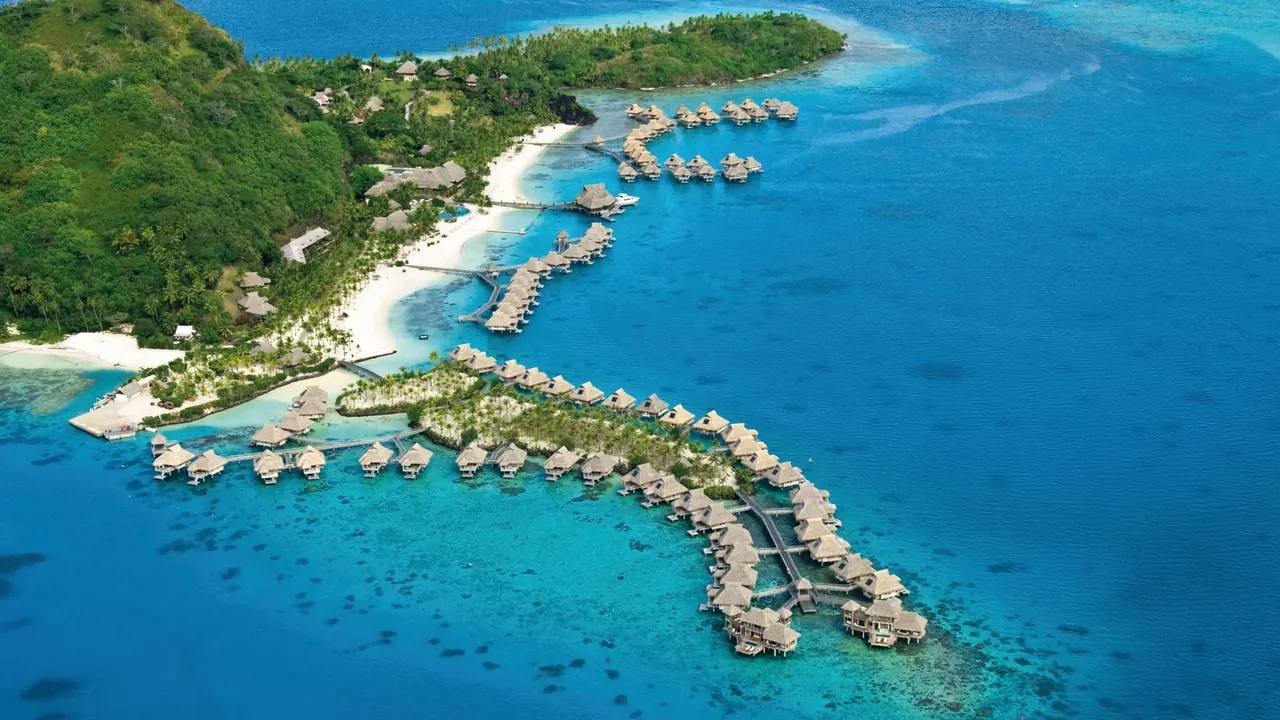
Bora Bora is for the trip where the setting is the whole point. The green spire of Mount Otemanu above a lagoon of many blues, a bungalow over the water, snorkelling with rays and reef sharks, then a quiet dinner and an early night. It suits a couple on a once-in-a-lifetime trip who want to do very little in a very beautiful place. They give up variety, ease of getting about and any sense of value for money.
Choose Cook Islands for
- live music and the arts
- prices
- families
The Cook Islands make the better choice if you want lagoon life with a bit more island around it. Rarotonga has a bus that circles the coast, a Friday night out in Avarua, the Saturday market, drum dancing and Sunday hymn singing, and Aitutaki's lagoon is a short flight away. Families and anyone watching their spending will find it easier. The scenery is less dramatic and the sea is cooler in the middle of the year.
Scoreboard
Twelve categories on one fixed scale from 0 to 100. The shaded stretch is the gap between the two.
Your match
Pick a travel style or drag the sliders, and both match scores follow your weighting.
Wins on nature and the outdoors and wellness with your weighting.
Wins on live music and the arts and prices with your weighting.
What matters to you?
Category by category
What the scores mean for a trip.
Beaches & swimming
Both are lagoon destinations of the first order, and the difference lies in how you reach the water. On Bora Bora you mostly swim straight off a bungalow deck or a resort motu. Matira Point is the one great public beach, and most other good sand needs a boat.
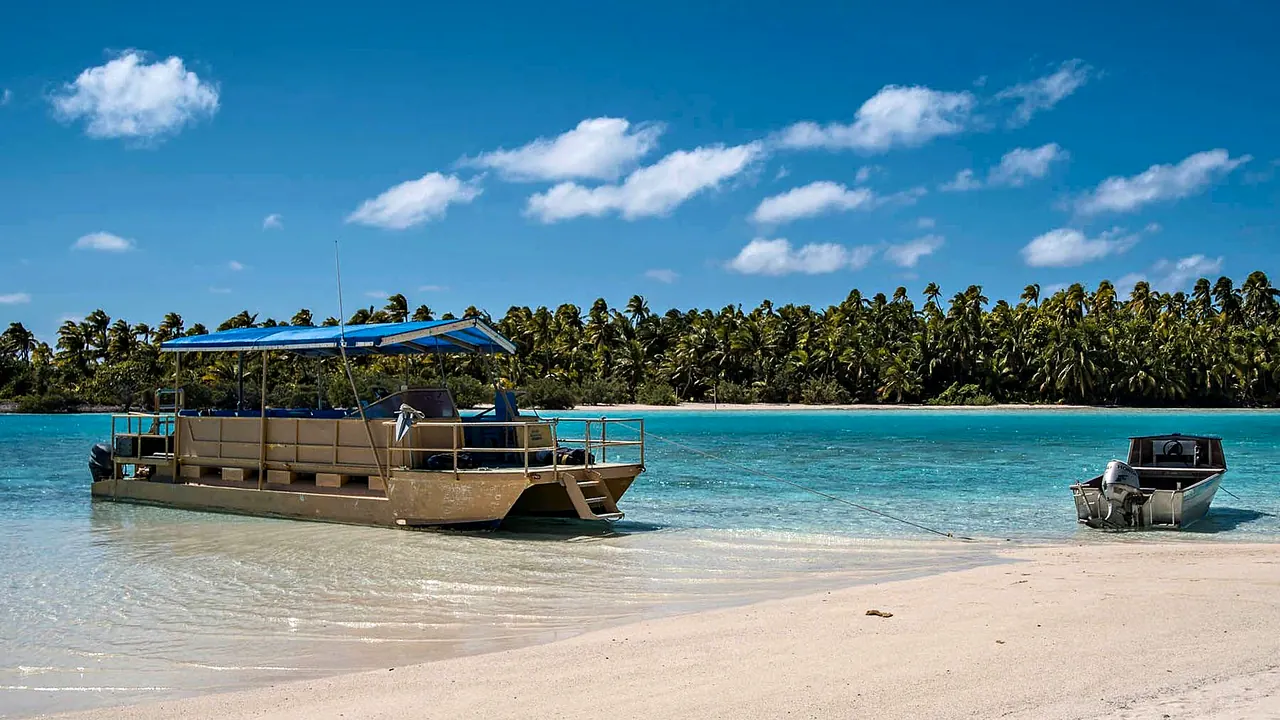
The Cook Islands give you more beaches you can simply walk onto. At Muri you can wade out to the motu, and at Titikaveka you can snorkel straight from the sand. Aitutaki adds sandbar islets such as One Foot Island, though its beaches are often narrow and very shallow at low tide.
Food & drink
The two eat much alike, down to the signature dish of raw fish in lime and coconut, called poisson cru on Bora Bora and ika mata in the Cook Islands. On Bora Bora most meals are French-Polynesian cooking in a small set of resort dining rooms. The best local food comes from snack counters and food trucks around Vaitape.
The Cook Islands make it easier to eat outside a hotel. The Saturday Punanga Nui market in Avarua, the evening stalls at Muri and umu feasts give a stay more variety, even if neither place will satisfy a serious food lover for long.
Culture & sights
Neither is a sightseeing destination, but the Cook Islands have more to show. Rarotonga has Arai-te-Tonga and other marae, coral-lime mission churches from the 1800s and a small national museum in Avarua. The old way of life is still close to the surface on Atiu and Mangaia.
On Bora Bora, the island tour takes in a few restored marae, Second World War guns on the hills and the church at Vaitape, and that covers it in a few hours.
Nightlife
Rarotonga at least has a night out. On Fridays the bars around Avarua fill with locals and visitors and stay busy until late. Bora Bora has nothing like it: a sunset cocktail at the resort bar, a long dinner and bed. Neither has any clubs, and on Aitutaki evenings are as quiet as on Bora Bora.
Nature & outdoors
Bora Bora has the more spectacular setting and the richer lagoon. The jagged peak of Otemanu rises above the water, and you can snorkel with stingrays and blacktip reef sharks or dive the reef passes for lemon sharks and manta rays. On land there is less to do: 4x4 tracks up to viewpoints and a guided climb of Mount Pahia.
Rarotonga is the better island for walking. The half-day Cross-Island Track climbs through rainforest past the Needle. From July to October humpback whales can be seen from the shore, and Atiu adds caves and coral terraces. Its lagoon outings, though, are gentler than Bora Bora's.
Day trips
Day trips are thin from both, and most visitors stay put. From Bora Bora you can go by boat or plane to Tahaa for its vanilla and pearl farms, to Raiatea for the sacred marae of Taputapuatea, or to quiet Maupiti, all of which take organised tours or careful timing.
From Rarotonga the one real outing is the fly-in day tour to Aitutaki, which takes under an hour each way. That lagoon is better as a second base for a few nights, which turns a Cook Islands trip naturally into two islands.
Good for families
The Cook Islands are clearly the better choice with children. The water at Muri and Titikaveka is warm, shallow and sheltered, children are welcome everywhere, and many resorts have family rooms and kids' clubs. Neither destination has zoos, aquariums or theme parks.
Bora Bora's shallows at Matira are just as good for paddling, but the island is designed for couples. Some overwater bungalows are unsafe for children who cannot swim, and the cost weighs heavily on a family. Older children who love snorkelling get the most from it.
Getting around
Each main island is circled by a coast road of about 32km, but Rarotonga is far easier to use. A bus runs around it in both directions and stops wherever you flag it down, so you can manage without your own wheels.
Bora Bora has few buses and scarce taxis. If your resort is out on a motu, every trip to Vaitape or Matira depends on the hotel's boat shuttle, and lagoon outings are mostly organised tours.
Shopping & style
Black pearls are the main buy in both places, and neither will fill more than a morning. On Bora Bora you buy them in showrooms in Vaitape and the resorts, and there are pareos and carvings at the craft stalls by the quay. The Cook Islands' best shopping is the Saturday Punanga Nui market, which feels more local. You may also see tivaevae, the appliquéd quilts, though they are rarely for sale.
Affordability
Both are costly because almost everything is shipped in, but Bora Bora is in a class of its own. Overwater bungalows are priced as once-in-a-lifetime luxury, and boat transfers, tours and spa visits add more. Family-run guesthouses and self-catering from Vaitape's grocery stores only soften the bill.
The Cook Islands are expensive too, especially resorts on Aitutaki. Still, self-catering bungalows, backpacker lodges, market meals and the cheap local bus on Rarotonga make a careful budget possible.
Live music & performing arts
The Cook Islands have far more to watch and hear. Their log-drum rhythms and ura dancing are famous across the Pacific, and island-night shows run on several evenings a week on Rarotonga and Aitutaki. On Sunday mornings visitors can hear the unaccompanied imene tuki hymns in village churches, and Te Maeva Nui in late July and early August brings dance teams from every island to Avarua.
On Bora Bora, Polynesian dance mostly means the fire dancing and drumming of resort dinner shows. The Heiva in July is the time to see local groups compete.
Wellness & relaxation
Both are places to do very little, and they offer it in different ways. On Bora Bora, wellness centres on polished resort spas, some with treatment rooms over the lagoon, using monoi oil and tiare flowers. The calm of a bungalow deck does the rest.
In the Cook Islands the rest comes from the place itself. There are no buildings taller than a coconut palm, Sundays are quiet and the outer islands are slower still. Polynesian massage is widely offered outside the resorts, and there are a few yoga classes.
When should you go?
Pick your month. The climate figures are measured averages, not a forecast.
Bora Bora in July
Cook Islands in July
Daytime high, °C
Rainfall in the month, mm
Temperature and rainfall are climate normals, averaged over the years shown. Bora Bora: 1991-2020 (sunshine 1981-2010) normals, Bora-Bora / Faanui (6.1 km from centre). Cook Islands: 1991-2020 normals, Rarotonga (4.4 km from centre).
Bora Bora is hot all year, with daytime highs close to 30°C in every month and a lagoon that never drops below 27°C, so the water is warm whenever you go. The difference is the rain. From December to March it is the wet season, and December and January each bring more than 260mm. From May to October the rain eases to its lowest and the sun is at its strongest, peaking in August. That makes it the best stretch for days spent between the deck and the reef, though the midday heat is still strong for a bicycle ride round the coast road.
Around Rarotonga, where the Cook Islands figures are measured, the year swings further. From June to September it is dry and fresher, with highs near 26°C, which is ideal for the Cross-Island Track. The lagoon cools to about 24°C by August and September, though, a little cool for long hours of snorkelling. October and November are the best balance for a lagoon trip. They are the sunniest months, the rain is still moderate, and the sea is warming again. From December to April it is wetter, and April is one of the rainiest months of the year.
Which traveller are you?
On a family trip with children, the Cook Islands are the easier choice. The sheltered shallows at Muri and Titikaveka suit young paddlers, resorts have family rooms and kids' clubs, and a bus makes outings simple. Bora Bora's resorts are built for couples.
On a tight budget, neither is cheap, but the Cook Islands give you more ways to save. On Rarotonga there are self-catering bungalows and backpacker lodges, cheap local buses and market food. Bora Bora is among the most expensive places on earth, and guesthouses only soften that.
For an outdoors trip centred on the water, Bora Bora is the stronger pick. You can dive the reef passes for lemon sharks and manta rays and snorkel among stingrays below Otemanu. Rarotonga has the better hike, the Cross-Island Track, but the lagoon diving is not on the same level.
Before you go
| Measure | Bora Bora | Cook Islands |
|---|---|---|
| Official language | French | English, Cook Islands Maori |
| Currency | CFP Franc (XPF) | New Zealand Dollar (NZD) |
| Sockets | - | I240 V, 50 Hz |
| Driving side | Right | Left |
| Time zone | UTC-10 | UTC-10 |
| Emergency number | 112 | Police 999, ambulance 998, fire 996 |
| Main airport | Bora Bora Airport (BOB)9 non-stop destinations | Rarotonga International Airport (RAR)7 non-stop destinations |
| Public holidays this year | 16 days | 11 days |
By the numbers
| Measure | Bora Bora | Cook Islands |
|---|---|---|
| Population | 10,605 | 14,222 |
| People per km² | 347 | 59 |
| Swim season, months above 21 °C | 12 months | 12 months |
Where else could you go?
Every comparison below shares a destination with this one, so you can follow Bora Bora or Cook Islands somewhere new.
- Mooreavs Bora Bora
- Tahitivs Bora Bora
- Aitutakivs Bora Bora
- Tahitivs Cook Islands
- American Samoavs Cook Islands
- New Caledoniavs Cook Islands