Cook Islands
Rarotonga
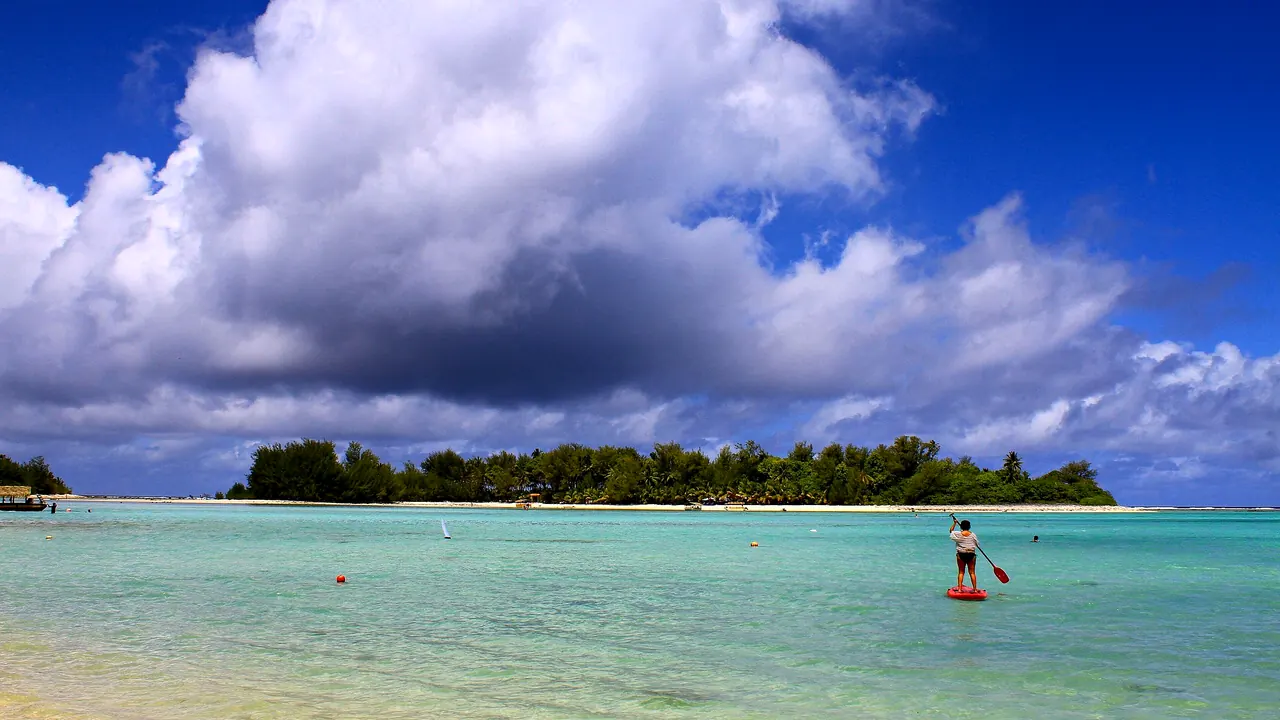
Koromiri islet in Muri Lagoon
- Beaches85
- Nature & outdoors66
- Getting around58
Photo: Christopher Johnson from Tokyo, Japan, CC BY-SA 2.0, cropped
Rarotonga lies in Cook Islands, which has its own page.
Match
41
Every category weighted equally
- Beach & sun47
- Culture & arts35
- Food & nightlife36
- Family trip47
- Outdoors44
- Relax & unwind47
- Shopping & style37
- On a budget40
Rarotonga in twelve categories
Our verdict on each, scored 0 to 100 against the same fixed benchmark cities, so a score means the same thing on every page.
Beaches & swimming. Scores 85 out of 100.
Food & drink. Scores 36 out of 100.
Culture & sights. Scores 20 out of 100.
Nightlife. Scores 18 out of 100.
Nature & outdoors. Scores 66 out of 100.
Day trips. Scores 15 out of 100.
Good for families. Scores 56 out of 100.
Getting around. Scores 58 out of 100.
Shopping & style. Scores 26 out of 100.
Affordability. Scores 30 out of 100.
Live music & performing arts. Scores 34 out of 100.
Wellness & relaxation. Scores 50 out of 100.
Rarotonga category by category
Beaches & swimming
85A reef sits a few hundred metres offshore all the way round the island. Between it and the shore lies a shallow, sheltered lagoon edged with pale sand, so almost every stretch of coast is a beach of some kind. Muri on the south-east coast is the best-known. It has calm turquoise water and four small motu, islets you can wade or paddle out to at low tide. The south coast around Titikaveka and the Aroa marine reserve has the clearest water and the best snorkelling from the sand, with coral and reef fish a few strokes out.
The water is about 23°C in the cooler months and close to 28°C in summer, so swimming works all year. The lagoon is shallow and has coral in places, which makes it better for floating and snorkelling than for lap swimming. On the north and west coasts the reef comes closer to shore and the water is rockier. Swimming outside the reef or near the passages is dangerous because of strong currents.
Food & drink
36Food here is island cooking on a small scale. The dish to look for is ika mata, raw fish in lime and coconut cream. It turns up alongside taro, breadfruit, rukau (taro leaves in coconut) and food baked in an umu earth oven. The Saturday morning Punanga Nui market in Avarua is the best place to try it, together with fresh fruit, coconut buns and fish sandwiches. The evening night market at Muri is another, with food cooked at stalls.
Otherwise there are beach cafés, resort dining rooms and a few relaxed restaurants serving fish, burgers and Pacific-tinged dishes. Coffee is decent and a local beer is brewed on the island. Most ingredients apart from fish and fruit are flown or shipped in, so the range is narrow and meals cost more than they look.
Culture & sights
20Sightseeing in the museum sense is modest. In Avarua there are a small national museum and a library-museum with Polynesian artefacts and canoe history. The Cook Islands Christian Church, built of coral lime in the mid-19th century, is the most handsome building on the island, and early missionaries are buried in its churchyard. Elsewhere you find ancient marae, the stone ceremonial grounds, notably Arai-te-Tonga on the inland road. The Ara Metua itself is an ancient road that once linked the villages. Each village has its own white mission church. A morning covers most of it. The real heritage here is living culture, not monuments.
Nightlife
18Evenings are quiet. Most visitors eat early, watch the sunset from the west coast and turn in. Friday is the one night when Avarua livens up: locals and visitors move between a small cluster of waterfront bars and a couple of places with dancing that stay open late. On other nights a beach bar or a resort lounge is about as far as it goes. There are no clubs to speak of. Anyone hoping for a scene will find a sociable small-town Friday and little else.
Nature & outdoors
66Behind the lagoon the island rises steeply into a volcanic interior of sharp ridges and dense rainforest, with peaks over 600m. The classic walk is the cross-island track. It climbs to the base of Te Rua Manga, a rock spire also called the Needle, then drops through forest and past a waterfall to the south coast, and takes a few hours. Steeper ridge hikes such as Raemaru and Ikurangi need care and are often done with a guide. Paths turn muddy after rain.
On the water there is snorkelling and paddleboarding in the lagoon, kitesurfing off Muri when the trade winds blow, and diving on the outer reef walls. From roughly July to October humpback whales pass close to the reef and can often be seen from shore. The island is small, so a keen walker covers the main trails within a week.
Day trips
15Rarotonga is a lone island with one small town, so it is a poor base for day trips. The one well-known outing is a day tour to Aitutaki. That means a flight of under an hour to a lagoon island with small villages, a lagoon cruise and lunch on a sandbar before flying back in the evening. It is memorable but expensive. The other southern islands need overnight stays. Otherwise, day outings mean circling the island itself.
Good for families
56Rarotonga makes an easy family trip because it is gentle, not because there is much to do. The lagoon is shallow, warm and protected by the reef, so small children can paddle and snorkel near the shore, especially at Muri and on the south coast. The island is safe and unhurried. Cook Islanders are warm towards children, and Sunday church singing and island dance nights tend to win them over.
There is nothing purpose-built for children: no zoo, aquarium or attractions beyond lagoon trips, glass-bottom boats and the markets. Many resorts have kids' clubs and family units. Some boutique places do not take children. Older children may run out of things to do after a week.
Getting around
58Getting around could hardly be simpler to understand. One coastal road circles the island in about 32km, with the old inland road running roughly parallel. The island bus runs in two directions only, clockwise and anticlockwise, and stops wherever you flag it down. A full loop takes about an hour. Service thins in the evening and on Sundays, which is when the bus becomes less useful.
Many visitors hire a scooter or small car, or cycle, since the road is flat and traffic is light, with a low island speed limit. Avarua and Muri are each walkable on their own, but the distances between them and the beaches call for wheels. Driving is on the left.
Shopping & style
26Shopping is small and mostly local. The main draw is Cook Islands black pearls, sold loose and set in jewellery at a few specialist shops in Avarua. Beyond those there are pareu sarongs, hand-stitched tivaevae quilts, woven pandanus hats and wood carving, most easily found at the Saturday Punanga Nui market. Avarua has a short street of gift shops and a few clothing boutiques. Everyday goods are imported and priced accordingly.
Affordability
30Rarotonga is expensive for a visitor. Almost everything is imported, and prices follow New Zealand levels or sit above them. Beachfront resorts and villas around Muri cost a lot. Restaurant meals, groceries and drinks are high for what you get, and tours, diving and inter-island flights add up quickly. The savings are in simple self-catering units and backpacker lodges, market food, and the island bus or a hired scooter in place of taxis. Most of the island's real pleasures, the lagoon and the walks, cost nothing.
Live music & performing arts
34Performance here means Polynesian drumming and dance, and Cook Islands dance is renowned across the Pacific for its speed and its thunderous log drums. Island nights with a buffet and a dance troupe run several evenings a week at resorts and cultural venues. Some are polished, some are village-hall affairs, and both are worth seeing. On Sunday mornings visitors are welcome at church services, where the harmonised hymn singing of the congregation is the most moving music on the island.
The high point of the calendar is Te Maeva Nui, the national celebration around early August, when teams from every island compete in dance, drumming and chant. There is no theatre, orchestra or regular live music venue beyond that.
Wellness & relaxation
50Rarotonga's wellness is mostly its pace. There are no traffic lights, there is little to rush to, and most days drift between the lagoon, a shaded deck and an early night. The south and east coasts around Muri and Titikaveka are the calmest places to stay. The spa offer is modest: day spas and resort treatment rooms offering massage, often with local coconut oil, plus some yoga on the beach. There is no bathing or spa tradition of its own. People come to slow down rather than to be treated.
Where to stay in Rarotonga
Rarotonga is small enough that one base serves a whole trip. The coast road loops the island in about 32km, so nowhere is much more than half an hour from anywhere else by bus or scooter, and choosing a base really means choosing a stretch of lagoon.
Muri on the south-east coast is the obvious first choice. It has the calmest water, the motu you can wade or paddle out to, the evening night market and kitesurfing when the trade winds blow. You can get around it on foot, so it suits families and anyone who wants easy beach days without much planning. It is also where beachfront stays cost the most. A little further west along the south coast, Titikaveka and the area around the Aroa marine reserve are quieter, with the clearest water and snorkelling straight from the sand. They suit a slow, restful stay.
Avarua on the north coast is the island's only town. It is handy for the Saturday market, the museums, the black pearl shops and the Friday bars, so stay there if you want evenings out, though the water nearby is rockier. The west coast has the sunsets and plainer self-catering units. It suits travellers on a tighter budget who plan to explore by scooter or car.
When should you go?
Pick a month to see what it is like. The climate figures are measured averages, not a forecast.
Rarotonga in July
Daytime high, °C
Rainfall in the month, mm
The whole year
Shaded against this destination’s own year: the deepest cell is its best month for that figure and the palest its weakest.
Temperature and rainfall are climate normals, averaged over the years shown. Rarotonga: 1991-2020 normals, Rarotonga (10.8 km from centre).
Before you go
| Measure | Rarotonga |
|---|---|
| Official language | English, Cook Islands Maori |
| Currency | New Zealand Dollar (NZD) |
| Sockets | I240 V, 50 Hz |
| Driving side | Left |
| Time zone | UTC-10 |
| Emergency number | Police 999, ambulance 998, fire 996 |
| Main airport | Rarotonga International Airport (RAR)7 non-stop destinations |
| Public holidays this year | 11 days |
By the numbers
| Measure | Rarotonga |
|---|---|
| Population | 10,572 |
| People per km² | 158 |
| Swim season, months above 21 °C | 12 months |
Compare Rarotonga with
Every comparison with a written verdict behind it.