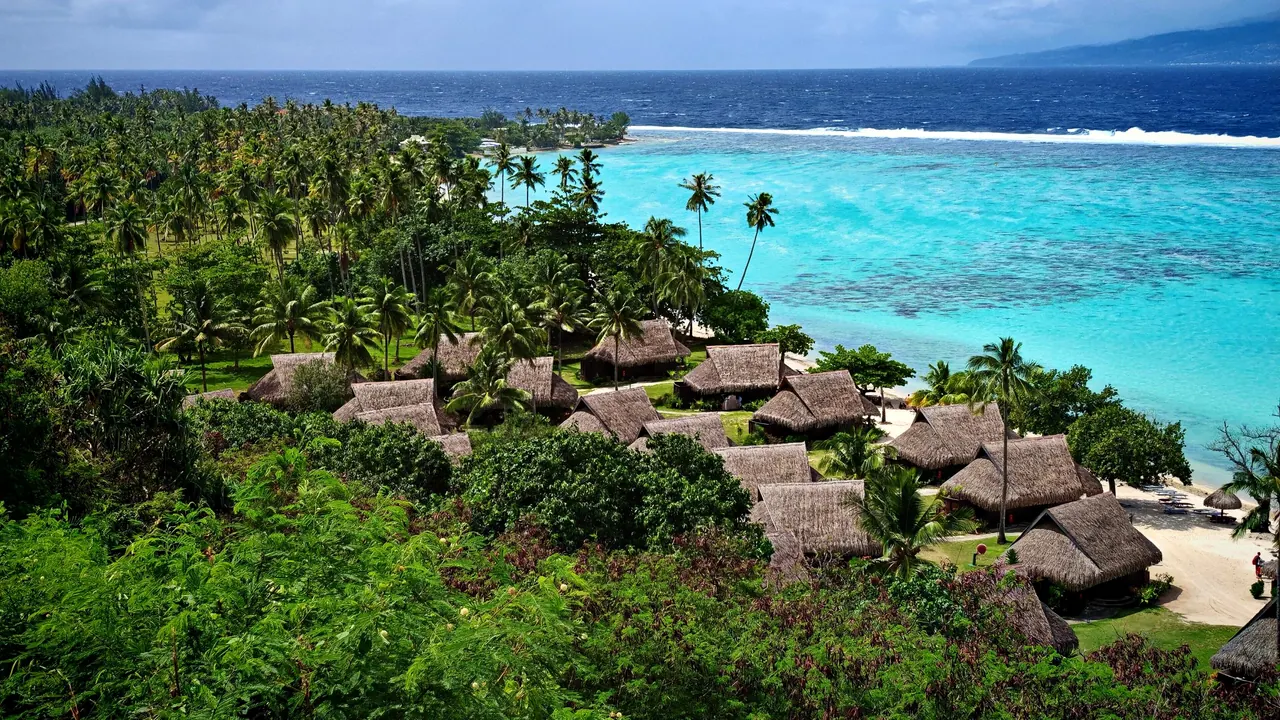
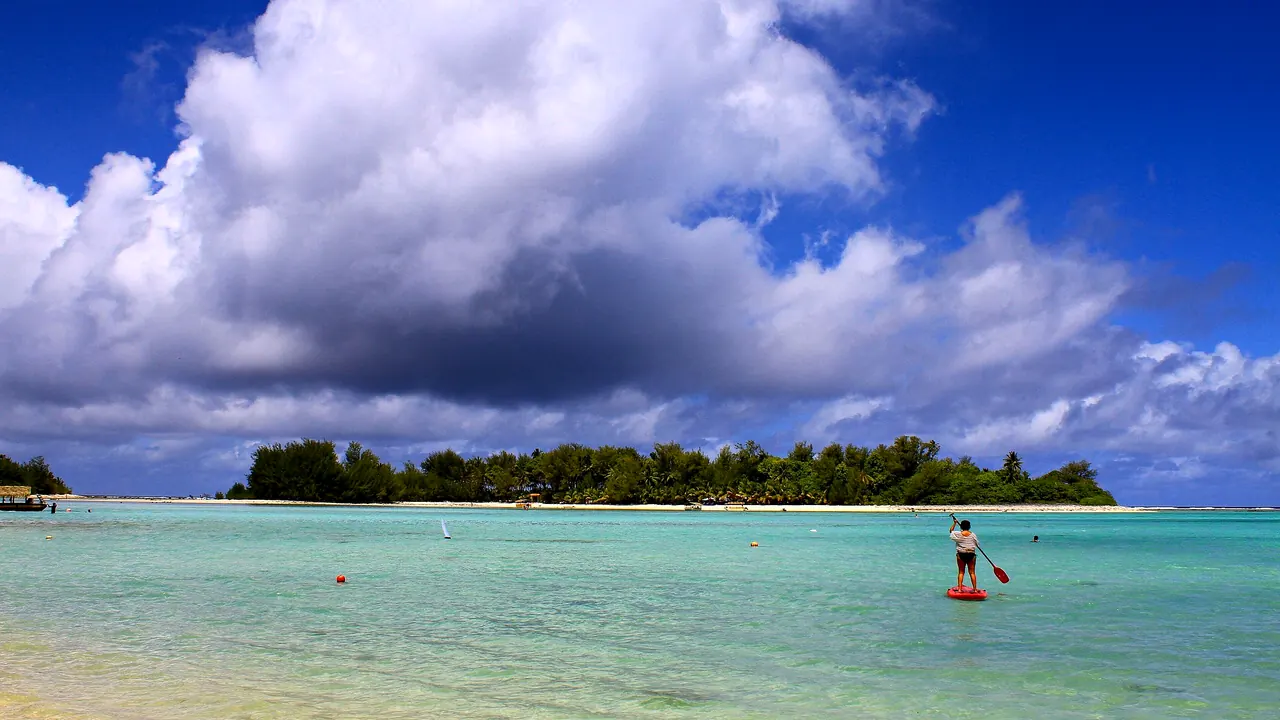
Photos: Moorea by Hakilon, CC BY-SA 4.0, cropped; Rarotonga by Christopher Johnson from Tokyo, Japan, CC BY-SA 2.0, cropped.
Moorea or Rarotonga?
Our verdict in twelve categories, each scored against the same fixed benchmark cities, and the climate month by month, so you can choose for your trip.
Choose Moorea for
- nature and the outdoors
- day trips
- wellness
Moorea is the island for scenery and the water. Its jagged green peaks rise straight out of the lagoon, the hiking is steeper and more varied, and snorkelling with stingrays and reef sharks is part of an ordinary day. It suits couples and active travellers who want a striking landscape, an overwater bungalow or a quiet pension, and Tahiti close enough for a day out, and who can accept a very high bill and evenings that end early.
Choose Rarotonga for
- live music and the arts
- prices
- getting around
Rarotonga makes the gentler, more sociable and slightly cheaper choice. Sandy lagoon runs almost all the way round it, the island bus means you can manage without a car, and Cook Islands dance, Sunday hymn singing and a lively Friday in Avarua give it more life after dark. Families with small children and travellers watching their spending will find it easier, at the cost of less dramatic mountains and almost no worthwhile day trips.
Scoreboard
Twelve categories on one fixed scale from 0 to 100. The shaded stretch is the gap between the two.
Your match
Pick a travel style or drag the sliders, and both match scores follow your weighting.
Wins on nature and the outdoors and day trips with your weighting.
Wins on live music and the arts and prices with your weighting.
What matters to you?
Category by category
What the scores mean for a trip.
Beaches & swimming
The lagoons are equally good, and the difference is in how you reach the water. On Moorea you often swim straight off a jetty or an overwater deck. Proper sand is mostly at Temae in the north-east and around Hauru Point and Tiahura, and much of the rest of the shore is coral, rock or private land, so where you stay matters.
Rarotonga has pale sand along almost its whole coast, with Muri and its wadeable motu and the clear snorkelling water around Aroa on the south side. Its sea is a few degrees cooler in the middle of the year, and the passages through the reef call for care.
Food & drink
Neither island is a reason to travel for food, and both centre on raw fish in lime and coconut: poisson cru on Moorea, ika mata on Rarotonga. Moorea has a French accent, with bistro-style restaurants around Cook's Bay, evening roulottes and Sunday ma'a Tahiti from the earth oven.
Rarotonga's best eating is at its markets, the Saturday Punanga Nui in Avarua and the night market at Muri. It adds taro, rukau and coconut buns, decent coffee and a locally brewed beer. On both islands choice is narrow, and many visitors end up self-catering.
Culture & sights
Neither island has much in the way of sights, and a day or less covers either. Moorea's heritage is in the landscape: the restored marae and archery platforms under the chestnut trees of the Opunohu valley, and the octagonal mission church at Papetoai.
Rarotonga has a little more in town, with a small national museum and the coral-lime Cook Islands Christian Church in Avarua, plus the Arai-te-Tonga marae on the old inland road. Its real strength is living custom rather than monuments.
Nightlife
Rarotonga has a little more going on, and nearly all of it happens on Friday, when Avarua's waterfront bars fill and a couple of places with dancing stay open late. On other nights both islands go to bed early.
On Moorea the evening ends with a sunset drink near Hauru Point and perhaps a hotel bar after dinner. With the ferry timetable ruling out Papeete, there is no realistic night out at all.
Nature & outdoors
Moorea is the more dramatic island by a wide margin. Mount Rotui and Mouaroa rise sheer from the lagoon between Cook's Bay and Opunohu Bay, trails climb through pineapple plantations to the Three Coconuts pass, and guided routes go higher still. In the water you meet stingrays and blacktip reef sharks in waist-deep shallows, lemon sharks on outer-reef dives and dolphins all year.
Rarotonga's interior is steep and forested too, and the cross-island track past the Needle and a waterfall is a fine half-day. Kitesurfing off Muri and humpbacks seen from shore add to it, but a keen walker covers its trails within a week.
Day trips
Moorea has the better day out because Tahiti is so close. A short ferry crossing brings Papeete's covered market and cathedral, and with a hire car you can follow the coast to Point Venus, the black-sand beaches and the quieter Tahiti Iti peninsula.
Rarotonga's only real option is a flight to Aitutaki for a lagoon cruise and lunch on a sandbar. It is memorable but expensive, and beyond it the outer islands need overnight stays.
Good for families
Rarotonga is the easier island with small children. Shallow, sandy water at Muri and along the south coast lets toddlers paddle from the beach, many resorts have kids' clubs and family units, and island dance nights and Sunday singing go down well.
Moorea works better for older children who can snorkel and kayak out to the rays on the sandbars. Its resorts lean towards honeymooners, reef shoes are needed against coral and urchins, and families do best in a pension or house near the northern sandy beaches.
Getting around
Rarotonga is the easier island to manage without a car. Its 32km loop is served by a bus running clockwise and anticlockwise that stops where you flag it down, though it thins in the evenings and on Sundays.
Moorea's coast road is nearly twice as long, and its buses are little more than links to the ferry, so you need a hire car, scooter or e-bike, or else taxis and tours. With your own wheels, though, everything there is within half an hour.
Shopping & style
Pearls are the serious purchase on both islands, and Rarotonga has slightly more besides. Its Saturday Punanga Nui market sells tivaevae quilts, pandanus hats and carvings, and Avarua has a short street of gift shops and boutiques.
Moorea has pearl shops around Cook's Bay and Hauru Point, plus pareos, monoi and vanilla from roadside stalls, but no market of any size. For more choice you cross to Papeete.
Affordability
Moorea is the dearer island by some distance. The rooms it is famous for, the overwater bungalows, are also its most expensive, and because the buses do little more than meet the ferry, a car, scooter or taxis are a cost from the first day. A pension with a kitchen and suppers at the roulottes narrow the gap without closing it.
Rarotonga is far from cheap, but its lower end goes further down. Backpacker lodges and simple self-catering units give real alternatives to the resorts at Muri, the Saturday market makes an inexpensive meal easy, and the flag-down bus removes the need for wheels. Its big costs are occasional, such as a dive or the flight to Aitutaki, rather than the price of the room every night.
Live music & performing arts
Rarotonga offers more, and more of it feels unstaged. Island nights with drumming and dance run several evenings a week, from polished resort shows to village-hall affairs, and Sunday hymn singing in the churches is open to visitors. Te Maeva Nui around early August brings dance teams from every island.
Moorea's ori Tahiti, fire dancing and to'ere drumming are skilled, but they are mostly resort dinner shows and cultural-village performances. Its big festival, the Heiva in July, takes place across the water in Papeete.
Wellness & relaxation
Both islands are made for slowing down, and both have only modest spas. Moorea has the more indulgent setting, with resort spas built over the water and taurumi, the traditional Polynesian massage with tiare-scented monoi.
Rarotonga's calm is plainer: no traffic lights, quiet stays around Muri and Titikaveka, day spas with coconut-oil massage and some yoga on the beach.
When should you go?
Pick your month. The climate figures are measured averages, not a forecast.
Moorea in July
Rarotonga in July
Daytime high, °C
Rainfall in the month, mm
Temperature and rainfall are climate normals, averaged over the years shown. Moorea: 1991-2020 normals, Tahiti-Faaa (22.2 km from centre). Rarotonga: 1991-2020 normals, Rarotonga (10.8 km from centre).
You can swim on both islands in any month, but Moorea is the hotter of the two all year. Daytime highs stay around 30°C and the lagoon rarely drops below 27°C. Rarotonga cools to about 26°C in the middle of the year and its sea to around 24°C, still pleasant but noticeably fresher, which makes its winter the more comfortable time for long walks inland.
Both islands are wettest around the turn of the year and driest from June to October, but Moorea's seasons are sharper. Around its main resort area July and August bring only about 43mm of rain and the most sunshine of the year, while December and January are the wettest months on either island. Rarotonga's rain is spread more evenly, so its wet season is lighter but its dry season less reliable. It also gets fewer hours of sunshine than Moorea in almost every month.
Which traveller are you?
On an outdoors trip, Moorea is the stronger choice. Its mountains are sharper and wilder, the hiking runs from valley paths to guided climbs, and the lagoon brings sharks, rays and turtles close enough to snorkel with, so active days rarely repeat.
On a family trip with young children, Rarotonga is the easier pick. Toddlers can paddle from sand almost anywhere on its coast and many resorts have kids' clubs and family units, whereas Moorea's resorts lean towards couples and much of its shore is coral.
On a trip on a tight budget, Rarotonga is the kinder of two costly islands. You can manage without a hire car, and a day snorkelling at Aroa or crossing the island past the Needle costs nothing, while Moorea's cheapest stays still add up.
Before you go
| Measure | Moorea | Rarotonga |
|---|---|---|
| Official language | French | English, Cook Islands Maori |
| Currency | CFP Franc (XPF) | New Zealand Dollar (NZD) |
| Sockets | - | I240 V, 50 Hz |
| Driving side | Right | Left |
| Time zone | UTC-10 | UTC-10 |
| Emergency number | 112 | Police 999, ambulance 998, fire 996 |
| Main airport | Fa'a'ā International Airport (PPT)30 non-stop destinations | Rarotonga International Airport (RAR)7 non-stop destinations |
| Public holidays this year | 16 days | 11 days |
By the numbers
| Measure | Moorea | Rarotonga |
|---|---|---|
| Population | 16,191 | 10,572 |
| People per km² | 121 | 158 |
| Swim season, months above 21 °C | 12 months | 12 months |
Where else could you go?
Every comparison below shares a destination with this one, so you can follow Moorea or Rarotonga somewhere new.