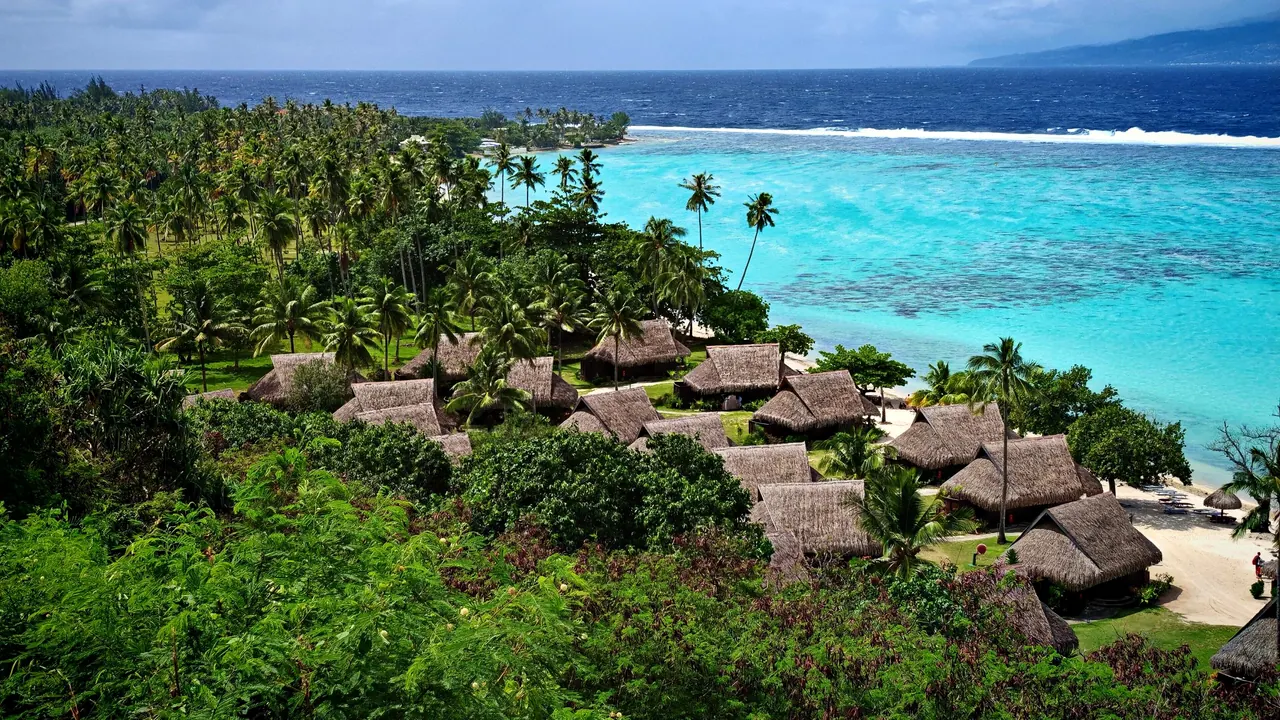
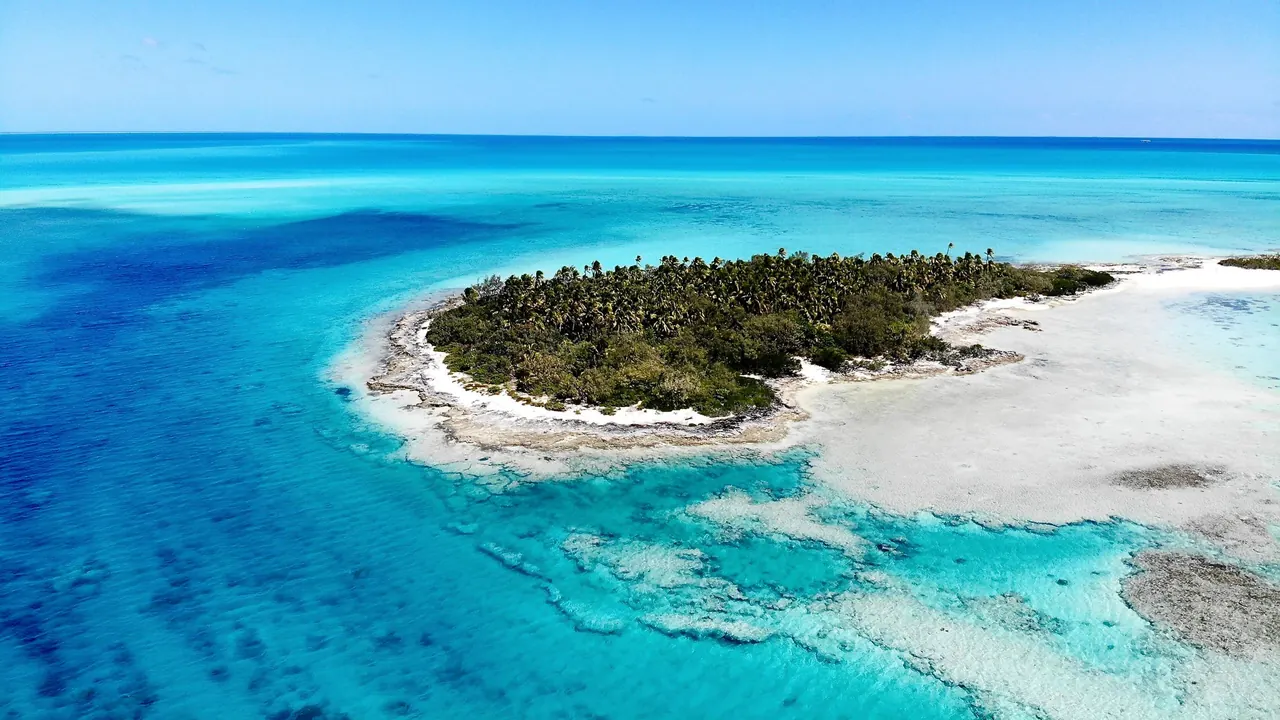
Photos: Moorea by Hakilon, CC BY-SA 4.0, cropped; New Caledonia by Pacificbluefilm, CC BY-SA 4.0, cropped.
Moorea or New Caledonia?
Our verdict in twelve categories, each scored against the same fixed benchmark cities, and the climate month by month, so you can choose for your trip.
Choose Moorea for
- getting around
- wellness
- nature and the outdoors
Moorea suits travellers who want one beautiful place and nothing much else to think about. The whole island is a single loop of coast road under green volcanic peaks, the lagoon is warm enough to swim every month, and days settle into snorkelling, paddling and doing very little. Couples, honeymooners and anyone after a slow, scenic week will find it hard to beat, as long as they don't need good restaurants, evenings out or sights to fill the time.
Choose New Caledonia for
- nightlife
- culture and sights
- food and drink
New Caledonia is the better choice for a fuller trip with more variety. Nouméa gives you French bakeries and bistros, the Tjibaou Cultural Centre, an aquarium and a few bars that stay open late at the weekend. Beyond it, the Isle of Pines and the Loyalty Islands have some of the finest white-sand beaches in the Pacific. The price is distance: you spend more time in cars and on domestic flights. It works best for families, curious travellers and anyone who wants to combine a town base with island stays.
Scoreboard
Twelve categories on one fixed scale from 0 to 100. The shaded stretch is the gap between the two.
Your match
Pick a travel style or drag the sliders, and both match scores follow your weighting.
Wins on getting around and wellness with your weighting.
Wins on nightlife and culture and sights with your weighting.
What matters to you?
Category by category
What the scores mean for a trip.
Beaches & swimming
The beaches are on a par, but they work differently. On Moorea you mostly swim straight into the lagoon from a jetty or deck. Temae in the north-east and the strips around Hauru Point are the main sandy beaches, and the warm water makes swimming easy all year.
New Caledonia has the grander sand, though mostly away from the capital. Kuto and Kanumera on the Isle of Pines and the long beach on Ouvéa are the reasons to go, with Anse Vata and the islets of Amédée and Maître as the easy options near Nouméa. The water there is cooler in the southern winter, and swimmers need to watch for shark signs.
Food & drink
New Caledonia eats better. Nouméa's French bakeries, wine bistros and seafood tables are served by the territory's farmed blue prawns. Long-settled Vietnamese and Indonesian families add bami and nems, and bougna at a tribal homestay is a meal to remember.
Moorea has poisson cru, grilled lagoon fish, evening roulottes and sweet local pineapple. Beyond that there is a short list of restaurants around Cook's Bay and Hauru Point, and many visitors end up cooking for themselves.
Culture & sights
New Caledonia has more to see. Renzo Piano's Tjibaou Cultural Centre is a real introduction to Kanak culture, the Museum of New Caledonia holds carvings and ceremonial axes, and the penal colony ruins on Nouville and the Isle of Pines tell a hard nineteenth-century story.
Moorea's heritage takes an afternoon or two: the restored marae under the chestnut trees of the Opunohu valley, the octagonal mission church at Papetoai and a cultural village.
Nightlife
Neither place is for serious nightlife, but New Caledonia at least has some. On Friday and Saturday nights a few bars and small clubs on the Baie des Citrons and at Anse Vata stay busy past midnight. On Moorea the evening is a sunset drink near Hauru Point and an early night, and a night out in Papeete is not practical with the ferry times.
Nature & outdoors
Moorea has the edge, mostly because of how much is packed into a small space. Peaks like Mount Rotui rise straight from the lagoon, the Belvedere lookout and the Three Coconuts trail are a short drive apart, and stingrays and blacktip sharks swim in water you can stand in.
New Caledonia's natural world is larger and more varied, but spread out. Its UNESCO-listed lagoon has dugongs, Anse Vata is known for kitesurfing, and the red earth of the Grand Sud and the Blue River park, home of the kagu, are unlike anything on Moorea. Both get humpback whales in the southern winter.
Day trips
New Caledonia has a few more places to go for the day: the Isle of Pines by plane or ferry, the convict village at Prony, and the drive up the west coast to Bourail and Fort Teremba. From Moorea there is really only Tahiti, half an hour or so away by ferry, for Papeete's market and the coast road out to Point Venus.
Good for families
New Caledonia is easier with children. Nouméa adds an aquarium with nautilus and a zoo and forest park to the calm water at Anse Vata. Boat trips go to islets with lifeguards, and French supermarkets and pharmacies make everyday life simple.
Moorea's sandbars full of rays thrill older children who can snorkel, but nothing on the island is built for them. Many resorts are aimed at couples, so families do best in a pension near the northern beaches.
Getting around
Moorea is much simpler to get around. One quiet road of about 60km circles the island, and with a car, scooter or e-bike nothing is more than half an hour away. Without your own wheels you depend on taxis and shuttles, because buses only meet the ferries.
In New Caledonia, Nouméa's buses reach the beaches, but you need a car anywhere else. The east coast is hours away over the mountains, and the outer islands mean a flight or a fast ferry.
Shopping & style
Neither is a shopping trip, but New Caledonia gives you slightly more choice. Central Nouméa has French fashion and swimwear boutiques and some duty-free shops, and the morning market at Port Moselle sells Kanak carvings, vanilla and sandalwood. Moorea comes down to one serious purchase, Tahitian black pearls from shops around Cook's Bay, plus pareos and monoi from roadside stalls.
Affordability
Both are among the most expensive places you can travel to, and almost everything in either is imported. You save money in similar ways, but in different places: on Moorea through family pensions, roulottes and the supermarket, and in New Caledonia through tribal homestays and simple bungalows on the Isle of Pines and the Loyalty Islands. Domestic flights add more to the bill in New Caledonia.
Live music & performing arts
New Caledonia has a bit more going on. The Tjibaou Cultural Centre stages Kanak dance, theatre and concerts, Nouméa has a modest theatre and some bars with live bands, and kaneka music can be heard at local festivals. On Moorea, live performance means skilled ori Tahiti and fire dancing at resort dinner shows, and the great July Heiva takes place across the water in Papeete.
Wellness & relaxation
Moorea is better for unwinding. The whole island runs slowly and quietly, overwater bungalows invite long idle hours, and resort spas offer taurumi massage with tiare-scented monoi.
New Caledonia can be just as calm on Ouvéa or Maré, with spa treatments using niaouli and tamanu oils. Most stays begin in Nouméa, though, which is still a working town, and the one thermal spring, at La Crouen, is a long drive away.
When should you go?
Pick your month. The climate figures are measured averages, not a forecast.
Moorea in July
New Caledonia in July
Daytime high, °C
Rainfall in the month, mm
Temperature and rainfall are climate normals, averaged over the years shown. Moorea: 1991-2020 normals, Tahiti-Faaa (22.2 km from centre). New Caledonia: 1991-2020 normals, Noumea Nlle-Caledonie (1.3 km from centre).
Moorea is hot all year, with daytime highs around 30°C in every month and a lagoon that never drops below 27°C, so the beach is never out of season. What changes is the rain. June to September is the dry, sunny stretch, with July and August down to about 43mm. December to February is the wet season, with heavy tropical downpours peaking near 280mm in December. The heat stays the same either way.
New Caledonia has real seasons. Around Nouméa, July and August bring highs of about 23°C and a sea near 22°C. That is pleasant for walking and hiking, but cool for long swims. September to November is the sweet spot, the driest and sunniest time, with the water warming up again. From January to April it is hotter and wetter, with the rain peaking in March. So for a dry trip, Moorea is at its best in the southern winter and New Caledonia in the southern spring.
Which traveller are you?
On a relaxing and wellness trip, Moorea asks less of you. There are no flights or long drives to plan, the loop road keeps every beach close, and evenings end early, so days can simply follow the morning light on the lagoon.
On a family trip with children, New Caledonia fits better. Split the stay between Nouméa's shallow town beaches and the sheltered natural pool at Oro on the Isle of Pines. On Moorea, coral and sea urchins mean reef shoes for small feet.
For a food and nightlife trip, pick New Caledonia and stay in Nouméa. Mornings start at the Port Moselle market, and evenings run from seafood and French wine to a weekend bar at Anse Vata. Moorea offers a roulotte supper and an early night.
Before you go
| Measure | Moorea | New Caledonia |
|---|---|---|
| Official language | French | French |
| Currency | CFP Franc (XPF) | CFP Franc (XPF) |
| Sockets | - | CF220 V, 50 Hz |
| Driving side | Right | Right |
| Time zone | UTC-10 | UTC+11 |
| Emergency number | 112 | 112 |
| Main airport | Fa'a'ā International Airport (PPT)30 non-stop destinations | La Tontouta International Airport (NOU)14 non-stop destinations |
| Public holidays this year | 16 days | 13 days |
By the numbers
| Measure | Moorea | New Caledonia |
|---|---|---|
| Population | 16,191 | 278,500 |
| People per km² | 121 | 15 |
| Swim season, months above 21 °C | 12 months | 12 months |
Where else could you go?
Every comparison below shares a destination with this one, so you can follow Moorea or New Caledonia somewhere new.
- Tahitivs Moorea
- Bora Boravs Moorea
- Rarotongavs Moorea
- Cook Islandsvs New Caledonia
- Bora Boravs New Caledonia
- Tahitivs New Caledonia