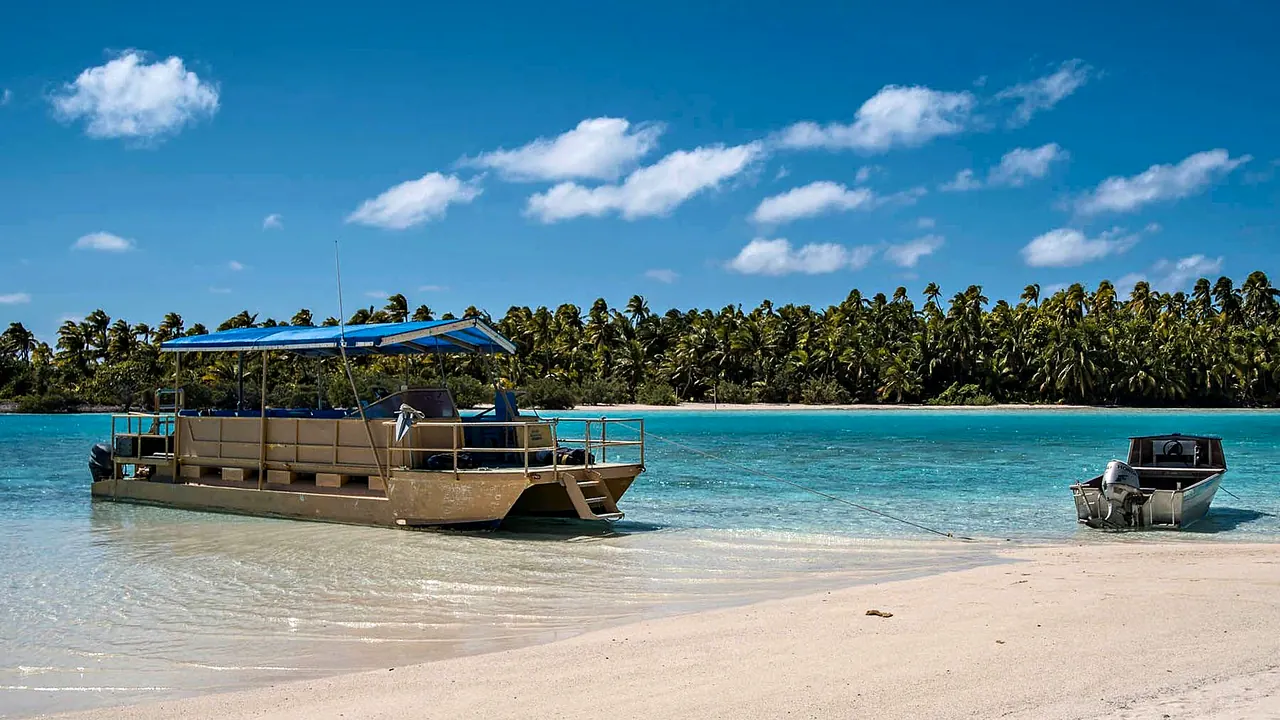
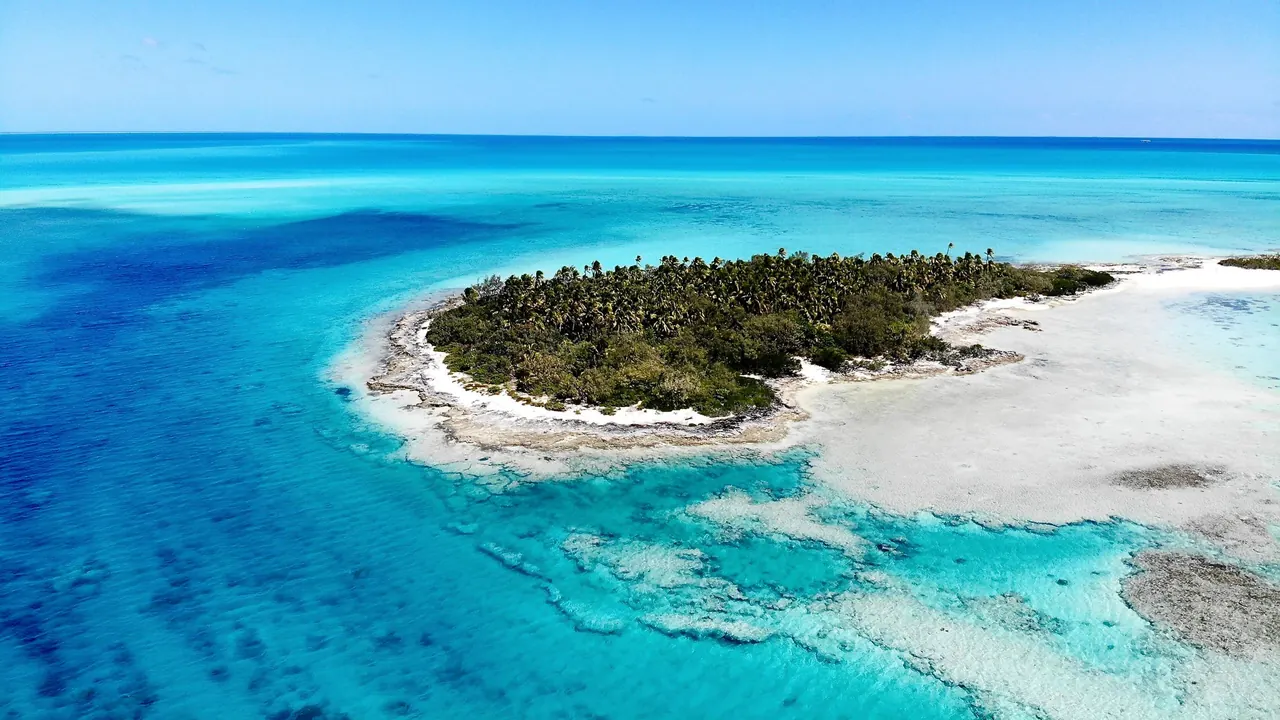
Photos: Cook Islands by Frank Winkler, CC BY-SA 4.0, cropped; New Caledonia by Pacificbluefilm, CC BY-SA 4.0, cropped.
Cook Islands or New Caledonia?
Our verdict in twelve categories, each scored against the same fixed benchmark cities, and the climate month by month, so you can choose for your trip.
Choose Cook Islands for
- getting around
- live music and the arts
- prices
The Cook Islands suit a traveller who wants one lagoon, one easy loop road and as little planning as possible. Rarotonga is small enough to learn in a day, the water at Muri and Titikaveka is steps from your room, and the island nights of drumming and dance are the best evenings out in either place. Aitutaki then adds a few slow days on one of the Pacific's great lagoons. You give up range: the food is simple, the sights take a morning, and there is little to fill a second week except the sea.
Choose New Caledonia for
- nature and the outdoors
- day trips
- food and drink
New Caledonia is the better pick for someone who wants more to do around the beaches. The reefs are World Heritage waters for serious diving, Grande Terre has red-earth wilderness and rainforest to explore by car, and Nouméa brings French bakeries, bistros and the Tjibaou Cultural Centre. It costs more and takes more organising, with hire cars and island flights, but it repays a longer and more varied trip.
Scoreboard
Twelve categories on one fixed scale from 0 to 100. The shaded stretch is the gap between the two.
Your match
Pick a travel style or drag the sliders, and both match scores follow your weighting.
Too close to call, 1 point apart
Wins on getting around and live music and the arts with your weighting.
Wins on nature and the outdoors and day trips with your weighting.
What matters to you?
Category by category
What the scores mean for a trip.
Beaches & swimming
Both are lagoon destinations of the first rank, and the difference is in how the beaches are spread out. In the Cook Islands everything centres on Rarotonga's south-east, where you can wade to the motu off Muri or snorkel straight from the sand at Titikaveka, and on Aitutaki's turquoise sandbars around One Foot Island. The water there is a degree or two warmer and good all year, though Aitutaki gets very shallow at low tide.
New Caledonia spreads its best sand more widely. Nouméa has easy town beaches and boats out to islets like Amédée, while the Isle of Pines has the white bays of Kuto and Kanumera and the natural pool at Oro, and Ouvéa has its single 25km beach. Summer brings cyclone risk, and some beaches carry shark warnings.
Food & drink
New Caledonia eats better, thanks to its French base. Nouméa has real bakeries, bistros pouring French wine, lagoon crab and the territory's farmed blue prawns, plus Vietnamese and Indonesian dishes at the Port Moselle market. Bougna, cooked on hot stones at a tribal homestay, is worth ordering a day ahead.
The Cook Islands offer a shorter menu: ika mata, grilled tuna and wahoo, and umu feasts. The Saturday Punanga Nui market in Avarua is the highlight, and beyond it most meals come from beach cafés and resort kitchens using imported produce.
Culture & sights
Neither is a sightseeing destination, but New Caledonia gives a curious visitor more. Renzo Piano's Tjibaou Cultural Centre is a serious introduction to Kanak culture, the Museum of New Caledonia holds carvings and ceremonial axes, and penal colony ruins stand on Nouville and the Isle of Pines.
In the Cook Islands, heritage is the stone marae of Arai-te-Tonga, coral-lime mission churches and a small museum in Avarua, all seen in a morning. The culture is more alive in daily village life than in anything you visit.
Nightlife
Both go quiet after dark, but Nouméa gives a little more. Its waterfront at the Baie des Citrons and Anse Vata has a few small clubs busy past midnight on both Friday and Saturday. On Rarotonga, Friday in Avarua's bars is the only real night out, Sunday is a day of rest, and there are no clubs at all.
Nature & outdoors
New Caledonia is the far bigger outdoor destination. Its reefs are a World Heritage Site where divers meet dugongs, rays and turtles, and the trade winds make Anse Vata a kitesurfing spot. On land, the red earth of the Grand Sud, the kagu and kauri trees of Blue River, and the rainforest and Mont Panié around Hienghène fill days of exploring, most of the plants found nowhere else.
The Cook Islands work on a smaller scale. Rarotonga has the half-day Cross-Island Track past the Needle, easy kayaking and snorkelling inside the reef, and humpbacks visible from shore in winter, with Atiu's caves further afield. A few active days cover it.
Day trips
New Caledonia has more places to go for a day. From Nouméa you can fly or ferry to the Isle of Pines, drive the west coast to Bourail and Fort Teremba, or take a shorter run to the convict ruins at Prony.
From Rarotonga the only real outing is the fly-in day tour to Aitutaki, and even that is better done as a stay of several nights. The other islands need overnight trips.
Good for families
For children the two come out even, and both rest on calm, shallow water inside the reef. The Cook Islands make it simplest, with Muri and Titikaveka safe for paddling, resorts with kids' clubs and short distances, but nothing built for children.
New Caledonia adds a few attractions, the Aquarium of the Lagoons and the Michel Corbasson park with its kagu, along with lifeguarded islet beaches. Against that, drives on Grande Terre are long for small children.
Getting around
The Cook Islands are much easier. Rarotonga's single coast road loops 32km, with a bus in each direction that stops wherever you flag it down, and a scooter or bicycle on Aitutaki covers the rest.
New Caledonia needs a car almost from the start. Nouméa sprawls around its bays, the east coast is hours away over the mountains, and the outer islands mean domestic flights or a fast ferry plus transport arranged at the other end.
Shopping & style
Shopping is a minor part of either trip, and what differs is what you bring home. The Cook Islands mean black pearls in Avarua and pareu, carvings and pandanus weaving at the Saturday market. Nouméa has French swimwear and fashion boutiques and some duty-free shops, plus Kanak carvings, Loyalty Islands vanilla and sandalwood.
Affordability
Both are expensive because nearly everything arrives by ship, but New Caledonia costs more. Prices there sit above mainland France, and car hire and domestic flights add up quickly. Tribal homestays on the islands are the main way to save.
The Cook Islands are dear too, especially the Aitutaki resorts and lagoon cruises. Still, the cheap local bus, backpacker lodges and market meals on Rarotonga make a careful budget easier to hold.
Live music & performing arts
The Cook Islands are the place for performance. Their log-drum rhythms and ura dancing are famous across the Pacific and staged at island-night dinners several evenings a week. Sunday hymn singing in village churches is unforgettable, and the Te Maeva Nui festival in late July and early August brings dance teams from every island.
New Caledonia has the Tjibaou Cultural Centre's programme and a modest theatre in Nouméa. Kaneka music is mostly heard at festivals rather than any night you choose.
Wellness & relaxation
Both restore you through slowness rather than spas, so they are much alike. Rarotonga has no building taller than a palm, quiet Sundays and coconut-oil massage at the Muri resorts, plus a few yoga classes.
New Caledonia's calm is found on the Isle of Pines, Ouvéa and Maré rather than in Nouméa, which is a working town. Its spas use niaouli and tamanu oils, and there is a thermal spring at La Crouen, though it is a long drive from anywhere.
When should you go?
Pick your month. The climate figures are measured averages, not a forecast.
Cook Islands in July
New Caledonia in July
Daytime high, °C
Rainfall in the month, mm
Temperature and rainfall are climate normals, averaged over the years shown. Cook Islands: 1991-2020 normals, Rarotonga (4.4 km from centre). New Caledonia: 1991-2020 normals, Noumea Nlle-Caledonie (1.3 km from centre).
On Rarotonga the air stays warm all year, with highs from about 26°C in the southern winter to 30°C in summer, and the lagoon is warm enough for a comfortable swim in every month. Rain is the thing to plan around. December to April is the wet, humid half of the year, with heavy showers most weeks. June to October is much drier and a little fresher, which makes it the better time for the Cross-Island Track, although May and June are the cloudiest months.
October and November bring the most sunshine.\n\nAround Nouméa the pattern is different. Winter is noticeably cooler, with highs near 23°C and the sea down to about 22°C in August. That is fine for walking but brisk for long swims. September to November is the driest stretch, at around 40mm a month, and October to December is the sunniest spell in either destination, with December a little wetter but still bright. March and April are the wettest months there, though still less soggy than Rarotonga's summer.
Which traveller are you?
On an outdoors trip, New Caledonia is the clear choice. It suits someone who wants a fortnight of different days, a dive on the reef, then a long drive into wild, empty country, with fresh ground still ahead. Rarotonga's walks and reef paddling fill a few active days.
For a food and nightlife trip, New Caledonia again comes out ahead, mainly because of Nouméa. French bakeries, blue prawns, bami from the market and weekend bars and small clubs at the Baie des Citrons give more to choose from than Avarua's single Friday night.
On a trip on a tight budget, the Cook Islands are the easier of two costly places. The round-island bus is cheap, there are backpacker lodges and self-catering bungalows on Rarotonga, and you can manage without the hire cars and domestic flights New Caledonia demands.
Before you go
| Measure | Cook Islands | New Caledonia |
|---|---|---|
| Official language | English, Cook Islands Maori | French |
| Currency | New Zealand Dollar (NZD) | CFP Franc (XPF) |
| Sockets | I240 V, 50 Hz | CF220 V, 50 Hz |
| Driving side | Left | Right |
| Time zone | UTC-10 | UTC+11 |
| Emergency number | Police 999, ambulance 998, fire 996 | 112 |
| Main airport | Rarotonga International Airport (RAR)7 non-stop destinations | La Tontouta International Airport (NOU)14 non-stop destinations |
| Public holidays this year | 11 days | 13 days |
By the numbers
| Measure | Cook Islands | New Caledonia |
|---|---|---|
| Population | 14,222 | 278,500 |
| People per km² | 59 | 15 |
| Swim season, months above 21 °C | 12 months | 12 months |
Where else could you go?
Every comparison below shares a destination with this one, so you can follow Cook Islands or New Caledonia somewhere new.
- Bora Boravs Cook Islands
- Tahitivs Cook Islands
- American Samoavs Cook Islands
- Bora Boravs New Caledonia
- Mooreavs New Caledonia
- Tahitivs New Caledonia