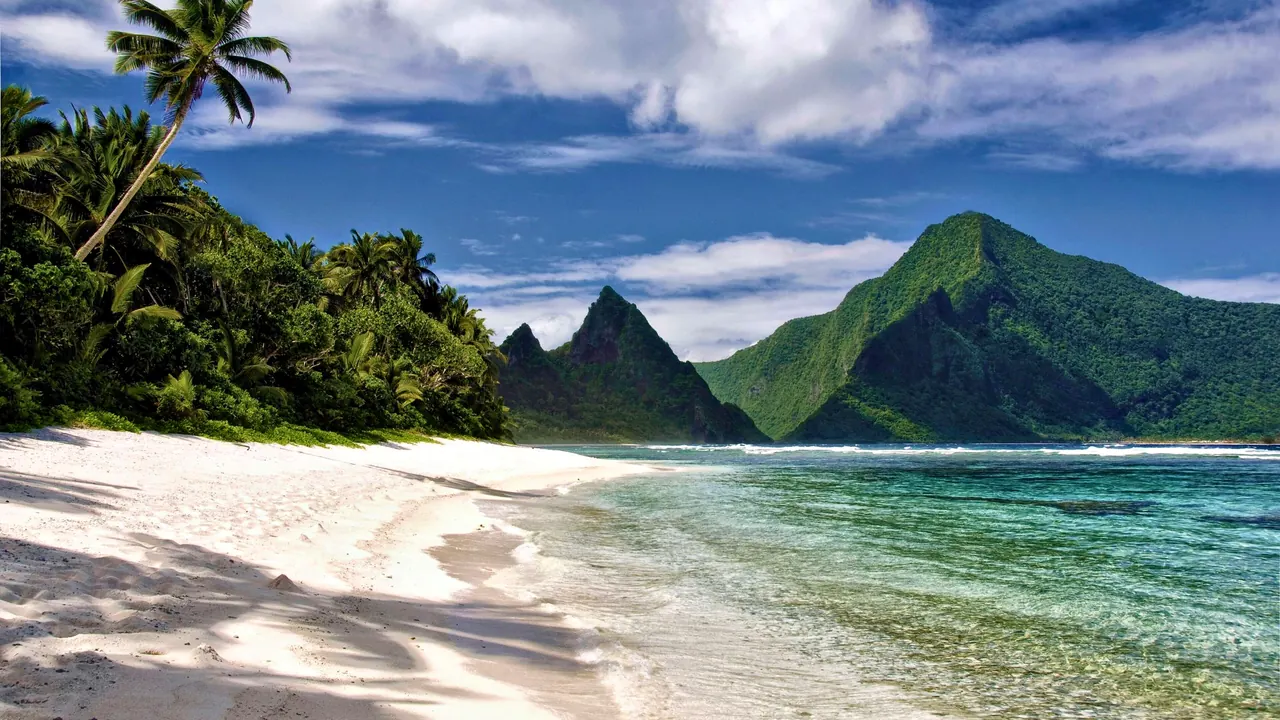
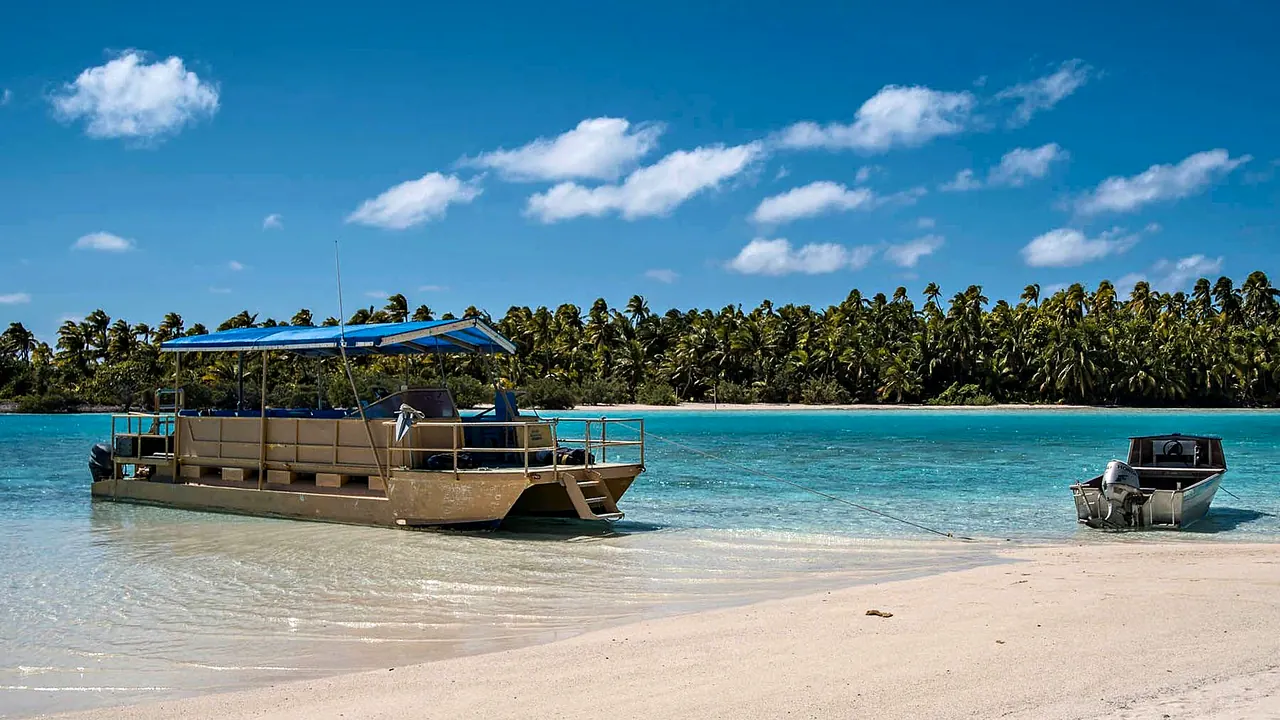
Photos: American Samoa by The U.S. National Park Service (public domain), Public domain; Cook Islands by Frank Winkler, CC BY-SA 4.0, cropped.
American Samoa or Cook Islands?
Our verdict in twelve categories, each scored against the same fixed benchmark cities, and the climate month by month, so you can choose for your trip.
Choose American Samoa for
- prices
- nature and the outdoors
American Samoa is for travellers who come for wild landscape and don't mind roughing it a little. It offers ridge trails above Pago Pago harbour, the national park's rainforest and the remote Manu'a islands, where Ofu's reef and Ta'u's sea cliffs feel barely visited. It is also slightly cheaper of the two, though neither is cheap. The trade-off is a thin choice of hotels, few services and a great deal of rain.
Choose Cook Islands for
- beaches
- families
- getting around
The Cook Islands suit a classic lagoon vacation. Rarotonga's sheltered water at Muri and Titikaveka and Aitutaki's turquoise lagoon are the main draw. Add an easy loop road with a bus, resorts with family rooms and island-night drumming, and they are the gentler, more comfortable choice. They suit couples, families and anyone who would rather swim and unwind than explore.
Scoreboard
Twelve categories on one fixed scale from 0 to 100. The shaded stretch is the gap between the two.
Your match
Pick a travel style or drag the sliders, and both match scores follow your weighting.
Wins on prices and nature and the outdoors with your weighting.
Wins on beaches and families with your weighting.
What matters to you?
Category by category
What the scores mean for a trip.
Beaches & swimming
For a beach vacation the Cook Islands win easily. Rarotonga's reef holds a calm, clear lagoon all round the island. At Muri you can wade out to the motu, and at Titikaveka you can snorkel straight off the sand. Aitutaki's sandbar islets add a second, even more striking lagoon a short flight away.
American Samoa's best sand, on Ofu, is just as beautiful, but it lies on a remote island with only simple guesthouses. On Tutuila the coves at Alega and Avaio are small and often shallow at low tide. They are also village-owned, so you need permission and good timing, and Sunday swims near villages are best avoided.
Food & drink
Neither destination is a reason to travel for food, but the Cook Islands give a visitor more to work with. There is ika mata and grilled wahoo in beach cafés, a Saturday morning of grazing at Punanga Nui market in Avarua and evening stalls at Muri.
In American Samoa the best Samoan cooking, the Sunday umu feast with palusami and oka, mostly comes by invitation. Everyday eating around Pago Pago leans on diners, fast food and imported goods, and the fish and fruit at the Fagatogo market are the high point.
Culture & sights
Both are about living Polynesian culture rather than monuments, and either can be seen in a day or so. American Samoa's culture shows along the coast road, in village fale meeting houses, the tattoo tradition and church after church. Add the Jean P. Haydon Museum in Fagatogo, the Navy-era buildings around the harbour and quiet archaeology such as the star mounds in the hills.
The Cook Islands lean more on old ceremonial stone. The marae of Arai-te-Tonga beside Rarotonga's inland road is the key site. Coral-lime mission churches from the 1800s and a small national museum in Avarua complete a short morning's round.
Nightlife
American Samoa has the quieter evenings of the two. After dark you get a hotel bar or one of a handful of local drinking spots by Pago Pago harbour, and the church-going rhythm of village life, with evening prayer and a hushed Sunday, sets the tone. No night of the week brings visitors together.
Rarotonga has such a night on Friday, when Avarua's waterfront becomes a short, sociable round of bars shared by islanders and travellers. Pago Pago has nothing like it. The rest of the week runs closer to Tutuila's pace, with a sundowner on the beach and an early night, and Aitutaki is quieter still. Anyone hoping for clubs will be disappointed in both.
Nature & outdoors
American Samoa has the wilder, grander landscape, with a national park spanning rainforest, reef and coast on three islands. Tutuila offers the Mount Alava ridge trail and the cliffs and seabird colonies at Pola Island. Ta'u adds some of the world's highest sea cliffs, and Ofu's reef is among the healthiest in the Pacific. The price is heavy rain, overgrown trails and almost no guides.
The Cook Islands are tamer and easier. On Rarotonga you can walk the half-day Cross-Island Track past the Needle, kayak and snorkel inside the reef, and dive or fish for tuna outside it. Atiu adds caves and rare birds. Humpback whales pass both in the southern winter, and on Rarotonga you can watch them from the shore.
Day trips
Both are poor bases for day trips, because the islands are small and far apart. From Tutuila the one easy outing is the short boat ride to car-free Aunu'u and its crater lake. Apia in independent Samoa and the Manu'a islands both need overnight stays. From Rarotonga the usual outing is a fly-in day tour to Aitutaki with a lagoon cruise, although that lagoon deserves several nights rather than a single day.
Good for families
The Cook Islands are much easier with children. The shallow, sheltered water around Muri and Titikaveka is safe for small paddlers and good for older children learning to snorkel or kayak. Many resorts have family rooms and kids' clubs.
American Samoa welcomes children just as warmly but does less to make a stay comfortable, with few hotels, sharp reef flats, heavy rain and humidity. Older children who like rock pools, snorkelling and fruit bats will enjoy it, but toddlers less so. Neither destination has zoos, aquariums or theme parks.
Getting around
Rarotonga is the simpler island. A 32km loop road has buses running both ways that stop wherever you flag them down. Scooters and bicycles suit the flat coast, and nowhere is much more than forty minutes away.
Tutuila also has one main road, but its aiga buses keep no timetable, thin out at night and mostly stop on Sundays. A hire car is close to essential for trailheads and the steep north-coast villages. Island-hopping is awkward in both places. Aitutaki is a short hop from Rarotonga, while the small planes to Manu'a are infrequent and easily grounded by weather.
Shopping & style
The Cook Islands have one real buy, black pearls from the northern atolls, sold in small shops in Avarua. The Saturday Punanga Nui market adds pareu, carvings and shell jewellery. Shopping in American Samoa is mostly supermarkets and general stores. The souvenirs worth taking home are siapo bark cloth, woven mats and lavalava from the Fagatogo market and a few craft outlets.
Affordability
Both are costly because most food is imported, but American Samoa is a little easier on the budget. Its hotels around Pago Pago are simple and mid-range, and daily costs run close to those on the US mainland. The aiga buses and market food are cheap, leaving car hire and the journey out as the big expenses.
The Cook Islands push higher, especially at the beachfront resorts on Aitutaki, and lagoon cruises and inter-island flights add up quickly. Self-catering bungalows and backpacker lodges on Rarotonga are the way to keep costs down.
Live music & performing arts
Cook Islands drumming and ura dancing are famous across the Pacific. Island-night shows with dinner run on several evenings a week on Rarotonga and Aitutaki, so a visitor is almost certain to see them. The Te Maeva Nui festival in late July and early August brings every island's dance teams to Avarua.
In American Samoa, siva and fire knife dancing appear only at the occasional fiafia evening or community event, with Flag Day in April as the big occasion. Sunday hymn singing is moving in both, and visitors are welcome at church in either.
Wellness & relaxation
American Samoa offers rest in its plainest form. Beyond the odd hotel massage there are no treatments at all. What it has is real disconnection, in a guesthouse on Ofu or a fale on Tutuila's quiet east end, for people who relax by doing almost nothing.
The Cook Islands add some comfort to the slow pace. The resorts around Muri and on Aitutaki have spas, coconut-oil Polynesian massage is easy to find, and there are a few yoga classes. All of it sits on an island where no building rises above the palms.
When should you go?
Pick your month. The climate figures are measured averages, not a forecast.
American Samoa in July
Cook Islands in July
Daytime high, °C
Rainfall in the month, mm
Temperature and rainfall are climate normals, averaged over the years shown. American Samoa: 1991-2020 normals, Pago Pago / Int. Airport (6.6 km from centre). Cook Islands: 1991-2020 normals, Rarotonga (4.4 km from centre).
American Samoa is hot and humid all year, with highs around 30°C and a sea warm enough to snorkel in every month. What changes is the rain. The wet season runs roughly from November to May and peaks from December to February, when January brings around 385mm. June to September is the least wet stretch, though it is still showery and the sun is no more generous then. Whenever you go, plan your days around downpours.
The Cook Islands are a little cooler and much drier. From June to October, Rarotonga sees around 100mm of rain a month or less, and daytime highs near 26°C make walking and the Cross-Island Track comfortable. October is one of the sunniest months. In August and September the lagoon cools to about 24°C, which is refreshing rather than warm. December to April bring warmer water and more heat, but also heavier rain. For both destinations the southern winter is the better time to go.
Which traveller are you?
On a beach and sun trip, the Cook Islands are the clear choice. Rarotonga's reef-sheltered lagoon makes swimming easy all round the island, Muri and Titikaveka sit right on it, and Aitutaki's sandbar islets are a short flight away.
For an outdoors trip, American Samoa has more to offer. Its national park covers the rainforest ridges of Tutuila, the towering sea cliffs of Ta'u and Ofu's outstanding coral reef. It suits walkers and snorkellers who can cope with mud, rain and few guides.
On a family trip with children, choose the Cook Islands. The shallow, warm water at Muri suits young swimmers, and resorts offer family rooms and kids' clubs. Getting around Rarotonga by bus or car is simple, unlike rainy, thinly served Tutuila.
Before you go
| Measure | American Samoa | Cook Islands |
|---|---|---|
| Official language | English, Samoan | English, Cook Islands Maori |
| Currency | US Dollar (USD) | New Zealand Dollar (NZD) |
| Sockets | ABFI120 V, 60 Hz | I240 V, 50 Hz |
| Driving side | Right | Left |
| Time zone | UTC-11 | UTC-10 |
| Emergency number | 911 | Police 999, ambulance 998, fire 996 |
| Main airport | Pago Pago International Airport (PPG)2 non-stop destinations | Rarotonga International Airport (RAR)7 non-stop destinations |
| Public holidays this year | - | 11 days |
By the numbers
| Measure | American Samoa | Cook Islands |
|---|---|---|
| Population | 49,710 | 14,222 |
| People per km² | 250 | 59 |
| Swim season, months above 21 °C | 12 months | 12 months |
Where else could you go?
Every comparison below shares a destination with this one, so you can follow American Samoa or Cook Islands somewhere new.