French Polynesia
Bora Bora
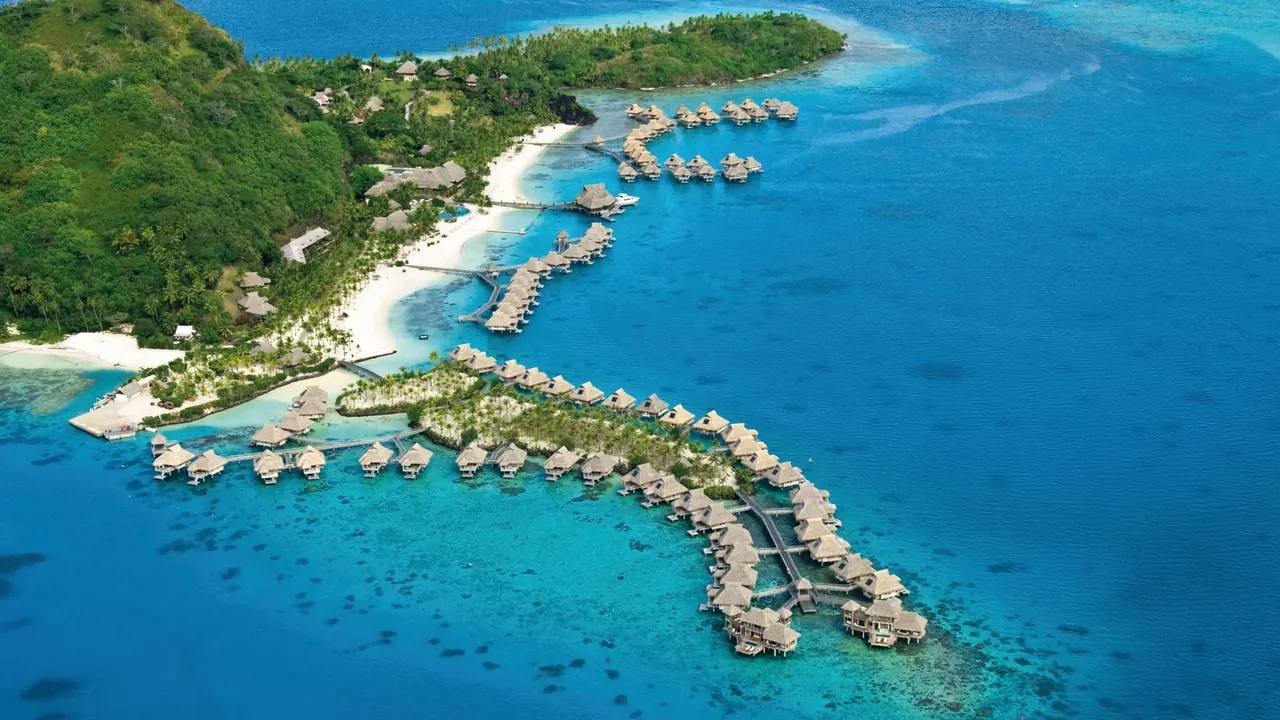
Overwater bungalows on a motu in the lagoon
- Beaches92
- Nature & outdoors76
- Wellness & relaxation55
Photo: Mauro Soares, CC BY-SA 3.0, cropped
Match
33
Every category weighted equally
- Beach & sun42
- Culture & arts24
- Food & nightlife26
- Family trip39
- Outdoors41
- Relax & unwind43
- Shopping & style28
- On a budget30
Bora Bora in twelve categories
Our verdict on each, scored 0 to 100 against the same fixed benchmark cities, so a score means the same thing on every page.
Beaches & swimming. Scores 92 out of 100.
Food & drink. Scores 32 out of 100.
Culture & sights. Scores 12 out of 100.
Nightlife. Scores 6 out of 100.
Nature & outdoors. Scores 76 out of 100.
Day trips. Scores 20 out of 100.
Good for families. Scores 35 out of 100.
Getting around. Scores 33 out of 100.
Shopping & style. Scores 20 out of 100.
Affordability. Scores 4 out of 100.
Live music & performing arts. Scores 14 out of 100.
Wellness & relaxation. Scores 55 out of 100.
Bora Bora category by category
Beaches & swimming
92Bora Bora is less about beaches than about the lagoon. The water is clear and turquoise, protected by the reef, and stays around 26°C to 29°C all year. Most visitors swim straight off their overwater bungalow deck or the sand of a resort motu, the low coral islets on the reef. Beach life here is quiet: you swim, float and snorkel, and that is most of the day.
Matira Point, at the southern tip of the main island, has the best public beach. It is a long curve of soft white sand where the shallow water goes on far enough for waders. Other good sand is mostly on the motu, which you reach by boat.
Food & drink
32Most meals are eaten in the resorts, where the cooking is French with Polynesian touches: tuna and mahi-mahi, vanilla sauces, coconut and tropical fruit. Some of it is very good, but you are always eating in the same small set of dining rooms. The local dish to try is poisson cru, raw fish in lime and coconut milk. It tastes best at the simple snack counters and food trucks around Vaitape and along the coast road, where locals eat too.
On a longer stay the choice feels small. Many resorts offer a Polynesian evening with food cooked in an earth oven.
Culture & sights
12There is little here to see. On the main island are a few restored marae, the stone platforms where Polynesians once held ceremonies, and some rusting American coastal guns from the Second World War on the hills above the lagoon. Vaitape, the main village, has a small church and a quay. These fill a few hours on a tour of the island, and that is all. People come for the lagoon, not for the island's history.
Nightlife
6Evenings are for sunset cocktails, a long dinner and an early night. The resorts have bars with lagoon views, and a couple of bar-restaurants on the main island draw visitors from different hotels. After that there is nowhere to go and no club scene. Bora Bora suits couples who want quiet. Anyone looking for a night out will not find one.
Nature & outdoors
76The scenery is what people come for. A jagged green volcanic peak, Mount Otemanu, rises from a lagoon of every shade of blue, with a ring of palm-covered motu along the reef. Most outdoor time is spent on the water: snorkelling in the coral gardens, swimming with stingrays and blacktip reef sharks in the shallows, outrigger canoeing, kitesurfing off the motu, and diving the reef passes for lemon sharks and manta rays.
On land there is less to do. The 4x4 tracks into the hills give the classic views over the lagoon, and the steep climb up Mount Pahia needs a guide and a dry day. The peak of Otemanu itself is closed to climbers. The island is small, so a week here is about the lagoon.
Day trips
20For a day away, the neighbouring Leeward Islands are your only option. Tahaa and Raiatea are reached by boat or a short flight. Tahaa has vanilla plantations and pearl farms, and Raiatea has Taputapuatea, the most sacred marae in Polynesia. Maupiti, a smaller and quieter island, is a short flight to the west. All of these mean an organised trip or careful planning around flights and boats, and the destinations are small villages, not towns. Most visitors never leave Bora Bora.
Good for families
35The lagoon is calm, warm and shallow in many places, so swimming and snorkelling are easy for children. At Matira toddlers can paddle a long way out. The island is safe and relaxed. Beyond that, there is little made for children. The resorts are designed mostly for couples, and some overwater bungalows are not safe for small children who cannot swim. The flight is very long and the island is costly. Families with older children who like snorkelling get the most out of it, and should choose a resort with a kids' club and a pool.
Getting around
33The airport is on a motu, so arrival begins with a boat across the lagoon. On the main island, a single coast road of about 32km circles the island, and it is easy to do by bicycle, scooter or small hired car. Buses are few and taxis are scarce. Many resorts are on the outer motu, and from there every trip to Vaitape or Matira depends on the hotel's boat shuttle. In practice you get around by boat, and lagoon outings are mostly organised tours.
Shopping & style
20Shopping here means Tahitian black pearls, sold loose and as jewellery in showrooms around Vaitape and in the resorts. Besides pearls, the craft stalls by the Vaitape quay sell pareos, carved wood, shell jewellery and monoi oil. That is all there is, and a single morning is enough to see it.
Affordability
4Bora Bora is one of the most expensive places in the world to visit. Overwater bungalows are priced as a once-in-a-lifetime luxury. Nearly all food and drink is shipped in, so resort meals cost a lot, and lagoon tours, boat transfers and spa treatments add more. Family-run guesthouses on the main island, and self-catering from the grocery stores in Vaitape, bring costs down. Even so, the island is never cheap.
Live music & performing arts
14Polynesian dance is the only live performance here. Most visitors see it at resort dinner shows, with drumming, fire dancing and fast hip-shaking ori tahiti. The best time to see it is July, when the Heiva brings dance and singing contests between local groups to Vaitape. Outside that, there are no theatres or concert halls.
Wellness & relaxation
55Wellness here means the spa at your resort. The larger resorts on the motu run polished spas, some with treatment rooms built over the lagoon or set in tropical gardens. They use local ingredients such as monoi oil, coconut and the tiare flower, and offer traditional Polynesian massage. The island has no bathing tradition of its own and no public baths, and no retreat scene, so once you have tried your own resort's spa there is little else to find.
What the island does give you is calm. There is no traffic to speak of, no nightlife, and days pass between the spa, a hammock and the bungalow deck. It suits a couple who want to do very little. It will not suit someone looking for thermal waters or a programme of retreats.
Where to stay in Bora Bora
Most visitors choose between the outer motu and the main island. The motu are the low coral islets along the reef, where the larger resorts sit with overwater bungalows and views back across the lagoon to Mount Otemanu. Staying there means swimming straight off your deck, long spa afternoons and early nights, and it suits couples who want to do very little. The catch is that every trip to Vaitape or Matira depends on the hotel's boat shuttle.
On the main island, Matira Point at the southern tip is the most pleasant base on land. It has the island's best public beach, where the shallow water suits families with small children, and simple places to eat are a short walk or bicycle ride away. Around Vaitape and along the coast road, family-run guesthouses and the village grocery stores keep costs lower. This side suits travellers watching their budget and those who want to ride the 32km coast road by bicycle or scooter and eat poisson cru beside locals.
The island is small, so one base is enough for the whole stay. A first visit is usually spent on a motu for the classic lagoon setting. A second visit on the main island shows more of everyday island life. Boat trips to Tahaa or Raiatea work from either base without changing hotel.
When should you go?
Pick a month to see what it is like. The climate figures are measured averages, not a forecast.
Bora Bora in July
Daytime high, °C
Rainfall in the month, mm
The whole year
Shaded against this city’s own year: the deepest cell is its best month for that figure and the palest its weakest.
Temperature and rainfall are climate normals, averaged over the years shown. Bora Bora: 1991-2020 (sunshine 1981-2010) normals, Bora-Bora / Faanui (6.1 km from centre).
Before you go
| Measure | Bora Bora |
|---|---|
| Official language | French |
| Currency | CFP Franc (XPF) |
| Driving side | Right |
| Time zone | UTC-10 |
| Emergency number | 112 |
| Main airport | Bora Bora Airport (BOB)9 non-stop destinations |
| Public holidays this year | 16 days |
By the numbers
| Measure | Bora Bora |
|---|---|
| Population | 10,605 |
| People per km² | 347 |
| Swim season, months above 21 °C | 12 months |
Compare Bora Bora with
Every comparison with a written verdict behind it.