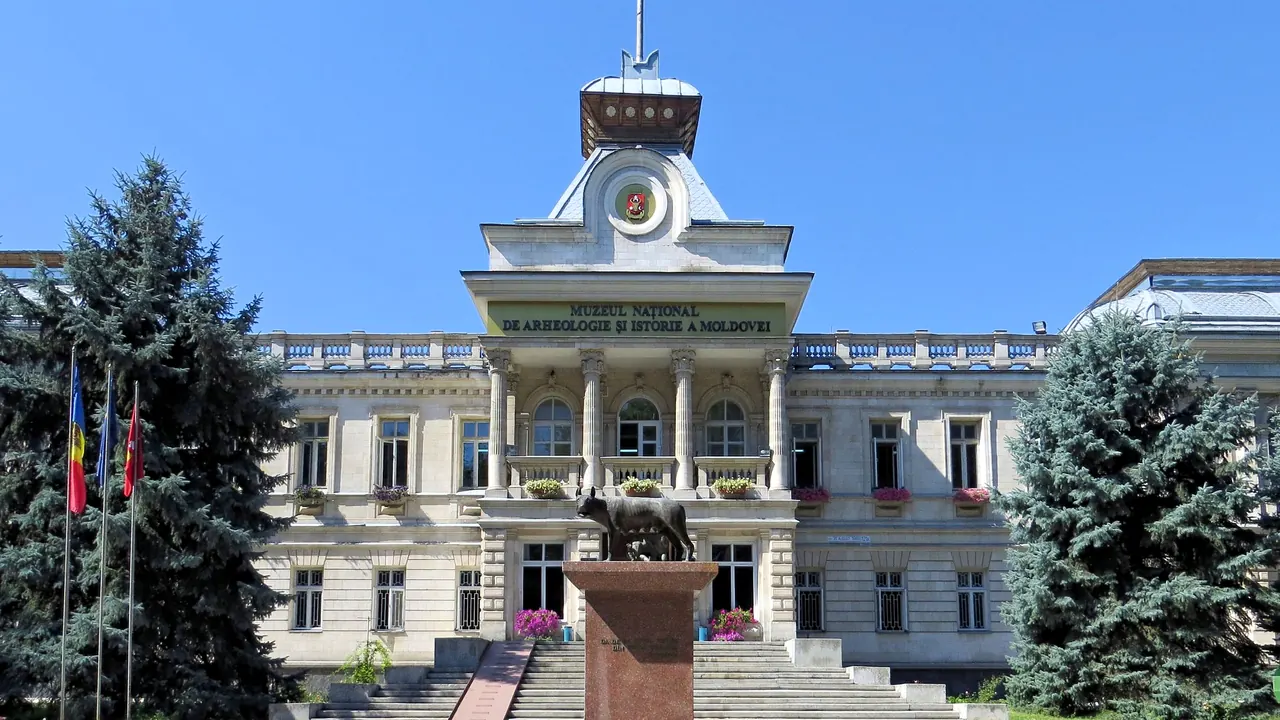
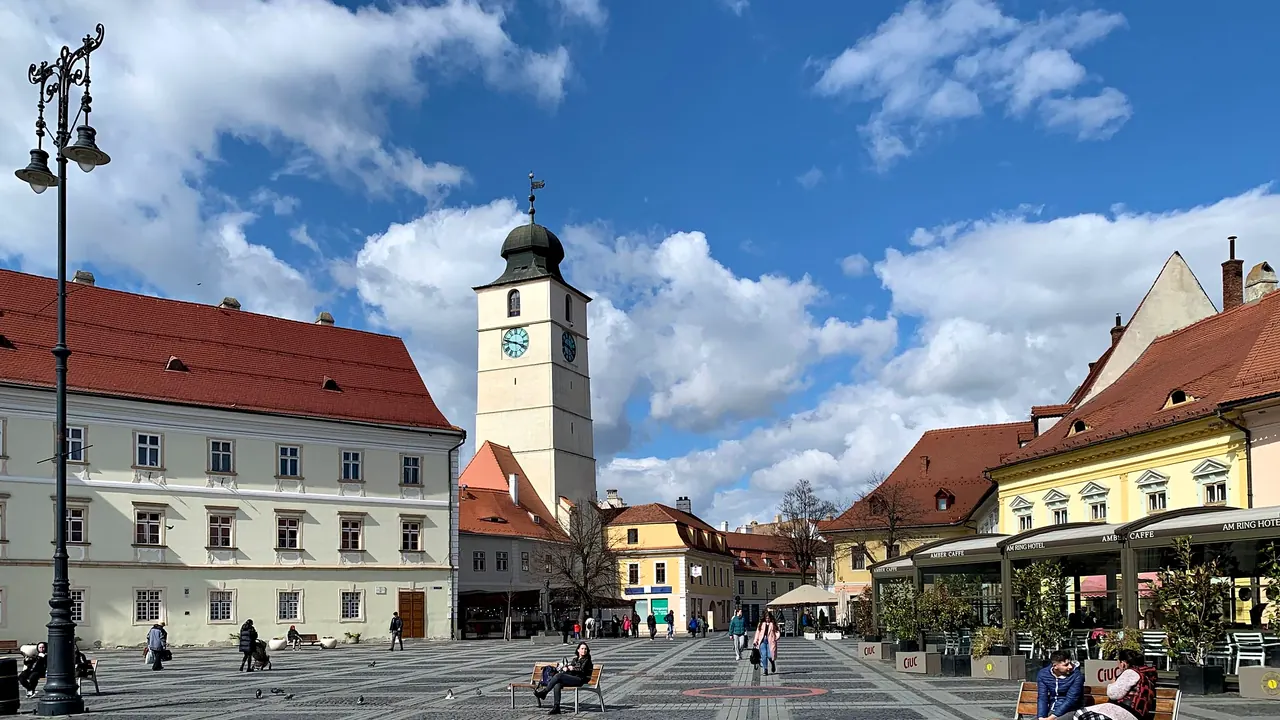
Photos: Chișinău by Alexandru Panoiu, CC BY 2.0, cropped; Sibiu by Chainwit., CC BY 4.0, cropped.
Chișinău or Sibiu?
Our verdict in twelve categories, each scored against the same fixed benchmark cities, and the climate month by month, so you can choose for your trip.
Choose Chișinău for
- food and drink
- nightlife
- prices
Chișinău suits a traveller whose trip revolves around the glass and the table. The draw is Moldova's wine: vast underground cellar towns a short drive out, local reds poured across the city, and evenings in bars and on terraces that cost very little. It is the cheaper of the two and the livelier after dark, and its Soviet modernist buildings will interest architecture fans. The old town is thin, though, and the countryside is gentle rather than dramatic.
Choose Sibiu for
- nature and the outdoors
- culture and sights
- wellness
If you want a handsome historic town with mountains on the horizon, Sibiu is the better pick. Its Saxon Upper Town of linked squares, Gothic churches and medieval walls has far more to look at than Chișinău's grid. The Fagaras and Cindrel ranges, the Transfagarasan road and the fortified churches of the villages make it a strong base for walking, driving and sightseeing. It is also the calmer, easier choice with children or for a restful stay.
Scoreboard
Twelve categories on one fixed scale from 0 to 100. The shaded stretch is the gap between the two.
Your match
Pick a travel style or drag the sliders, and both match scores follow your weighting.
Wins on food and drink and nightlife with your weighting.
Wins on nature and the outdoors and culture and sights with your weighting.
What matters to you?
Category by category
What the scores mean for a trip.
Beaches & swimming
Both are landlocked and far from the sea, so neither works for a beach vacation. Chișinău's version is the Dniester's sandy and grassy banks at Vadul lui Vodă, with warm, slow river water and weekend crowds.
Sibiu offers something odder: the salt lakes of Ocna Sibiului, about 20km out, which are dense enough to float in. In either city, most hot days end at a pool.
Food & drink
Chișinău has the stronger table, mainly because of wine. Moldova's reds such as Fetească Neagră anchor the restaurant lists and wine bars, and the Central Market shows off the country's cheeses, pickles and honey. Plăcinte, zeamă and a Russian and Ukrainian layer of pelmeni and borscht give the menu some variety.
Sibiu's cooking is hearty Transylvanian fare: sarmale, bean soup in bread, smoked pork and papanasi, served in vaulted cellars. The sheep's cheese and brandies from the Marginimea villages are the local treat. Beyond that the choice narrows quickly, and the main-square terraces sell the view more than the food.
Culture & sights
Sibiu is far ahead here. The Large Square, Small Square and Huet Square, the Lutheran Cathedral, the Bridge of Lies, the stairways down to the Lower Town and the surviving guild towers make a medieval Saxon townscape worth wandering for days. The Brukenthal's paintings and the ASTRA open-air museum in the Dumbrava forest add real depth.
Chișinău's low limestone centre around Ștefan cel Mare Boulevard and Cathedral Park is pleasant but plain. Its standout is the Moorish-revival Ethnography and Natural History museum. Fans of Soviet modernism will find more to like in the Gates of the City and the brutalist circus.
Nightlife
Neither is a party destination, but Chișinău has more going on. Its cocktail bars, wine bars and craft beer pubs in the old centre are joined by a few clubs and lounges that run late at weekends for a dressed-up local crowd.
Sibiu's evenings belong to students in cellar bars and pubs around the squares. Its few clubs come alive mainly at weekends in term time, which makes it better for a drink after dinner than for a long night.
Nature & outdoors
This is Sibiu's biggest advantage. The Southern Carpathians rise just south of town, with easy summer hiking and modest skiing at Paltinis. The Fagaras Mountains, Romania's highest at over 2,500m, offer ridge walks, glacial lakes and the hairpins of the Transfagarasan up to Balea Lake. Brown bears roam the forests.
Chișinău has no mountains. Its outdoors means vineyards and farmland, the oak and beech woods of the Codri hills and the limestone gorge of the Răut at Orheiul Vechi. In the city itself there are Valea Morilor park and the Botanical Garden.
Day trips
Both make good bases, but Sibiu's list is longer and more varied. Fortified Saxon churches such as Biertan and Cisnadioara sit close by. Sighisoara is about an hour and a half away, while Alba Iulia's citadel and Corvin Castle make castle days to the west.
Chișinău's outings are a tight theme of wine and monasteries: the underground tunnels of Cricova and Mileștii Mici, estates like Purcari, and the cave monastery at Orheiul Vechi. Around either city a driver, tour or hire car makes the difference.
Good for families
Sibiu is the easier city with children. Its small, largely traffic-free old town is calm, and the ASTRA museum with its windmills and lakes sits beside the zoo and playgrounds of the Dumbrava park. The Christmas market is a hit with younger children too.
Chișinău is manageable but has less aimed at children: the zoo, Valea Morilor's lake, the Dendrarium and shows at the Soviet-era circus. Its rough pavements are a nuisance with a pushchair, just as Sibiu's stairways are.
Getting around
Both centres are walkable, so the difference is in the details. Sibiu's sights cluster around the pedestrianised Large Square, and the only effort is the climb between the Upper and Lower Town. Chișinău's grid is flat but its pavements are uneven. Its trolleybuses are simple to use, the minibuses are confusing, and cheap ride-hailing fills the gaps. Out of town, both rely on a car or a tour.
Shopping & style
Neither is a shopping destination, and what you carry home differs. Chișinău means bottles: cellar shops stock wines from every region, along with sparkling wine and divin brandy. Sibiu means crafts, with painted ceramics, glass icons and wooden toys along Nicolae Balcescu Street and at the Christmas market stalls.
Affordability
Both are inexpensive by European standards, but Chișinău goes a little further. Hotels, canteen meals, taxis and opera tickets all cost very little, and wine is a standout bargain.
Sibiu's guesthouses and cellar restaurants are also good value. Main-square terraces charge more, though, and rooms get pricier during the June theatre festival and the Christmas market.
Live music & performing arts
The two are broadly level, with different strengths. Chișinău's draw is classical. The National Opera and Ballet Theatre runs a full season, and the Organ Hall and Philharmonic host concerts throughout the year.
Sibiu is a theatre town, built around the Radu Stanca National Theatre and the June International Theatre Festival, which spills into churches and squares. Most of the drama in both cities is not in English, so music and dance travel better.
Wellness & relaxation
Sibiu offers more for a restful trip. Ocna Sibiului's salt lakes and mud cures, a spa tradition since the 19th century, are close by, and Paltinis offers mountain air and quiet. The city's slow evenings on the squares help too.
Chișinău has no bathing culture. Relaxing there means a hotel spa, a countryside sanatorium or a long afternoon over wine on a shaded terrace.
When should you go?
Pick your month. The climate figures are measured averages, not a forecast.
Chișinău in July
Sibiu in July
Daytime high, °C
Rainfall in the month, mm
Temperature and rainfall are climate normals, averaged over the years shown. Chișinău: 1991-2020 normals, Kisinev (11.2 km from centre). Sibiu: 1991-2020 normals, Sibiu (0 km from centre).
The two share a continental pattern of cold winters and warm summers, with January highs close to freezing in both. Late spring and early autumn, May, June and September, are the most comfortable for walking the streets. Neither has a sea. River bathing at Vadul lui Vodă or floating in the salt lakes at Ocna Sibiului works best in July and August.
Chișinău runs hotter and drier in summer, with highs near 29°C in July and August and over 300 hours of sunshine a month, so midday sightseeing can feel heavy. Sibiu stays a little cooler, at around 27°C, which suits mountain walks, but its summer is much wetter, with close to 97mm of rain in June, often in afternoon storms. Sibiu has the edge in early spring and autumn, which are marginally milder there.
Which traveller are you?
On a culture and arts trip, Sibiu is the clear choice. Its Saxon Upper Town, the Brukenthal Museum and the ASTRA open-air museum fill two or three rewarding days. The June theatre festival adds a calendar highlight that Chișinău's modest museums cannot match.
For an outdoors trip, Sibiu wins easily. The Fagaras ridges, glacial lakes, hiking from Paltinis and the Transfagarasan drive are all within reach. Around Chișinău you get rolling vineyards, the Codri woods and the gorge at Orheiul Vechi, which are pleasant but low-key.
On a food and nightlife trip, Chișinău comes out ahead. Moldovan wine is the backbone of its bars and restaurants, the cellar towns of Cricova and Mileștii Mici are close by, and its handful of streets of bars and late weekend clubs outlast Sibiu's student pubs.
Before you go
| Measure | Chișinău | Sibiu |
|---|---|---|
| Official language | Romanian | Romanian |
| Currency | Moldovan Leu (MDL) | Romanian Leu (RON) |
| Sockets | CF220 V, 50 Hz | CF230 V, 50 Hz |
| Driving side | Right | Right |
| Time zone | UTC+2, UTC+3 in summer | UTC+2, UTC+3 in summer |
| Emergency number | 112 | 112 |
| Elevation | 85 m | 415 m |
| Main airport | Chişinău International Airport (RMO)13 km from centre76 non-stop destinations | Sibiu International Airport (SBZ)5 km from centre11 non-stop destinations |
| Public holidays this year | 16 days | 17 days |
By the numbers
| Measure | Chișinău | Sibiu |
|---|---|---|
| Population | 567,038 | 134,308 |
| People per km² | 4,610 | 1,110 |
| Museums within 10 km | 13 | 12 |
| UNESCO World Heritage sites within 50 km | 0 | 2 |
Where else could you go?
Every comparison below shares a destination with this one, so you can follow Chișinău or Sibiu somewhere new.