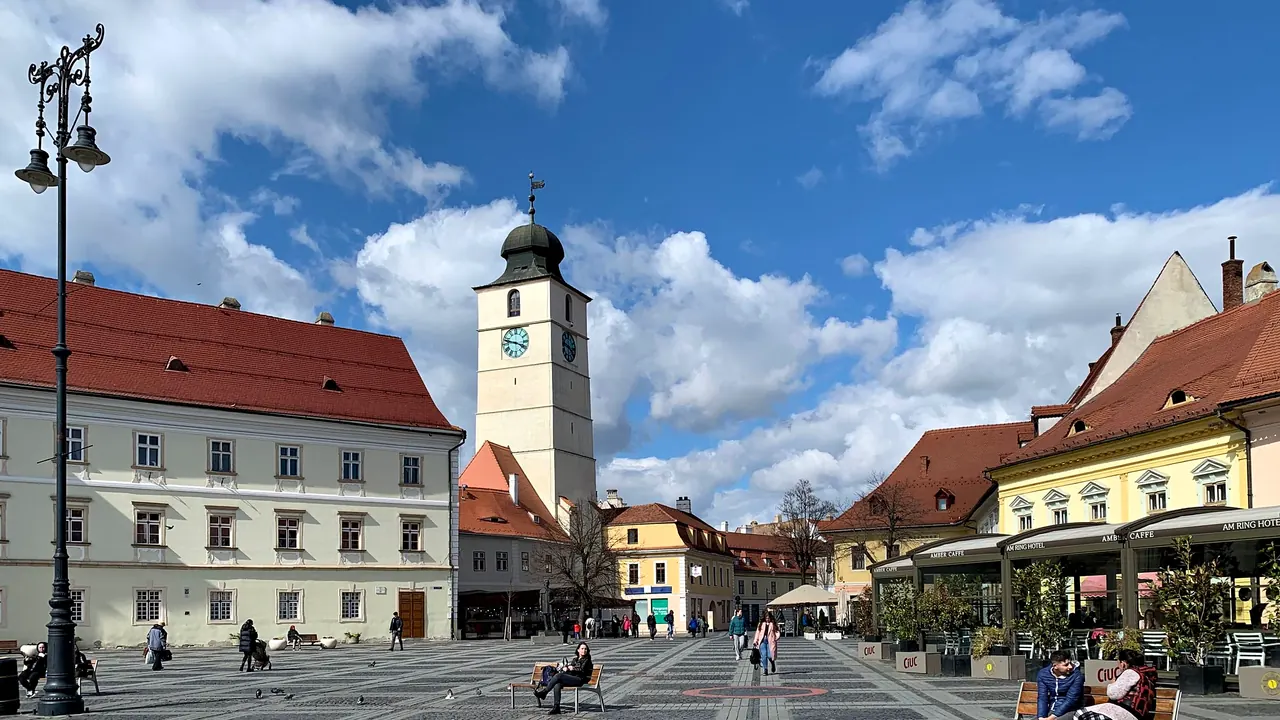
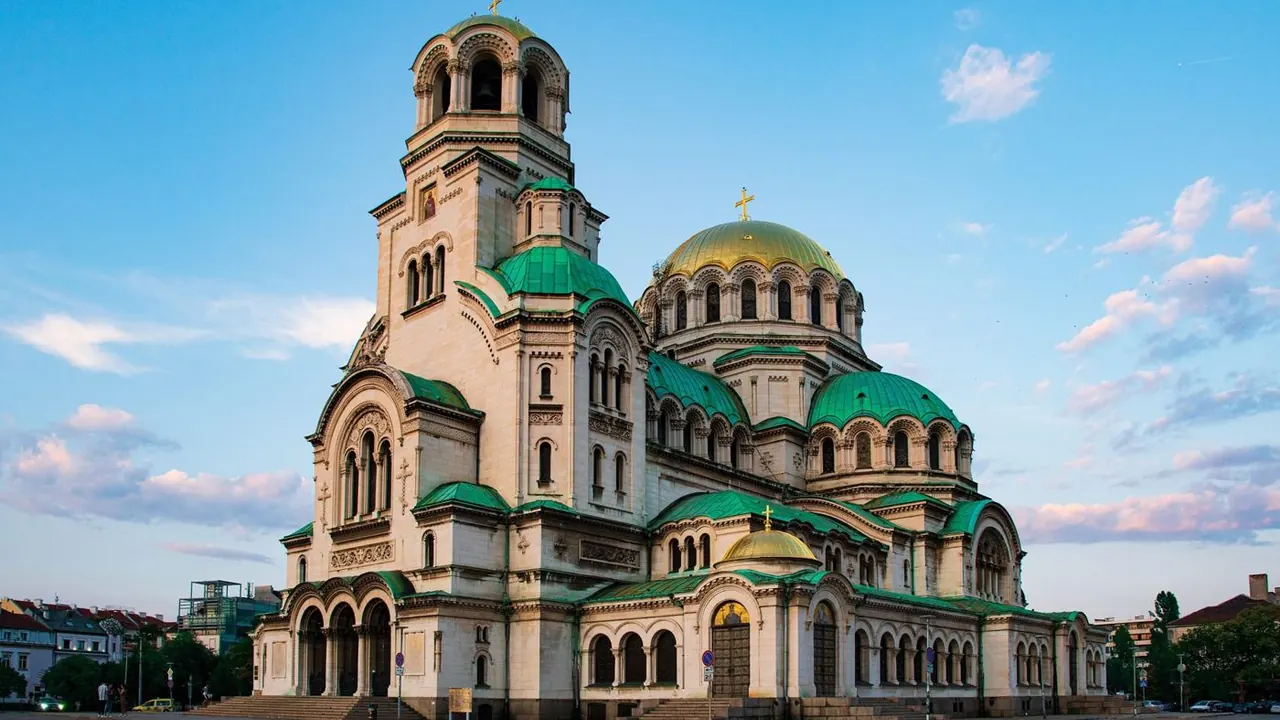
Photos: Sibiu by Chainwit., CC BY 4.0, cropped; Sofia by Jose Ligero Loarte, CC BY-SA 4.0, cropped.
Sibiu or Sofia?
Our verdict in twelve categories, each scored against the same fixed benchmark cities, and the climate month by month, so you can choose for your trip.
Choose Sibiu for
- day trips
- beaches
- culture and sights
Sibiu suits travellers who want a small, beautifully kept old town and plan to use it as a base. The Saxon squares, the medieval walls and the ASTRA museum fill a couple of days, and then the fortified churches, Sighisoara and the Fagaras range wait within reach, best with a car. It is quieter in the evenings and charming rather than lively.
Choose Sofia for
- nightlife
- shopping
- getting around
Pick Sofia for a capital that works without a car and has more going on after dark. Roman ruins, Orthodox cathedrals and Boyana's frescoes sit within an easy walk or a metro ride, Vitosha rises straight above the city, and the bar quarter around Shishman Street, opera and ballet give the evenings more choice. The streets are plainer, but the trip is easier to run.
Scoreboard
Twelve categories on one fixed scale from 0 to 100. The shaded stretch is the gap between the two.
Your match
Pick a travel style or drag the sliders, and both match scores follow your weighting.
Too close to call, 1 point apart
Wins on day trips and beaches with your weighting.
Wins on nightlife and shopping with your weighting.
What matters to you?
Category by category
What the scores mean for a trip.
Beaches & swimming
Neither city is for a beach vacation, as both lie far inland from the Black Sea. Sibiu has the more unusual swim: the salt lakes at Ocna Sibiului, about 20km away, are buoyant enough to float in and warm up well in high summer.
Sofia offers only park pools and the lake at Pancharevo on the city's edge, so a swim there is a way to cool off rather than a reason to go.
Food & drink
The two are about even at the table, both serving hearty regional cooking without much international range. Sibiu's strength is Transylvanian home food in vaulted cellars, with sheep's cheese, smoked meats and brandies from the Marginimea villages and its own dry salami.
Sofia's Balkan grills, shopska salad and banitsa breakfasts come with a better wine culture built on local grapes, and a few more modern bistros around Vitosha Boulevard give it a lighter option.
Culture & sights
Each gives a rewarding two or three days, but in different ways. In Sibiu the town itself is the sight: three linked squares, the Council Tower, the Bridge of Lies, guild towers and rooftop "eyes", with the Brukenthal paintings and the ASTRA open-air museum to add depth.
Sofia's appeal lies in separate monuments rather than its streets: Roman Serdica under the centre, the Rotunda of St George, Alexander Nevsky Cathedral, Boyana's UNESCO frescoes and Thracian gold in the history museum, linked by streets that are often plain.
Nightlife
Sofia has noticeably more to do after dark. The streets around Shishman and Tsar Ivan Asen are packed with cocktail, wine and craft beer bars, cellar bars draw young professionals as well as students, and there are a few electronic clubs.
Sibiu's evenings are quieter: a drink on the summer terraces or in a student cellar bar near the squares, with clubs that come alive mainly at weekends in term time.
Nature & outdoors
Both have serious mountains on the doorstep, but access differs. Sofia's Vitosha is reachable by city bus and gondola, with boulder rivers and the climb to Cherni Vrah within an hour, and the Seven Rila Lakes and Borovets's skiing further out.
Sibiu looks onto higher, wilder country: the Fagaras ridge above 2,500m, glacial lakes, multi-day traverses and the Transfagarasan drive to Balea Lake, plus gentle hiking at Paltinis. Most of it needs a car or a tour, and there is a chance of seeing bears.
Day trips
Sibiu has the richer choice close by. Fortified Saxon churches such as Biertan and Cisnadioara, walled Sighisoara, Alba Iulia's star citadel and Corvin Castle all lie within easy driving range, so a week can be filled without moving hotels.
Sofia has two outstanding outings, Rila Monastery and Plovdiv's Roman theatre and old town, each about two hours away and with the advantage that Plovdiv is reachable by train. Beyond those and Koprivshtitsa, the best places are too far for a day.
Good for families
Both are calm places with children and both are short of attractions made for them. Sibiu's best day out is the ASTRA museum with the Dumbrava zoo and playgrounds beside it, and its small traffic-free squares are easy to wander, though the stairways down to the Lower Town are tough with a pushchair.
In Sofia the big parks and a gondola ride up Vitosha do the same job, with a science centre for rainy days, but broken pavements make pushchairs hard work.
Getting around
Sibiu's centre needs no transport at all: the sights cluster within a short walk of the Large Square on largely pedestrian streets, and the only effort is the steep lanes and stairways down to the Lower Town. The airport is close by, but slow, infrequent regional trains make a car or a tour the practical way to reach the fortified churches and the mountains.
Sofia is a bigger city with a proper network to match. The metro links the airport, the centre, the main railway station and Vitosha's foothills, and trams, trolleybuses and plentiful taxis fill the gaps, so a car only earns its keep for the monasteries and the high mountains. On foot it takes more getting used to, with cracked pavements, parked cars and Cyrillic signs once you leave the centre.
Shopping & style
Sofia has a little more to offer. Vitosha Boulevard gathers the international chains on a pedestrian street, and rose oil, Troyan pottery and the icon flea market near Alexander Nevsky give it local character.
Sibiu is mostly about crafts on Nicolae Balcescu Street, painted ceramics, embroidered blouses and icons on glass, with the Christmas market and summer pottery fair as its high points.
Affordability
Both are among the cheaper places to visit in Europe, with hearty meals, local wine and museum entry all costing little. The differences are in timing: Sibiu's rooms rise in price during the June theatre festival and the Christmas market, while in Sofia only the smarter bistros and cocktail bars push the bill up, and trips to Vitosha or Rila add very little.
Live music & performing arts
The two are close, but they peak differently. Sibiu is defined by its June International Theatre Festival, when stages, churches and squares fill for over a week, and by the respected Radu Stanca National Theatre, though much is in Romanian and quiet weeks offer little.
Sofia keeps a steadier year-round season of opera and ballet at the National Opera, concerts at Bulgaria Hall and the National Palace of Culture, and the chance to hear Orthodox choral singing.
Wellness & relaxation
Neither is a spa destination in itself, and both rely on bathing just outside town. Sibiu's tradition is the salt lakes and mud cures of Ocna Sibiului, with mountain air at Paltinis for a restful stay.
Sofia sits on mineral springs, with warm public taps by the old Central Mineral Baths, mineral pools on its edges and the spa town of Bankya half an hour away, so it has slightly more on hand.
When should you go?
Pick your month. The climate figures are measured averages, not a forecast.
Sibiu in July
Sofia in July
Daytime high, °C
Rainfall in the month, mm
Temperature and rainfall are climate normals, averaged over the years shown. Sibiu: 1991-2020 normals, Sibiu (0 km from centre). Sofia: 1991-2020 normals, Sofia Observ. (7.3 km from centre).
Both cities share an inland climate of cold winters and warm summers, and both are at their best for walking from May to September. July and August are the warmest months, around 27°C in Sibiu and 28°C in Sofia, warm enough for an outdoor pool or Sibiu's salt lakes but rarely too hot for the streets. From December to February daytime highs hover just above freezing, a little colder in Sibiu, which suits Christmas markets and the ski slopes more than sightseeing.
The difference shows in early summer. Sibiu's wettest months are June and July, close to 97mm, with heavy showers, while Sofia stays drier and much sunnier, with over 300 hours of sun in July. For dependable weather, Sofia has the edge through the summer; for both, late spring and September give mild days with less rain.
Which traveller are you?
On a culture and arts trip, Sibiu is the better pick. Its Saxon Upper Town is one of the most intact in the region, and the fortified churches, Sighisoara and Alba Iulia make the surrounding day trips richer than Sofia's.
For a food and nightlife trip, choose Sofia. The cooking is similar in weight, but Sofia adds wine bars pouring Mavrud and Melnik and a far livelier evening scene around Shishman Street, where Sibiu offers mostly student cellar bars.
For a short city break, Sofia is easier. The metro runs from the airport into the centre, the main sights sit close together, and Vitosha is a bus ride away, whereas Sibiu's best sights beyond town need a car.
Before you go
| Measure | Sibiu | Sofia |
|---|---|---|
| Official language | Romanian | Bulgarian |
| Currency | Romanian Leu (RON) | Euro (EUR) |
| Sockets | CF230 V, 50 Hz | CF230 V, 50 Hz |
| Driving side | Right | Right |
| Time zone | UTC+2, UTC+3 in summer | UTC+2, UTC+3 in summer |
| Emergency number | 112 | 112 |
| Elevation | 415 m | 560 m |
| Main airport | Sibiu International Airport (SBZ)5 km from centre11 non-stop destinations | Sofia Airport (SOF)8 km from centre97 non-stop destinations |
| Public holidays this year | 17 days | 15 days |
By the numbers
| Measure | Sibiu | Sofia |
|---|---|---|
| City population | 134,308 | 1,213,134 |
| People per km² | 1,110 | 2,466 |
| Museums within 10 km | 12 | 43 |
| UNESCO World Heritage sites within 50 km | 2 | 1 |
Where else could you go?
Every comparison below shares a destination with this one, so you can follow Sibiu or Sofia somewhere new.