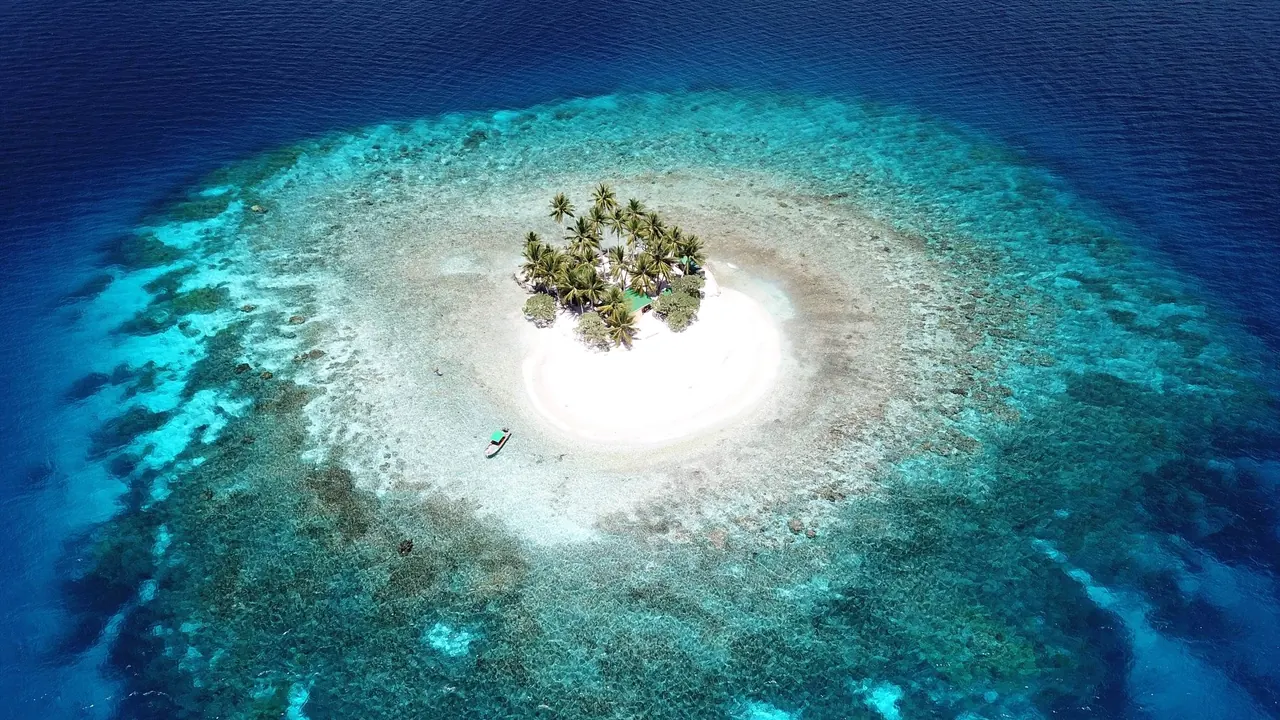
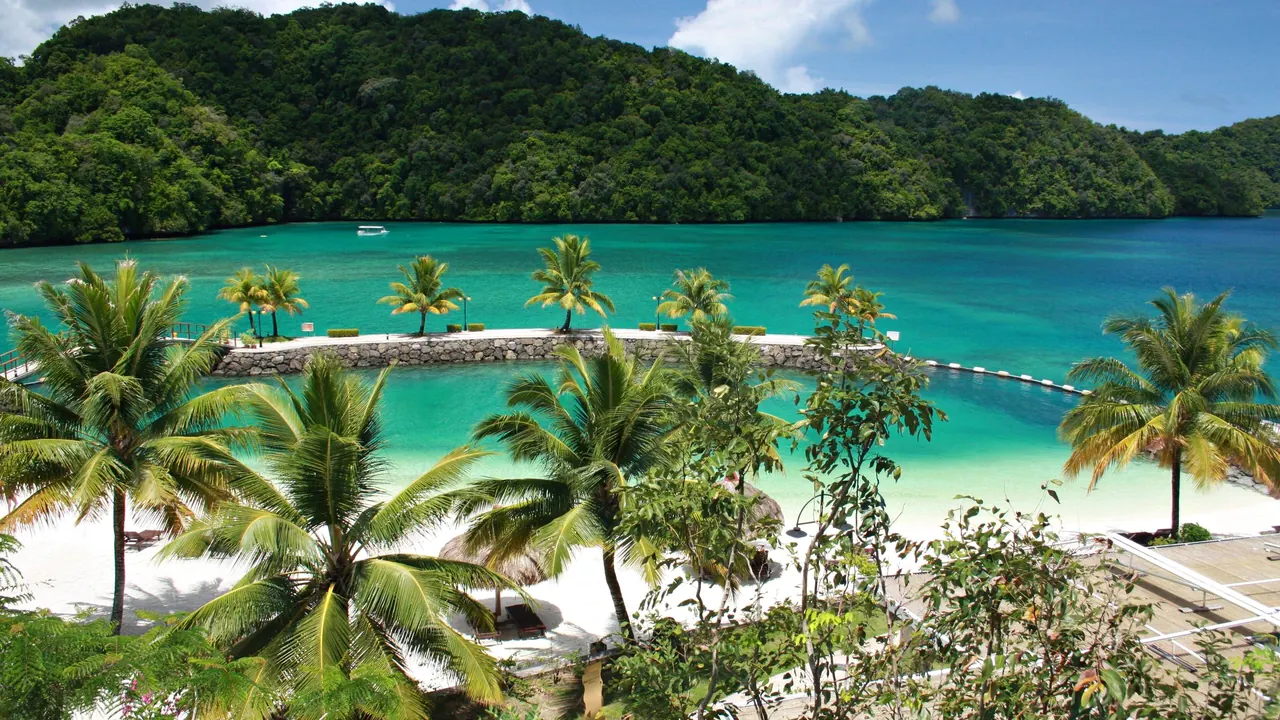
Photos: Chuuk Lagoon by Motoki Kurabayashi, CC BY-SA 4.0, cropped; Koror by ito1117, CC BY-SA 3.0, cropped.
Chuuk Lagoon or Koror?
Our verdict in twelve categories, each scored against the same fixed benchmark cities, and the climate month by month, so you can choose for your trip.
Choose Chuuk Lagoon for
- prices
Chuuk Lagoon is for divers with one goal, the sunken Japanese fleet. Freighters still holding trucks, tanks and aircraft parts lie on the lagoon floor, and nowhere else offers wreck diving on this scale. Almost everything else is thin. Food is basic, there is no nightlife, and the beaches need a boat. Come here if the wrecks are the whole point of the trip and you are happy to eat, sleep and dive.
Choose Koror for
- families
- wellness
- beaches
Koror gives a wider trip around the sea. The Rock Islands combine reef and wall diving with sharks and mantas, kayaking, marine lakes and white crescent beaches, and the town has a few more restaurants, a national museum, resort spas and day trips to Peleliu and Babeldaob. It suits divers who want variety, snorkelling couples and families with older children, and it is the better choice for anyone in the party who doesn't dive.
Scoreboard
Twelve categories on one fixed scale from 0 to 100. The shaded stretch is the gap between the two.
Your match
Pick a travel style or drag the sliders, and both match scores follow your weighting.
Wins on prices with your weighting.
Wins on families and wellness with your weighting.
What matters to you?
Category by category
What the scores mean for a trip.
Beaches & swimming
Both are about the water rather than the sand, and in both places the good beaches are reached by boat. Chuuk's are palm-topped coral islets on the edge of the lagoon. They are lovely and nearly empty, but usually a picnic outing, since Weno itself has rocky, mangrove-fringed shores.
Koror does better. The Rock Islands have many small white crescents under limestone cliffs, and they are part of the normal round of snorkelling and kayak tours. Resorts on Arakabesang and Malakal also have sand on the main islands, so a beach day takes less planning.
Food & drink
Neither place is a food destination, but Koror gives you more choice. Its Japanese legacy shows in sashimi, bento and noodle counters, and the main road has Filipino, Korean, Thai and American-style diners, with coconut crab and taro on some menus.
In Chuuk you mostly eat at your dive hotel or on the boat: imported rice, tinned goods and simple plates, rescued by fresh reef fish and tuna. You will want to eat out in Koror. In Chuuk you won't have the option.
Culture & sights
Both take a morning or two on land, but the heritage differs. Chuuk's is all Pacific War: coastal guns in hillside caves, the stone lighthouse at Sapuk and a blast-proof Japanese building on Weno, with no museum to give the context.
Koror tells the longer story. The Belau National Museum covers the Spanish, German, Japanese and American periods and has a painted bai meeting house in its grounds, and the Etpison Museum adds shell money and carvings. It is the better place to learn about the islands themselves rather than only about the war.
Nightlife
Both places go to bed early because the dive boats leave at dawn. In Koror there are at least a few bars on the main street, drinks by the water at the resorts and weekend karaoke rooms. In Chuuk, alcohol is restricted in parts of the state, so evenings end over dinner at the hotel.
Nature & outdoors
These are two of the Pacific's great dive areas, but they offer different things. Chuuk is about history underwater: coral-covered freighters still holding tanks and munitions, with sharks in the reef passes. Anyone who doesn't dive will see little of it.
Koror covers more ground. Blue Corner and German Channel bring mantas, sharks and big schools of fish, there are sheltered reefs for beginners, and kayaking, Jellyfish Lake and the Milky Way give snorkellers and non-divers full days too. Babeldaob adds mangrove river trips and the Ngardmau waterfall walk.
Day trips
Koror has the stronger outings. Peleliu, an hour away by speedboat, keeps tanks, bunkers and memorials from one of the war's fiercest battles in its jungle. Babeldaob, across the bridge, has the Badrulchau monoliths, the bai houses in Airai and the capitol at Melekeok.
From Chuuk, every trip is a boat across the lagoon to quiet villages on Tonoas, Fefen or Uman. The old Japanese base ruins on Tonoas are the main sight.
Good for families
Koror is the more realistic choice with children. It is safe and quiet, the reef centre's aquarium is a good start, and calm lagoons with turtles suit confident young swimmers. Long, choppy boat days still make it better for older children than toddlers.
Chuuk is harder going. Nothing is made for children, the roads and boats take stamina and medical help is far away. It is really only for certified teenage divers or strong snorkellers.
Getting around
On both, the dive operator collects you and handles the boats, and moving around on your own is the hard part. On Weno you rely on shared taxis and hotel vans along potholed roads, and every other island needs a boat. Koror strings out along one causeway road with no buses, but taxis are easy to find and a hire car opens up Babeldaob.
Shopping & style
There is little to buy in either place, though Koror has a little more. Its general stores are better stocked, and it has one craft worth seeking out, the carved Palauan storyboard, which carvers make showing legends and village life. Chuuk offers carved love sticks, weaving and shell work from the hotels or the makers. Anything else, dive spares included, you should bring with you.
Affordability
Both are expensive trips for similar reasons, long flights and daily boat diving, but the money goes in different places. In Chuuk the hotels on Weno are modest and the liveaboard boats are the big expense. In Koror the rooms themselves are costly for what you get, and Rock Islands permits and an arrival environmental fee come on top. Local diners and taxis there are more reasonable.
Live music & performing arts
Neither has a theatre or a regular music venue. Chuukese songs and dances belong to church and community life and you'd see them only by chance. Koror gives you a slightly better chance of catching Palauan chant and dance, at cultural festivals or a resort dance evening.
Wellness & relaxation
Koror is the more restful of the two. A few resort hotels have proper spas with coconut and plant-based treatments, and days on the water followed by a hotel pool are easy to put together.
Chuuk has no spas, and Weno is a working, untidy town rather than a resort. With several dives a day it is an active trip, and the real quiet comes on the outer islets.
When should you go?
Pick your month. The climate figures are measured averages, not a forecast.
Chuuk Lagoon in July
Koror in July
Daytime high, °C
Rainfall in the month, mm
Temperature and rainfall are climate normals, averaged over the years shown. Chuuk Lagoon: 1991-2020 normals, Weno Island, Chuuk Int. Airp. (1.4 km from centre). Koror: 1991-2020 normals, Babelthuap Island, Babelthuap/Koror Airport (6.4 km from centre).
Neither place has a cool or dry season worth the name. Both stay hot every day of the year, a little above 30°C, so walking around town is sticky in any month, and the water is warm enough to swim year-round. Rain falls heavily in every month. In Chuuk the wettest stretch runs from June to September, peaking around 380mm in September, and February is a touch drier. Sunshine stays fairly even, with December the dullest month.
Koror's year swings more. March is its driest and sunniest month, at about 194mm of rain, and February to April is the best time for calm days on the water. From June to August the rain is at its heaviest, above 400mm in July, and the skies are greyer. If you can only go early in the year, Koror benefits more from that timing than Chuuk does.
Which traveller are you?
For divers who come for wrecks, Chuuk Lagoon is the place. More than fifty ships and many aircraft lie in warm, sheltered water, some within reach of recreational divers and some deep enough for technical divers, and diving here is possible all year.
On a beach and sun trip, Koror is the better pick. The Rock Islands have white sand under limestone cliffs and reefs right off the boat. Chuuk's sandbars are lovely, but Weno has almost no beach, and building a stay around the sand is hard.
On a family trip with children, Koror is clearly easier. It has an aquarium, turtle-spotting boat trips and calm lagoons for confident swimmers. Chuuk has nothing made for children, and its medical care is basic and a long way from specialist help.
Before you go
| Measure | Chuuk Lagoon | Koror |
|---|---|---|
| Official language | English | English, Japanese, Palauan |
| Currency | US Dollar (USD) | US Dollar (USD) |
| Sockets | AB120 V, 60 Hz | AB120 V, 60 Hz |
| Driving side | Right | Right |
| Time zone | UTC+10 | UTC+9 |
| Emergency number | 911 | 911 |
| Elevation | - | 22 m |
| Main airport | Chuuk International Airport (TKK)7 non-stop destinations | Roman Tmetuchl International Airport (ROR)7 km from centre7 non-stop destinations |
| Public holidays this year | 8 days | 11 days |
By the numbers
| Measure | Chuuk Lagoon | Koror |
|---|---|---|
| Population | 41,745 | 8,744 |
| People per km² | 448 | - |
| Museums within 10 km | - | 2 |
| UNESCO World Heritage sites within 50 km | - | 1 |
| Swim season, months above 21 °C | 12 months | 12 months |
Where else could you go?
Every comparison below shares a destination with this one, so you can follow Chuuk Lagoon or Koror somewhere new.