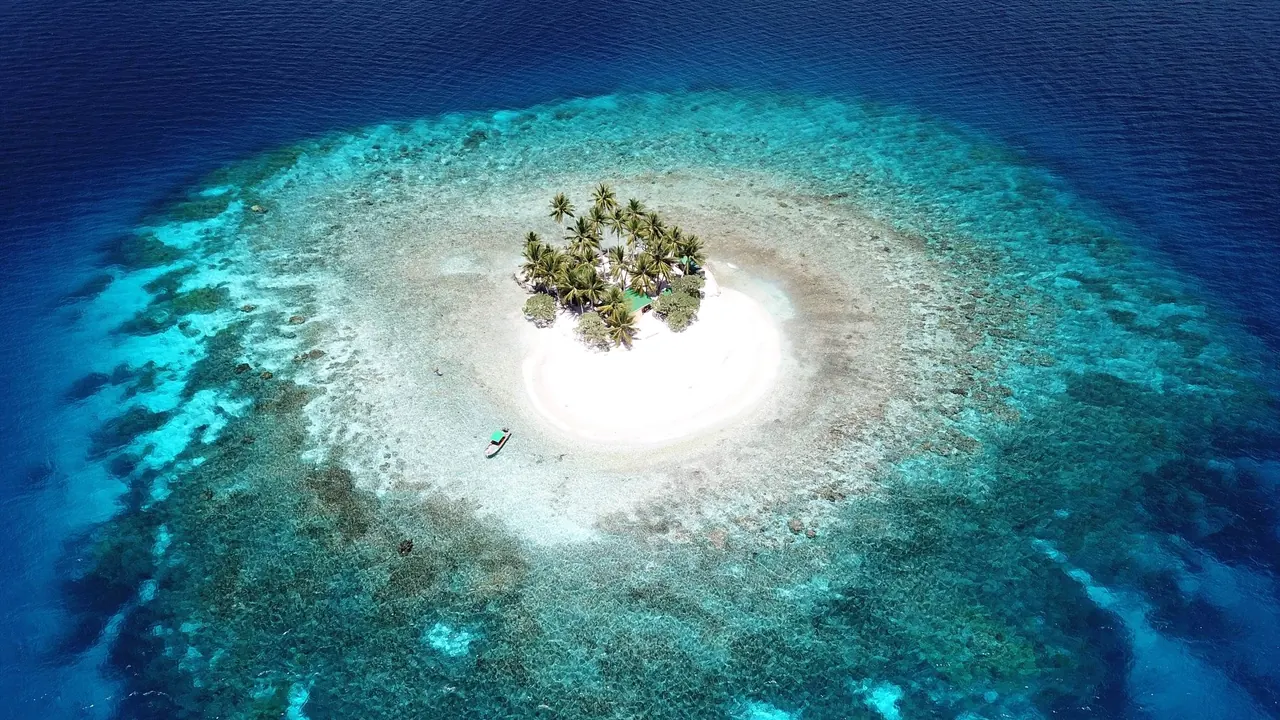
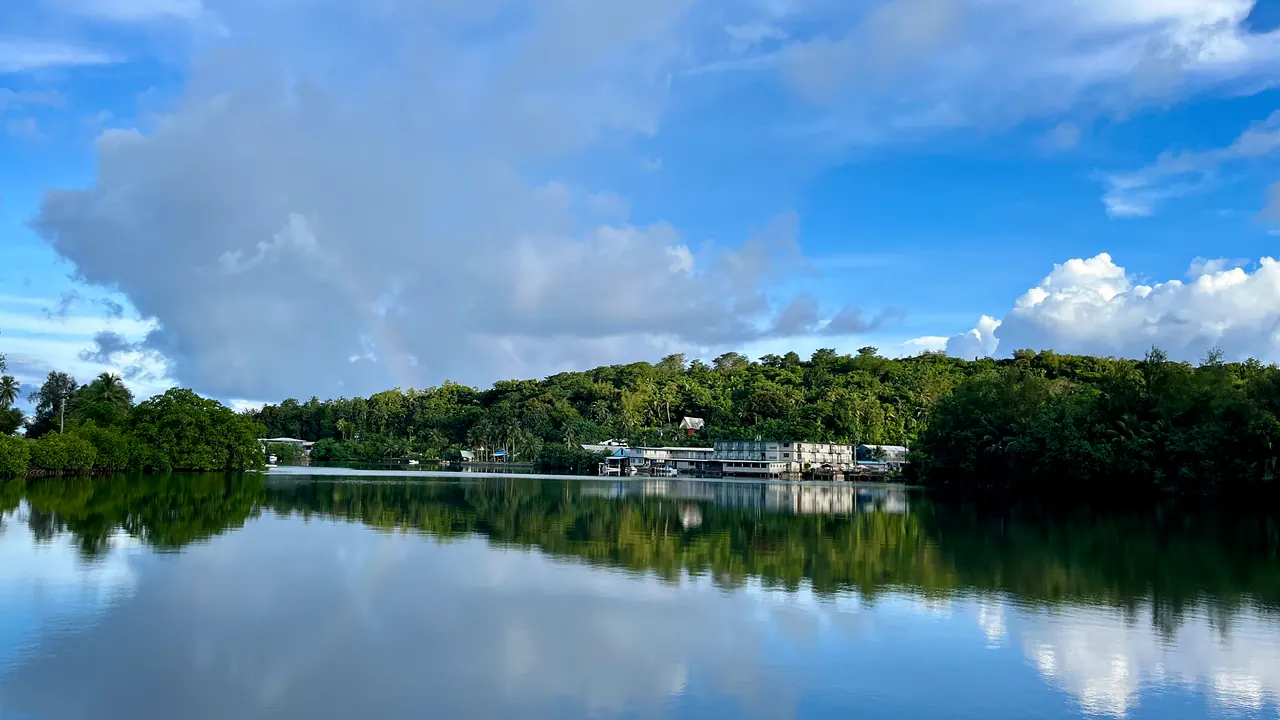
Photos: Chuuk Lagoon by Motoki Kurabayashi, CC BY-SA 4.0, cropped; Yap by W1K1L1By4N, CC BY-SA 4.0, cropped.
Chuuk Lagoon or Yap?
Our verdict in twelve categories, each scored against the same fixed benchmark cities, and the climate month by month, so you can choose for your trip.
Choose Chuuk Lagoon for
- nature and the outdoors
- day trips
- beaches
Chuuk Lagoon is the choice if the trip is about wreck diving. The sunken Japanese fleet on the lagoon floor is the reason people cross the Pacific to get here. Freighters still hold trucks and aircraft parts under the coral, at depths for both recreational and technical divers. The lagoon also gives Chuuk the better sand, on empty outer islets reached by boat, and more places to reach in a day. Above the water there is very little, and anyone who does not dive will run out of things to do quickly.
Choose Yap for
- culture and sights
- wellness
- live music and the arts
Yap suits a traveller who wants reefs and a living culture in the same stay. Manta rays gather in its reef channels all year, and between dives you can visit stone money banks, thatched men's houses and village dances in traditional dress. It is also the quieter and easier island: Colonia is walkable and the northern villages are a short drive away. What you give up is the wrecks, and there are even fewer places to go beyond the main island.
Scoreboard
Twelve categories on one fixed scale from 0 to 100. The shaded stretch is the gap between the two.
Your match
Pick a travel style or drag the sliders, and both match scores follow your weighting.
Wins on nature and the outdoors and day trips with your weighting.
Wins on culture and sights and wellness with your weighting.
What matters to you?
Category by category
What the scores mean for a trip.
Beaches & swimming
Neither suits a beach vacation, but Chuuk Lagoon's outer islets give it the edge. These are palm-topped sandbars of white coral sand with snorkelling straight off the shore, nearly empty, and reached by boat as a picnic day out. Weno itself has rocky shores fringed with mangrove.
Yap's sandy stretches are smaller and lie mostly in the north, around Maap and Bechiyal. The wide reef flats mean a long wade at low tide before the water is deep enough to swim. Beaches belong to villages, so you ask permission and pay a customary fee first.
Food & drink
Food is no reason to pick either island. Both depend on hotel kitchens, reef fish, rice and whatever supplies are shipped in. On Chuuk more meals are eaten on dive boats or at the Weno hotels, with little to drink beyond beer. Yap has a few small places in Colonia besides the hotels, and village visits are the chance to taste taro, breadfruit and fish cooked the traditional way.
Culture & sights
Yap has far more to see, because its traditions are still lived. Huge stone money discs, quarried long ago in Palau, stand in village banks at Kadai, Okau and Gachpar, next to thatched men's houses and old stone paths through the forest. Visits are arranged and often guided, and a few days spent there teach a respectful visitor a great deal.
Chuuk's sights on land are almost all from the war: coastal guns in hillside caves, the stone lighthouse at Sapuk and the blast-proof Japanese building that a mission school took over. Chuukese village life is not set out for visitors, and a non-diver will see it all in a morning or two.
Nightlife
Both islands go quiet early. On Chuuk, alcohol is restricted in parts of the state and the few places that serve it close early. On Yap, a drink at a hotel bar in Colonia over dive talk is about as late as it goes. Neither suits anyone who wants to go out.
Nature & outdoors
Both are diving trips first, but Chuuk Lagoon's sunken fleet puts it ahead. More than fifty ships and many aircraft lie on the lagoon floor, and freighters still hold trucks, tanks and munitions under the coral. The wrecks lie at depths for recreational and technical divers alike, and the passes in the barrier reef add sharks and open-water fish.
Yap's diving is about living reef rather than wrecks. Resident manta rays visit the cleaning stations in Mi'l and Goofnuw channels in every month, and there are coral walls and drop-offs with few other divers around. On land Yap is gentler, with mangrove channels to kayak and stone paths to walk, while Chuuk's steep green islands offer only a few rough walks.
Day trips
Chuuk Lagoon has more to fill a day, because the lagoon itself is the route. Boats run to Tonoas and the ruins of the Japanese base, to Fefen and Uman for quiet villages and more wartime remains, and to the outer islets for picnics. On Yap the sightseeing happens on the main island itself. Outer atolls such as Ulithi lie hundreds of kilometres away and are reached only by occasional small planes or the supply ship.
Good for families
Both are hard places to bring young children: nothing is made for them, medical care is basic and the journey is long. The difference is what older children get. On Chuuk there are boat picnics to the islets, and certified teenage divers can see the shallower wrecks. On Yap there is a safe, unhurried island whose village culture is built around family, though its beaches are few and shallow.
Getting around
Yap is easier to get around. Colonia is walkable, and the quiet roads to Maap or Bechiyal take well under an hour by rental car or taxi. There is no public transport, many side roads are rough, and village land is not for wandering onto.
On Chuuk, Weno's roads are potholed and pavements are rare. Transport means shared taxis and hotel vans, and anywhere else in the lagoon needs a small boat. That works smoothly on a dive package but makes independent travel slow.
Shopping & style
There is almost nothing to buy on either island, so pack everything, dive gear spares included. Only the souvenirs differ. Chuuk has carved love sticks, woven items and shell work. Yap has woven bags, lava-lavas and small carved stone money pieces, sold at hotels and cultural centres.
Affordability
Both are costly trips for the same reasons: long flights across the Pacific, imported food and boat diving almost every day. On Chuuk the Weno hotels are simple and moderately priced, but the liveaboard boats most wreck divers choose cost a lot. On Yap the few small hotels are priced as dive resorts, and village fees add up.
Live music & performing arts
Yap has a real performing tradition: standing, sitting and bamboo dances in traditional dress, with chanted songs that carry history. The best time to see them is Yap Day in early March, when villages gather in Colonia, and hotels can sometimes arrange a village dance. On Chuuk, song and dance belong to church and community occasions, and a visitor sees them only by chance.
Wellness & relaxation
Neither island has spas or a bathing culture, but Yap is more restful. Few visitors, little traffic and slow village life make it easy to switch off between dives. Chuuk's base, Weno, is a working and untidy town, and a schedule of early boats and several dives a day keeps you busy. Its quietest hours are out on the islets.
When should you go?
Pick your month. The climate figures are measured averages, not a forecast.
Chuuk Lagoon in July
Yap in July
Daytime high, °C
Rainfall in the month, mm
Temperature and rainfall are climate normals, averaged over the years shown. Chuuk Lagoon: 1991-2020 normals, Weno Island, Chuuk Int. Airp. (1.4 km from centre). Yap: 1991-2020 normals, Yap Island, Yap Int. Airp. (6.1 km from centre).
Both islands are hot in every month, with daytime highs of 30°C to 31°C, and the sea is warm enough for swimming all year, so there is no cool season to plan around. The midday heat and humidity make walking tiring at any time, so land outings work best in the morning. The real difference is rain. Around Weno, Chuuk is wet in every month and wettest from June to September, peaking near 382mm in September. February and March are a little drier and sunnier, and December has the least sunshine.
Around Colonia, Yap has a clearer dry spell from February to April, when rainfall drops to about 140mm a month. That makes late winter and early spring its best months. A long wet season then runs from June to October, when Yap is as rainy as Chuuk or rainier.
Which traveller are you?
On a culture and arts trip, Chuuk Lagoon offers little on land beyond wartime gun emplacements, seen in a morning. Yap is the clear choice. Guided village visits show customs that are still kept, from stone money ownership to dances in traditional dress.
For an outdoors trip, which on both islands means time underwater, Chuuk Lagoon wins for divers drawn to wartime history, with enough wrecks to fill a week or more. Yap rewards those who would rather meet wildlife, above all its resident mantas.
On a relaxing and wellness trip, neither island offers any pampering, and on Chuuk the days are planned around the dive boats. Yap is the easier place to slow down, with gentle walks on village paths and hardly anyone else around.
Before you go
| Measure | Chuuk Lagoon | Yap |
|---|---|---|
| Official language | English | English |
| Currency | US Dollar (USD) | US Dollar (USD) |
| Sockets | AB120 V, 60 Hz | AB120 V, 60 Hz |
| Driving side | Right | Right |
| Time zone | UTC+10 | UTC+10 |
| Emergency number | 911 | 911 |
| Main airport | Chuuk International Airport (TKK)7 non-stop destinations | Yap International Airport (YAP)4 non-stop destinations |
| Public holidays this year | 8 days | 8 days |
By the numbers
| Measure | Chuuk Lagoon | Yap |
|---|---|---|
| Population | 41,745 | 6,000 |
| People per km² | 448 | 107 |
| Swim season, months above 21 °C | 12 months | 12 months |
Where else could you go?
Every comparison below shares a destination with this one, so you can follow Chuuk Lagoon or Yap somewhere new.
- Kororvs Yap
- Pohnpeivs Chuuk Lagoon
- Guamvs Yap
- Guamvs Chuuk Lagoon
- Kororvs Chuuk Lagoon
- Majurovs Chuuk Lagoon