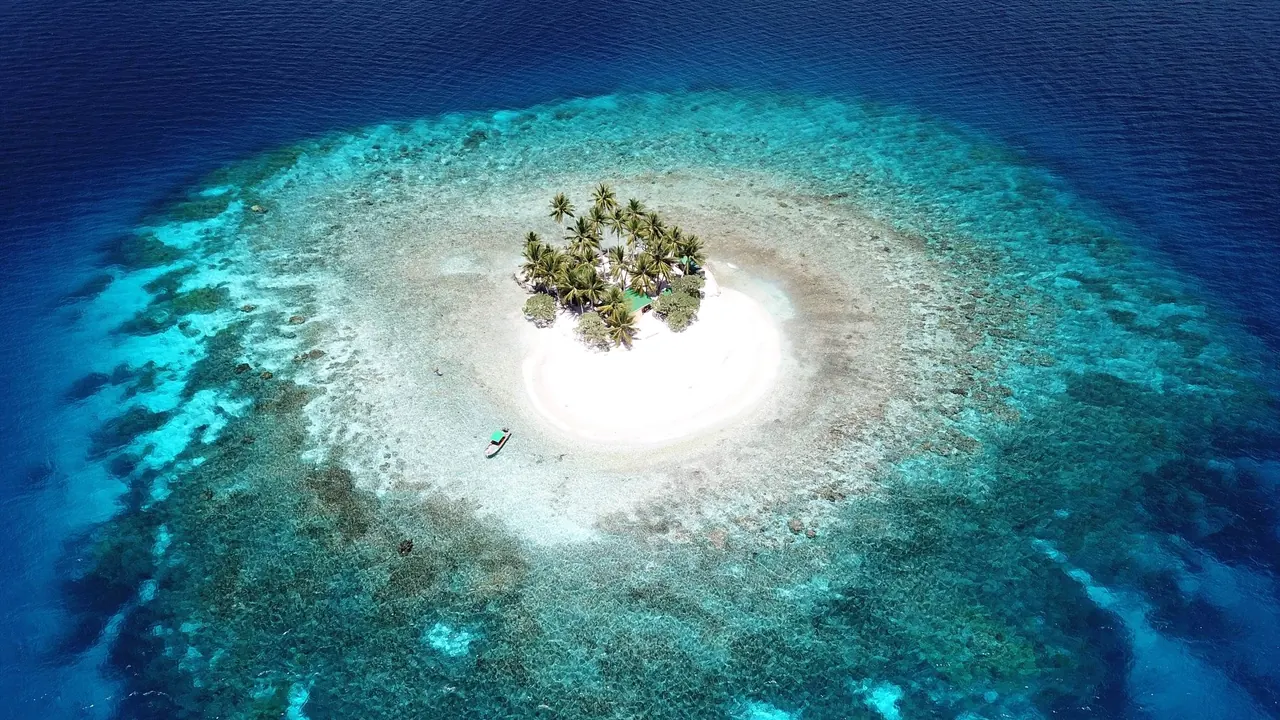
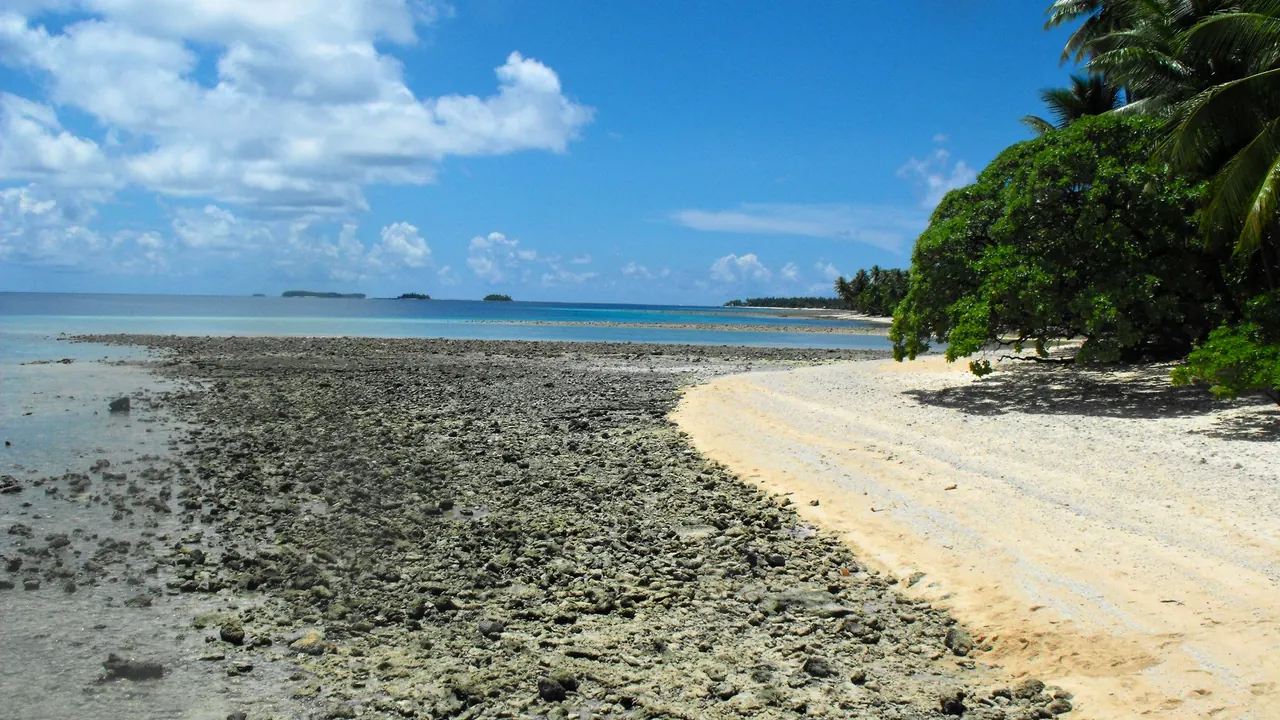
Photos: Chuuk Lagoon by Motoki Kurabayashi, CC BY-SA 4.0, cropped; Majuro by Cliff Hansen, CC BY-SA 4.0, cropped.
Chuuk Lagoon or Majuro?
Our verdict in twelve categories, each scored against the same fixed benchmark cities, and the climate month by month, so you can choose for your trip.
Choose Chuuk Lagoon for
- nature and the outdoors
- day trips
Chuuk Lagoon is for divers, and for wreck divers above all. The Japanese fleet on the lagoon floor, freighters still holding trucks and aircraft parts under a coat of coral, is something Majuro cannot offer, and boat trips to Tonoas and the high islands add some wartime history between dives. In return you accept plain food, rough roads and early nights, and a traveller who does not dive will run out of things to do within a couple of days.
Choose Majuro for
- getting around
- wellness
- beaches
Majuro is the better pick for a slower stay on the water without the dive schedule. Shared taxis on its single road make it easier to get about. Laura and islets such as Eneko are easier places for a swim, and the sunnier skies suit long afternoons by the lagoon. The Alele Museum explains Marshallese navigation. It is still a remote atoll with little to buy and little to do after dark, but it asks less of someone who never puts on a tank.
Scoreboard
Twelve categories on one fixed scale from 0 to 100. The shaded stretch is the gap between the two.
Your match
Pick a travel style or drag the sliders, and both match scores follow your weighting.
Too close to call, 1 point apart
Wins on nature and the outdoors and day trips with your weighting.
Wins on getting around and wellness with your weighting.
What matters to you?
Category by category
What the scores mean for a trip.
Beaches & swimming
Chuuk's base at Weno has a rocky, mangrove-lined shore, so every beach day means taking a boat to the reef islets on the lagoon's rim. Those palm-topped sandbars are lovely and nearly empty, with snorkelling straight from the sand, but each visit is a planned outing rather than an easy swim.
Majuro makes it simpler to reach sand. Laura, at the western end of the road, has a shaded lagoon beach you can drive to, and islets such as Eneko offer the same white sand and shallow reef water as Chuuk's. Neither place has resorts or facilities, so bring your own shade and food.
Food & drink
Both eat simply, from imported staples with fresh reef fish and tuna as the high point. In Chuuk you eat at the dive hotels or on the boat, so meals follow the dive schedule. Majuro has a few hotel dining rooms and Asian-run kitchens in town, tuna served as sashimi, and local dishes at church and community events, which gives you slightly more choice.
Culture & sights
Neither has much to see on land, and what there is differs in kind. Chuuk's sights are all from the Pacific War: coastal guns in hillside caves, the stone lighthouse at Sapuk and the blast-proof Japanese building now used by a mission school. Most of its history lies underwater.
Majuro's sights are more about Marshallese life. The Alele Museum explains navigation by stick chart and has outrigger canoes, and the nuclear tests on Bikini and Enewetak give the country's story its weight. In both places local culture is met in villages and churches rather than at sights.
Nightlife
There is effectively nothing to go out for in either. In Chuuk alcohol is restricted in parts of the state, the few places that serve it close early, and divers are in bed before the morning boat. Majuro at least has a few hotel and local bars, sometimes with karaoke, but most evenings there also end with dinner and a sunset.
Nature & outdoors
This is where Chuuk Lagoon pulls far ahead. The sunken Japanese fleet, ships and aircraft overgrown with coral and full of reef fish, makes it a destination divers plan years around. The sheltered water allows diving all year, and the reef passes add sharks and pelagic fish. The steep green high islands have a few rough walks.
Majuro's strengths lie elsewhere. It has healthy outer reefs and drop-offs, a lagoon suited to kayaking and sailing, and serious sportfishing for tuna, wahoo and marlin. The atoll is flat and narrow, though, with nothing to hike, and its wartime wreckage is a sideshow next to Chuuk's.
Day trips
Chuuk gives you more to do in a day, because its lagoon holds several high islands. Tonoas has the ruins of the old Japanese base, and Fefen and Uman have quiet villages and more wartime remains, all a short boat ride away.
From Majuro the choices are the drive to Laura or, with a hired boat and good weather, a crossing to Arno Atoll to see outer-island village life. Anywhere else in the Marshall Islands takes several days.
Good for families
Both are hard going with children, but Majuro is a little easier. Its calm, shallow lagoon and the warmth Marshallese culture shows towards children help, even with fast traffic on the one road and stray dogs to watch for.
Chuuk has less for younger children and its boats and roads take more stamina. Its one real draw is for older children: strong snorkellers enjoy the islet picnics, and certified teenage divers can visit some of the shallower wrecks. Medical care is limited in both.
Getting around
Majuro is far simpler. One road runs about 50km down the atoll, and shared taxis drive up and down it and stop for anyone who waves, so short trips in town need no planning. Only Laura and the lagoon islets need a car or a boat.
On Weno, the roads are potholed, pavements are rare and transport is informal taxis and hotel vans. Everything beyond the island goes by small boat. On a dive package the boat collects you at the jetty and it all runs smoothly, but exploring Chuuk on your own is slow.
Shopping & style
Majuro has a little more to buy, and the reason is its handicraft. Finely woven pandanus baskets, fans, mats and replica stick charts are sold through handicraft outlets and the museum. In Chuuk the choice comes down to carved love sticks, woven pieces and shell work from the hotels or the makers, and divers should bring their own spare parts.
Affordability
Both are expensive to reach and costly once there, for different reasons. In Chuuk the hotels are moderately priced, and the daily boat diving and liveaboard trips are what make it expensive. In Majuro the rooms cost more than their simple standard suggests and imported food adds up, though shared taxis are cheap. In both, the long flights across the Pacific are a large part of the cost.
Live music & performing arts
Neither has a stage or a venue, so any music you hear will be in a church or at a celebration. Majuro is the easier place to hear some, because hymns sung in Marshallese are a strong part of church life there. In Chuuk you would come across traditional songs and dances only by chance, at a community occasion or a hotel event.
Wellness & relaxation
Pampering is thin in both places, and an occasional massage is about all either can arrange. In Chuuk the setting works against rest as well. Weno is an untidy working town, and the real quiet is on the outer islets, which take a boat and a day set aside.
Majuro's town is just as crowded, but the whole atoll runs on island time, so unwinding takes less effort there. A day on an empty islet across the lagoon is easy to arrange, and that slow pace carries through the rest of your stay.
When should you go?
Pick your month. The climate figures are measured averages, not a forecast.
Chuuk Lagoon in July
Majuro in July
Daytime high, °C
Rainfall in the month, mm
Temperature and rainfall are climate normals, averaged over the years shown. Chuuk Lagoon: 1991-2020 normals, Weno Island, Chuuk Int. Airp. (1.4 km from centre). Majuro: 1991-2020 normals, Majuro Atoll, Marshall Islands Int. Airp. (11.1 km from centre).
Neither place has a season in the usual sense. Daytime highs sit around 30°C in every month at both, and the lagoon water stays close to 29°C, so swimming, snorkelling and diving work all year. The steady heat makes walking around town in the middle of the day hard work in any month, and early mornings and late afternoons are the better times to be out.
The difference is rain and cloud. Chuuk is wet all year and wettest from June to September, peaking at around 382mm in September, and it gets noticeably less sunshine than Majuro in every month. Majuro has a drier, brighter stretch from January to April, with about 203mm in January, the most sun in March and steadier trade winds for getting out on the water. Its rain then builds to a peak in October and November.
Which traveller are you?
On an outdoors trip built around the water, Chuuk Lagoon wins easily. More than fifty wrecks lie within reach, some suited to recreational divers and the deeper ones to technical divers, and the reef passes bring sharks. Majuro's outer reefs are good but are no match for that.
For a beach and sun trip, Majuro is the better choice. Laura gives you a shaded lagoon beach you can drive to, the islets across the lagoon add white sand, and its skies are clearly sunnier, while Chuuk's beaches all need a boat.
On a relaxing trip, Majuro suits the slower pace better. Its afternoons by the lagoon end in sunsets, and you can find calm out at Laura. Chuuk's days run on early boats and several dives, which keeps you busy rather than rested.
Before you go
| Measure | Chuuk Lagoon | Majuro |
|---|---|---|
| Official language | English | English, Marshallese |
| Currency | US Dollar (USD) | US Dollar (USD) |
| Sockets | AB120 V, 60 Hz | - |
| Driving side | Right | Right |
| Time zone | UTC+10 | UTC+12 |
| Emergency number | 911 | 911 |
| Elevation | - | 3 m |
| Main airport | Chuuk International Airport (TKK)7 non-stop destinations | Marshall Islands International Airport (MAJ)12 km from centre10 non-stop destinations |
| Public holidays this year | 8 days | 11 days |
By the numbers
| Measure | Chuuk Lagoon | Majuro |
|---|---|---|
| Population | 41,745 | 30,000 |
| People per km² | 448 | 3,093 |
| Museums within 10 km | - | 1 |
| UNESCO World Heritage sites within 50 km | - | 0 |
| Swim season, months above 21 °C | 12 months | 12 months |
Where else could you go?
Every comparison below shares a destination with this one, so you can follow Chuuk Lagoon or Majuro somewhere new.
- Tarawavs Majuro
- Pohnpeivs Chuuk Lagoon
- Nauruvs Majuro
- Guamvs Chuuk Lagoon
- Pohnpeivs Majuro
- Yapvs Chuuk Lagoon