Photos: Majuro by Cliff Hansen, CC BY-SA 4.0, cropped; Tarawa by KiribatiTraveller, CC BY-SA 4.0, cropped.
Majuro or Tarawa?
Our verdict in twelve categories, each scored against the same fixed benchmark cities, and the climate month by month, so you can choose for your trip.
Choose Majuro for
- beaches
- wellness
- families
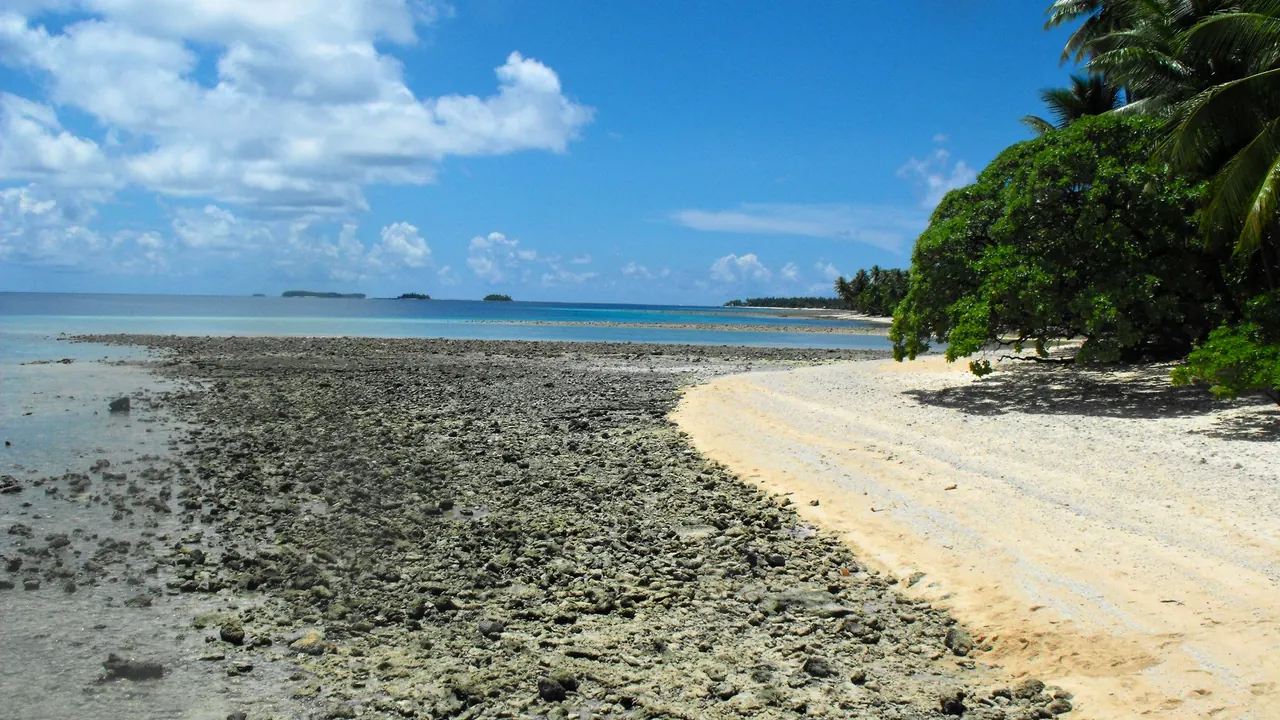
Majuro is the better choice if you want to get into the water. The lagoon beach at Laura is a drive away, and boats run out to islets such as Eneko for white sand and shallow reef. Divers, snorkellers and sportfishers have more to work with, with outer reefs, wartime wreckage and tuna and marlin offshore. The quiet western end of the atoll also gives you a little more room to slow down.
Choose Tarawa for
- prices
- live music and the arts
- culture and sights
Tarawa makes more sense when history and tradition are the point of going. The Second World War battlefield on Betio is still scattered with guns and bunkers, and the maneaba is where I-Kiribati village life and the island's striking dance tradition come together. Day-to-day costs run a bit lower too. The trade-off is that swimming near where you stay is unwise, so the beaches mean a boat trip to North Tarawa.
Scoreboard
Twelve categories on one fixed scale from 0 to 100. The shaded stretch is the gap between the two.
Your match
Pick a travel style or drag the sliders, and both match scores follow your weighting.
Wins on beaches and wellness with your weighting.
Wins on prices and live music and the arts with your weighting.
What matters to you?
Category by category
What the scores mean for a trip.
Beaches & swimming
Majuro is clearly the better place to swim. Laura, at the end of the road, has shaded lagoon sand you can drive to. Across the lagoon, islets such as Eneko have white sand and shallow reef water. Facilities are almost nonexistent, but the swimming itself is good.
Tarawa's lagoon is just as warm and colourful, but the populated south takes the runoff from a crowded strip, and the ocean side is mostly sharp reef flat. Its good beaches are in North Tarawa, so a swim there is a planned boat outing rather than something on the doorstep.
Food & drink
Neither atoll is somewhere to travel for food. Both rely on imports, hotel dining rooms and Asian-run kitchens, and the best meal on either is fresh tuna or reef fish. Majuro has a slight edge in how often you get that fish served well, often as sashimi. Tarawa serves it raw with coconut cream, alongside babai, the giant swamp taro grown in pits, though most traditional cooking stays at home or at community feasts.
Culture & sights
Sightseeing is thin on both, and Tarawa has a little more to walk round. The battlefield on Betio from November 1943 is still littered with coastal guns, bunkers and command posts. That makes for a concentrated, sobering morning that Majuro's Peace Park memorial doesn't match.
Majuro's strength is the Alele Museum, which explains how Marshallese navigators read ocean swells with stick charts. The story of the nuclear tests on Bikini and Enewetak adds real weight. Tarawa's Te Umanibong centre is smaller, but a village maneaba in use shows I-Kiribati life better than any exhibit.
Nightlife
After dark the two are much alike. On each you'll find a few hotel bars and simple local drinking places, with church and family setting the rhythm of the evening. Majuro adds the occasional karaoke night among expatriates and visiting fishermen. On either atoll, a sunset drink by the lagoon is the usual end to the day.
Nature & outdoors
These are both flat coral atolls with nothing to hike, so the outdoors means the water. What differs is the kind of water sport. Majuro is set up for divers and snorkellers, with healthy outer reefs, drop-offs and wartime wreckage. Sportfishing for tuna, wahoo and marlin is a serious draw there, and the 40km lagoon suits kayaking and sailing.
Tarawa is better known for bonefishing on its lagoon flats, and it has few organised dive or kayak operations. Its gentler appeal is in North Tarawa, where you can wade between palm-covered islets at low tide and watch seabirds on the quieter islets.
Day trips
Neither works as a base for exploring, and each comes down to one main outing. From Majuro it is a drive to Laura village or a boat across to Arno Atoll. From Tarawa it is a boat across the lagoon to the thatched villages of North Tarawa, with the longer run to Abaiang beyond. Tarawa's outing is the more striking contrast, because the quiet north feels so far removed from the crowded south.
Good for families
Both are warm towards children and neither has anything built for them. Majuro is the more workable of the two, because the lagoon offers calm, shallow water you can reach, and snorkelling and boat trips fill the days. The narrow road, stray dogs and limited medical care still make it hard work with small children.
On Tarawa the water near where families would stay is not safe for splashing, and hotel pools are few. Most families there are visiting relatives or working, and the trip that works is a boat to the beaches of North Tarawa.
Getting around
On both atolls one road does almost all the work, and you get about by waving down whatever passes. On Majuro that means shared taxis cruising the 50km stretch from town to Laura, though a hired car is easier for the far end. On Tarawa privately run minibuses ply the causeways from Bonriki through Bairiki to Betio.
Walking is a chore on both, with patchy pavements and close traffic. The real difference is that North Tarawa has no road link at all, so reaching it depends on boats, tides and weather.
Shopping & style
Shopping is a short errand on either atoll, and woven handicrafts are the only real find. Majuro has slightly more to look at, including replica navigation stick charts, sold through handicraft outlets and the Alele Museum. Tarawa's pandanus mats, shell jewellery and model canoes come mainly through women's cooperatives and the cultural centre.
Affordability
Neither is cheap, but Tarawa is gentler on the wallet day to day. Minibus fares are very low and local fish is inexpensive, so you mainly feel the cost in imported goods and chartered boats to the north.
On Majuro nearly all food is imported, so meals and groceries cost more than you might expect, and the few hotels charge well above their standard. Diving, fishing and boat hire add up fast, and only the shared taxis count as a bargain.
Live music & performing arts
Neither atoll has a theatre, a concert hall or anything on a regular programme, so on both, live performance comes down to being in the right place on the right day. On Majuro that usually means church, where congregations sing hymns in Marshallese with real force. Traditional dances and songs come out on national days and at community celebrations, but there is little to plan a visit around.
Tarawa's tradition is the stronger one, and you have a better chance of timing a visit to see it. Kiribati dance is stylised and almost statuesque, with sudden, precise turns of the arms and head set against the voices and clapping of a choir gathered on the maneaba floor. Weddings, church gatherings and village festivities all bring it out, and the big competitions fall at a fixed point in the national calendar. Failing that, an invitation from a local host is the surest way in.
Wellness & relaxation
For a restful stay, Majuro is the easier choice. Neither offers spas, but Majuro's island pace, slow lagoon afternoons and the calm around Laura or on an empty islet are easier to reach, and an occasional massage is on offer.
Tarawa's south is hot and noisy with traffic. Its calm is in North Tarawa's basic guesthouses, where shade, a hammock and silence after dark are all there is. That means switching off rather than being looked after.
When should you go?
Pick your month. The climate figures are measured averages, not a forecast.
Majuro in July
Tarawa in July
Daytime high, °C
Rainfall in the month, mm
Temperature and rainfall are climate normals, averaged over the years shown. Majuro: 1991-2020 normals, Majuro Atoll, Marshall Islands Int. Airp. (11.1 km from centre). Tarawa: 1991-2020 (sunshine 1981-2010) normals, Tarawa (7.2 km from centre).
Both atolls sit close to the equator, so the heat hardly moves. Daytime highs stay between 30°C and 32°C, and the lagoon is warm enough to swim in every month, though walking far in the middle of the day is tiring at any time of year. What changes is the rain. Majuro is wet all year and gets wetter as the year goes on. January to March is its driest stretch, and March is its sunniest month. From September to November more than 320mm falls each month, and November and December have the greyest skies.
Tarawa runs on almost the opposite pattern. It is at its best in the second half of the year, when rain drops to about 88mm in November and October has the most sunshine, while December, January, March and April are noticeably wetter. If you can only choose the season, go to Majuro early in the year and Tarawa late in the year.
Which traveller are you?
On a beach and sun trip, Majuro is the clear pick. The lagoon sand at Laura is reachable by road, and boats run to palm-fringed islets like Eneko. On Tarawa, visitors are advised to stay out of the water near South Tarawa, and every proper beach means a boat ride north.
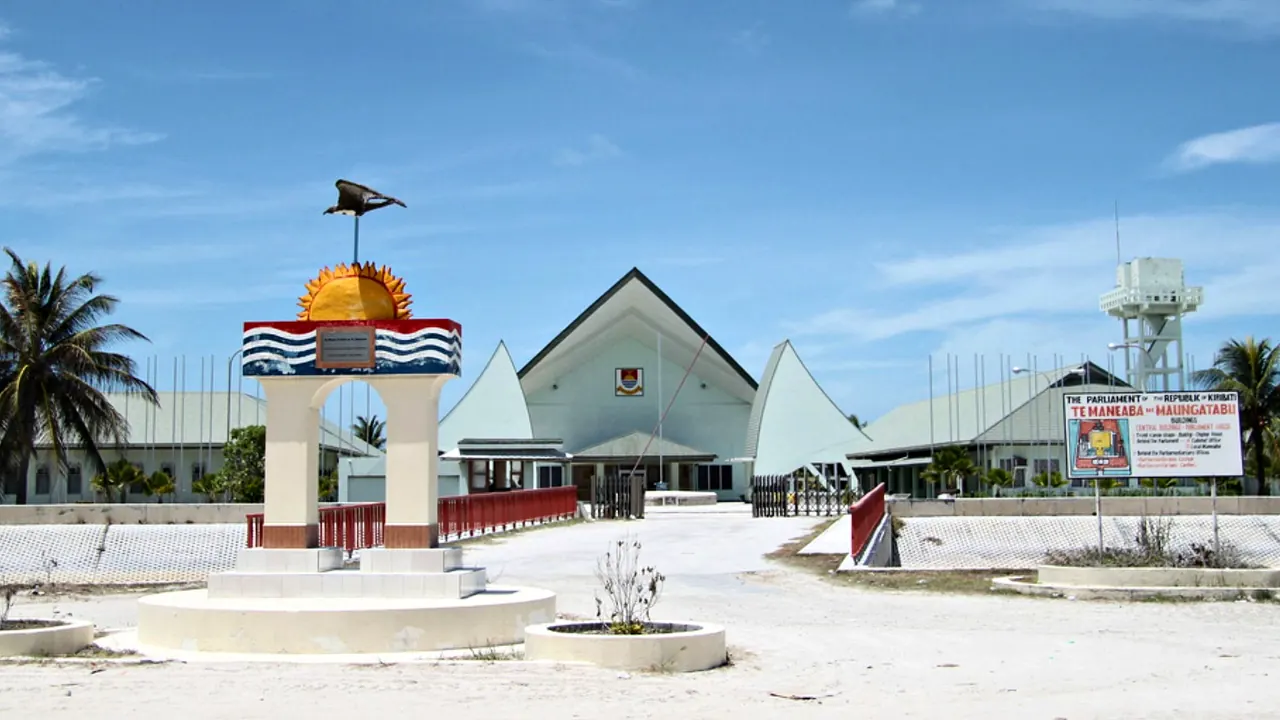
For a culture and arts trip, Tarawa gives you more. You can spend a morning among the Japanese guns and bunkers on Betio, see the parliament built as a maneaba and, if your timing is right, catch Kiribati dancing at its strongest around Independence Day in July.
On a trip on a tight budget, Tarawa is the easier of two expensive places. Minibus rides are very cheap and local fish costs little. Majuro's thinly stocked hotels and imported food push daily costs higher, although its shared taxis are good value.
Before you go
| Measure | Majuro | Tarawa |
|---|---|---|
| Official language | English, Marshallese | English, Gilbertese |
| Currency | US Dollar (USD) | Australian Dollar (AUD) |
| Sockets | - | I240 V, 50 Hz |
| Driving side | Right | Left |
| Time zone | UTC+12 | UTC+12 |
| Emergency number | 911 | 999 |
| Elevation | 3 m | 3 m |
| Main airport | Marshall Islands International Airport (MAJ)12 km from centre10 non-stop destinations | Bonriki International Airport (TRW)20 km from centre7 non-stop destinations |
| Public holidays this year | 11 days | 16 days |
By the numbers
| Measure | Majuro | Tarawa |
|---|---|---|
| Population | 30,000 | 63,439 |
| People per km² | 3,093 | 4,015 |
| Museums within 10 km | 1 | 0 |
| UNESCO World Heritage sites within 50 km | 0 | 0 |
| Swim season, months above 21 °C | 12 months | 12 months |
Where else could you go?
Every comparison below shares a destination with this one, so you can follow Majuro or Tarawa somewhere new.