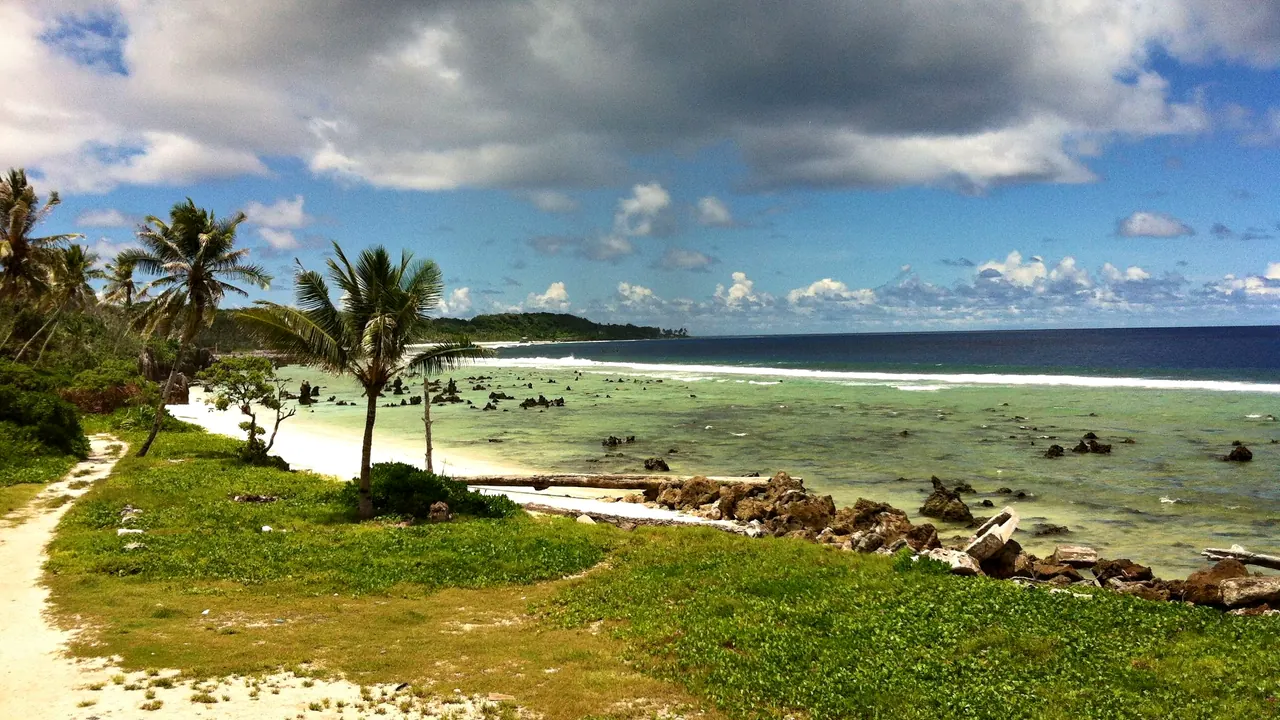
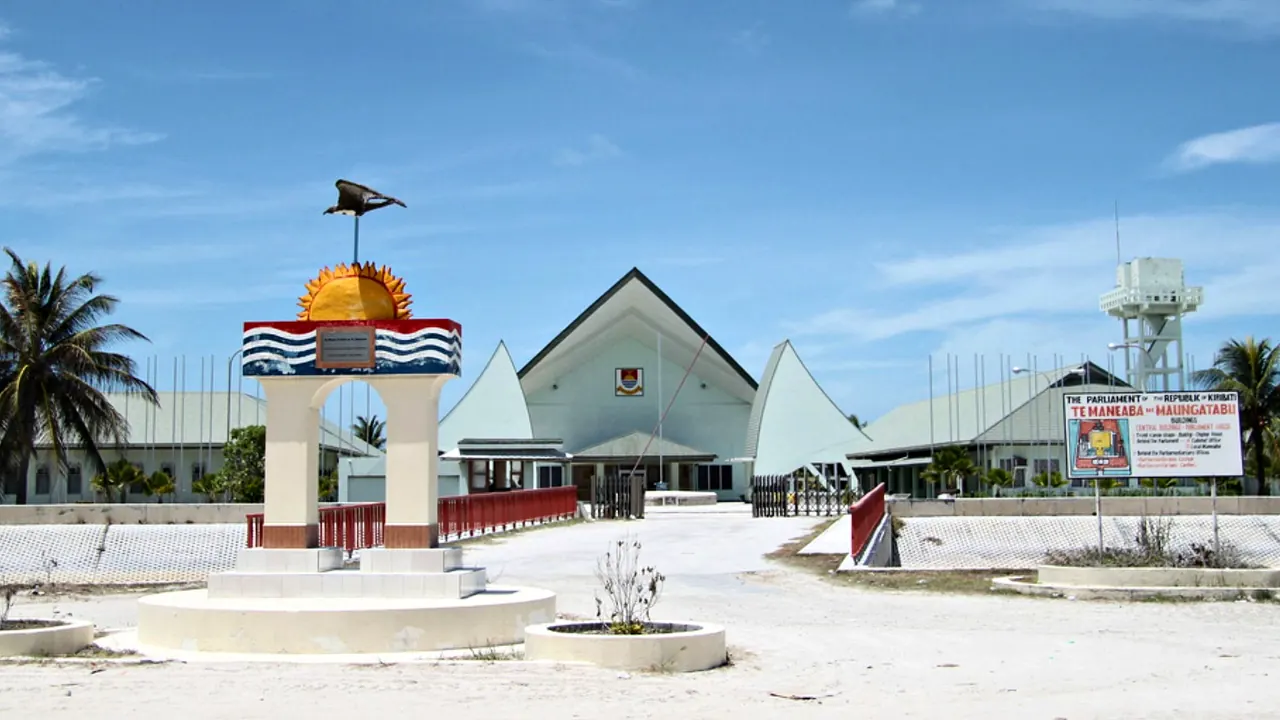
Photos: Nauru by Sean Kelleher, CC BY-SA 2.0, cropped; Tarawa by KiribatiTraveller, CC BY-SA 4.0, cropped.
Nauru or Tarawa?
Our verdict in twelve categories, each scored against the same fixed benchmark cities, and the climate month by month, so you can choose for your trip.
Choose Nauru for
- beaches
- families
- wellness
Nauru suits a traveller who is curious about an unusual place and content with very little to do. It is one small raised island where everything sits on a single coast road: Anibare Bay, the war guns on Command Ridge and the grey pinnacles of mined-out Topside. Quiet comes without effort anywhere you stay. Go for a few still days and the oddity of the place, not for variety.
Choose Tarawa for
- nature and the outdoors
- prices
- day trips
Tarawa gives more to a visitor willing to work for it. Behind the crowded, built-up south lies a real atoll: a turquoise lagoon, palm-covered islets in North Tarawa reached by boat, bonefishing on the flats and the Betio battlefield. Everyday costs are a little gentler, and with luck on timing you may see Kiribati dance in a maneaba. Most of what is best here is a boat ride from where you sleep.
Scoreboard
Twelve categories on one fixed scale from 0 to 100. The shaded stretch is the gap between the two.
Your match
Pick a travel style or drag the sliders, and both match scores follow your weighting.
Wins on beaches and families with your weighting.
Wins on nature and the outdoors and prices with your weighting.
What matters to you?
Category by category
What the scores mean for a trip.
Beaches & swimming
Both are warm-water places without an easy beach on the doorstep, but the problem is different on each. On Nauru you can swim close to where you stay: the boat harbours cut through the reef at Anibare and Aiwo are sheltered, and Anibare Bay gives you the white sand to look at, even if the open sea beyond the reef needs a calm day.
On Tarawa the water near the crowded southern islets is best avoided. The good sand is across the lagoon in North Tarawa, quiet, clear and shallow, but reaching it means arranging a boat for the day or a night.
Food & drink
Neither is anywhere to travel for food. Both run on Chinese-run takeaways, hotel dining rooms and imported tins, and both are at their best with fresh tuna served raw in coconut. Tarawa has a little more of its own behind that, with breadfruit, pandanus and babai, the pit-grown swamp taro, though it mostly gets cooked at home and at feasts rather than served to visitors.
Culture & sights
Each has a morning or a day of sights, and on both they are mostly Second World War remains. Nauru pairs Japanese guns on Command Ridge with its phosphate story: the cantilevers at Aiwo and the wrecked interior of Topside, a landscape that is a monument in its own right.
Tarawa's war history is heavier. Betio was the site of the November 1943 battle, and its bunkers and memorials near the landing beaches make for a sobering walk. It also gives a little more insight into how people live now, through the Te Umanibong cultural centre and the maneaba meeting houses still in use in the villages.
Nightlife
There is effectively no nightlife on either. On Nauru a drink at the hotel bar is the evening. Tarawa adds a few simple local drinking places along the southern road and sunset over the lagoon, but church and family still close the day early.
Nature & outdoors
Tarawa is far more rewarding outdoors. Once you cross to North Tarawa you have a classic atoll of palm and pandanus islets around a wide lagoon, sandbanks to wade between at low tide, bonefishing flats, seabirds and reef snorkelling when the sea allows.
Nauru's landscape is stranger but much smaller. There are the limestone pinnacles of Topside to scramble through and the palm-ringed Buada Lagoon, and its best outdoor feature is the sea dropping steeply off the reef, which brings deep-sea fishing for marlin and some wall diving. An active visitor runs out of things to do far sooner here.
Day trips
Nauru has nowhere to go beyond its own ring road, since the nearest land is a flight away. Tarawa at least has a real outing: the boat across the lagoon to the thatched villages of North Tarawa, and for the keen, the longer trip north to Abaiang atoll for a similar view of outer-island life.
Good for families
Neither has anything made for children, and on both medical care is basic. The difference is the water. Nauru's sheltered harbours give children somewhere to splash alongside local families, whereas Tarawa's populated shore is not safe for swimming and its heat is harder on small children. Tarawa's warmth towards children and the boat trip to North Tarawa's calm beaches are its own consolations.
Getting around
Both have one road and short distances, but you use it differently. Nauru's 19km loop can be driven in under half an hour and traffic is light, but with no buses and few taxis you will need a hire car or scooter arranged through the hotel.
On Tarawa, minibuses run the causeway road from Bonriki to Betio all day and stop wherever you wave, so no car is needed. The road is busier, though, and the trip to North Tarawa depends on boats and tides.
Shopping & style
On both, shopping means general stores full of imported groceries. Tarawa at least has something worth bringing home: woven pandanus mats, fans and baskets, shell jewellery and model canoes sold through women's cooperatives and the cultural centre. Nauru has no crafts for sale at all.
Affordability
Tarawa is the easier place to keep costs down. Getting around by minibus costs very little and local fish is cheap, though hotels charge a lot for basic rooms and boat charters to the north add up.
Nauru gives you less for more. Its few hotels and lodges are expensive for what they are, almost everything is imported, and a hire car is close to essential. The takeaways are reasonable and the sights are free, but there is no cheaper room to fall back on.
Live music & performing arts
Tarawa has the stronger tradition and better odds of seeing it. Kiribati dance, with its rigid bird-like poses and seated choirs clapping in harmony, is performed in the maneaba at weddings and celebrations, and above all at the Independence Day competitions in July. Nauruan song and dance also appear at national celebrations, but they are rarer and less of a draw. Neither has a theatre or any regular live music.
Wellness & relaxation
Neither has spas or treatments, so rest on both means quiet rather than pampering. On Nauru that stillness is everywhere, with little traffic and nothing to book. Tarawa's south is hot and noisy along its one road, and you have to cross to North Tarawa's simple guesthouses to find the hammocks, lagoon breezes and silence after dark.
When should you go?
Pick your month. The climate figures are measured averages, not a forecast.
Nauru in July
Tarawa in July
Daytime high, °C
Rainfall in the month, mm
Where the figures come from
Nauru has no weather station within reach, so its figures come from a gridded climate model rather than a measured record, and read a broad area rather than one spot.
Temperature and rainfall are climate normals, averaged over the years shown. Nauru: 2001-2020 normals, NASA POWER reanalysis grid, no weather station within 90 km. Tarawa: 1991-2020 (sunshine 1981-2010) normals, Tarawa (7.2 km from centre).
Neither place has a cold or cool season, and the sea sits around 29°C off both all year, so the beach calendar is really a rain calendar. Nauru is the milder of the two, with daytime highs of 28-29°C in every month. Its wetter stretch runs from December to March, and May to October is noticeably drier, which makes those months the better choice for driving the ring road and scrambling round Topside.
Tarawa is hotter, at 31-32°C, and the heat makes walking hard work in any month. Rain peaks around March, at about 247mm, and eases through the second half of the year to its lowest in November at about 88mm. September to November is the sunniest and driest spell, which also tends to mean calmer days for boat trips across the lagoon to North Tarawa.
Which traveller are you?
For an outdoors trip, Tarawa is the clear pick. The North Tarawa islets give you palm-covered shores to wade between at low tide, bonefishing on the lagoon flats and reef snorkelling on calm days. On Nauru the pinnacles of Topside are about the extent of it.
On a tight budget, Tarawa costs less from day to day. Minibus rides along the main road cost very little and local fish is inexpensive. Nauru has no cheaper tier of lodging at all, and on the island you rely on a hire car.
On a family trip with children, Nauru is the easier of two hard choices. Its sheltered boat harbours at Anibare and Aiwo are where local families swim each afternoon, while on Tarawa visitors are told to keep out of the water near the populated south.
Before you go
| Measure | Nauru | Tarawa |
|---|---|---|
| Official language | English, Nauruan | English, Gilbertese |
| Currency | Australian Dollar (AUD) | Australian Dollar (AUD) |
| Sockets | I240 V, 50 Hz | I240 V, 50 Hz |
| Driving side | Left | Left |
| Time zone | UTC+12 | UTC+12 |
| Emergency number | Police 110, ambulance 111, fire 112 | 999 |
| Elevation | - | 3 m |
| Main airport | Nauru International Airport (INU)7 non-stop destinations | Bonriki International Airport (TRW)20 km from centre7 non-stop destinations |
| Public holidays this year | 13 days | 16 days |
By the numbers
| Measure | Nauru | Tarawa |
|---|---|---|
| Population | 13,650 | 63,439 |
| People per km² | 644 | 4,015 |
| Museums within 10 km | - | 0 |
| UNESCO World Heritage sites within 50 km | - | 0 |
| Swim season, months above 21 °C | 12 months | 12 months |
Where else could you go?
Every comparison below shares a destination with this one, so you can follow Nauru or Tarawa somewhere new.