Photos: Funafuti by mrlins, CC BY 2.0, cropped; Tarawa by KiribatiTraveller, CC BY-SA 4.0, cropped.
Funafuti or Tarawa?
Our verdict in twelve categories, each scored against the same fixed benchmark cities, and the climate month by month, so you can choose for your trip.
Choose Funafuti for
- beaches
- wellness
- families
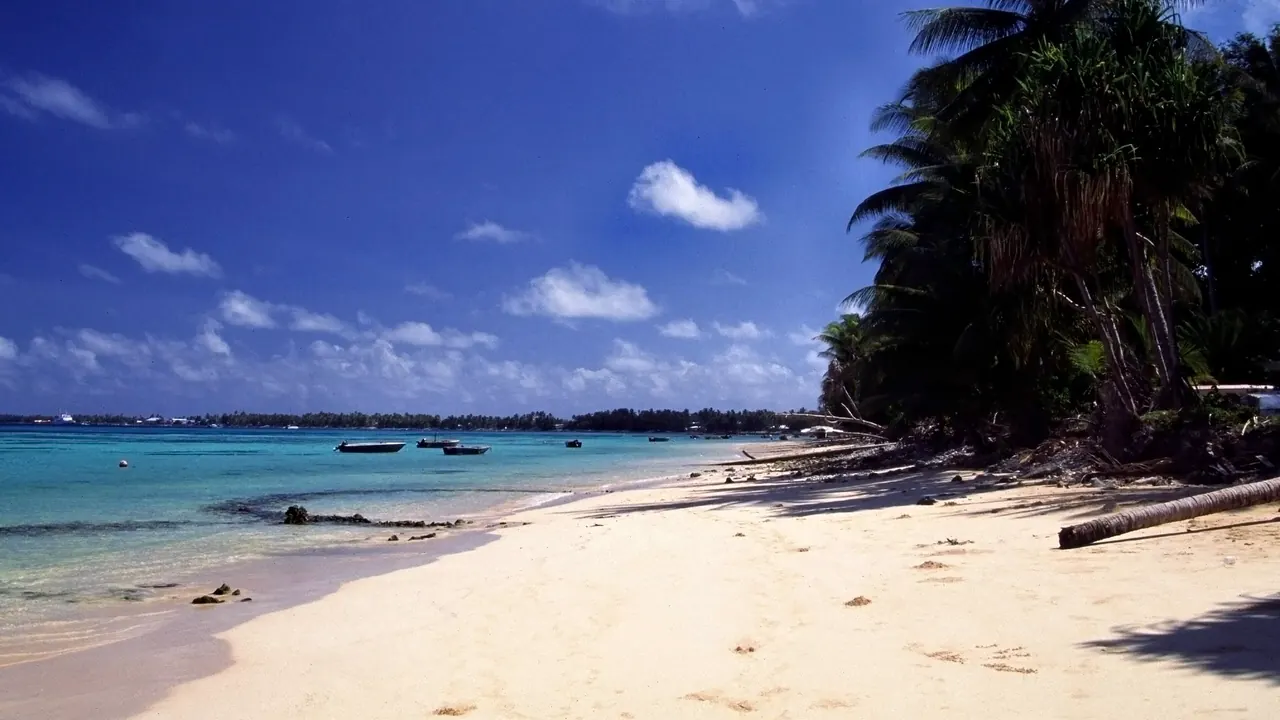
Funafuti is the better pick when the lagoon itself is the point of the trip. You can swim off the shore near Vaiaku in the evening, the protected islets of the conservation area have white coral sand a boat ride away, and the whole island moves slowly enough that doing very little comes easily. It is also kinder to children, with calm water and a runway that turns into a village playground at dusk.
Choose Tarawa for
- culture and sights
- day trips
- getting around
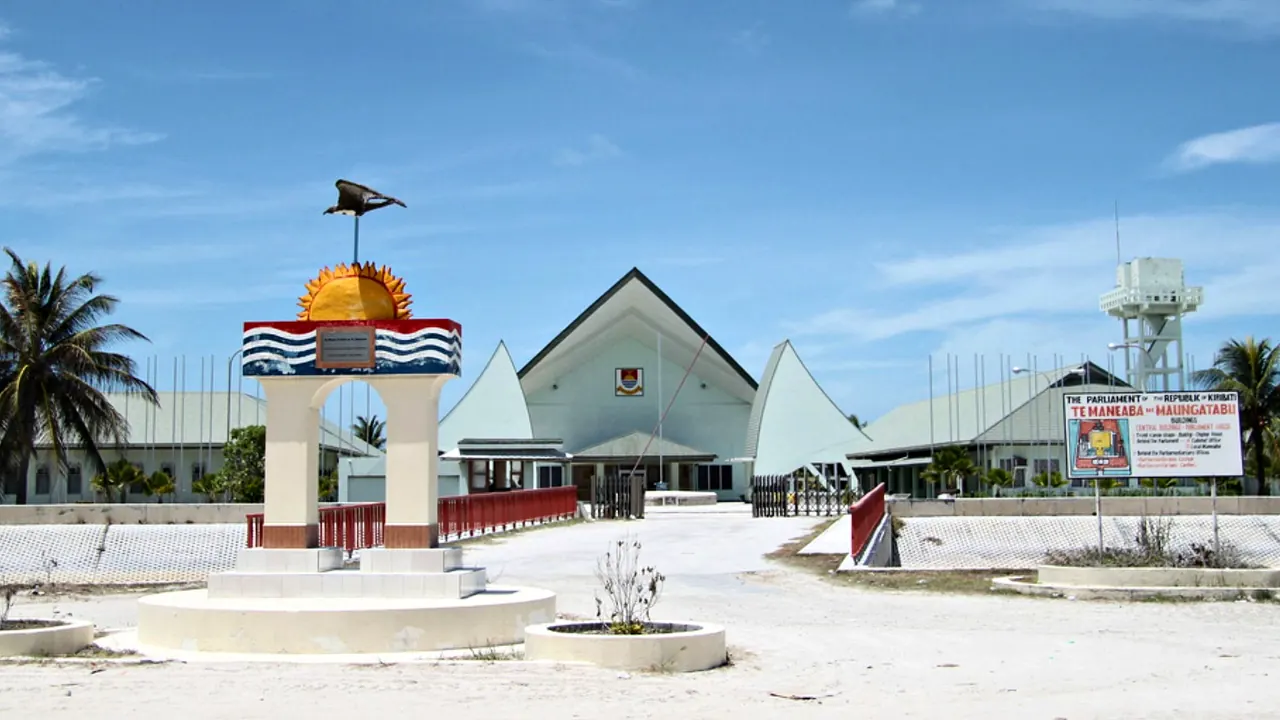
Travellers who want history and a little more to explore will get more from Tarawa. The wartime battlefield on Betio fills a serious morning, the villages of North Tarawa and the neighbouring atoll of Abaiang make outings Funafuti cannot offer, and minibuses cover the long southern strip with no effort. The catch is that swimming near where you stay is best avoided, so your beach days will be out in the north.
Scoreboard
Twelve categories on one fixed scale from 0 to 100. The shaded stretch is the gap between the two.
Your match
Pick a travel style or drag the sliders, and both match scores follow your weighting.
Too close to call, 1 point apart
Wins on beaches and wellness with your weighting.
Wins on culture and sights and day trips with your weighting.
What matters to you?
Category by category
What the scores mean for a trip.
Beaches & swimming
What separates the two is distance. In Funafuti the lagoon is a short walk from most guesthouses on Fongafale, calm and warm enough to stay in for an hour, though you do better swimming away from the most built-up stretch. The finest sand is further out, on the empty islets of the conservation area, and the boat ride across is worth giving a whole day to.
Tarawa has nothing like that on the doorstep. Waste from the busy southern islets ends up in the lagoon there, so visitors are steered away from it, and every swim starts with arranging a boat to North Tarawa. The beaches there are quiet and clear, but far enough away that many people stay the night. Neither atoll has sunbeds or anything else built for beachgoers.
Food & drink
Both atolls eat the same way: a few Chinese-run restaurants and takeaways, shops full of imported tins and frozen food, and very fresh tuna and reef fish as the high point. Tarawa also has hotel dining rooms and its raw fish dressed in coconut cream. Funafuti has kaleve, the sweet coconut-sap toddy. In both places the pit-grown swamp taro, called pulaka in one and babai in the other, is something you taste at a feast, not off a menu.
Culture & sights
Both atolls were shaped by the Second World War, but in very different ways. Funafuti was an American airbase, and its legacy is the runway and some borrow pits. Tarawa's Betio was a battlefield, and its coastal guns, bunkers and memorials make for a far more affecting walk.
Tarawa also has the Te Umanibong cultural centre and the parliament built in the form of a maneaba. Funafuti has the marker for the 1890s coral drilling that tested Darwin's theory of atolls, plus a small national library, and you can see all of it in a morning.
Nightlife
Neither place has a nightlife to speak of, so the difference lies in how evenings are spent. In Funafuti people gather on the runway and the lagoon front, and a weekend dance sometimes runs late. In Tarawa a night out means a hotel bar or a sunset drink by the lagoon, followed by an early night.
Nature & outdoors
These are two coral rings of much the same kind, and the difference is in what you do there. Funafuti's western rim is a protected conservation area where seabirds nest and green turtles feed, and you snorkel coral heads in the lagoon. Fongafale is so narrow in places that you see lagoon and ocean side by side.
Tarawa is more for anglers. Bonefishing on the lagoon flats and tuna trips are its strengths, and the palm-covered islets of North Tarawa can be waded between at low tide. In both places you arrange outings through locals, not operators.
Day trips
Tarawa at least has places to go. A boat across the lagoon takes you to the thatched villages of North Tarawa, and a longer crossing reaches Abaiang and its outer-island life.
Funafuti has no inhabited destination within reach. The islets around its lagoon are lovely but empty, and Tuvalu's other atolls are many hours away on an irregular ship.
Good for families
Funafuti suits children better, mainly because the water is usable. Calm lagoon swimming is on hand, and in the evenings visiting children join local families playing volleyball and football on the runway.
Tarawa is just as welcoming and safe day to day, but the water near the populated stretch is not a place to splash about. With few hotel pools, the one outing that really works is a boat to North Tarawa's beaches. Both have basic medical care and fierce sun.
Getting around
Tarawa is easier to get around. Minibuses run all day along the single causeway road from Bonriki through Bikenibeu and Bairiki to Betio, and you flag one down wherever you are. Walking is the hard part there, with few pavements and heavy traffic near Betio.
Funafuti has no buses and few taxis, so you rent a motorbike or bicycle to reach the ends of its 12km islet. Its small core around the airfield at Vaiaku is easy to walk, though. In both places, going anywhere across the lagoon means arranging a boat.
Shopping & style
Neither place is for shopping, and in both the only things worth buying are woven pandanus mats, fans and baskets and shell jewellery made by women's groups. Tarawa also has carved model canoes and sells crafts through its cultural centre. Funafuti adds Tuvalu's postage stamps, which collectors seek out.
Affordability
Costs are much the same in both, and in both your money buys little comfort. Tarawa's minibuses are very cheap and its local fish is inexpensive, which keeps everyday spending down. In Funafuti a scooter and a plate of fish and rice are just as modest, but the guesthouses and the one government hotel charge a lot for what they offer.
In either place, chartering a boat across the lagoon is the big extra cost and is easier shared, and the flights to get there make up most of the trip's cost.
Live music & performing arts
Fatele is all about speed. Singers seated around a box drum push the tempo faster and faster until the standing dancers are moving flat out. Kiribati dance works the other way: dancers hold stiff, bird-like poses broken by sudden jerks of the head and arms, while a seated choir claps and sings in close harmony.
Both are community occasions, not shows, seen in the meeting house at weddings, church gatherings and national celebrations. Tarawa gives you a fixed point to aim for, the dance and singing competitions around Independence Day in July. In Funafuti the music easiest to catch is the singing in church on Sunday mornings.
Wellness & relaxation
Funafuti makes rest easy because the whole island is unhurried. The day runs by the heat and the tide, and Sunday is kept as a day off by everyone. An evening in the shade by the lagoon is the nearest you get to a treatment, since neither atoll has spas.
In Tarawa you have to travel to find the same calm. South Tarawa, where most visitors sleep, is hot and crowded, with traffic noise along its single road. The peace is across the lagoon in North Tarawa, in plain guesthouses with a hammock, sea breezes and silent nights.
When should you go?
Pick your month. The climate figures are measured averages, not a forecast.
Funafuti in July
Tarawa in July
Daytime high, °C
Rainfall in the month, mm
Temperature and rainfall are climate normals, averaged over the years shown. Funafuti: 1991-2020 normals, Funafuti (2.1 km from centre). Tarawa: 1991-2020 (sunshine 1981-2010) normals, Tarawa (7.2 km from centre).
Neither atoll has a cool season. Daytime highs sit at 31 to 32°C every month in both, so the sea is warm enough for swimming all year, and walking is best kept to early morning and late afternoon whenever you go. Funafuti's lagoon runs slightly warmer, at around 30°C.
Rain is what sets the two apart. Funafuti is wet all year and wettest from December to March, when monthly totals reach about 368mm. It eases a little from May to November, and August and September bring the most sun. Tarawa is much drier. Its best stretch runs from September to November, with only 88mm in November and October the sunniest month, while December to April brings heavier showers.
Which traveller are you?
On a beach and sun trip, Funafuti is clearly the better choice. You can swim in the lagoon off Fongafale itself, and the islets of the conservation area offer clean white sand. In Tarawa you are advised to stay out of the water by the settlements.
For a culture and arts trip, Tarawa gives you more to see. Betio's Japanese guns, bunkers and landing-beach memorials are some of the Pacific war's most important sites, and there is the cultural centre at Bikenibeu and the maneaba-style parliament at Ambo as well.
On a relaxing and wellness trip, Funafuti is the calmer place to switch off. The whole island keeps a slow, tide-bound pace and a quiet Sunday. In Tarawa the south is crowded and noisy, and real quiet only starts in North Tarawa.
Before you go
| Measure | Funafuti | Tarawa |
|---|---|---|
| Official language | English, Tuvaluan | English, Gilbertese |
| Currency | Australian Dollar (AUD) | Australian Dollar (AUD) |
| Sockets | I220 V, 50 Hz | I240 V, 50 Hz |
| Driving side | Left | Left |
| Time zone | UTC+12 | UTC+12 |
| Emergency number | 911 | 999 |
| Elevation | 7 m | 3 m |
| Main airport | Funafuti International Airport (FUN)0 km from centre2 non-stop destinations | Bonriki International Airport (TRW)20 km from centre7 non-stop destinations |
| Public holidays this year | 11 days | 16 days |
By the numbers
| Measure | Funafuti | Tarawa |
|---|---|---|
| Population | 6,025 | 63,439 |
| People per km² | 2,510 | 4,015 |
| Museums within 10 km | 0 | 0 |
| UNESCO World Heritage sites within 50 km | 0 | 0 |
| Swim season, months above 21 °C | 12 months | 12 months |
Where else could you go?
Every comparison below shares a destination with this one, so you can follow Funafuti or Tarawa somewhere new.