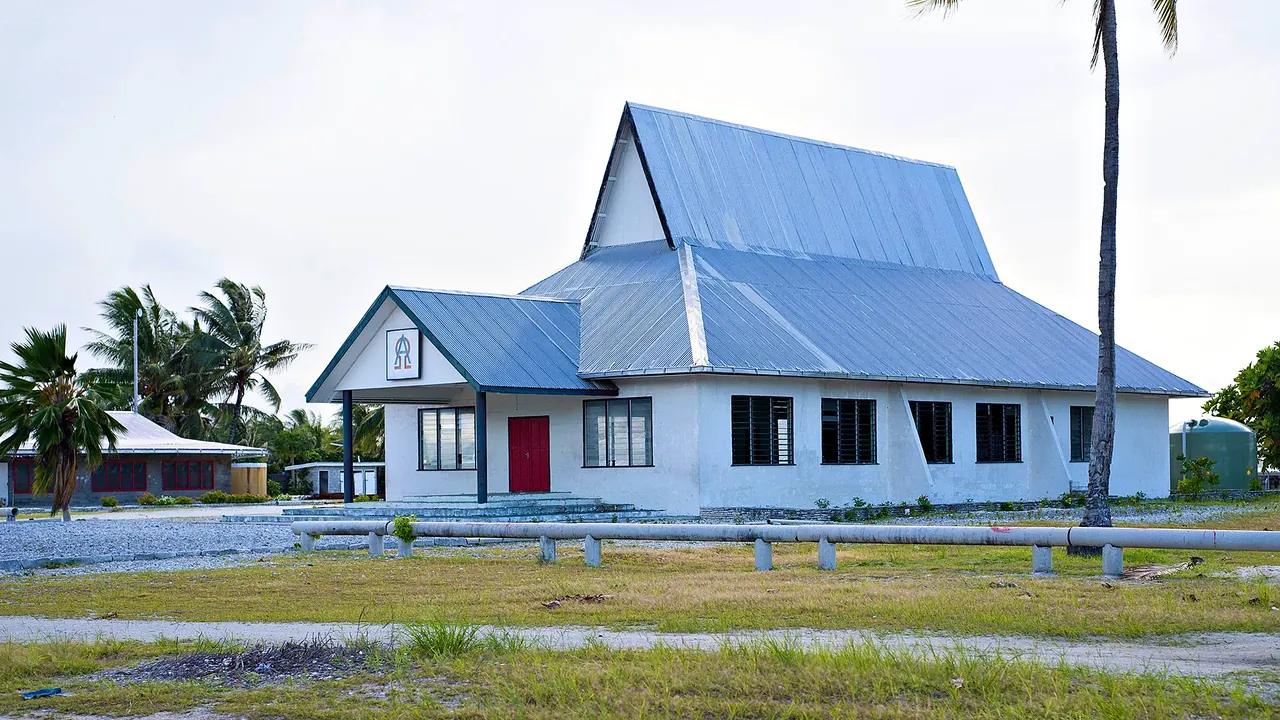
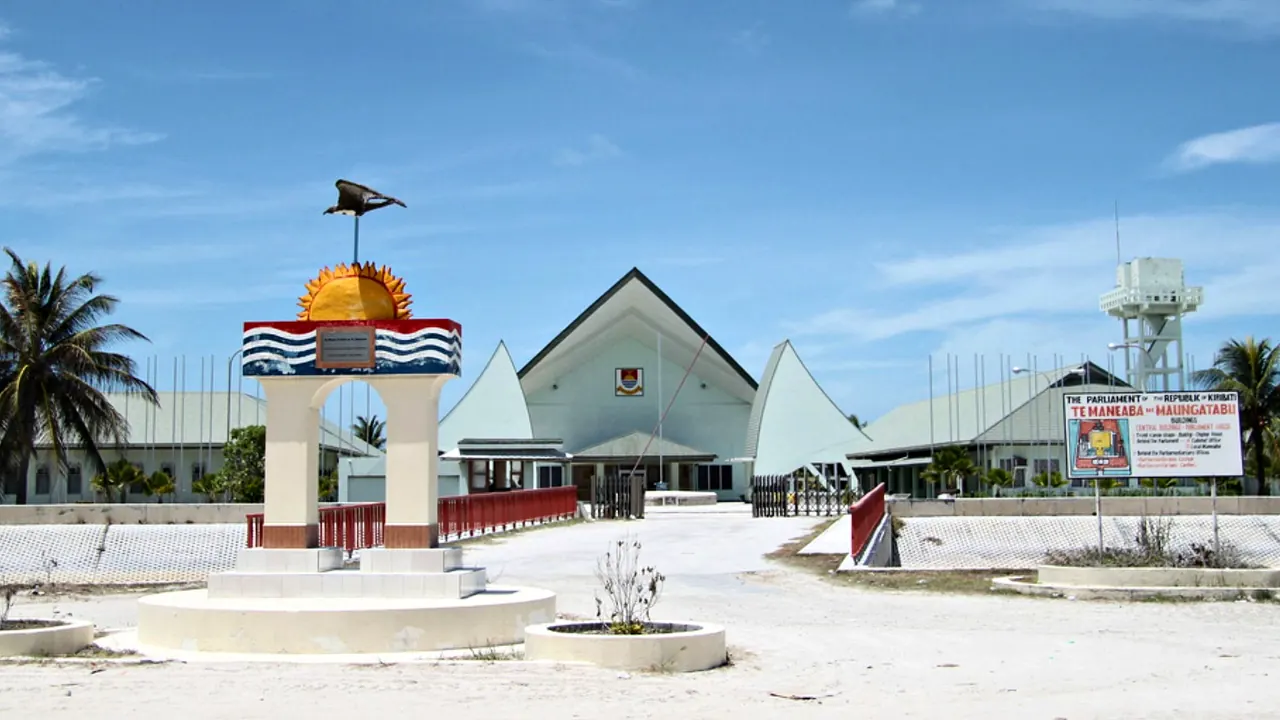
Photos: Kiritimati by Calvin Smith, CC BY 2.0, cropped; Tarawa by KiribatiTraveller, CC BY-SA 4.0, cropped.
Kiritimati or Tarawa?
Our verdict in twelve categories, each scored against the same fixed benchmark cities, and the climate month by month, so you can choose for your trip.
Choose Kiritimati for
- nature and the outdoors
- beaches
- wellness
Kiritimati is for the angler and the birdwatcher. Its lagoon flats are a world-famous bonefish ground and millions of seabirds nest on its islets. Its sheltered swims near London are also cleaner and easier than anything on South Tarawa. Expect a lodge-based, full-board stay with little else to do, evenings quieter than almost anywhere, and a long, costly journey to get there.
Choose Tarawa for
- prices
- getting around
- culture and sights
Travellers curious about Kiribati itself will get more from Tarawa. The capital atoll has the Second World War battlefield of Betio, the maneaba parliament at Ambo and the best chance of seeing I-Kiribati dancing. Minibuses on its single road make it easier to get around, it costs somewhat less day to day, and a boat trip takes you to the quiet villages and beaches of North Tarawa. What it gives up is the wild side: the crowded south is no place to swim, and its fishing and birdlife are a lesser version of Kiritimati's.
Scoreboard
Twelve categories on one fixed scale from 0 to 100. The shaded stretch is the gap between the two.
Your match
Pick a travel style or drag the sliders, and both match scores follow your weighting.
Too close to call, 1 point apart
Wins on nature and the outdoors and beaches with your weighting.
Wins on prices and getting around with your weighting.
What matters to you?
Category by category
What the scores mean for a trip.
Beaches & swimming
Neither is a beach vacation, but Kiritimati has the better water close to where you stay. Its coral-white sand is usually empty, and the sheltered spots near London and along the lagoon edge of the northern villages are fine for a quiet dip. The lagoon itself is mostly wading flats, though, the windward reef shore is rough, and there are no bars, sunbeds or lifeguards.
On Tarawa the swimming worth doing is a boat ride away. Runoff from the crowded islets reaches the lagoon along South Tarawa, and visitors are advised to stay out of the water there. That turns the good sand and clear shallows of North Tarawa into a day or overnight trip.
Food & drink
Both atolls mean plain eating, and the difference is where you eat. On Kiritimati meals come full board at the fishing lodge or small hotel, usually reef fish and tuna grilled over coals or eaten raw with lime, and the village stores in London and Tabwakea hold only basics.
Tarawa gives a little more choice: hotel dining rooms, Chinese-run restaurants and takeaway counters along the main road. Its best dishes are raw fish in coconut cream and babai, the giant swamp taro grown in pits, but traditional cooking mostly happens at home and visitors rarely see it.
Culture & sights
Tarawa has the one sight in Kiribati that justifies a morning: Betio, where the battle of November 1943 left Japanese coastal guns, bunkers and command posts, with memorials near the landing beaches. Add the small Te Umanibong collection in Bikenibeu and the maneaba-shaped parliament at Ambo, and there is enough for a day.
Kiritimati offers only traces of its past. The churches and maneaba of London, Tabwakea, Banana and Poland, wartime airfield remains and rusting relics of the nuclear tests of the late 1950s and early 1960s are worth a look in passing. Its name recalls Cook's landing on Christmas Eve 1777, but none of this is a reason to make the trip.
Nightlife
There is barely any night out on either atoll. Tarawa at least has a few hotel bars and simple drinking places along the south, where the usual evening is a sunset drink by the lagoon. On Kiritimati the drink comes with dinner at the lodge, anglers go to bed early for the dawn flats, and the evening's reward is a dark sky full of stars.
Nature & outdoors
Here Kiritimati is in another league. Its vast lagoon flats are among the world's most celebrated bonefish grounds, giant trevally and triggerfish patrol the reef edges, and lodge guides fish them all year. It is also one of the great seabird breeding sites, with millions of sooty terns and protected sanctuaries on Motu Tabu and Cook Islet.
Tarawa offers a smaller version of the same atoll pleasures. It has bonefishing on the lagoon flats, boat trips after tuna and seabirds on the quieter islets, but all of this starts in North Tarawa because the south is built up, and there are few organised dive or kayak operations. Neither atoll has hills or trails, and the heat makes long walks hard on both.
Day trips
Tarawa has at least one proper outing: a boat across the lagoon to the thatched villages and maneaba of North Tarawa, with the neighbouring atoll of Abaiang a longer trip beyond. Kiritimati has nothing comparable, since the other Line Islands lie hundreds of kilometres away across open ocean, so excursions there mean the island's own fishing grounds and bird colonies.
Good for families
Both are hard places to bring children. Neither has anything made for them, medical care is basic and the equatorial heat is fierce.
The differences are small. Kiritimati's shallow lagoon is gentle for paddling and may enthral an older child keen on fishing or birds. Tarawa's culture is warm towards children, but the water near the crowded south is unsafe, so the family outing there is the boat to North Tarawa.
Getting around
Tarawa is the easier place to move about. One road links Bonriki airport, Bikenibeu, Bairiki and Betio by causeway, and you can flag down a minibus anywhere along it all day. Walking is hot, pavements are rare, and North Tarawa can only be reached by boat.
Kiritimati is large and spread out and has no proper public transport. You depend on lodge vehicles, guides' boats, a hire car or an occasional minibus to reach fishing grounds far down rough tracks. Reaching the island at all is harder still, because very few flights serve it.
Shopping & style
There is next to nothing to buy on either atoll. Both have woven pandanus mats, fans and shell pieces sold through women's groups. Tarawa adds baskets, model canoes and the cultural centre's outlet, while on Kiritimati crafts tend to turn up at your lodge, and you should bring fishing gear, sunscreen and medicines with you.
Affordability
Neither is cheap, but Tarawa costs less. Minibus rides and local fish are inexpensive there. Imported goods are dear, though, hotels charge more than their standard suggests, and chartering a boat north adds up.
Kiritimati is mostly visited on full-board fishing packages, where guides, boats and remoteness make up most of the cost, and almost everything on the island is imported. Daily spending stays small only because there is little to spend on, and the journey costs more than the stay.
Live music & performing arts
The same I-Kiribati dancing, with its rigid bird-like poses and powerful seated choirs, is the main performance on both atolls, but Tarawa gives you the better chance of seeing it. Weddings, church gatherings and above all the Independence Day competitions in July fill its maneaba. On Kiritimati you depend on a village celebration or a display put on for lodge guests, and Sunday church singing is the most reliable live music.
Wellness & relaxation
Kiritimati is the more restful of the two, because the whole island is quiet. There is no traffic and no crowd, and the pace stays slow from the northern villages to the far end of the lagoon. It has no spas or massage, though, and the lodges are built for fishing, so long days in fierce sun on the flats can leave you tired rather than refreshed.
Tarawa has no wellness offer either, and its crowded south is hot and loud with traffic along the single road. To find calm you take a boat to North Tarawa, where a basic guesthouse gives you shade, a hammock, a lagoon breeze and silence after dark.
When should you go?
Pick your month. The climate figures are measured averages, not a forecast.
Kiritimati in July
Tarawa in July
Daytime high, °C
Rainfall in the month, mm
Where the figures come from
Kiritimati has no rain gauge within 25 km of the centre, so its rainfall comes from a gridded climate dataset read at the destination rather than from a gauge further away.
Temperature and rainfall are climate normals, averaged over the years shown. Kiritimati: 1991-2020 normals, Christmas / Cassidy (0.9 km from centre). Tarawa: 1991-2020 (sunshine 1981-2010) normals, Tarawa (7.2 km from centre).
Both atolls lie near the equator and stay hot all year, with daytime highs of about 31°C every month. There is no cool season for walking and no month too cold for the water, so rain is what sets the months apart. On Kiritimati, measured around the northern villages where visitors stay, June to November is distinctly dry, with only 27mm in October. The first months of the year are wet, with March the peak at 278mm, yet March to May is still the sunniest stretch there.
Tarawa is wetter overall and has no truly dry season. September to November is its least rainy time, falling to 88mm in November, and October is its sunniest month at 259 hours, while December to April brings the heaviest rain. The sea is a touch warmer at Tarawa all year round. For both atolls the second half of the year is the better bet, and in those months Kiritimati is clearly the drier of the two.
Which traveller are you?
On an outdoors trip, Kiritimati is the clear pick. The island is made for days spent wading its lagoon flats for bonefish, casting for giant trevally along the reef edges or watching millions of nesting terns. Tarawa's fishing and birdlife are slighter.
For a culture and arts trip, Tarawa is the only real choice. The battlefield relics on Betio, the maneaba parliament at Ambo and the dance competitions around Independence Day give a visitor plenty to see, while Kiritimati has little beyond scattered historical traces.
On a trip on a tight budget, Tarawa is the gentler of two costly options. Cheap minibuses and local fish keep daily spending down. Kiritimati is mostly sold as full-board fishing packages, and far fewer flights reach it.
Before you go
| Measure | Kiritimati | Tarawa |
|---|---|---|
| Official language | English, Gilbertese | English, Gilbertese |
| Currency | Australian Dollar (AUD) | Australian Dollar (AUD) |
| Sockets | I240 V, 50 Hz | I240 V, 50 Hz |
| Driving side | Left | Left |
| Time zone | UTC+14 | UTC+12 |
| Emergency number | 999 | 999 |
| Elevation | - | 3 m |
| Main airport | Cassidy International Airport (CXI)3 non-stop destinations | Bonriki International Airport (TRW)20 km from centre7 non-stop destinations |
| Public holidays this year | 16 days | 16 days |
By the numbers
| Measure | Kiritimati | Tarawa |
|---|---|---|
| Population | 7,369 | 63,439 |
| People per km² | 19 | 4,015 |
| Museums within 10 km | - | 0 |
| UNESCO World Heritage sites within 50 km | - | 0 |
| Swim season, months above 21 °C | 12 months | 12 months |
Where else could you go?
Every comparison below shares a destination with this one, so you can follow Kiritimati or Tarawa somewhere new.