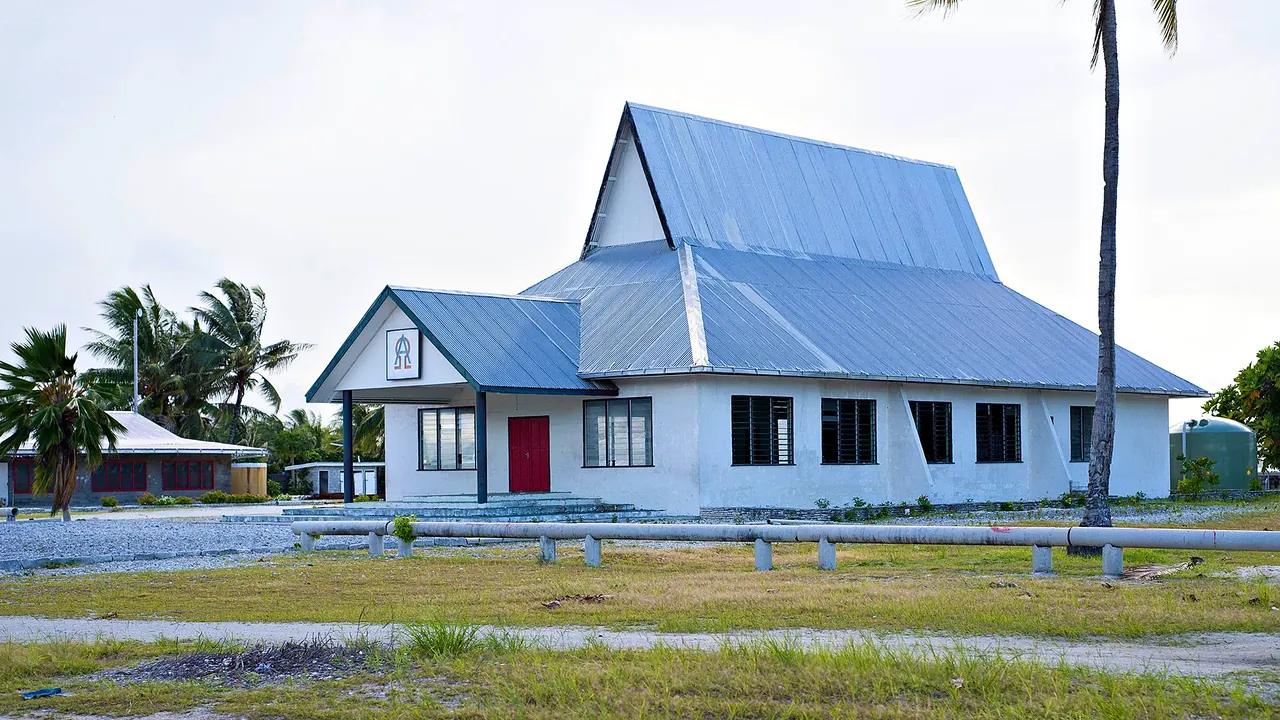
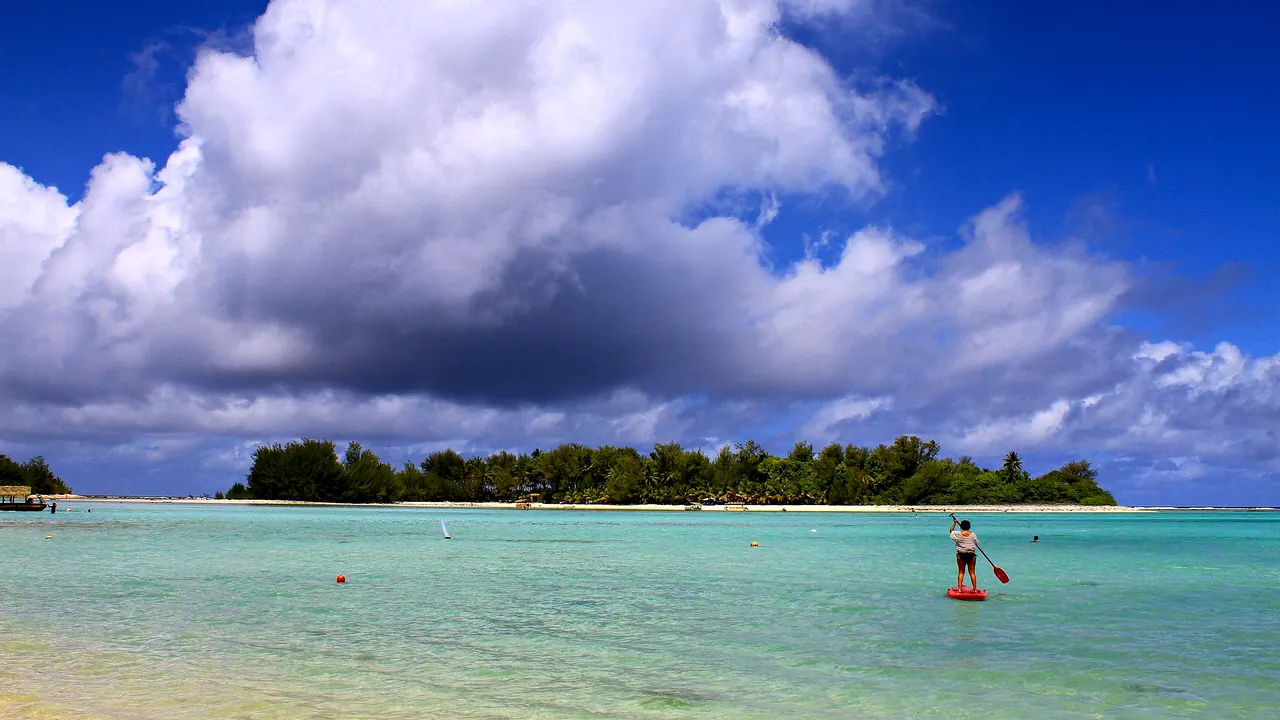
Photos: Kiritimati by Calvin Smith, CC BY 2.0, cropped; Rarotonga by Christopher Johnson from Tokyo, Japan, CC BY-SA 2.0, cropped.
Kiritimati or Rarotonga?
Our verdict in twelve categories, each scored against the same fixed benchmark cities, and the climate month by month, so you can choose for your trip.
Choose Kiritimati for
- nature and the outdoors
Kiritimati is for the angler, and to a lesser degree the birdwatcher, who will cross the Pacific for days of wading on the lagoon flats after bonefish and giant trevally, with seabird colonies and an island that is almost empty. Everything else is stripped back: full-board lodge meals, no sights to speak of, quiet evenings and a long journey on very few flights. If fishing is the point of the trip, nowhere on this page comes close. If it is not, there is little to keep you.
Choose Rarotonga for
- families
- getting around
- beaches
Rarotonga suits nearly everyone else looking for a remote Pacific island. It has the reef-sheltered lagoon beaches that Kiritimati lacks, a rainforest interior to hike, island dance nights, Saturday markets and a bus that goes round the coast in both directions. It is an easy choice for couples and families who want sand, snorkelling and a slow pace, and it gives you more to do on the days you don't spend in the water.
Scoreboard
Twelve categories on one fixed scale from 0 to 100. The shaded stretch is the gap between the two.
Your match
Pick a travel style or drag the sliders, and both match scores follow your weighting.
Wins on nature and the outdoors with your weighting.
Wins on families and getting around with your weighting.
What matters to you?
Category by category
What the scores mean for a trip.
Beaches & swimming
Both islands have warm water and pale coral sand, but they offer very different kinds of beach. Rarotonga's reef encloses a calm, shallow lagoon almost all the way round, so you can wade out to the motu at Muri or snorkel among coral a few strokes from shore on the south coast near Titikaveka. Resorts and beach cafés line the sand.
Kiritimati's sand is emptier, but the swimming is harder. The great inner lagoon is mostly flats for wading, the windward shore has surge and currents, and there are no sunbeds, bars or lifeguards. You swim near London or off the northern villages at the end of a day outdoors.
Food & drink
Neither island eats well by city standards, but Rarotonga at least gives you choices. You can try ika mata and umu-baked dishes at the Saturday Punanga Nui market in Avarua or the Muri night market, and there are beach cafés, a few restaurants and a locally brewed beer.
On Kiritimati you eat at your lodge on full board, so meals are whatever it serves. The fish is excellent, grilled over coals or dressed raw with lime, but most other food comes in tins or frozen, and there are no markets or restaurants to try.
Culture & sights
Neither island has much to sightsee, though Rarotonga can fill a morning. It has a small national museum in Avarua, the coral-lime Cook Islands Christian Church and the ancient marae of Arai-te-Tonga beside the inland Ara Metua road.
Kiritimati's past survives only as traces: Cook's 1777 landing, which gave the island its name, wartime airfield remains and debris from the nuclear tests. Its living culture is in the maneaba meeting houses and churches of villages such as London and Banana.
Nightlife
Friday night in Avarua is the closest either island comes to a night out. Locals and visitors move between the waterfront bars, and a couple of places stay open late for dancing. The rest of the week Rarotonga settles into sunset drinks on the west coast and a beach bar or resort lounge.
Kiritimati has nothing like it. Anglers have a drink with dinner at the lodge and go to bed early for a dawn start on the flats, the villages are silent after dark, and the stars over the lagoon are the evening's entertainment.
Nature & outdoors
Kiritimati's nature is a vast, pale lagoon set in flat scrub and palms, and the draw is what lives in and around it. There are bonefish on firm sand flats, giant trevally on the reef edges and millions of nesting sooty terns, with sanctuaries on Motu Tabu and Cook Islet. There is nothing to hike, and the sun is fierce all day.
Rarotonga instead rises from its lagoon into a volcanic interior of rainforest ridges above 600m. The cross-island track passes the Needle and a waterfall, and Raemaru and Ikurangi are steeper climbs. On the water there is paddleboarding, kitesurfing off Muri, diving on the reef walls and, in the cooler months, humpback whales close to shore.
Day trips
From Kiritimati there is no day trip to take. The other Line Islands lie hundreds of kilometres away across open ocean, so a day out means a boat run across the lagoon or a drive down the island's own tracks to the fishing grounds and bird colonies.
Rarotonga has one real excursion. A flight of under an hour takes you to Aitutaki for a lagoon cruise and lunch on a sandbar, and you fly back the same evening. It is an expensive day but a memorable one. The other southern islands need overnight stays, so beyond Aitutaki your outings are loops of Rarotonga itself.
Good for families
Rarotonga is the easy choice for families. It is not packed with attractions, but it is calm and safe, with warm, shallow lagoon water for paddling at Muri and on the south coast. There are kids' clubs at resorts, glass-bottom boats and a welcome from islanders who are warm towards children.
Kiritimati is a hard trip with children. There is nothing designed for them, the heat is intense and hospitals are a long flight away. Only an older child with a passion for fishing or birds is likely to enjoy it.
Getting around
Rarotonga is very easy to get around. One flat 32km road circles the coast, buses run clockwise and anticlockwise and stop when you flag them down, and a scooter or bicycle gets you to any beach. The bus thins out in the evenings and on Sundays.
Kiritimati is large and spread out, with no proper public transport. You rely on lodge vehicles, guides' boats or a hire car on rough tracks, and simply reaching the island on its very few flights is harder than anything on Rarotonga.
Shopping & style
Rarotonga has a small but real selection of things to buy. There are Cook Islands black pearls from specialist shops in Avarua, plus tivaevae quilts, pareu, carvings and pandanus hats at the Saturday market. On Kiritimati the shops are village stores selling basics, and the only souvenirs are a few woven mats, fans and shell pieces from women's groups or your lodge. Pack every fishing fly and bottle of sunscreen before you leave home.
Affordability
On Kiritimati most of the money goes on the fishing package, with guides, boats and remoteness built in, and on the long flight to get there, which costs more than the stay itself. Once you have arrived there is little else to spend on.
Rarotonga's costs build up day by day instead, because meals, drinks, tours and diving all cost as much as in New Zealand or more. Independent travellers have more ways to save, with self-catering units, backpacker lodges, market food and the island bus, and the lagoon and the trails cost nothing.
Live music & performing arts
Polynesian dance is the only real performance on either island, and Rarotonga has much more of it. Island nights with log drums and dance troupes run several evenings a week, and Te Maeva Nui in early August brings dance teams from every island to compete. On Kiritimati you might see I-Kiribati dancing, with its bird-like movements, at a village celebration or a show put on for lodge guests. On both islands, Sunday hymn singing in church is the most moving music you will hear.
Wellness & relaxation
Rarotonga is the better place to unwind. Its south and east coasts around Muri and Titikaveka are made for slow days on a deck, and there are day spas, coconut-oil massages and yoga on the beach. Kiritimati is quiet too, but days are built around long, sun-baked hours on the flats, and the lodges are set up for fishing rather than for rest.
When should you go?
Pick your month. The climate figures are measured averages, not a forecast.
Kiritimati in July
Rarotonga in July
Daytime high, °C
Rainfall in the month, mm
Where the figures come from
Kiritimati has no rain gauge within 25 km of the centre, so its rainfall comes from a gridded climate dataset read at the destination rather than from a gauge further away.
Temperature and rainfall are climate normals, averaged over the years shown. Kiritimati: 1991-2020 normals, Christmas / Cassidy (0.9 km from centre). Rarotonga: 1991-2020 normals, Rarotonga (10.8 km from centre).
Kiritimati is hot in every month, with daytime highs of about 31°C all year, so rain is what sets the seasons apart. Around the northern villages and lodges the first half of the year is the wetter part, and March is the wettest month at close to 280mm. From June the rain falls away, and July to November are very dry. These are the most settled months for long days out on the flats. The sea stays warm enough for a comfortable swim all year.
Rarotonga runs a little cooler and is never truly dry. December to April is the hot, humid season, around 30°C, with heavy rain in most months. From June to October the days ease into the mid-twenties, the rain roughly halves and the sun is steady, so these are the best months for the cross-island walk. The lagoon cools to about 24°C in August and September. That is fresher than Kiritimati's water but still fine for swimming.
Which traveller are you?
On a beach and sun trip, Rarotonga is far ahead. Its reef-sheltered lagoon runs all round the island, with calm water at Muri and snorkelling from the sand at Aroa. Kiritimati's shallow flats and surge-swept ocean shore make for a quick dip, not a beach vacation.
On a family trip with children, choose Rarotonga. The lagoon is warm and gentle, resorts have kids' clubs, the island is safe and easy to get around, and dance nights go down well with children. Kiritimati offers children very little, and medical care there is basic and far away.
For fly fishers, Kiritimati is the place. Its lagoon flats are among the world's most famous bonefish grounds, with giant trevally on the reef edges, fishing all year and guides at the lodges. Rarotonga offers lagoon sports and hiking but nothing comparable for the serious angler.
Before you go
| Measure | Kiritimati | Rarotonga |
|---|---|---|
| Official language | English, Gilbertese | English, Cook Islands Maori |
| Currency | Australian Dollar (AUD) | New Zealand Dollar (NZD) |
| Sockets | I240 V, 50 Hz | I240 V, 50 Hz |
| Driving side | Left | Left |
| Time zone | UTC+14 | UTC-10 |
| Emergency number | 999 | Police 999, ambulance 998, fire 996 |
| Main airport | Cassidy International Airport (CXI)3 non-stop destinations | Rarotonga International Airport (RAR)7 non-stop destinations |
| Public holidays this year | 16 days | 11 days |
By the numbers
| Measure | Kiritimati | Rarotonga |
|---|---|---|
| Population | 7,369 | 10,572 |
| People per km² | 19 | 158 |
| Swim season, months above 21 °C | 12 months | 12 months |
Where else could you go?
Every comparison below shares a destination with this one, so you can follow Kiritimati or Rarotonga somewhere new.
- Aitutakivs Rarotonga
- Mooreavs Rarotonga
- Tahitivs Rarotonga
- Apiavs Rarotonga
- Nuku'alofavs Rarotonga
- Yasawa Islandsvs Rarotonga