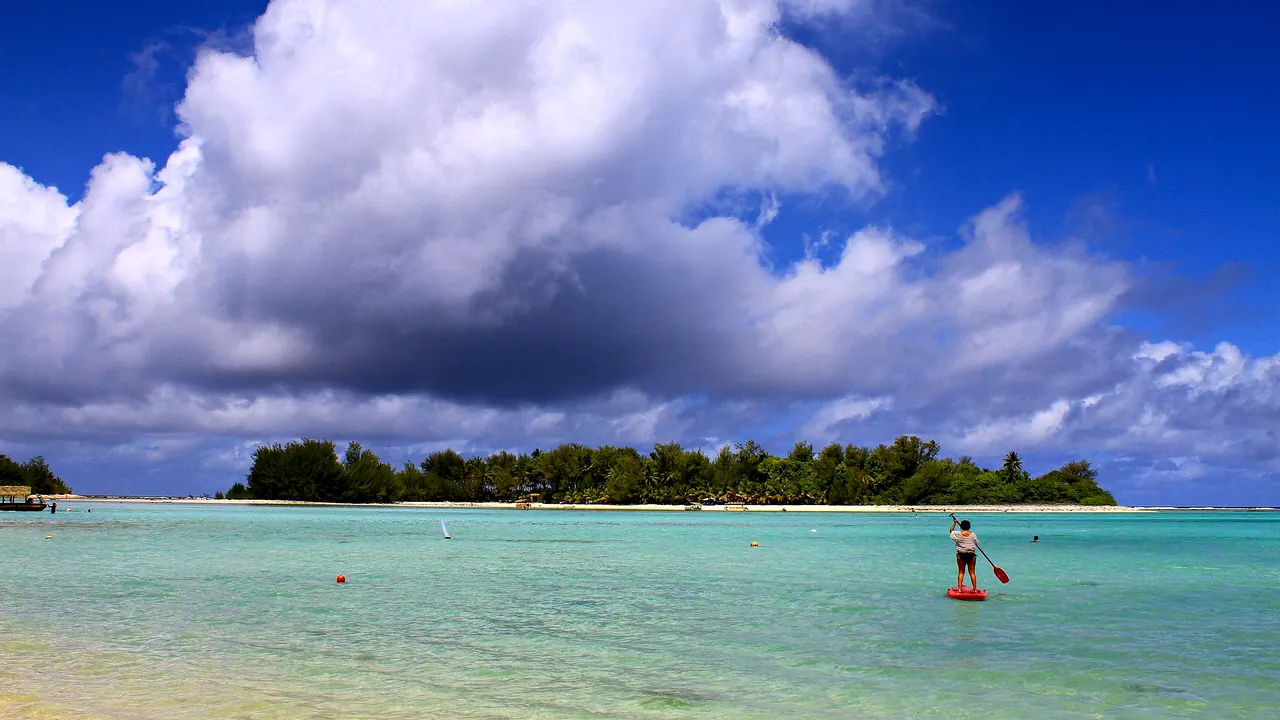
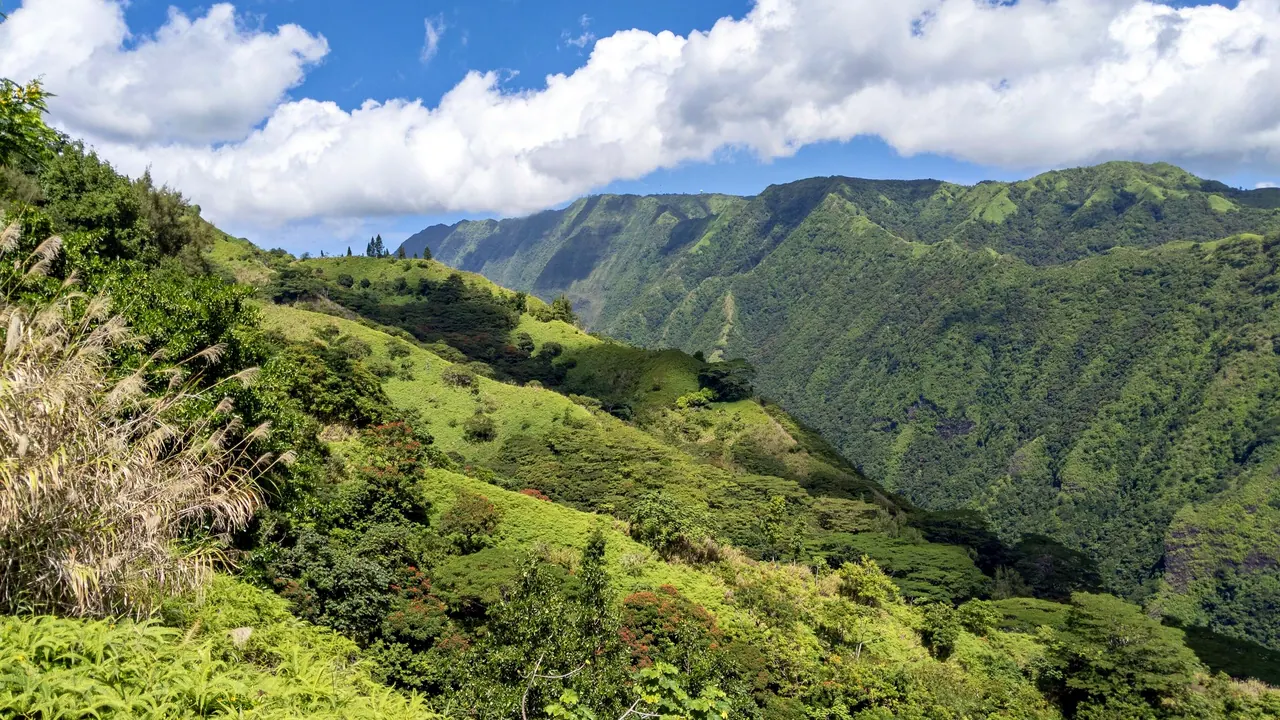
Photos: Rarotonga by Christopher Johnson from Tokyo, Japan, CC BY-SA 2.0, cropped; Tahiti by Matthew Dillon from Hollywood, CA, USA, CC BY 2.0, cropped.
Rarotonga or Tahiti?
Our verdict in twelve categories, each scored against the same fixed benchmark cities, and the climate month by month, so you can choose for your trip.
Choose Rarotonga for
- getting around
- beaches
- prices
Rarotonga suits a lagoon vacation where the water is the whole point. Sheltered sand runs almost all the way round the island, the snorkelling starts a few strokes from the beach, and one flat coast road with a flag-down bus makes it simple to get around without a car. It is the gentler and somewhat less punishing choice on cost, and it works well for families with young children and anyone who wants to do very little, slowly.
Choose Tahiti for
- day trips
- nature and the outdoors
- food and drink
Tahiti is for travellers who want more island to explore. Its interior climbs to jagged ridges and deep waterfall valleys, Teahupo'o draws surfers from around the world, and Moorea is a short ferry ride away for the beach days the main island cannot quite deliver. Papeete adds French bakeries, the roulottes on the waterfront and a proper museum, and it is the gateway to the rest of French Polynesia, so it suits a longer, more active trip that moves between islands.
Scoreboard
Twelve categories on one fixed scale from 0 to 100. The shaded stretch is the gap between the two.
Your match
Pick a travel style or drag the sliders, and both match scores follow your weighting.
Too close to call, 2 points apart
Wins on getting around and beaches with your weighting.
Wins on day trips and nature and the outdoors with your weighting.
What matters to you?
Category by category
What the scores mean for a trip.
Beaches & swimming
On Rarotonga the beach comes with almost any address, because the reef encloses a shallow lagoon edged with pale sand nearly all the way round. Muri's turquoise water and wadeable motu and the clear, coral-filled water off Titikaveka and Aroa put first-rate snorkelling within a few strokes of the sand.
Tahiti's lagoon water is just as warm and clear, but the beaches are thinner on the ground. The north and east coasts around Pointe Venus are black volcanic sand, the pale-sand stretches cluster near Punaauia and at Plage de Maui, and many visitors take the ferry to Moorea for the classic white-sand lagoon. On both islands, stay inside the reef.
Food & drink
Tahiti eats noticeably better, thanks to its blend of Polynesian, French and Chinese cooking. The evening roulottes at Place Vaiete serve everything from steak frites to chow mein at shared tables, and every village has a French bakery. Restaurants are French-leaning, though the choice is small.
Rarotonga's table is narrower and mostly island cooking. The raw fish dish is the same idea under another name, ika mata rather than poisson cru, and is best found at the Saturday Punanga Nui market or the Muri night market. Beyond that it is beach cafés and resort dining rooms.
Culture & sights
Neither island is a sightseeing destination, but Tahiti has the more to show. The Musée de Tahiti et des Îles at Punaauia is a real museum on navigation, tapa and tattoo, and the forest marae at Arahurahu and Cook's 1769 observation point at Pointe Venus fill out a day or two.
Rarotonga's sights take a morning: the small museums in Avarua, the coral-lime Cook Islands Christian Church, and the marae of Arai-te-Tonga beside the ancient Ara Metua road. Its heritage is better met in village life than in buildings.
Nightlife
Both islands go to bed early, but Papeete gives Tahiti the edge, with a handful of waterfront bars and clubs filling up with locals and harbour sailors on both Friday and Saturday. Rarotonga has one real night out, Friday in Avarua, when a small cluster of bars and a couple of dancing spots stay open late. There are no clubs to speak of, and on other nights a sunset drink on the west coast is the plan.
Nature & outdoors
Rarotonga's volcanic interior is steep, green and compact, with peaks over 600m. The cross-island track past the Needle takes a few hours, the ridge climbs to Raemaru and Ikurangi are best done with a guide, and a keen walker has covered the main trails within a week. On the water it is gentle: lagoon snorkelling, paddleboarding and kitesurfing off Muri when the trade winds blow.
Tahiti is on another scale. Ridges rise above 2,000m over deep rainforest valleys full of waterfalls, an off-road track climbs up the Papenoo valley and right across the island, and Mount Aorai is a serious ridge hike. Offshore you have Teahupo'o's famous wave and diving with sharks and rays, and Moorea adds its own peaks. Humpback whales pass both islands from about July to October.
Day trips
Tahiti is the far better base for outings. Moorea is about half an hour away by ferry and easy to tour by car in a day, the drive round Tahiti Iti to Teahupo'o makes a second outing, and boats run to the atoll of Tetiaroa.
From Rarotonga the only real day trip is the flight to Aitutaki for a lagoon cruise and sandbar lunch. It is memorable but costly, and otherwise your outings mean circling the island itself.
Good for families
Rarotonga is the easier island with children. The shallow, reef-protected water off Muri and the south coast suits toddlers and first snorkels, distances are short, and Sunday singing and dance nights tend to win children over. Older children may run out of things to do after a week.
Tahiti's lagoons are just as gentle, and older children get waterfalls, outrigger canoes and whale-watching boats. But the main island's beaches are fewer and less inviting, and the longer journey and steeper costs weigh on a family trip. Neither island has a zoo, aquarium or theme park.
Getting around
Rarotonga is far simpler. One flat road loops the island in about 32km, the bus runs clockwise and anticlockwise and stops when you flag it down, and a hired scooter or bicycle covers the rest. Only evenings and Sundays leave you short of transport.
Tahiti's coast road is just as easy to follow, but the buses run too rarely to rely on, so most visitors hire a car and meet heavy rush-hour traffic around Papeete. The interior can only be reached on foot or in an off-road vehicle. Frequent ferries to Moorea and domestic flights from Faa'a do open up the wider islands, though.
Shopping & style
Black pearls are the main purchase on both islands, but Papeete has many more jewellers, which makes it the better place to compare and choose. The upper floor of the Marché de Papeete adds pareos, carving, vanilla and tiare-scented monoi oil. Rarotonga's offer is smaller, a few pearl specialists and a short street of gift shops in Avarua, though its Saturday market is the place for hand-stitched tivaevae quilts.
Affordability
Both islands are expensive, but Tahiti is harder on the budget. Nearly everything is imported, so meals, alcohol and car hire cost well above European levels, and the west-coast resorts more again. Family-run pensions and the roulottes soften it.
Rarotonga's prices run at New Zealand levels or a little above, which is still steep, but it leaves more ways to save. Self-catering units, market food and the island bus all help, and the lagoon and the walks cost nothing.
Live music & performing arts
The two are evenly matched, and both centre on fast Polynesian dance with thunderous drums. Tahiti's high point is the Heiva i Tahiti in July, several weeks of competing troupes and choirs in Papeete, and the Maison de la Culture hosts occasional concerts during the rest of the year.
Rarotonga answers with Te Maeva Nui around early August and island nights at resorts and village halls through the week. Its most moving music is the harmonised hymn singing at Sunday church services.
Wellness & relaxation
Rarotonga relaxes you a little more simply by being slow. There are no traffic lights, little to rush to, and the coast at Muri and Titikaveka is quiet from end to end. Its spas are modest coconut-oil massages and beach yoga.
Tahiti has a massage tradition of its own, taurumi with warm monoi oil, offered in lagoon-facing hotel spas around Punaauia. The island around them is busier, though, and real calm means staying out on Tahiti Iti or the east coast.
When should you go?
Pick your month. The climate figures are measured averages, not a forecast.
Rarotonga in July
Tahiti in July
Daytime high, °C
Rainfall in the month, mm
Temperature and rainfall are climate normals, averaged over the years shown. Rarotonga: 1991-2020 normals, Rarotonga (10.8 km from centre). Tahiti: 1991-2020 normals, Tahiti-Faaa (5.3 km from centre).
The two islands share the same pattern: a hot, wet season from about December to April and a drier, sunnier stretch from June to October. Rarotonga is the milder of the two, with afternoons around 26°C in the dry months, which is pleasant for walking the cross-island track. Its lagoon cools to about 24°C in August and September. That is still fine for swimming, just fresher. Rain is spread more evenly across Rarotonga's year, so even the drier months bring the odd shower, and the wet months from January to April are humid and showery rather than washed out.
Tahiti runs hotter, near 30°C in every month, and its seasons are more sharply divided. December is the wettest month at about 280mm, while July and August see barely 43mm and more sunshine than any month on Rarotonga. The sea around Tahiti stays warm all year. For hiking its mountain interior, the dry months from May to October are clearly the time to go, since the trails turn slippery and the rivers rise in the wet season.
Which traveller are you?
On a beach and sun trip, Rarotonga is the better pick. Its reef-sheltered lagoon and pale sand circle almost the whole island, Muri has wadeable islets, and Aroa gives coral straight off the beach, whereas Tahiti's own beaches are modest and often dark-sanded.
For an outdoors trip, Tahiti wins clearly. Ridges above 2,000m, the Papenoo and Fautaua valleys, the Aorai climb, diving with sharks and rays, and surfing at Teahupo'o go well beyond Rarotonga's interior, which a keen walker covers in a week.
On a family trip with young children, Rarotonga is easier. Shallow, protected water lies right off most of the coast, the round-island bus and short distances make outings simple, and it is less ruinous to feed a family than Tahiti, where the best beaches mean a ferry to Moorea.
Before you go
| Measure | Rarotonga | Tahiti |
|---|---|---|
| Official language | English, Cook Islands Maori | French |
| Currency | New Zealand Dollar (NZD) | CFP Franc (XPF) |
| Sockets | I240 V, 50 Hz | - |
| Driving side | Left | Right |
| Time zone | UTC-10 | UTC-10 |
| Emergency number | Police 999, ambulance 998, fire 996 | 112 |
| Main airport | Rarotonga International Airport (RAR)7 non-stop destinations | Fa'a'ā International Airport (PPT)30 non-stop destinations |
| Public holidays this year | 11 days | 16 days |
By the numbers
| Measure | Rarotonga | Tahiti |
|---|---|---|
| Population | 10,572 | 178,133 |
| People per km² | 158 | 171 |
| Swim season, months above 21 °C | 12 months | 12 months |
Where else could you go?
Every comparison below shares a destination with this one, so you can follow Rarotonga or Tahiti somewhere new.
- Mooreavs Tahiti
- Bora Boravs Tahiti
- Aitutakivs Rarotonga
- Mooreavs Rarotonga
- Cook Islandsvs Tahiti
- Apiavs Rarotonga