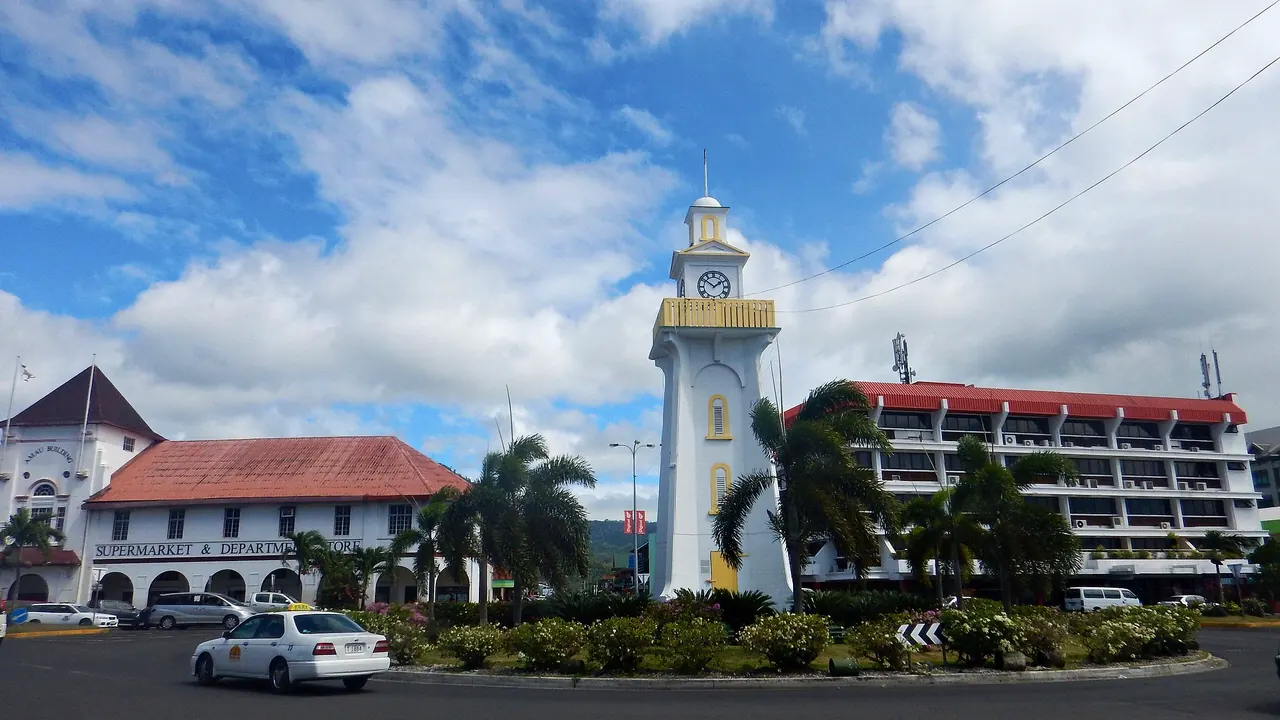
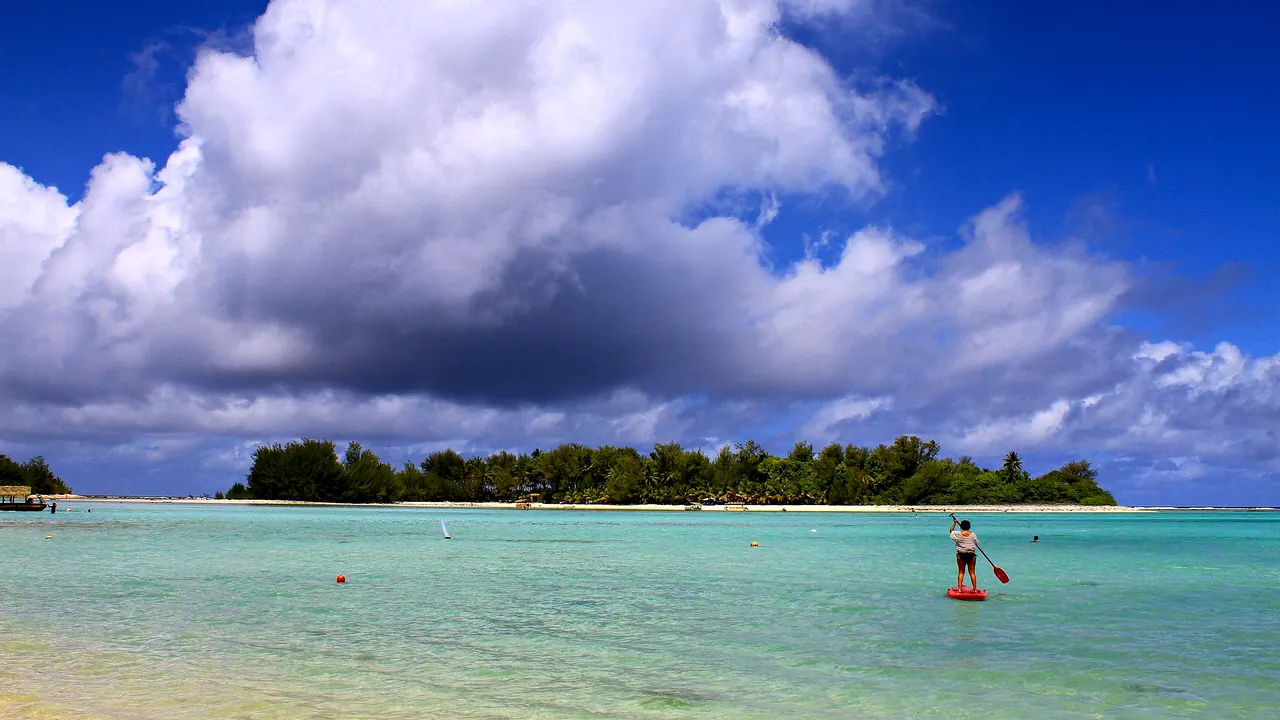
Photos: Apia by Rickard Törnblad, CC BY-SA 4.0, cropped; Rarotonga by Christopher Johnson from Tokyo, Japan, CC BY-SA 2.0, cropped.
Apia or Rarotonga?
Our verdict in twelve categories, each scored against the same fixed benchmark cities, and the climate month by month, so you can choose for your trip.
Choose Apia for
- prices
- culture and sights
- nature and the outdoors
Apia suits travellers who want to see Samoan life up close and are happy to keep moving. The town is a working harbour rather than a resort, but it has the stronger sights, with Stevenson's house at Vailima and the chiefs' tombs at Mulinu'u. Upolu around it is a bigger island of waterfalls, crater lakes and cave pools. It is also the cheaper choice, especially if you sleep in simple beach fales on the south coast once you have seen the town.
Choose Rarotonga for
- beaches
- getting around
- families
Rarotonga is the easier trip of the two. The lagoon runs right round the island, so the beach is a short walk from almost anywhere you stay. One flat coastal road and a two-way bus make it simple to get around without planning. That suits families, couples who want to slow down, and anyone whose idea of a Pacific island is mostly turquoise water. The cost is a higher bill and less to explore beyond the shore.
Scoreboard
Twelve categories on one fixed scale from 0 to 100. The shaded stretch is the gap between the two.
Your match
Pick a travel style or drag the sliders, and both match scores follow your weighting.
Wins on prices and culture and sights with your weighting.
Wins on beaches and getting around with your weighting.
What matters to you?
Category by category
What the scores mean for a trip.
Beaches & swimming
These two are very different for beaches. Apia's waterfront is a reef flat and a port, and the only real swim in town is snorkelling the deep blue hole at Palolo Deep. The white sand at Lalomanu and Return to Paradise is an hour or more away by winding road, which is why beach lovers usually spend a night or two in Apia and then move to the coast.
Rarotonga is the beach. A shallow lagoon behind the reef edges almost the whole coast. Muri has calm water and small motu you can wade out to, and Titikaveka and Aroa have coral a few strokes from the sand. The north and west shores are rockier.
Food & drink
Neither island is a food destination, and both eat from the same Polynesian larder: raw fish in coconut cream, taro, breadfruit and the umu oven. Apia's eating is more everyday and local, built around the produce and fish markets, with palusami, koko Samoa and the chance of a Sunday umu at a guesthouse.
Rarotonga is more set up for visitors. The Saturday Punanga Nui market in Avarua and the evening stalls at Muri make good places for ika mata, and beach cafés, decent coffee and a locally brewed beer fill out the rest.
Culture & sights
Apia has more to see and one sight of real stature. Villa Vailima keeps Robert Louis Stevenson's house as he lived in it, and his tomb sits on Mount Vaea above. Add the waterfront cathedral, the Museum of Samoa and the paramount chiefs' tombs at Mulinu'u, and fa'a Samoa is lived openly in the fale villages around town.
Rarotonga's formal heritage is slighter: a small museum in Avarua, the coral-lime Cook Islands Christian Church and the stone marae of Arai-te-Tonga beside the ancient Ara Metua road. It fills a morning, with living island culture doing the rest.
Nightlife
Both are quiet after dark, so neither suits a big night out. Apia has a little more range, with waterfront bars on Beach Road and a couple of nightclubs where locals dance on Friday and Saturday. Rarotonga comes alive only on a Friday in Avarua, and most evenings there end with a sunset on the west coast and an early night.
Nature & outdoors
Both are green volcanic islands with a reef around them, but Upolu has more ground to cover. From Apia you can reach the crater lake at Lanoto'o, the waterfalls of the Cross Island Road and O Le Pupu-Pu'e National Park. On the coast are the To Sua Ocean Trench, the Piula cave pools and reef breaks for experienced surfers.
Rarotonga is smaller and easier to get round. The cross-island track past the Needle is the classic half-day walk, steeper ridge hikes such as Ikurangi need a guide, and Muri's trade winds bring kitesurfers. Humpbacks pass close enough to the reef to be seen from shore.
Day trips
Neither island is a good base for day trips, since each has only one town. The difference is how you get out. From Upolu, boats run to car-free Manono and a ferry to Savai'i, though Savai'i deserves a night. From Rarotonga the one classic outing means flying to Aitutaki for a lagoon cruise, which is memorable but costly.
Good for families
Rarotonga is the easier family choice, mainly because the lagoon is right there. Shallow, warm, reef-sheltered water lets small children paddle and snorkel near the room, and many resorts have kids' clubs and family units.
Apia welcomes children just as warmly, and Palolo Deep, the Piula pools and waterfall swims make good outdoor days. But the best beaches are long drives away, medical care is basic and dengue makes repellent essential. Neither island has a zoo, aquarium or theme park.
Getting around
Rarotonga is far simpler. A flat coastal road of about 32km circles the island, the bus runs only clockwise or anticlockwise and stops when flagged down, and scooters or bikes fill the gaps.
In Apia the town centre along Beach Road is walkable and taxis are cheap. The painted village buses are fun but leave only when full, though, and seeing Upolu properly usually means hiring a car with a temporary licence for narrow roads shared with dogs and pigs. Traffic drives on the left on both islands.
Shopping & style
Both offer small-scale, craft-led shopping, and both quieten on a Sunday. Apia's waterfront flea market is the place for siapo bark cloth, woven mats, kava bowls and lavalava wraps. Rarotonga has the more serious buy in Cook Islands black pearls from specialist shops in Avarua, plus tivaevae quilts at the Saturday market.
Affordability
Apia is noticeably cheaper. Living locally costs little: market food, buses, taxis and beach fales with meals included, which are among the cheapest places to sleep by the sea in the Pacific. Villages charge only small customary fees to visit pools and waterfalls.
Rarotonga's prices follow New Zealand levels or sit above them, and meals, tours and diving add up fast. Savings come from self-catering, the bus or a scooter, and the free pleasures of the lagoon. On both islands resort comforts and imported goods are expensive.
Live music & performing arts
Rarotonga has the slightly fuller programme, with island nights several evenings a week built around Cook Islands drumming and fast dancing, and its big event is Te Maeva Nui around early August. Apia's hotels put on weekly fiafia nights with the slap dance and fire knife dance, and its Teuila Festival comes in September. On both islands the unaccompanied Sunday hymn singing is the most moving thing you will hear.
Wellness & relaxation
Rarotonga is better for doing nothing. It has no traffic lights, calm stays around Muri and Titikaveka, and beach yoga alongside resort massage, so you can rest right where you sleep.
Apia has a tradition of its own in fofō, the Samoan coconut-oil massage, and Samoa's slow pace and silent Sundays help you unwind. But the town itself has traffic and market noise, so for a proper rest you need to move out to a coastal resort or beach fale.
When should you go?
Pick your month. The climate figures are measured averages, not a forecast.
Apia in July
Rarotonga in July
Daytime high, °C
Rainfall in the month, mm
Temperature and rainfall are climate normals, averaged over the years shown. Apia: 1998-2025 (sunshine 1981-2010, rainfall 1991-2020) normals, Faleolo Intl / Apia (18.1 km from centre). Rarotonga: 1991-2020 normals, Rarotonga (10.8 km from centre).
Apia is hot all year, with highs around 31°C in every month, so rain is what decides when to go. December to February is very wet, with more than 400mm in each of January and February, and heavy downpours turn the inland trails to mud. June to October is the drier stretch and also the sunniest, which makes it the best time for both the beaches and the walks. The sea around Upolu barely changes and stays warm enough for a long swim all year.
Rarotonga, measured on the coast where most visitors stay, runs cooler than Apia. The difference is slight in the summer months but clear in the southern winter, when highs of about 26°C make the inland tracks comfortable for walking. June to October is its driest time, but not its sunniest: June and July are among its greyer months, and the brightest weather comes from October to March, when there is more rain. The lagoon cools to about 24°C in August and September, which is fine for swimming but less inviting for a long snorkel, and warms back to around 28°C late in the summer. October suits both islands well, as it is fairly dry and sunny in each.
Which traveller are you?
On a beach and sun trip, Rarotonga is the clear choice. The sheltered lagoon and pale sand go all the way round the island, with Muri and the Aroa reserve on the doorstep. From Apia the good beaches are a long drive away on Upolu's south and east coasts.
For a trip on a tight budget, Apia goes further. Market meals, cheap buses and taxis, and coastal beach fales with meals included keep costs low. Rarotonga can be done cheaply in self-catering units and backpacker lodges, but meals, tours and diving there cost far more.
On a family trip with children, Rarotonga is easier. Small children can paddle in warm, shallow water near most places to stay, many resorts have kids' clubs, and the bus or a hired car covers the short distances. Apia means long, winding drives and only basic medical care.
Before you go
| Measure | Apia | Rarotonga |
|---|---|---|
| Official language | English, Samoan | English, Cook Islands Maori |
| Currency | Tala (WST) | New Zealand Dollar (NZD) |
| Sockets | I230 V, 50 Hz | I240 V, 50 Hz |
| Driving side | Left | Left |
| Time zone | UTC+13 | UTC-10 |
| Emergency number | 999 | Police 999, ambulance 998, fire 996 |
| Elevation | 2 m | - |
| Main airport | Faleolo International Airport (APW)19 km from centre6 non-stop destinations | Rarotonga International Airport (RAR)7 non-stop destinations |
| Public holidays this year | 11 days | 11 days |
By the numbers
| Measure | Apia | Rarotonga |
|---|---|---|
| Population | 37,708 | 10,572 |
| People per km² | 305 | 158 |
| Museums within 10 km | 4 | - |
| UNESCO World Heritage sites within 50 km | 0 | - |
| Swim season, months above 21 °C | 12 months | 12 months |
Where else could you go?
Every comparison below shares a destination with this one, so you can follow Apia or Rarotonga somewhere new.
- Aitutakivs Rarotonga
- Nuku'alofavs Apia
- Mooreavs Rarotonga
- Tahitivs Rarotonga
- Funafutivs Apia
- Nuku'alofavs Rarotonga