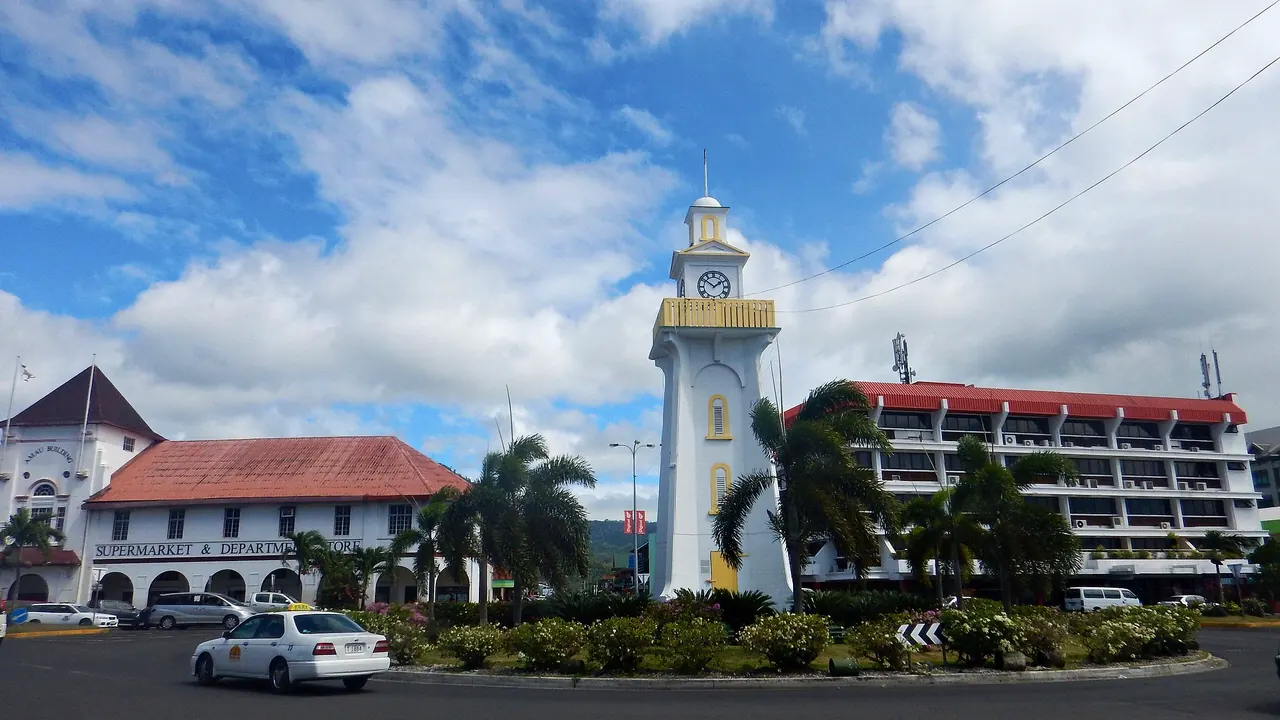
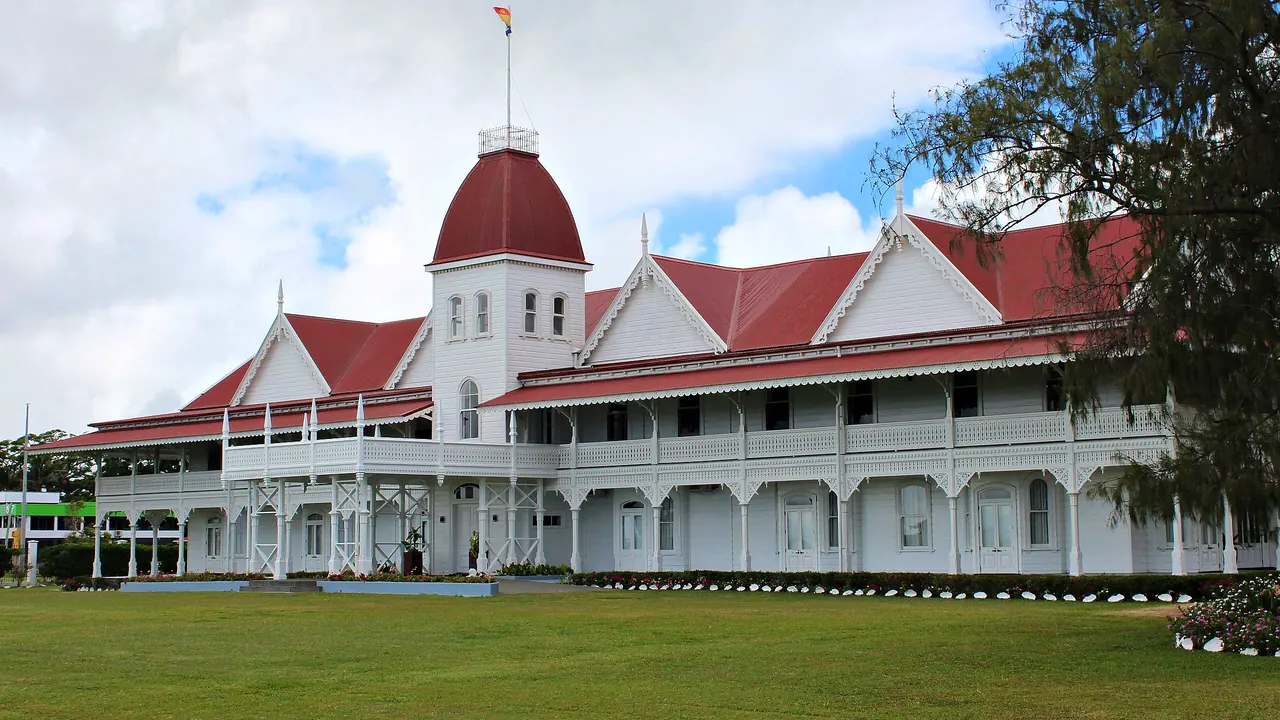
Photos: Apia by Rickard Törnblad, CC BY-SA 4.0, cropped; Nuku'alofa by Uhooep, CC BY-SA 4.0, cropped.
Apia or Nuku'alofa?
Our verdict in twelve categories, each scored against the same fixed benchmark cities, and the climate month by month, so you can choose for your trip.
Choose Apia for
- nature and the outdoors
- culture and sights
- nightlife
Apia suits travellers who want an island to explore rather than a town to sit in. Upolu's rainforest ridges, crater lake, waterfalls and cave pools start close to the capital, and the town itself has more to see and do, from Villa Vailima and its hilltop tomb to fiafia nights and a few bars that fill at weekends. It also works better with children, as long as they're happy with snorkelling and waterfalls rather than theme parks.
Choose Nuku'alofa for
- beaches
- day trips
Nuku'alofa is the quieter, flatter choice, and the better one if the sea matters most. Lagoon islands lie a short boat ride off the harbour and the western beaches are close by, while the humpback season brings the chance to swim with whales. Tongatapu's ancient royal tombs and trilithon make a good day out. Expect a town that empties on a Sunday kept by law, and very little to do after dark.
Scoreboard
Twelve categories on one fixed scale from 0 to 100. The shaded stretch is the gap between the two.
Your match
Pick a travel style or drag the sliders, and both match scores follow your weighting.
Wins on nature and the outdoors and culture and sights with your weighting.
Wins on beaches and day trips with your weighting.
What matters to you?
Category by category
What the scores mean for a trip.
Beaches & swimming
Neither town has a beach of its own, but Nuku'alofa gets you into the water with much less effort. Pangaimotu and the other coral islets are a short boat ride from the harbour, and Ha'atafu's sheltered lagoon on the western tip is about half an hour's drive. A night on a resort island is easy to arrange.
In Apia the only swimming in town is the snorkelling hole at Palolo Deep. The white-sand lagoons at Lalomanu and Matareva are lovely but an hour or more away by road, so beach lovers usually move out to the coast. The sea off Samoa is the warmer of the two all year.
Food & drink
The food is much the same in both: market stalls, a few waterfront cafés and takeaways, raw fish in coconut cream and a Sunday umu. Apia has a slight edge for visitors, since some guesthouses share their umu meal and koko Samoa is easy to find at the market. In Nuku'alofa, the best way to taste lu pulu and earth-oven pork is a feast night or a family invitation rather than a restaurant.
Culture & sights
Apia has more to see. Villa Vailima keeps Robert Louis Stevenson's house with its period rooms, his tomb crowns Mount Vaea, and the Museum of Samoa and the chiefs' tombs at Mulinu'u fill a second morning. Fa'a Samoa, with its open fales, village councils and tattooing, is everywhere around town.
In Nuku'alofa the royal palace can only be seen from outside its grounds, and the Mala'ekula tombs and the thatch-roofed basilica make a walk of an hour or two. There's no real museum to go with them. The monarchy gives the town its character, but its most impressive heritage lies out of town.
Nightlife
Apia is livelier after dark, though only modestly: waterfront bars on Beach Road, harbour-view hotel bars and a couple of clubs where locals dance on Fridays and Saturdays. Nuku'alofa has a club or two that fill on Friday, but Tonga's legal Sabbath winds Saturday down before midnight. Both towns go almost silent on Sundays.
Nature & outdoors
Upolu's volcanic interior gives Apia the much richer outdoors. You can climb through forest on Mount Vaea, drive the Cross Island Road to the Lanoto'o crater lake, and visit O Le Pupu-Pu'e's lava cliffs and a string of waterfalls, with reef snorkelling, diving and surf breaks besides.
Tongatapu has no hills at all. Its highlights are the Mapu'a 'a Vaea blowholes, the Hufangalupe arch, the flying foxes at Kolovai and Anahulu Cave. Its one real advantage is the humpback season, when Tongan rules allow you to swim with the whales rather than just watch them pass.
Day trips
Nuku'alofa has the better day out, because Tongatapu has real history within easy reach. The langi tombs of the Tu'i Tonga kings at Lapaha and the Ha'amonga 'a Maui trilithon both fit into one unhurried day, and 'Eua's forests and cliffs are a short flight away.
From Apia, outings mean a drive round Upolu's villages, the car-free footpaths of Manono, or a long ferry day to Savai'i that's really worth staying overnight for. It's mostly scenery, with no ancient sites like Tonga's.
Good for families
Both cultures welcome children warmly, and neither has a zoo, an aquarium or a play attraction. Apia makes the easier base all the same. Palolo Deep's sheltered snorkelling is right in town, and the Piula cave pools and waterfall swims are a drive away.
In Nuku'alofa, families do best by moving out to an offshore island or the western beaches. In Apia, bring mosquito repellent against dengue and expect long, winding drives.
Getting around
Both centres are small enough to walk in the heat. Apia is easier beyond town, with plentiful cheap taxis and painted wooden buses that fan out from the market to villages across Upolu, though they leave only when full. Tongatapu's buses keep informal hours and stop early, so taxis, tours or a hire car do most of the work. Distances there are short and flat, though. Both need a local licence for driving and slow to a halt on Sundays.
Shopping & style
This is a craft trip in both places, and Apia offers a little more range. Its waterfront flea market sells siapo bark cloth, kava bowls, carvings and lavalava wraps, with coconut oil and cocoa at the produce market.
At Talamahu Market in Nuku'alofa the stalls are smaller but often more personal, with painted ngatu and fine pandanus mats frequently sold by the women who made them.
Affordability
Costs are much alike, cheap at the market and in taxis but high for anything imported or resort-style. Where they differ is the bed by the sea. Samoa's simple coast fales with meals included are among the cheapest seaside stays in the Pacific. In Tonga the island resorts and whale swims that many trips are built around are the big expense.
Live music & performing arts
Fire knife dancing and the slap dance come to the stage weekly at fiafia nights in several Apia hotels. They are put on for visitors but performed with real skill, so Samoan dance is easy to catch whenever you're there. In September the Teuila Festival brings choir and dance competitions to the waterfront.
In Nuku'alofa, the graceful solo tau'olunga and the group lakalaka are mostly seen at feast nights, church celebrations or the Heilala Festival around the King's birthday, so seeing them takes more planning. In both towns the finest performance costs nothing: congregations singing in unaccompanied harmony on a Sunday morning.
Wellness & relaxation
Apia offers a little more for unwinding, thanks to fofō, the Samoan coconut-oil massage given by local practitioners and in a few day spas. Beyond a handful of resort treatment rooms, Nuku'alofa's restfulness is mainly its stillness.
Tonga's Sunday is the more complete pause, with work and traffic stopping entirely. A hammock on a lagoon island does the rest.
When should you go?
Pick your month. The climate figures are measured averages, not a forecast.
Apia in July
Nuku'alofa in July
Daytime high, °C
Rainfall in the month, mm
Where the figures come from
Nuku'alofa has no rain gauge within 25 km of the centre, so its rainfall comes from a gridded climate dataset read at the destination rather than from a gauge further away.
Temperature and rainfall are climate normals, averaged over the years shown. Apia: 1998-2025 (sunshine 1981-2010, rainfall 1991-2020) normals, Faleolo Intl / Apia (18.1 km from centre). Nuku'alofa: 2009-2025 (rainfall 1991-2020) normals, Fua'Amotu (12.2 km from centre).
Apia is hot all year, with daytime highs of about 31°C in every month, so the season is set by rain rather than temperature. December to March is very wet, with January and February each bringing over 400mm, and that's when downpours turn the trails to mud. June to October is the driest and sunniest stretch, and the best time for hiking, round-island drives and spotting whales. The sea stays warm enough to swim in every month.
Nuku'alofa follows a similar wet season from January to April but cools noticeably in the southern winter. From June to October afternoons ease to around 25°C, which makes walking and cycling the flat island far more comfortable than in Apia's steady heat. The sea drops to about 24°C over the same months, cooler than Samoa's but still fine for snorkelling. May to December is the drier half of the year and also covers the whale season.
Which traveller are you?
On an outdoors trip, Apia is the stronger base. Upolu has forest trails up Mount Vaea, the Lanoto'o crater lake, waterfalls, the To Sua trench and reef breaks for surfers. Tongatapu is flat coral, so its outdoors comes down to blowholes, caves and the sea.
For a beach and sun trip, choose Nuku'alofa. Pangaimotu is a short boat ride from the harbour and Ha'atafu's lagoon is a short drive away. From Apia the white-sand beaches on Upolu's south coast take a long, winding day out.
On a family trip with young children, Apia gives you more to fill the days. You can snorkel the sheltered Palolo Deep in town, swim in the Piula cave pools or under waterfalls, and enjoy a Sunday that's quiet but not entirely shut. Neither city has attractions built for children.
Before you go
| Measure | Apia | Nuku'alofa |
|---|---|---|
| Official language | English, Samoan | English, Tongan |
| Currency | Tala (WST) | Pa’anga (TOP) |
| Sockets | I230 V, 50 Hz | I240 V, 50 Hz |
| Driving side | Left | Left |
| Time zone | UTC+13 | UTC+13 |
| Emergency number | 999 | 911 |
| Elevation | 2 m | 3 m |
| Main airport | Faleolo International Airport (APW)19 km from centre6 non-stop destinations | Fua'amotu International Airport (TBU)13 km from centre5 non-stop destinations |
| Public holidays this year | 11 days | 11 days |
By the numbers
| Measure | Apia | Nuku'alofa |
|---|---|---|
| Population | 37,708 | 23,221 |
| People per km² | 305 | 2,037 |
| Museums within 10 km | 4 | 1 |
| UNESCO World Heritage sites within 50 km | 0 | 0 |
| Swim season, months above 21 °C | 12 months | 12 months |
Where else could you go?
Every comparison below shares a destination with this one, so you can follow Apia or Nuku'alofa somewhere new.
- Mamanuca Islandsvs Nuku'alofa
- Funafutivs Apia
- Rarotongavs Apia
- Rarotongavs Nuku'alofa
- Port Vilavs Nuku'alofa
- Port Vilavs Apia