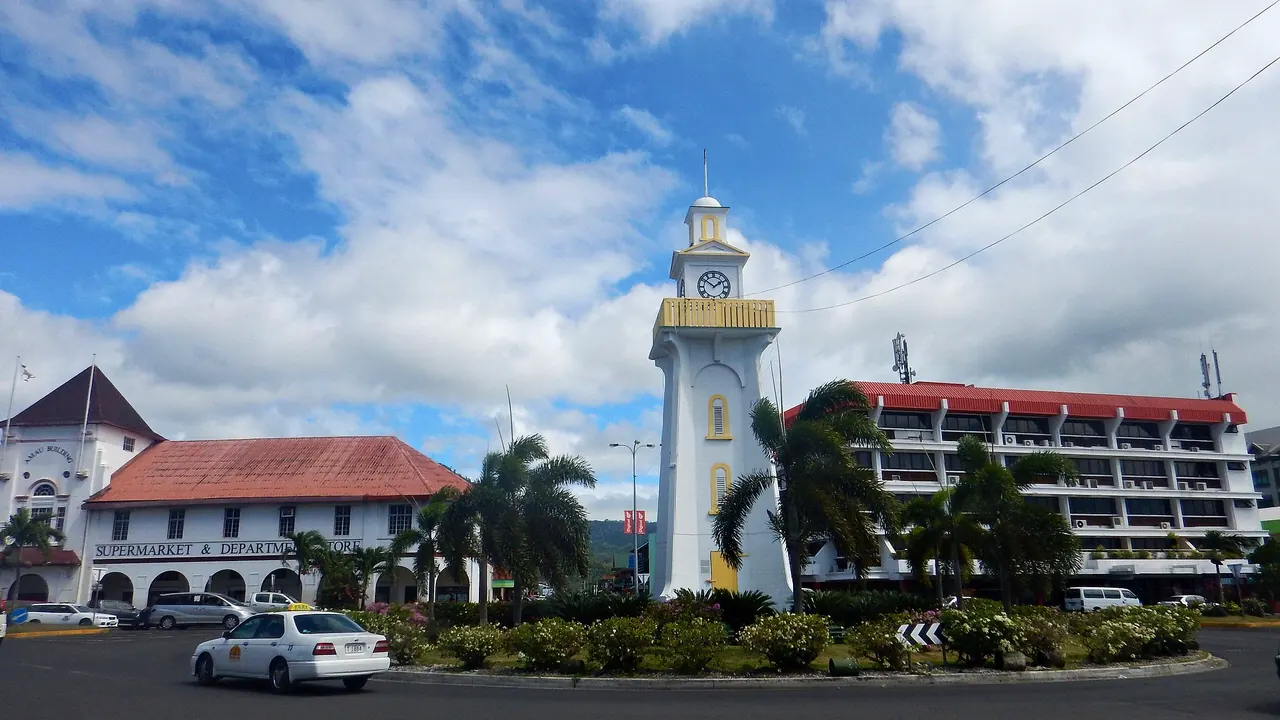
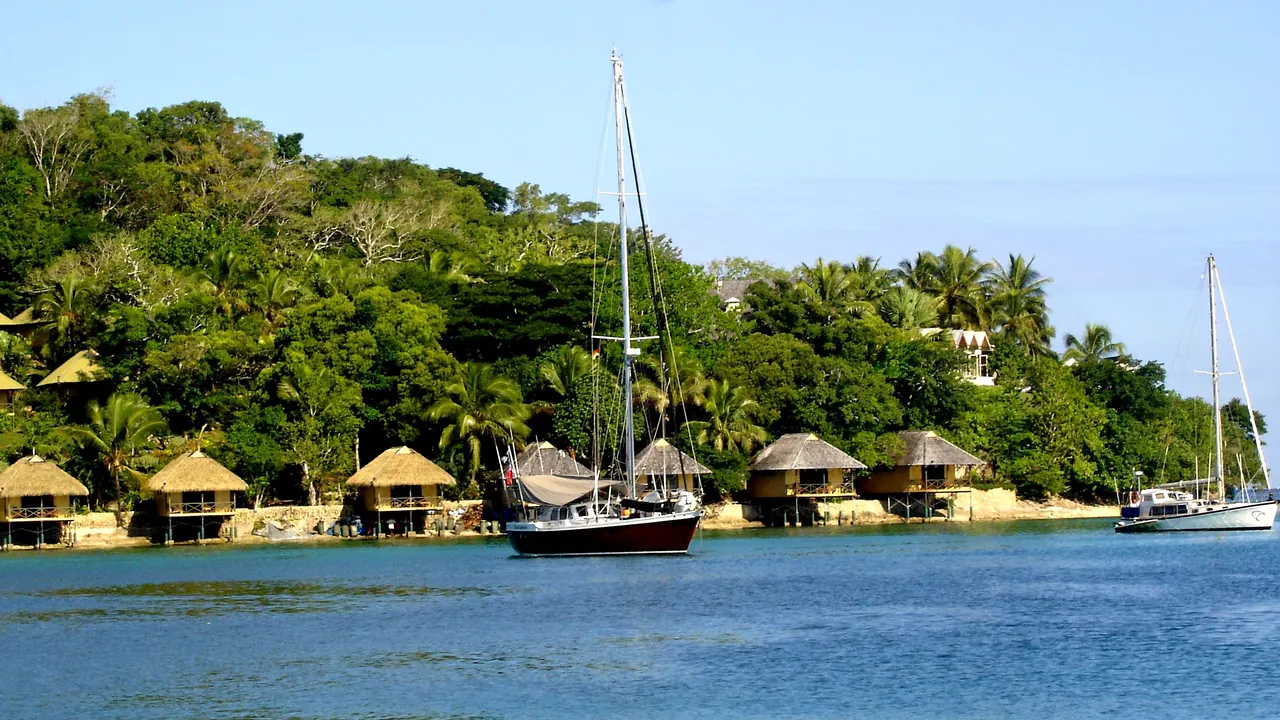
Photos: Apia by Rickard Törnblad, CC BY-SA 4.0, cropped; Port Vila by Phillip Capper from Wellington, New Zealand, CC BY 2.0, cropped.
Apia or Port Vila?
Our verdict in twelve categories, each scored against the same fixed benchmark cities, and the climate month by month, so you can choose for your trip.
Choose Apia for
- prices
- live music and the arts
- culture and sights
Apia suits travellers who want a cheaper, more lived-in island stay with Samoan culture close at hand. Stevenson's house at Vailima, Sunday church singing, fiafia dance nights and simple beach fales on the south coast that cost little all reward someone curious about the place. It takes more effort, though. The good beaches are an hour or more away, and the town works best as a short stop before moving to the coast.
Choose Port Vila for
- beaches
- food and drink
- day trips
Choose Port Vila if the sea is the point of the trip. Lagoons, island beaches and snorkelling reefs are a short boat hop from town. The food has a French accent and more range, and Chief Roi Mata's Domain and the offshore islands give you more for days out. It costs more, with resorts priced for Australians and New Zealanders, and apart from the national museum there is little culture to see in town.
Scoreboard
Twelve categories on one fixed scale from 0 to 100. The shaded stretch is the gap between the two.
Your match
Pick a travel style or drag the sliders, and both match scores follow your weighting.
Too close to call, 1 point apart
Wins on prices and live music and the arts with your weighting.
Wins on beaches and food and drink with your weighting.
What matters to you?
Category by category
What the scores mean for a trip.
Beaches & swimming
Neither town has swimming off its own waterfront, but the water is much closer in Port Vila. The lagoons at Erakor and Iririki and the marine reserve at Hideaway Island are a short boat hop away, and the water is clear enough to snorkel straight from the sand. The beaches are small and edged with coral, and many belong to resorts.
In Apia the only swimming in town is snorkelling at Palolo Deep, where the reef drops into a deep blue hole. The long white sand and turquoise lagoons people imagine are at Lalomanu and Matareva, but they sit an hour or more away by winding road. A beach trip from Apia really means moving out to the coast.
Food & drink
Port Vila eats a little better, mainly thanks to its French accent. There are bakeries with morning baguettes, grilled lobster and Santo beef on the waterfront, and Tanna coffee. Lap lap at the harbour market stalls and kava at dusk in a nakamal give it a local side too.
Apia is plainer and closer to the land. Oka in coconut cream, palusami and koko Samoa are the dishes to try, and the fish market shows the day's catch. A Sunday umu meal shared at a guesthouse is the highlight. Beyond that the choice is a few cafés and takeaways.
Culture & sights
Apia has more to see, and you can see the culture being lived around you. Villa Vailima, Stevenson's tomb on Mount Vaea, the waterfront cathedral and the chiefs' tombs on the Mulinu'u peninsula fill a morning or two. Fa'a Samoa, the Samoan way of life, shows in open fales, village councils and traditional tattooing.
Port Vila has one strong sight, the Vanuatu Cultural Centre and National Museum, with its slit drums, masks and sand drawings. Beyond that there is little to tour in town, and its best cultural encounters happen in the villages outside.
Nightlife
Both towns are quiet after dark, and neither suits anyone looking for a big night out. The difference is in the habits. In Port Vila, evenings begin at dusk in dim kava nakamals and move on to waterfront bars full of yachties, resort lounges or the casino. In Apia, people drink Vailima beer in the Beach Road bars and locals dance in a couple of clubs at weekends, and the town goes almost silent on Sundays.
Nature & outdoors
Both are green volcanic islands with rich reefs, and either is good for time outdoors. Apia leans more towards the land: a forest trail up Mount Vaea, the crater lake of Lanoto'o, waterfalls along the Cross Island Road and the black lava cliffs of O Le Pupu-Pu'e National Park. The To Sua Ocean Trench, reef surf breaks and humpback whales in the southern winter add to it.
Port Vila is the one for time in the water, with coral gardens, drop-offs and wrecks close to the harbour and sheltered lagoons for kayaking and paddleboarding. Its hills are low and there are few marked hikes, so the Mele Cascades are the main walk inland.
Day trips
Port Vila has the stronger day trips. Chief Roi Mata's Domain, a UNESCO-listed chiefly landscape about forty minutes' drive away, makes a proper guided day out. Small boats also reach the village islands of Pele, Nguna and Lelepa.
From Apia the options are a drive round Upolu past churches and fale villages, or the car-free island of Manono. Savai'i is a ferry ride away, but it is really worth an overnight stay rather than a long day.
Good for families
There is little to choose between them for children. Neither has a zoo, aquarium or theme park, medical care is basic in both, and mosquitoes make repellent a daily habit. Apia suits families who like simple outdoor days: the sheltered pools at Palolo Deep and Piula, swims under waterfalls and lazy afternoons at south-coast beach fales. These places are spread around Upolu, though, so getting from town to each of them means long, winding drives.
Port Vila works better as a resort stay, with calm, shallow lagoons, kayaks, kids' clubs and easy snorkelling for children at Hideaway Island. Days there revolve around the water, with the odd outing to the Mele Cascades or a village.
Getting around
Both centres are compact and easy to walk along the harbour, and in both you need a hire car or a driver to see the island properly. Apia has brightly painted wooden buses that leave the market when full and slow to a trickle on Sundays, along with cheap taxis. Hiring a car there needs a temporary local licence.
Port Vila runs on shared minibuses marked with a B on the plate. They have no routes or timetables, and the driver drops each passenger at their door. Resorts run their own boats to the islands, and the town climbs steeply behind the water, with patchy pavements.
Shopping & style
Shopping is a small part of a stay in either town, and it centres on crafts rather than fashion. Apia's waterfront flea market is the place for siapo bark cloth, woven mats and kava bowls, though shops close on Sundays. Port Vila adds a few duty-free stores for cruise passengers, and its best buys are things to eat and drink, Tanna coffee and kava powder, alongside pandanus baskets and carvings.
Affordability
Apia makes it easier to keep costs down, and the biggest difference is where you sleep. On Upolu's south and east coasts a simple open-sided beach fale, with meals included, puts you on the sand for very little. Port Vila has nothing quite like it. Near its lagoons a bed usually means a resort, and the cheaper choice is a plain guesthouse in town, away from the water.
From day to day the gap is smaller. Both towns have filling market plates and cheap local transport, Apia with its wooden buses and taxis, Port Vila with its shared minibuses and kava evenings that cost next to nothing. The difference comes with a sit-down meal or a guided outing. In Apia, a waterfall or village pool usually asks only a small customary fee. In Port Vila, restaurant dinners, dive trips and organised tours soon cost roughly what they would back home in Australia.
Live music & performing arts
Neither has a theatre or concert hall, but Apia offers more music and dance. Hotels hold weekly fiafia nights with the slap dance and the fire knife dance. Congregations sing in unaccompanied harmony at Sunday services, and the Teuila Festival each September fills the waterfront with choirs and longboat races.
In Port Vila, live music means string bands playing guitar and ukulele at resorts and markets, custom dance at cultural villages near town and an annual music festival. Otherwise, evening entertainment is a resort show.
Wellness & relaxation
Both are places to slow down rather than to seek out treatments, and neither has a bathing tradition. Apia's special offer is fofō, the Samoan massage with coconut oil from local practitioners, though the town has traffic and most people stay at a coastal fale to rest. Port Vila's calm comes from its lagoon resorts, with a hammock and a kava at sunset, and resort and day spas for massage.
When should you go?
Pick your month. The climate figures are measured averages, not a forecast.
Apia in July
Port Vila in July
Daytime high, °C
Rainfall in the month, mm
Temperature and rainfall are climate normals, averaged over the years shown. Apia: 1998-2025 (sunshine 1981-2010, rainfall 1991-2020) normals, Faleolo Intl / Apia (18.1 km from centre). Port Vila: 1991-2020 normals, Bauerfield Efate (4.1 km from centre).
Apia is hot all year, with highs of about 31°C in every month, so choosing when to go comes down to the rain. The wet season from November to April is heavy, passing 400mm in January and February. June to September is much drier and sunnier, and August is the best month. The sea stays around 28°C all year, so you can always swim.
Port Vila has a real cooler season. From June to September highs ease to about 27°C, and from July to September rain falls below 100mm a month. The sea cools only slightly and is still warm enough for long snorkels. January to April is hot, humid and wet in both places, and in Port Vila it is also cyclone season. For walking and outdoor days, Port Vila's southern winter is the more comfortable choice. Apia's dry months are drier than its wet ones but never cool.
Which traveller are you?
For a beach and sun trip, Port Vila is the easier choice. Lagoon swimming at Erakor, Iririki and Hideaway Island is a short boat ride from town. Apia's waterfront is a working port, and its white-sand beaches lie an hour or more away on Upolu's south and east coasts.
On a trip on a tight budget, Apia goes further. Buses, taxis and market plates cost little, and beach fales with meals included are among the cheapest places to sleep by the sea in the Pacific. Port Vila's resorts and imported food push daily costs up quickly.
For a culture and arts trip, Apia has more to offer. Villa Vailima and Stevenson's tomb, the chiefs' tombs at Mulinu'u, fiafia dance nights and unaccompanied Sunday hymns add up to more than Port Vila, where the national museum is largely the only sight.
Before you go
| Measure | Apia | Port Vila |
|---|---|---|
| Official language | English, Samoan | French, English, Bislama |
| Currency | Tala (WST) | Vatu (VUV) |
| Sockets | I230 V, 50 Hz | CGI220 V, 50 Hz |
| Driving side | Left | Right |
| Time zone | UTC+13 | UTC+11 |
| Emergency number | 999 | 112 |
| Elevation | 2 m | 59 m |
| Main airport | Faleolo International Airport (APW)19 km from centre6 non-stop destinations | Bauerfield International Airport (VLI)4 km from centre9 non-stop destinations |
| Public holidays this year | 11 days | 14 days |
By the numbers
| Measure | Apia | Port Vila |
|---|---|---|
| Population | 37,708 | 49,034 |
| People per km² | 305 | 2,078 |
| Museums within 10 km | 4 | 2 |
| UNESCO World Heritage sites within 50 km | 0 | 1 |
| Swim season, months above 21 °C | 12 months | 12 months |
Where else could you go?
Every comparison below shares a destination with this one, so you can follow Apia or Port Vila somewhere new.
- New Caledoniavs Port Vila
- Nuku'alofavs Apia
- Mamanuca Islandsvs Port Vila
- Funafutivs Apia
- Honiaravs Port Vila
- Rarotongavs Apia