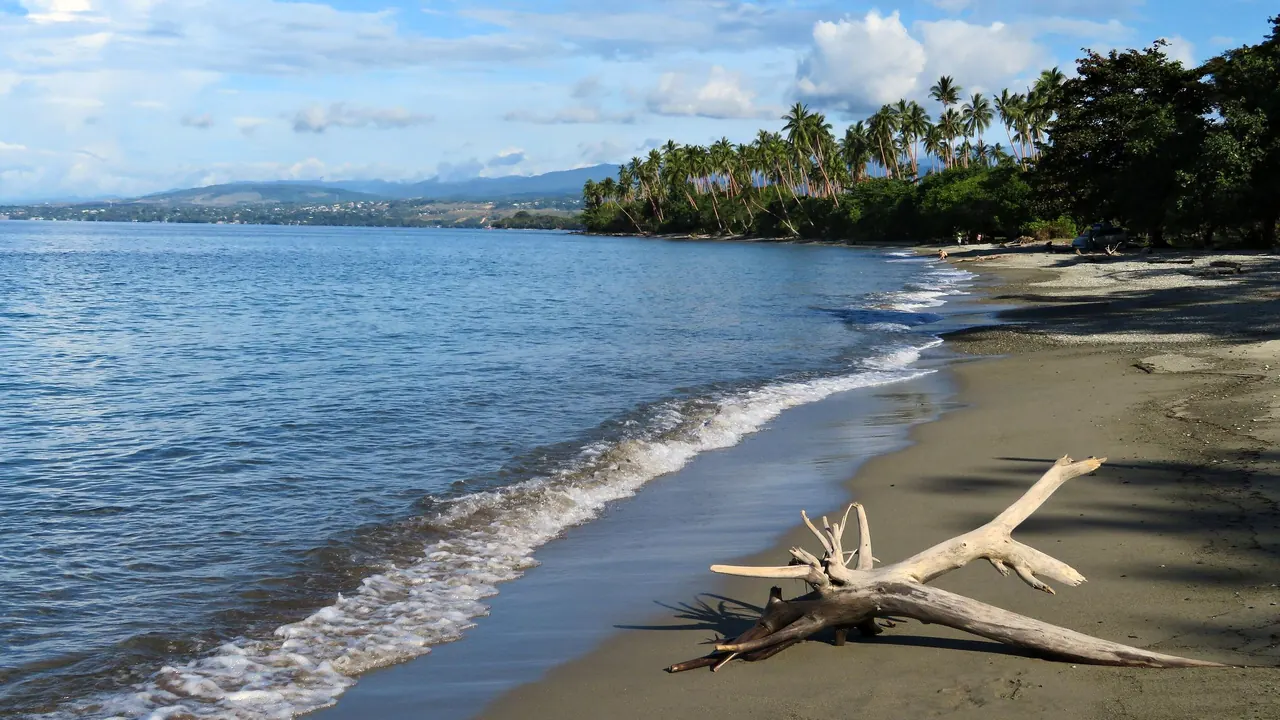
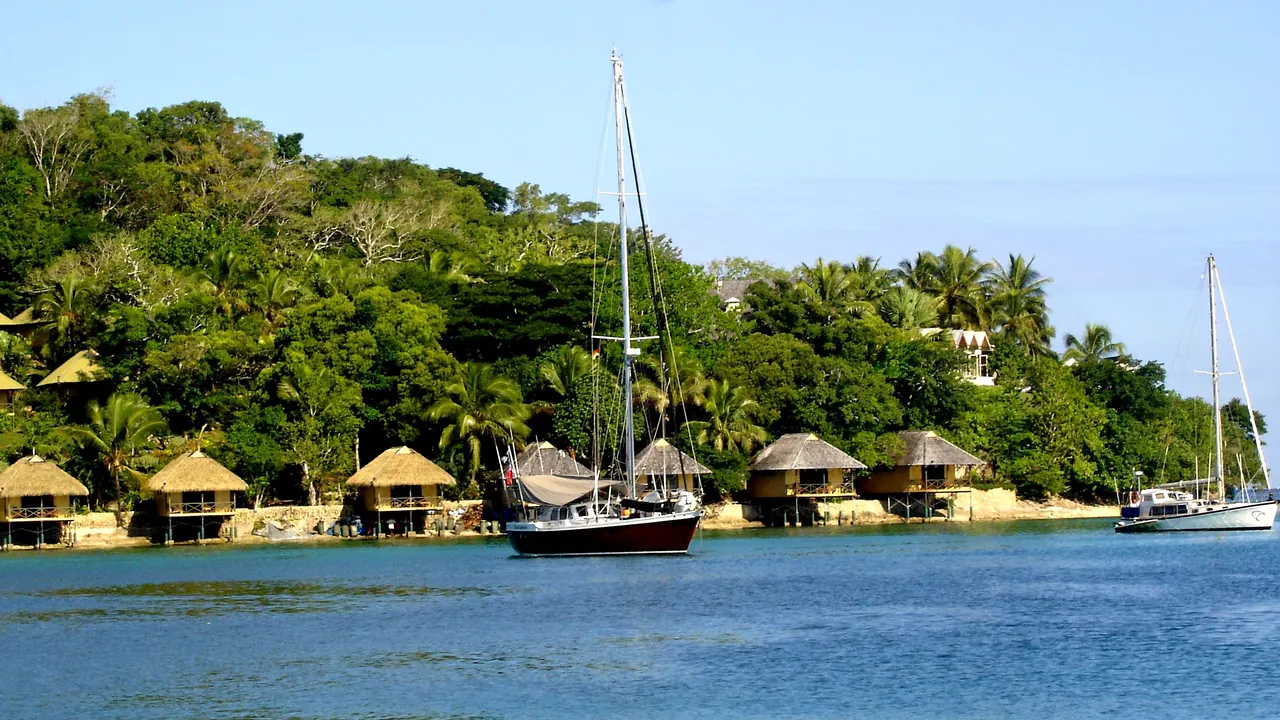
Photos: Honiara by Torbenbrinker, CC BY-SA 4.0, cropped; Port Vila by Phillip Capper from Wellington, New Zealand, CC BY 2.0, cropped.
Honiara or Port Vila?
Our verdict in twelve categories, each scored against the same fixed benchmark cities, and the climate month by month, so you can choose for your trip.
Choose Honiara for
- culture and sights
- prices
Honiara suits travellers with a clear purpose: the Second World War's Guadalcanal campaign, walked on Skyline Ridge and Bloody Ridge, and wreck diving in Iron Bottom Sound or straight off the beach at Bonegi. It asks for patience, taxis and local guides, and gives little back in comfort, food or evenings out. For history readers and divers, though, nothing in Port Vila comes close.
Choose Port Vila for
- wellness
- families
- beaches
Port Vila is the easier and softer choice. Lagoon resorts at Erakor and Hideaway Island, calm water for children, bakery breakfasts with a French accent and a sunset kava suit couples and families who want to switch off. Chief Roi Mata's Domain and the offshore village islands give it variety. Its history is lighter, so anyone drawn mainly by the war will find it a poor substitute.
Scoreboard
Twelve categories on one fixed scale from 0 to 100. The shaded stretch is the gap between the two.
Your match
Pick a travel style or drag the sliders, and both match scores follow your weighting.
Wins on culture and sights and prices with your weighting.
Wins on wellness and families with your weighting.
What matters to you?
Category by category
What the scores mean for a trip.
Beaches & swimming
Port Vila is the better choice for swimming. Lagoon water at Erakor, Iririki and Hideaway Island is a short boat hop away and clear enough to snorkel from the shore, with a marine reserve just off the sand at Hideaway. The beaches are small and often belong to resorts, but they are made for swimming.
Honiara's own shoreline is harbour and river mouth, so swimming starts a drive west at Bonegi's dark sand, where the draw is snorkelling over sunken transport ships rather than lazing on the beach. Crocodiles in the estuaries and custom fees on some beaches make it a more guarded beach day.
Food & drink
Neither town is a dining destination, but Port Vila gives you more to work with: morning baguettes and pastries, grilled reef fish, lobster and Santo beef on the waterfront, lap lap at the market stalls and Tanna coffee. In Honiara the best eating is at the Central Market on Mendana Avenue and the very fresh tuna. Restaurants there are mostly hotel dining rooms and Chinese-run eateries, and you are more likely to taste stone-oven home cooking at a village event than in town.
Culture & sights
Honiara has far more to see for anyone interested in history. The Guadalcanal battlefield surrounds the town, from the American Memorial on Skyline Ridge above Iron Bottom Sound to Bloody Ridge, the Japanese Peace Memorial on Mount Austen and guns and aircraft left in the bush. The National Museum adds custom money, canoes and carving.
Port Vila's sightseeing comes down mainly to the Vanuatu Cultural Centre and National Museum, excellent on slit drums, masks and sand drawing, plus a few colonial buildings. That is a morning's visit, whereas Honiara's war sites reward several days with a guide.
Nightlife
Both towns go to bed early, but Port Vila offers a little more after dark. There is kava in a nakamal at dusk, then waterfront bars where yachties and expatriates meet, resort lounges, a casino and a couple of dance spots at weekends. A night out in Honiara means a sunset drink at a hotel or waterfront bar and perhaps one of the few clubs playing reggae. Because the streets are dark, you take a taxi from place to place rather than wandering between bars.
Nature & outdoors
The outdoors is equally strong in both, and in both the best of it is under water, but it differs in character. Honiara is the wreck diver's choice, with warships, submarines and aircraft across Iron Bottom Sound, some reachable from the shore. Behind the town rises a steep, mountainous interior where guided jungle walks lead to the Mataniko and Tenaru Falls.
Port Vila leans towards coral gardens and drop-offs, with sheltered lagoons for kayaking and paddleboarding and the gentler Mele Cascades and bright pools near Eton. Its hills are low and walking is easy, while Honiara's hikes need a guide and the landowners' permission.
Day trips
Port Vila has the easier outings. Chief Roi Mata's Domain, a UNESCO-listed chiefly landscape about forty minutes' drive away, makes a fine guided day, and small boats run to the village islands of Pele, Nguna and Lelepa.
Honiara's best day out is Tulagi, the old protectorate capital across the strait, which is rewarding for history readers. Savo's hot springs and megapode birds are memorable too, but both trips depend on charters and boats without fixed schedules. Closer in, the Vilu war museum pairs neatly with Bonegi.
Good for families
Port Vila works for families on resort terms, with calm, shallow lagoon water, kayaks, kids' clubs and easy snorkelling at Hideaway Island, all in a small, relaxed town.
Honiara is hard going by comparison. It has heat, missing pavements, malaria on Guadalcanal, basic medical care and nothing aimed at children. Older children may enjoy snorkelling over the Bonegi wrecks, but most families head straight on to an island resort elsewhere.
Getting around
Port Vila is easier to get around. Its B-plate minibuses drop each passenger at their door, the harbour front is compact enough to walk, and resorts run their own boats to their islands.
Honiara's single coastal road makes it easy to understand but slow to travel, with jams, broken pavements and heat. The battlefields to the east and the beaches to the west mostly need a taxi, a car with driver or a tour.
Shopping & style
Neither town is worth visiting for shopping, and in both the buys are handicrafts. Honiara's best are carvings inlaid with nautilus shell and strands of Malaita shell money, found at the Central Market and the stalls near the museum. Port Vila has duty-free stores for cruise passengers, and alongside its pandanus baskets and miniature tam-tam drums it offers things to eat and use at home, such as Tanna coffee, kava powder and coconut oil.
Affordability
The two cost much the same, and both surprise visitors by being dearer than their size suggests, because so much is imported. Where the money goes differs. Honiara's comfortable hotels are few and expensive for what they offer, while Port Vila's lagoon resorts are priced for short-haul visitors from Australia and New Zealand.
In both towns, market food, minibus rides and simple guesthouses keep a careful budget in check. Port Vila adds the kava nakamal, where an evening costs next to nothing.
Live music & performing arts
Neither has a theatre or concert hall, and in both you hear the islands' music mostly at occasional or arranged events. Honiara's tradition is the bamboo panpipe ensembles of Malaita and custom dancing, usually seen at cultural shows and celebrations. Port Vila's guitar-and-ukulele string bands turn up more casually at resorts, markets and church events, and the town holds a long-standing annual music festival.
Wellness & relaxation
Port Vila is far better for unwinding. Resort spas and a few day spas offer coconut-oil massage, but the real draw is the slow island pace, with near-silent Sundays and long afternoons by the lagoon.
Honiara offers a hotel massage at most, and its hot, dusty main road is no place to rest. The calm of the Solomon Islands is out in the villages and outer islands, and most visitors leave the capital to find it.
When should you go?
Pick your month. The climate figures are measured averages, not a forecast.
Honiara in July
Port Vila in July
Daytime high, °C
Rainfall in the month, mm
Temperature and rainfall are climate normals, averaged over the years shown. Honiara: 1992-2020, 12 years observed (rainfall 1961-1990) normals, Honiara (2.6 km from centre). Port Vila: 1991-2020 normals, Bauerfield Efate (4.1 km from centre).
Honiara's temperature barely changes, with highs near 32°C in every month and a sea that stays very warm, so the year is shaped by the rain. December to April is the wet season, peaking near 348mm in January, when trails and roads turn to mud. June to September is the driest stretch and the best for diving and hiking, though the streets are hot for walking at any time of year.
Port Vila has a real cooler season. From June to September highs sit around 27°C, rain eases to under 100mm a month by July, and walking around town is comfortable. The sea, at about 26°C, is still pleasant for swimming. Its wet months run from January to May, peaking in March, and that hot, humid half of the year is also the cyclone season. In both places the middle of the year is the time to go, and Port Vila is the milder of the two then.
Which traveller are you?
For a culture and arts trip built around history, choose Honiara. Book a guide and driver for several days to work through the battlefields on either side of town, then cross to Tulagi. In Port Vila, the history fills a single morning.
On a family trip with young children, use Honiara at most as a stopover and stay in Port Vila. Choose a lagoon resort over a guesthouse in town, plan the days around the water and keep the Mele Cascades for one outing.
For a relaxing and wellness trip, treat Honiara only as a gateway to the outer islands and spend your time in Port Vila. Leave the days there unplanned, come in the drier middle of the year and end each evening with kava.
Before you go
| Measure | Honiara | Port Vila |
|---|---|---|
| Official language | English | French, English, Bislama |
| Currency | Solomon Islands Dollar (SBD) | Vatu (VUV) |
| Sockets | GI220 V, 50 Hz | CGI220 V, 50 Hz |
| Driving side | Left | Right |
| Time zone | UTC+11 | UTC+11 |
| Emergency number | Police 999, ambulance 911, fire 988 | 112 |
| Elevation | 29 m | 59 m |
| Main airport | Honiara International Airport (HIR)12 km from centre3 non-stop destinations | Bauerfield International Airport (VLI)4 km from centre9 non-stop destinations |
| Public holidays this year | 9 days | 14 days |
By the numbers
| Measure | Honiara | Port Vila |
|---|---|---|
| Population | 84,520 | 49,034 |
| People per km² | 3,842 | 2,078 |
| Museums within 10 km | 1 | 2 |
| UNESCO World Heritage sites within 50 km | 0 | 1 |
| Swim season, months above 21 °C | 12 months | 12 months |
Where else could you go?
Every comparison below shares a destination with this one, so you can follow Honiara or Port Vila somewhere new.
- New Caledoniavs Port Vila
- Mamanuca Islandsvs Port Vila
- Port Moresbyvs Honiara
- Nuku'alofavs Port Vila
- Mamanuca Islandsvs Honiara
- Apiavs Port Vila