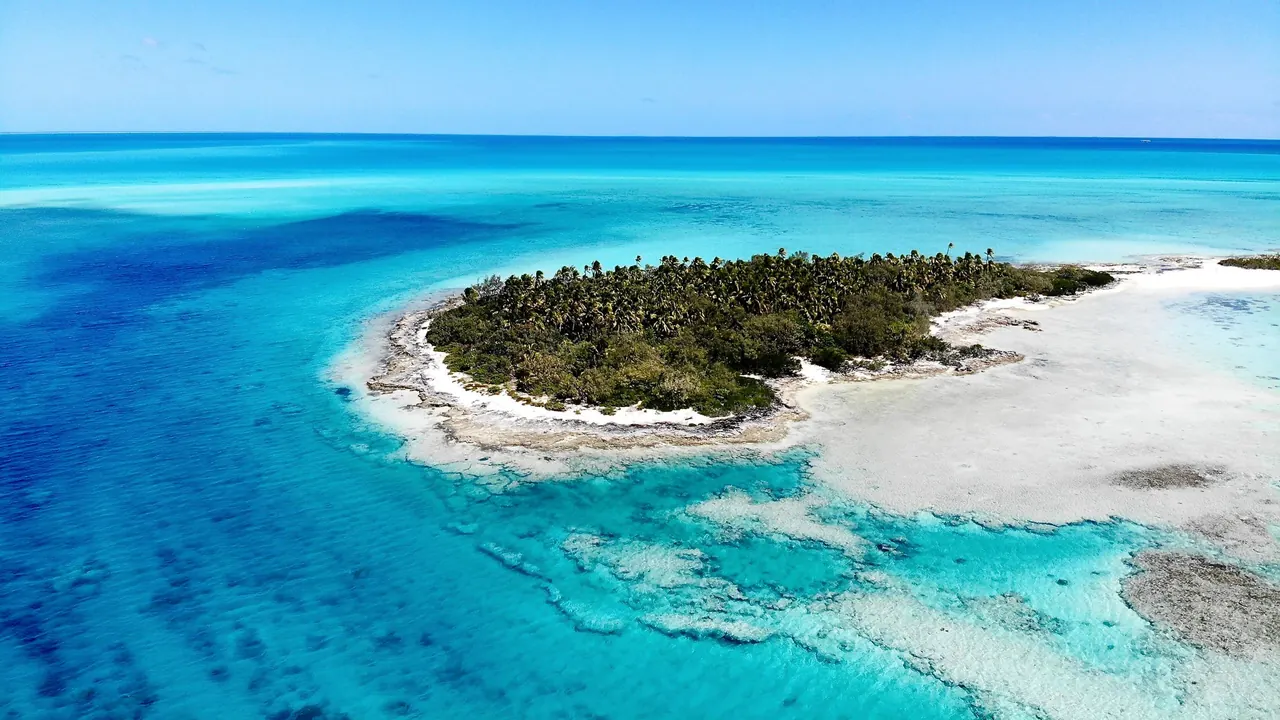
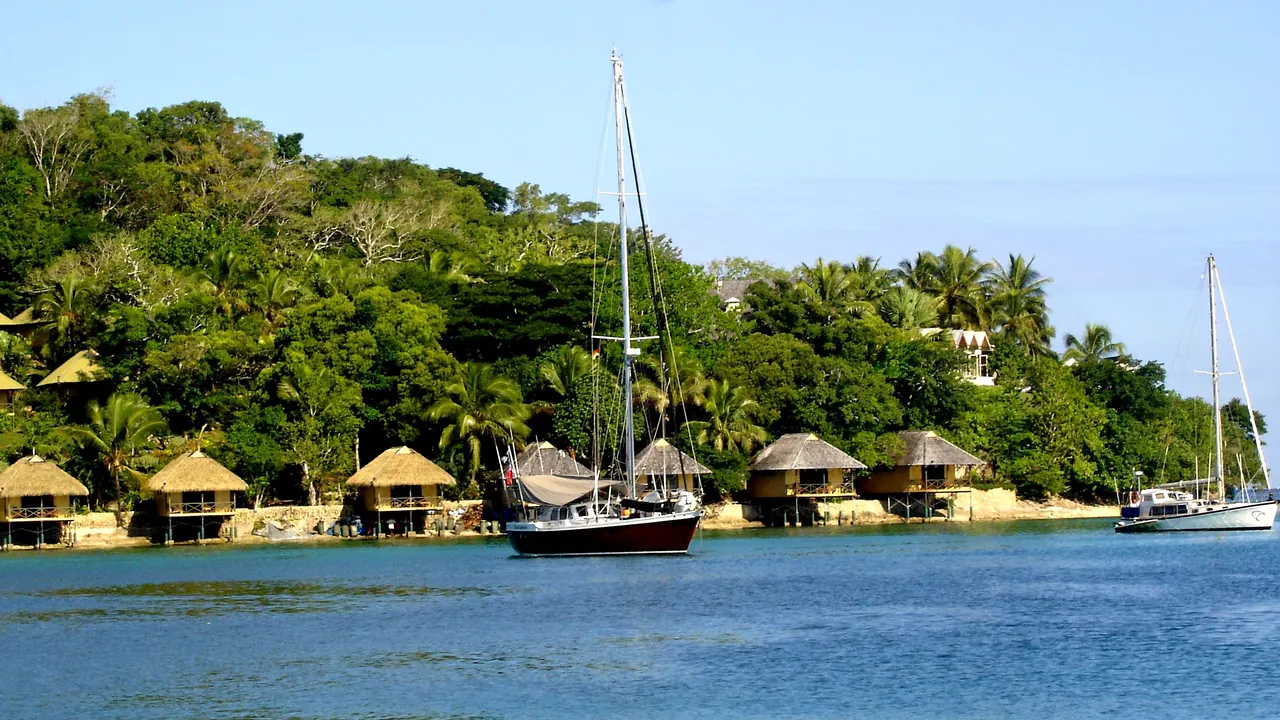
Photos: New Caledonia by Pacificbluefilm, CC BY-SA 4.0, cropped; Port Vila by Phillip Capper from Wellington, New Zealand, CC BY 2.0, cropped.
New Caledonia or Port Vila?
Our verdict in twelve categories, each scored against the same fixed benchmark cities, and the climate month by month, so you can choose for your trip.
Choose New Caledonia for
- culture and sights
- beaches
- nature and the outdoors
New Caledonia is the better choice for a longer, more varied island vacation. Its reef lagoon is far larger, the outer-island beaches on the Isle of Pines and Ouvéa are among the finest in the Pacific, and the main island adds red-earth wilderness, rainforest and real Kanak heritage at the Tjibaou Cultural Centre. You need a car, domestic flights and a generous budget to see it properly.
Choose Port Vila for
- prices
- getting around
Port Vila suits travellers who want a simpler, cheaper lagoon stay from one small town. The beaches are coves rather than long strands, but the sea is warmer still, the shared minibuses make moving about easy without a car, and kava nakamals, market food stalls and simple guesthouses keep daily costs down. It is a resort-and-snorkel trip rather than an island to explore.
Scoreboard
Twelve categories on one fixed scale from 0 to 100. The shaded stretch is the gap between the two.
Your match
Pick a travel style or drag the sliders, and both match scores follow your weighting.
Wins on culture and sights and beaches with your weighting.
Wins on prices and getting around with your weighting.
What matters to you?
Category by category
What the scores mean for a trip.
Beaches & swimming
New Caledonia has the finer and more varied beaches. In Nouméa you can swim straight from town at Anse Vata and the Baie des Citrons, and boats run out to sandy islets such as Amédée for a day snorkelling over the reef. The best beaches are on the outer islands: the pine-backed bays at Kuto and Kanumera on the Isle of Pines, the sheltered natural pool at Oro, and Ouvéa's single strand of about 25km.\n\nPort Vila has no beach on its harbour front, so swimming means a short boat hop to Iririki or Erakor, or a trip out to the marine reserve at Hideaway Island.
The beaches are small and often narrow, with coral underfoot, and many belong to resorts. Its real advantage is the water itself, which is a little warmer than New Caledonia's even in summer. In the southern winter the gap is larger: Efate's sea still feels like a warm bath, while the lagoon off Nouméa cools enough to cut a long swim short.
Food & drink
Both eat with a French accent and fresh bread in the morning, but New Caledonia has more range. Nouméa adds bistros with French wine, lagoon crab and the territory's blue prawns, and Vietnamese and Indonesian families long settled there brought bami and nems. Bougna, cooked on hot stones at a tribal homestay, is a meal worth planning a day around.
Port Vila is smaller and plainer. Grilled reef fish, lobster and Santo beef make the restaurant meals, and lap lap is found at the harbour market stalls. The distinctive ritual is a sunset shell of kava in a nakamal. A week covers it.
Culture & sights
New Caledonia gives a curious visitor more to see. Renzo Piano's Tjibaou Cultural Centre is a landmark in its own right, the Museum of New Caledonia holds Kanak carvings and door posts, and the stone ruins of the penal colony stand on the Nouville peninsula and the Isle of Pines.
Port Vila has one strong stop, the Vanuatu Cultural Centre and National Museum, with slit drums, masks and sand drawings. Beyond that, the town's colonial buildings and churches are modest, and the meaningful encounters happen in villages outside town.
Nightlife
Neither is a place for a big night out, though Nouméa has a little more. Beach bars and a few small clubs along the Baie des Citrons and Anse Vata stay busy past midnight at weekends. Port Vila's evenings are quieter. They begin in dim kava nakamals and end at a few yachtie bars, a casino or a resort lounge, and most of the town is asleep before midnight.
Nature & outdoors
New Caledonia is the stronger destination for the outdoors. Its lagoon is UNESCO-listed, with dugongs, turtles and rays, and humpback whales enter the southern lagoon in winter. Anse Vata's trade winds draw kitesurfers. On land there is the red-earth Grand Sud, kauri forest and kagu at Blue River, and the rainforest and rock towers around Hienghène.
Efate's outdoors is gentler and mostly underwater: drop-offs and wrecks close to the harbour, lagoons for paddling, and the Mele Cascades and Eton's freshwater pools inland. The hills are low and marked hiking is limited. Seeing Tanna's volcano means taking a flight.
Day trips
Outings are limited from both, but New Caledonia has a little more choice. From Nouméa you can fly or take the ferry to the Isle of Pines for the day, drive the west coast to Bourail and Fort Teremba, or visit the convict ruins at Prony.
Port Vila has no other towns to reach. Its outings are to Chief Roi Mata's Domain, a UNESCO-listed chiefly landscape about forty minutes' drive away, and by small boat to the village islands of Pele, Nguna and Lelepa.
Good for families
New Caledonia is the easier choice for children. Nouméa has the Aquarium of the Lagoons, with nautilus and reef life, and the Michel Corbasson zoo and forest park. Boat trips run to islets with lifeguarded beaches, and supermarkets and pharmacies are easy to find. The main drawback is the long drives on Grande Terre.
Port Vila works as a resort stay, with calm lagoons, kids' clubs and easy snorkelling at Hideaway Island, and people there are warm towards children. But there is no zoo or aquarium, medical care is basic, and mosquitoes and the hot wet summer need planning around.
Getting around
Port Vila is the simpler place to get about. The harbour front is walkable, and the minibuses with a B on the plate drop each passenger at their door, so most trips need no car.
New Caledonia means driving. Nouméa spreads around several bays, so visitors fall back on taxis or a hire car, and the east coast is hours away over the mountains. The outer islands need a flight or ferry, then a car or scooter once you arrive.
Shopping & style
Shopping is a minor part of either trip, though Nouméa offers a little more. It has French fashion and swimwear boutiques, and in the morning the Port Moselle market sells Kanak carvings, weaving and Loyalty Islands vanilla. Port Vila has handicraft stalls by the harbour selling pandanus baskets and miniature tam-tams, with Tanna coffee and kava powder to take home, but no fashion at all.
Affordability
Port Vila is the cheaper of the two, though neither is cheap. Imports make its groceries and restaurant meals cost about what they would in an Australian town, and its resorts are priced for short-haul visitors. Shared minibuses, market stalls, kava nakamals and simple guesthouses bring the daily cost down a great deal.
In New Caledonia, food and drink cost more than in mainland France, resorts are priced for long-haul visitors, and car hire and domestic flights add up. Tribal homestays on the outer islands and self-catering are the main ways to save.
Live music & performing arts
Neither has a season worth planning a trip around, but New Caledonia has a real venue. The Tjibaou Cultural Centre stages Kanak dance, theatre and concerts, and kaneka, the local reggae-tinged music, can be heard at festivals. In Port Vila, live music means string bands at resorts and markets, custom dance at cultural villages and one long-standing annual music festival.
Wellness & relaxation
The two are evenly matched, and in both the rest comes from a slow pace rather than any spa culture. In New Caledonia it means outer-island days led by the tide, and massages with niaouli and tamanu oils, while the one thermal spring at La Crouen is a long drive away. Port Vila is island time in a town: almost silent Sundays, coconut-oil massages and a hammock by the lagoon.
When should you go?
Pick your month. The climate figures are measured averages, not a forecast.
New Caledonia in July
Port Vila in July
Daytime high, °C
Rainfall in the month, mm
Temperature and rainfall are climate normals, averaged over the years shown. New Caledonia: 1991-2020 normals, Noumea Nlle-Caledonie (1.3 km from centre). Port Vila: 1991-2020 normals, Bauerfield Efate (4.1 km from centre).
Around Nouméa, New Caledonia's best stretch is September to December, when the rain is lightest at about 40mm a month and the long sunny days are at their peak. The sea warms to 27°C from January to April, the best time for swimming, though March is the wettest month and summer is cyclone season. From June to August the days are mild and good for walking and driving, but the sea drops to 22°C, which feels cool for long swims.
Port Vila is hotter and much wetter all year. Daytime highs reach 31°C in summer and the sea never cools below about 26°C, so swimming is good in any month. The rainy season is heavy, with March bringing around 334mm. July to September is the time to go, with less rain and slightly lower humidity. It is drier there in mid-year, whereas New Caledonia stays dry later into spring.
Which traveller are you?
For a beach and sun trip, New Caledonia is the clear pick. One of the world's largest lagoons rings its main island, and the Isle of Pines and Ouvéa have long white-sand bays. Port Vila mostly offers narrow resort coves.
On a tight budget, Port Vila goes much further. Shared minibuses cost little, market stalls serve lap lap and plain plates, and guesthouses replace resorts. New Caledonia's imported prices, car hire and domestic flights make it one of the region's dearest places to travel.
On a family trip with children, New Caledonia offers more to do. Nouméa has an aquarium, a zoo where children can see a kagu, and lifeguarded islet beaches. Port Vila has resort kids' clubs, but no attractions built for children and only basic medical care.
Before you go
| Measure | New Caledonia | Port Vila |
|---|---|---|
| Official language | French | French, English, Bislama |
| Currency | CFP Franc (XPF) | Vatu (VUV) |
| Sockets | CF220 V, 50 Hz | CGI220 V, 50 Hz |
| Driving side | Right | Right |
| Time zone | UTC+11 | UTC+11 |
| Emergency number | 112 | 112 |
| Elevation | - | 59 m |
| Main airport | La Tontouta International Airport (NOU)14 non-stop destinations | Bauerfield International Airport (VLI)4 km from centre9 non-stop destinations |
| Public holidays this year | 13 days | 14 days |
By the numbers
| Measure | New Caledonia | Port Vila |
|---|---|---|
| Population | 278,500 | 49,034 |
| People per km² | 15 | 2,078 |
| Museums within 10 km | - | 2 |
| UNESCO World Heritage sites within 50 km | - | 1 |
| Swim season, months above 21 °C | 12 months | 12 months |
Where else could you go?
Every comparison below shares a destination with this one, so you can follow New Caledonia or Port Vila somewhere new.
- Mamanuca Islandsvs Port Vila
- Honiaravs Port Vila
- Nuku'alofavs Port Vila
- Apiavs Port Vila
- Port Moresbyvs Port Vila
- Cook Islandsvs New Caledonia