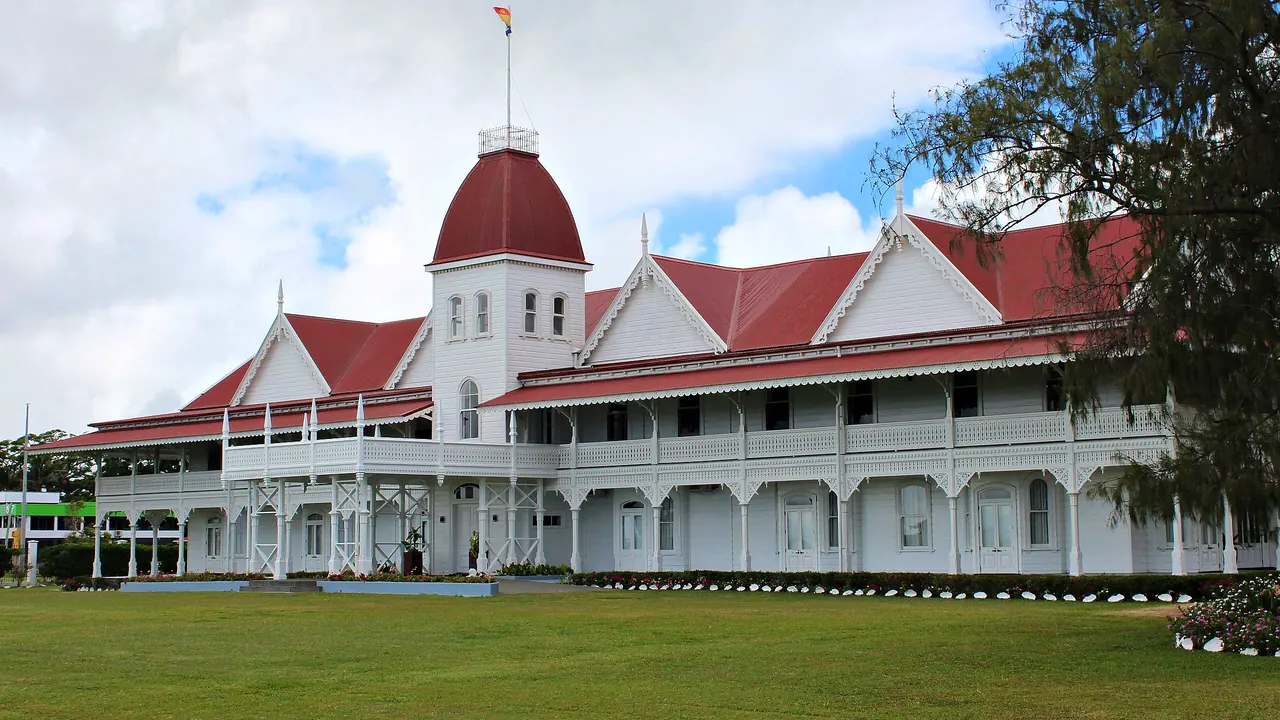
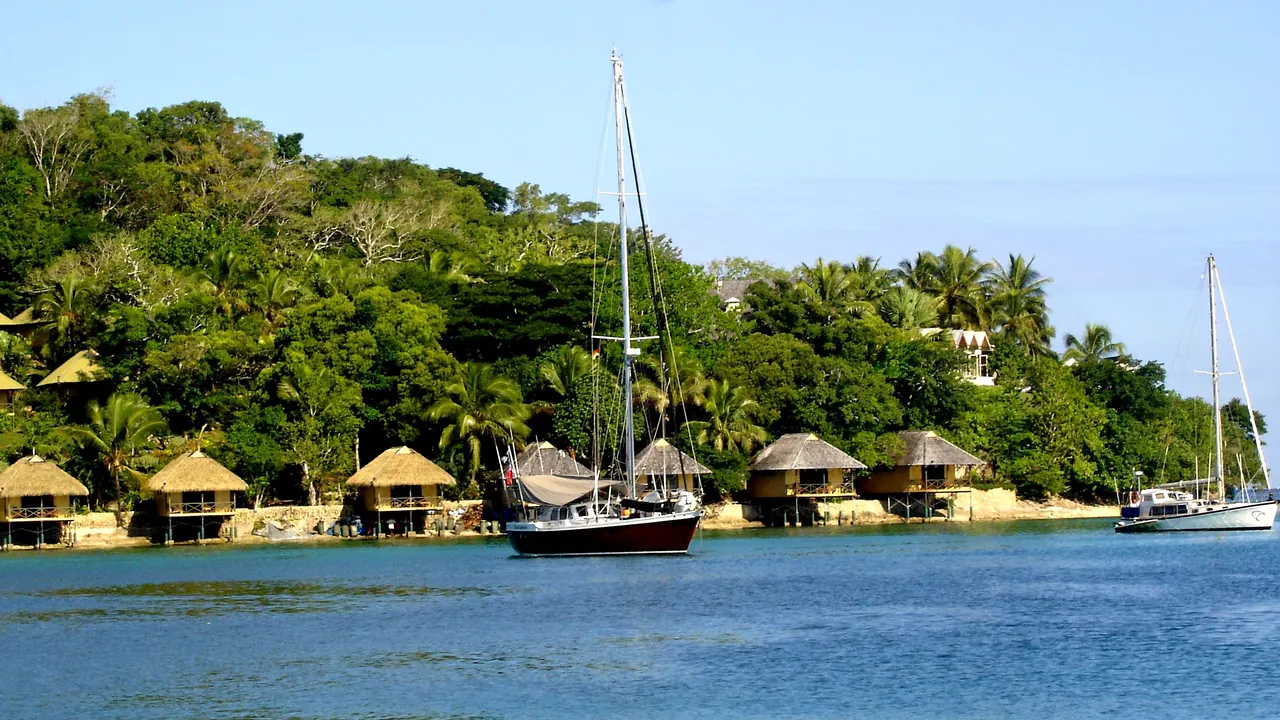
Photos: Nuku'alofa by Uhooep, CC BY-SA 4.0, cropped; Port Vila by Phillip Capper from Wellington, New Zealand, CC BY 2.0, cropped.
Nuku'alofa or Port Vila?
Our verdict in twelve categories, each scored against the same fixed benchmark cities, and the climate month by month, so you can choose for your trip.
Choose Nuku'alofa for
- prices
- live music and the arts
Nuku'alofa suits a traveller who wants a slower, more traditional Pacific island and is happy to plan their own days. The draws are the royal waterfront, Sunday hymns sung in full harmony, the stone tombs at Lapaha and, from July to October, the chance to swim with humpback whales. Day to day it costs a little less. It also asks for more patience: the food is thinner, the evenings are quieter and on Sunday everything stops.
Choose Port Vila for
- families
- nature and the outdoors
- beaches
For a sea-and-sun week, Port Vila is the easier choice. The lagoons and reefs are closer to town and the water is clearer, the diving and snorkelling are stronger, the resorts cater well for children, and the French-tinged bakeries and waterfront restaurants give more choice at the table. The cost is a higher bill, because resorts and dive trips are priced for visitors from Australia and New Zealand.
Scoreboard
Twelve categories on one fixed scale from 0 to 100. The shaded stretch is the gap between the two.
Your match
Pick a travel style or drag the sliders, and both match scores follow your weighting.
Wins on prices and live music and the arts with your weighting.
Wins on families and nature and the outdoors with your weighting.
What matters to you?
Category by category
What the scores mean for a trip.
Beaches & swimming
Neither town has a swimming beach on its own waterfront, so in both the sea means a short boat ride or a drive. Nuku'alofa looks out over shallow reef flats. You swim off Pangaimotu and the other islets beyond the harbour, or at Ha'atafu on the western tip, and much of it depends on the tide.
Port Vila has better water closer to town. Iririki and Erakor are a quick hop, Hideaway Island has a marine reserve a few fin strokes from the sand, and the sea is a degree or two warmer and clear enough to snorkel from the shore. Both give you coves and lagoons rather than long strands, and reef shoes help in either.
Food & drink
Port Vila has more to eat. Its French streak shows in the morning baguettes and pastries. Waterfront restaurants grill reef fish, lobster and Santo beef, Tanna coffee is worth finding, and lap lap is the local dish at the harbour market stalls.
Nuku'alofa has fewer places to eat and almost no café or wine culture. Tongan cooking is still worth seeking out for itself: lu pulu, 'ota 'ika, and pork and yams from the 'umu earth oven. It is best tasted at a feast night or a family meal rather than in a restaurant.
Culture & sights
You can see either town in a morning, but the sights are of different kinds. Nuku'alofa's interest is its living monarchy: the white wooden Royal Palace on the waterfront, the royal tombs at Mala'ekula and the striking roof of the Basilica of St Anthony of Padua, all on a short walk, with no real museum. Port Vila is the reverse, with little to see in the streets but the Vanuatu Cultural Centre and National Museum, whose slit drums, masks and sand-drawing displays are the best introduction to the islands' many cultures.
Nightlife
Neither is a place for a night out, but Port Vila has a little more going on. You can start at sunset in a kava nakamal, then move on to waterfront bars full of yachties, resort lounges, a casino or one of a couple of dance spots at weekends.
Nuku'alofa is quieter still. There are a few bars and hotel lounges and a club or two that fill on Fridays. Sabbath law winds Saturday down before midnight and shuts Sunday almost completely.
Nature & outdoors
Port Vila has the richer outdoors. Efate is green and volcanic, with coral gardens, drop-offs and wrecks a short boat ride out, sheltered lagoons for paddling, and the Mele Cascades running down through the rainforest inland.
Tongatapu is flat coral and coconut plantations with no hills, so its scenery is on the coast: the Mapu'a 'a Vaea blowholes, the stone arch at Hufangalupe and the flying foxes at Kolovai. Its trump card is seasonal. Humpback whales arrive from about July to October, and visitors can swim alongside them.
Day trips
Each town has one heritage outing about forty minutes' drive away, then islands, and neither has other towns to visit. From Nuku'alofa you head east to the langi, the terraced royal tombs at Lapaha, and the Ha'amonga 'a Maui trilithon, both remains of an ancient past built in stone. 'Eua's forests and cliffs are a ferry ride or short flight beyond.
From Port Vila, the outing is Chief Roi Mata's Domain, a UNESCO-listed landscape visited with local guides. The boat trips to Pele, Nguna and Lelepa are about present-day village life rather than ruins.
Good for families
Both welcome children warmly, and neither has a zoo, aquarium or anything built for them. Port Vila suits families better because its resorts do the work: calm lagoon water, kayaks, often kids' clubs, and easy snorkelling at Hideaway Island.
In Nuku'alofa, families have to make their own arrangements, staying on a small island or at the western beaches and hiring a car to reach the blowholes and flying foxes. Basic medical care is worth keeping in mind in both. In Port Vila, mosquitoes and the wet summer are further reasons for caution.
Getting around
Port Vila is easier to get around without a car. Its minibuses, marked with a B on the plate, have no routes or timetables but drop you at your door, and taxis fill the gaps. The town climbs steeply behind the harbour, though, and the pavements are patchy.
Nuku'alofa's centre is flat and small enough to walk. Beyond it, buses run irregularly and stop early, so most visitors use taxis, tours or a hire car, which needs a local licence. On Sunday nearly everything stops.
Shopping & style
Neither is a shopping destination, and in both it comes down to crafts. Nuku'alofa's speciality is ngatu, the painted bark cloth used in Tongan ceremony, sold with fine pandanus mats around Talamahu Market, often by the women who made them. Port Vila adds a few duty-free shops for cruise passengers and better food souvenirs, such as Tanna coffee, kava powder and coconut oil, alongside carvings and miniature tam-tam drums.
Affordability
Nuku'alofa is easier on a budget, though neither is cheap, because both import almost everything. Simple guesthouses, taxis and market food keep daily costs on Tongatapu moderate. The big outlays are resort islands and whale-swimming trips.
Port Vila's lagoon resorts, restaurants and dive trips are priced for visitors from Australia and New Zealand and add up quickly. You can save on minibus rides, market food and evenings in a nakamal, but staying in a guesthouse in town rather than a resort saves the most.
Live music & performing arts
Neither town has a theatre or concert programme, and in both the music comes from community life. In Nuku'alofa the highlight is free: unaccompanied singing at Sunday church services, open to modestly dressed visitors, with tau'olunga and lakalaka dances at feast nights and the Heilala Festival. Port Vila's music is lighter, with string bands of guitar and ukulele at markets and resorts, custom dance at villages near town and a long-standing annual music festival.
Wellness & relaxation
Neither has a bathing or spa culture, but Port Vila makes relaxing easier. It has resort spas, a few day spas offering coconut-oil massage, and lagoon resorts built around a hammock and a kava at sunset.
Nuku'alofa offers stillness rather than treatments. The town is slow, there are a few massage rooms at the island resorts, and Sunday is given over entirely to church, family lunch and rest.
When should you go?
Pick your month. The climate figures are measured averages, not a forecast.
Nuku'alofa in July
Port Vila in July
Daytime high, °C
Rainfall in the month, mm
Where the figures come from
Nuku'alofa has no rain gauge within 25 km of the centre, so its rainfall comes from a gridded climate dataset read at the destination rather than from a gauge further away.
Temperature and rainfall are climate normals, averaged over the years shown. Nuku'alofa: 2009-2025 (rainfall 1991-2020) normals, Fua'Amotu (12.2 km from centre). Port Vila: 1991-2020 normals, Bauerfield Efate (4.1 km from centre).
Nuku'alofa is the milder of the two. Daytime highs run from the mid-twenties in the southern winter to about 30°C in summer. January to April is the wet season, with roughly twice the rain of the rest of the year. From May to December it is drier and still warm enough for the beach, and the cooler middle months are comfortable for walking around town. The sea stays good for swimming all year and only cools to around 24°C in winter.
Port Vila is hotter and wetter, with highs near 31°C from December to March. March is the wettest month in either city, with well over 300mm of rain. Its best season is shorter: July to September is clearly the driest stretch, with highs around 27°C and the sea still warm. The middle of the year suits both cities. Early in the year Port Vila is steamy and wet, while Nuku'alofa is just wet.
Which traveller are you?
For a beach and sun trip, Port Vila is the better pick. The water is clear and warm right up to the shore at Hideaway Island and in the lagoons around Erakor, and many resorts have calm swimming at the door. In Nuku'alofa, getting to the sand means a boat or a drive.
On a trip on a tight budget, Nuku'alofa makes the money go further. Simple guesthouses are fairly priced and taxis and market food are cheap. The big costs are resorts and whale trips, and you can skip both. In Port Vila, resorts, restaurants and dive trips add up faster.
For travellers who want to swim with whales, Nuku'alofa is the clear choice. Humpbacks come to Tongan waters to calve from about July to October, and Tongan rules allow visitors to swim alongside them. Port Vila's draw is reef and wreck diving instead.
Before you go
| Measure | Nuku'alofa | Port Vila |
|---|---|---|
| Official language | English, Tongan | French, English, Bislama |
| Currency | Pa’anga (TOP) | Vatu (VUV) |
| Sockets | I240 V, 50 Hz | CGI220 V, 50 Hz |
| Driving side | Left | Right |
| Time zone | UTC+13 | UTC+11 |
| Emergency number | 911 | 112 |
| Elevation | 3 m | 59 m |
| Main airport | Fua'amotu International Airport (TBU)13 km from centre5 non-stop destinations | Bauerfield International Airport (VLI)4 km from centre9 non-stop destinations |
| Public holidays this year | 11 days | 14 days |
By the numbers
| Measure | Nuku'alofa | Port Vila |
|---|---|---|
| Population | 23,221 | 49,034 |
| People per km² | 2,037 | 2,078 |
| Museums within 10 km | 1 | 2 |
| UNESCO World Heritage sites within 50 km | 0 | 1 |
| Swim season, months above 21 °C | 12 months | 12 months |
Where else could you go?
Every comparison below shares a destination with this one, so you can follow Nuku'alofa or Port Vila somewhere new.
- New Caledoniavs Port Vila
- Apiavs Nuku'alofa
- Mamanuca Islandsvs Nuku'alofa
- Mamanuca Islandsvs Port Vila
- Honiaravs Port Vila
- Rarotongavs Nuku'alofa