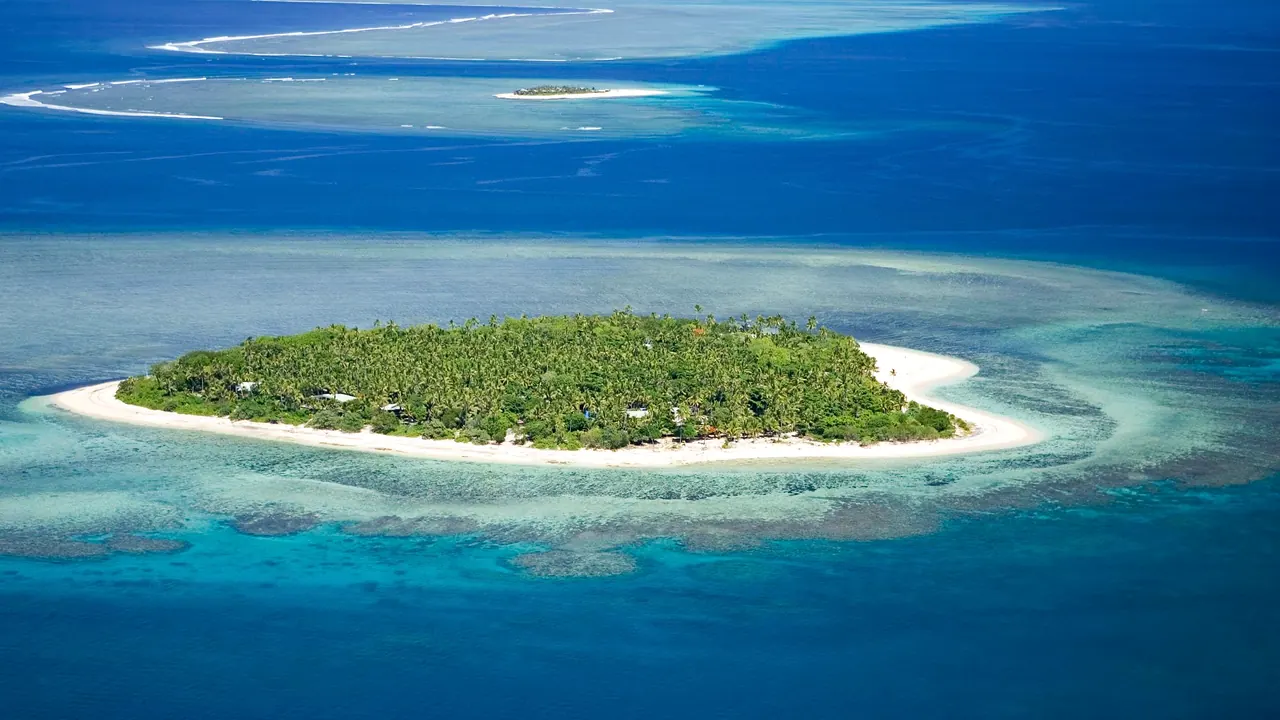
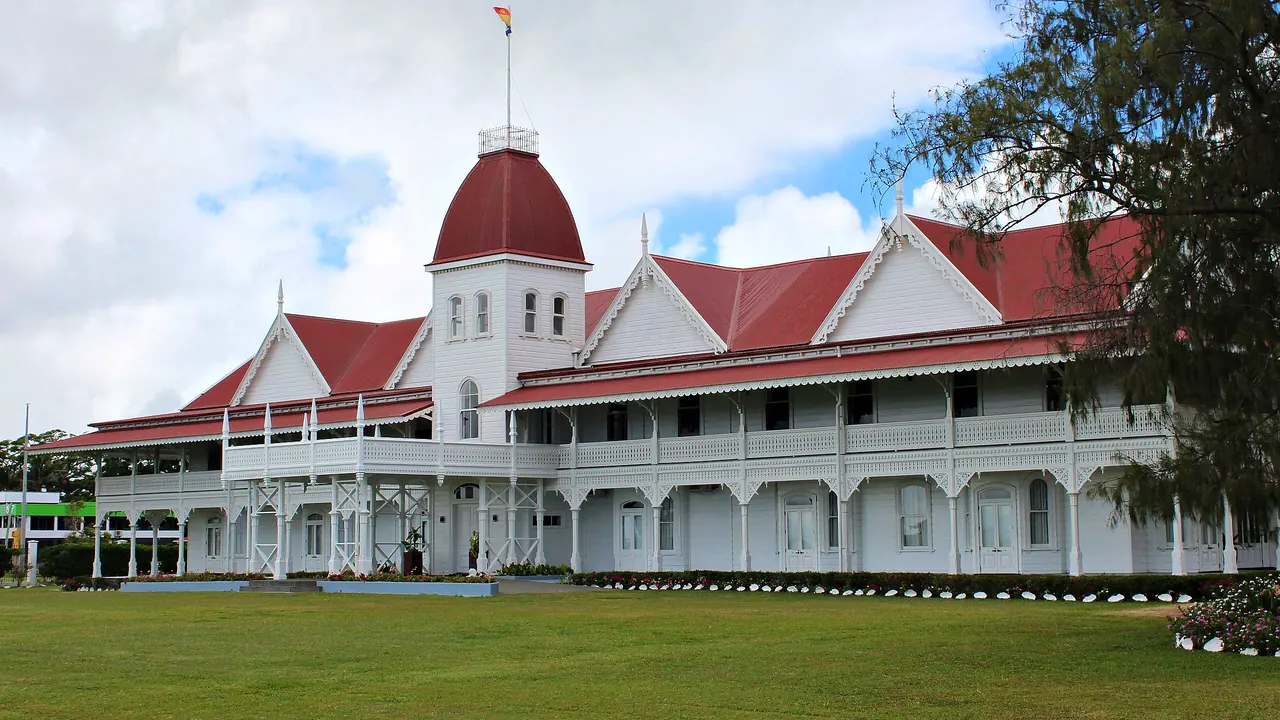
Photos: Mamanuca Islands by Tavyland, CC BY-SA 3.0, cropped; Nuku'alofa by Uhooep, CC BY-SA 4.0, cropped.
Mamanuca Islands or Nuku'alofa?
Our verdict in twelve categories, each scored against the same fixed benchmark cities, and the climate month by month, so you can choose for your trip.
Choose Mamanuca Islands for
- families
- beaches
- wellness
Choose the Mamanuca Islands for a vacation where the sea is the whole point: a resort on white sand, a lagoon safe for small children, reef dives and famous surf offshore, and evenings that end with a fire show at a quiet bar. Families and couples who want to rest will find it easier here, as long as they accept island prices and a narrow choice of food.
Choose Nuku'alofa for
- prices
- live music and the arts
- shopping
Nuku'alofa suits the curious traveller who wants a working Pacific capital rather than a resort. It offers the palace and royal tombs, church singing on a Sunday, ancient stone monuments down the road and humpback whales in the southern winter. It costs less and sells better crafts, but the beaches mean a trip out and the town is very quiet after dark.
Scoreboard
Twelve categories on one fixed scale from 0 to 100. The shaded stretch is the gap between the two.
Your match
Pick a travel style or drag the sliders, and both match scores follow your weighting.
Wins on families and beaches with your weighting.
Wins on prices and live music and the arts with your weighting.
What matters to you?
Category by category
What the scores mean for a trip.
Beaches & swimming
In the Mamanucas you step from your room onto the sand. Almost every island has white coral sand, a calm lagoon and snorkelling straight off the shore, from the hilly bays of Mana and Malolo Lailai to the sunset-facing beaches of Tokoriki. The one thing to watch is low tide on some shores.
Nuku'alofa has no swimming beach of its own, because its waterfront looks over reef flats. For sand you take a boat to Pangaimotu or drive about half an hour to Ha'atafu on the western tip, and the sea is a degree or two cooler. It works for beach days out, not for a beach vacation.
Food & drink
Neither is worth the trip for the food, but you eat in different ways. In the Mamanucas you eat at your resort, usually on a meal plan, and kokoda and the weekly lovo feast break up an international menu that soon repeats.
Nuku'alofa at least lets you leave the hotel, with Talamahu Market stalls, simple Chinese places and waterfront cafés. Tongan dishes such as lu pulu and 'ota 'ika are best tried at a feast night or a family's Sunday 'umu.
Culture & sights
Neither is a place to come for heritage, but Nuku'alofa gives you a little more to look at. On the Mamanucas, culture means people rather than buildings. You take a boat to a village such as Yanuya, are welcomed with kava, meet the families who live there and see the clay pots made on the island. It takes half a day and makes a good break from the beach for anyone curious about how islanders live.
Nuku'alofa's sights come from its role as a royal capital, and a morning on foot covers them. You can see the white wooden palace on the waterfront from outside its grounds, then walk to the lawn where the kings are buried and visit two churches, one of them the royal family's own. It suits travellers interested in Tonga's monarchy and its buildings more than in village life.
Nightlife
After dark the Mamanucas are the livelier of the two, though only by island standards. On the couples' and family islands the evening means music, kava and a fire show at the resort bar, and it is over by about eleven. The backpacker islands give younger travellers DJs and dancing on the sand.
Nuku'alofa is quieter. Locals go out on Fridays to a handful of bars and a club, and the rest of the weekend ends early, because Tongan law protects the Sabbath. If you want a party, the Fijian islands are the better bet. If you are glad of early nights, Nuku'alofa will suit you fine.
Nature & outdoors
The Mamanucas win on the water. Experienced surfers come for the breaks at Cloudbreak and the Namotu Left, divers have soft-coral walls and shark dives, and snorkellers see turtles and reef sharks. On land there are short walks to hilltop lookouts over the craggy outline of Monuriki.
Tongatapu is flat coral land. Its outdoors means the Mapu'a 'a Vaea blowholes, the stone arch at Hufangalupe, the flying foxes at Kolovai and Anahulu Cave. Its one big draw is the humpback whales from about July to October, when you can swim alongside them.
Day trips
Day trips count for little from either place, but they are different kinds of outing. From the Mamanucas they are boat days: a sandbar cruise, a neighbouring village or the southern Yasawas. Nadi's Hindu temple and markets are an hour or so away by ferry and rarely worth the time it takes.
From Nuku'alofa you go by road, and the trips have more history. The terraced langi tombs at Lapaha and the Ha'amonga 'a Maui trilithon make an easy day out, and the forests and cliffs of 'Eua are a short flight away.
Good for families
The Mamanucas are built for families, with kids' clubs, babysitting and lagoons shallow enough for toddlers. Malolo Lailai and Mana are only a short transfer from the mainland. Keep in mind that medical help beyond a resort nurse means a boat back to the mainland.
Nuku'alofa welcomes children warmly but has nothing set up for them and limited medical care, so families end up heading out to a small island or the western beaches anyway.
Getting around
Once you arrive, the Mamanucas are slightly simpler. A catamaran or seaplane from Port Denarau drops you on an island you can cross on foot, with no cars at all, though moving between islands means ferries and sometimes choppy water.
In Nuku'alofa the town centre is easy to walk. The blowholes, tombs and beaches need a taxi, a tour or a hire car with a local licence, because the buses keep informal hours and everything stops on Sunday.
Shopping & style
Nuku'alofa is the place to bring an empty bag. Talamahu Market sells painted ngatu bark cloth, fine pandanus mats and carvings, often by the women who made them.
The Mamanucas have resort boutiques selling swimwear and sunscreen, plus a few village tables of shell jewellery. Most visitors buy their crafts at the Nadi market on the way home.
Affordability
The Mamanucas are the dearer of the two. Most islands hold a single resort, many resorts require or strongly encourage a meal plan, and boat transfers and dive trips add to the bill. The adults-only outer islands are among the most expensive places to sleep in the South Pacific.
Nuku'alofa costs less, though it is no bargain. Local cooked food and taxis are cheap, but because almost everything is imported, groceries, drinks and meals in restaurants for visitors cost about as much as in many Western cities. The island resorts and whale-swimming trips are the big expenses.
Live music & performing arts
In the Mamanucas, the performances are shows put on by the resort. You will see Fijian dancing and singing after dinner and fire dancing on the sand, and staff musicians play at the tables. The shows are friendly and done with care, but you watch them as a guest, and there is no stage outside the resort.
Nuku'alofa has no theatre either, but it is the better place to hear music the way Tongans make it. The most moving performance is a Sunday church service, where the whole congregation sings in harmony without instruments, and visitors can join if they dress modestly. Traditional dance is performed at feast nights and national celebrations, so time your visit for one of these to see it in its own setting.
Wellness & relaxation
For rest, the Mamanucas are the clear choice. There is no traffic, just hammocks and long sunsets, and the resorts have spas in open-sided bures offering bobo massage with coconut oil. The adults-only islands of Tokoriki and Matamanoa are given over entirely to quiet.
Nuku'alofa has a few massage rooms at most. Its calm comes from a slow town and from Sundays, when everything stops for church and family lunch.
When should you go?
Pick your month. The climate figures are measured averages, not a forecast.
Mamanuca Islands in July
Nuku'alofa in July
Daytime high, °C
Rainfall in the month, mm
Where the figures come from
Mamanuca Islands's temperatures are measured 35 km from the centre, at Nandi.
Mamanuca Islands has no rain gauge within 25 km of the centre, so its rainfall comes from a gridded climate dataset read at the destination rather than from a gauge further away.
Nuku'alofa has no rain gauge within 25 km of the centre, so its rainfall comes from a gridded climate dataset read at the destination rather than from a gauge further away.
Temperature and rainfall are climate normals, averaged over the years shown. Mamanuca Islands: 1991-2020 normals, Nandi (35.3 km from centre). Nuku'alofa: 2009-2025 (rainfall 1991-2020) normals, Fua'Amotu (12.2 km from centre).
Both are warm all year, with a wet season at the start of the year and a drier spell in the middle. The Mamanucas are the hotter of the two, with highs around 29°C even in July and a sea warm enough for swimming in every month. Rain is heaviest from January to March, at close to 270mm a month. July and August are the driest and sunniest months, and the best time for a beach stay.
Nuku'alofa is a few degrees cooler. Highs of about 25°C from July to September make walking around town comfortable, though the sea drops to about 24°C. Its wet season lasts into April, and even the drier months get around 120mm of rain, so it never dries out the way the Fijian islands do in midyear.
Which traveller are you?
For a beach and sun trip, the Mamanucas are the obvious choice: white sand outside the door, calm lagoons for snorkelling, a dry season with steady sunshine and spas for the afternoons. From Nuku'alofa, every beach day means a boat or a drive out of town.
On a trip on a tight budget, Nuku'alofa is easier on the wallet, with fairly priced guesthouses, market stalls and taxis. The Mamanucas sell everything at island-resort prices, and only the backpacker islands, with dorms and meals included, keep costs in hand.
If you are coming to swim with whales, Nuku'alofa is the base. Humpbacks come to Tonga to calve from about July to October, and local rules allow visitors to swim alongside them. The Mamanucas offer coral walls, shark dives and serious surf instead.
Before you go
| Measure | Mamanuca Islands | Nuku'alofa |
|---|---|---|
| Official language | English, Fijian, Fiji Hindi | English, Tongan |
| Currency | Fiji Dollar (FJD) | Pa’anga (TOP) |
| Sockets | I240 V, 50 Hz | I240 V, 50 Hz |
| Driving side | Left | Left |
| Time zone | UTC+12 | UTC+13 |
| Emergency number | 000 or 911 | 911 |
| Elevation | - | 3 m |
| Main airport | Nadi International Airport (NAN)24 non-stop destinations | Fua'amotu International Airport (TBU)13 km from centre5 non-stop destinations |
| Public holidays this year | - | 11 days |
By the numbers
| Measure | Mamanuca Islands | Nuku'alofa |
|---|---|---|
| Population | - | 23,221 |
| People per km² | - | 2,037 |
| Museums within 10 km | - | 1 |
| UNESCO World Heritage sites within 50 km | - | 0 |
| Swim season, months above 21 °C | 12 months | 12 months |
Where else could you go?
Every comparison below shares a destination with this one, so you can follow Mamanuca Islands or Nuku'alofa somewhere new.
- Yasawa Islandsvs Mamanuca Islands
- Apiavs Nuku'alofa
- Port Vilavs Mamanuca Islands
- Rarotongavs Nuku'alofa
- Port Vilavs Nuku'alofa
- Honiaravs Mamanuca Islands