Fiji
Mamanuca Islands
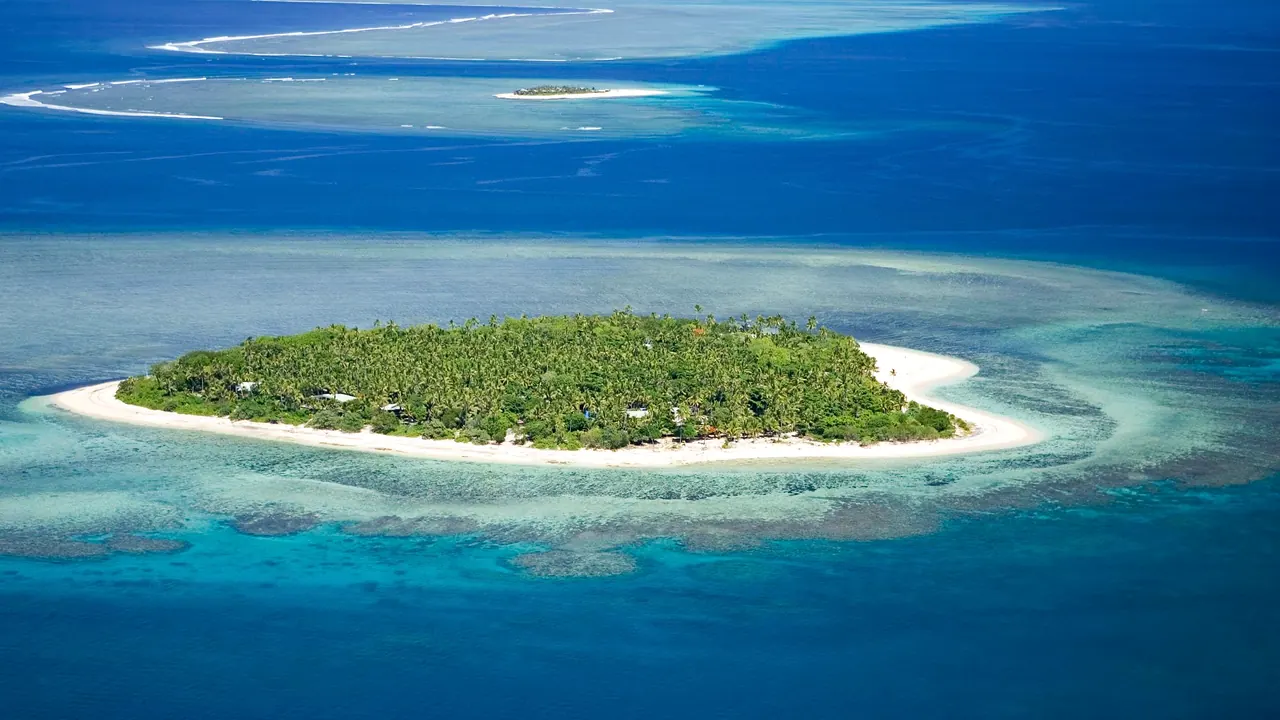
Tavarua Island ringed by its reef from the air
- Beaches93
- Nature & outdoors70
- Families70
Photo: Tavyland, CC BY-SA 3.0, cropped
Match
40
Every category weighted equally
- Beach & sun49
- Culture & arts28
- Food & nightlife30
- Family trip48
- Outdoors47
- Relax & unwind48
- Shopping & style31
- On a budget38
Mamanuca Islands in twelve categories
Our verdict on each, scored 0 to 100 against the same fixed benchmark cities, so a score means the same thing on every page.
Beaches & swimming. Scores 93 out of 100.
Food & drink. Scores 28 out of 100.
Culture & sights. Scores 12 out of 100.
Nightlife. Scores 25 out of 100.
Nature & outdoors. Scores 70 out of 100.
Day trips. Scores 30 out of 100.
Good for families. Scores 70 out of 100.
Getting around. Scores 36 out of 100.
Shopping & style. Scores 8 out of 100.
Affordability. Scores 28 out of 100.
Live music & performing arts. Scores 10 out of 100.
Wellness & relaxation. Scores 66 out of 100.
Mamanuca Islands category by category
Beaches & swimming
93Beach life is the reason to come. Nearly every island is fringed with white coral sand and a shallow turquoise lagoon, and the sea is warm all year, from about 25°C in the cooler months to around 29°C in the wet season. From most resorts you walk straight from your room onto the sand. The islands vary in character. Malolo Lailai, in the sheltered southern part of the group around Musket Cove, and Mana, in the middle, are hilly volcanic islands with several beaches and room to walk between them. Tokoriki and Matamanoa, out on the western edge, have long sunset-facing beaches below green hills.
For the classic picture of a speck of sand in the ocean, look to the tiny low coral islets that can be walked round in minutes, scattered closest to the mainland and around Qalito in the west, and to the uninhabited sandbars visited by day boat. The water inside the reef is calm and easy for weak swimmers, with snorkelling off the beach. On some shores the tide drains the lagoon to a shallow reef flat for a few hours, so check which side of an island you stay on if you want deep water at any time. The dry season from May to October brings clearer skies and steadier trade winds.
Food & drink
28Eating here means eating in your resort, often on a meal plan, since most islands hold a single property and there is nowhere else to walk to. The cooking is mostly international buffet and à la carte fare, much of it shipped in, with Fijian dishes as the highlight: kokoda, raw fish cured in lime and coconut milk, and the lovo feast cooked in an earth oven, usually laid on one night a week. Fresh reef fish and tropical fruit are good. Beyond that the range is narrow, and anyone keen on food will find the week repetitive. The markets and curry houses of the Indo-Fijian mainland are a boat ride away in Nadi.
Culture & sights
12There are no museums, monuments or historic buildings to tour. The cultural side of a stay is meeting Fijian village life: a handful of islands, such as Yanuya and Malolo, have villages that receive visitors for a sevusevu kava welcome, a look at the church and school, and on Yanuya the local clay pottery. These are pleasant, respectful half-day visits rather than sights, and a visitor who wants heritage should not choose these islands for it.
Nightlife
25Most evenings end at the resort bar after dinner, with a string band, kava and a fire show on the beach. A few budget islands aimed at younger travellers run livelier nights with drinking games, DJs and dancing on the sand, and a floating bar moored out on the reef draws day-trippers in the afternoon. Nothing runs truly late, and on the family and couples' islands the night is over by eleven.
Nature & outdoors
70The landscape is the reef rather than the land. The outer edge of the group holds some of the most celebrated surf in the Pacific, with Cloudbreak, Restaurants and the Namotu Left breaking over shallow coral, best for experienced surfers in the dry-season swells from May to October. Divers have soft-coral walls, pinnacles and shark feeding dives a short boat ride from most islands, and snorkelling, kayaking, sailing and stand-up paddling are offered almost everywhere.
On land the islands are small, dry and grassy, with short hikes to hilltop lookouts, the craggy volcanic outline of Monuriki being the most striking. Turtles and reef sharks are common sightings. There are no mountains or forests to explore, and beginners will find the big surf breaks beyond them.
Day trips
30Outings are mostly to other islands: a day cruise to a sandbar or uninhabited islet, a visit to a neighbouring village, or a boat to the southern Yasawas. On the mainland, about an hour or so by ferry, Nadi has its brightly painted Hindu temple and handicraft market, Lautoka its sugar-town streets, and the hills behind hold orchid gardens and the Sabeto mud pools. None of these is a reason to travel, and each trip costs a good part of the day on boats, so most visitors stay put.
Good for families
70Several islands are built around families, with kids' clubs run by Fijian staff, babysitting, children's menus and shallow lagoons where small children can paddle safely. Fijians are famously fond of children, and it shows in how readily staff take them under their wing. Malolo Lailai, Mana and the islands closest to Denarau are the easiest choices, with short transfers and a wide mix of activities.
There are no zoos, theme parks or museums, so the trip is beach, snorkelling and pool. Some of the outer islands are adults-only, sun and coral need care, and medical help beyond a resort nurse means a boat back to the mainland.
Getting around
36You reach the islands by catamaran from Port Denarau near Nadi airport, a ride of thirty minutes to about two hours depending on the island, or by seaplane, helicopter or water taxi for those who pay more. Once there, each island is small enough to cross on foot in minutes, and there are no roads or cars. Moving between islands depends on the ferry loop or a resort boat, and rough water in the trade winds can make crossings choppy, so most visitors pick one or two islands and stay.
Shopping & style
8Shopping is limited to resort boutiques selling swimwear, sarongs and sunscreen, and village visits where women lay out shell jewellery, woven mats and carvings. For more choice of crafts, masi cloth and kava bowls, visitors wait for the handicraft market in Nadi on the way home.
Affordability
28This is an expensive place to stay for most visitors. Nearly every island is a single resort, so rooms, meals, drinks and activities are all bought from the same place at island prices, and transfers and dive trips add up. Many resorts require or strongly encourage a meal plan. A few islands cater to backpackers with dormitories and simple bures that include meals, which keeps a basic stay within reach, while the adults-only outer islands are among the costliest places to sleep in the South Pacific.
Live music & performing arts
10Performance here means the meke, traditional Fijian song and dance put on at resorts, often with a fire-dancing display on the beach, and the guitar and ukulele bands that serenade guests at dinner and sing the farewell song as boats leave. It is warm and genuine in spirit, but there are no theatres or concert venues.
Wellness & relaxation
66Slowing down comes easily. With no traffic, few roads and nothing to rush to, days settle into a rhythm of swims, hammocks and long sunsets, and the adults-only islands at the far end of the group, such as Tokoriki and Matamanoa, are built entirely around rest. Most resorts have a spa, often in open-sided bures over the water or in the gardens, offering Fijian bobo massage with coconut oil and treatments using local plants.
There is no bathing culture of its own, no thermal springs or bathhouses, so wellness is the resort spa and the pace itself. The busier backpacker and day-trip islands are less restful than the outer ones.
Where to stay in Mamanuca Islands
Here you choose an island rather than a town. Nearly every island holds a single resort, and moving between them means a boat, so the choice matters. For a first visit or a trip with children, Malolo Lailai and Mana are the easiest picks. Malolo Lailai sits in the sheltered south around Musket Cove and Mana lies in the middle of the group. Both are hilly enough to have several beaches and short walks, with kids' clubs, plenty of water sports and transfers short enough for small children.
The tiny coral islets closest to the mainland suit a short stay. The crossing from Port Denarau is the quickest, and you can walk round the island in minutes. Couples who want quiet should look west to Tokoriki and Matamanoa. These adults-only islands have long sunset-facing beaches and little to do but swim, rest and visit the spa, and they are the most expensive places to stay in the group. Experienced surfers stay near the outer reef for the dry-season breaks.
Younger travellers on a budget head for the backpacker islands, where dormitories and included meals come with the liveliest nights in the group. Wherever you stay, check whether your beach keeps deep water at low tide. Plan on one island, or two at most, linked by the ferry loop.
When should you go?
Pick a month to see what it is like. The climate figures are measured averages, not a forecast.
Mamanuca Islands in July
Daytime high, °C
Rainfall in the month, mm
The whole year
Shaded against this destination’s own year: the deepest cell is its best month for that figure and the palest its weakest.
Where the figures come from
Mamanuca Islands's temperatures are measured 35 km from the centre, at Nandi.
Mamanuca Islands has no rain gauge within 25 km of the centre, so its rainfall comes from a gridded climate dataset read at the destination rather than from a gauge further away.
Temperature and rainfall are climate normals, averaged over the years shown. Mamanuca Islands: 1991-2020 normals, Nandi (35.3 km from centre).
Before you go
| Measure | Mamanuca Islands |
|---|---|
| Official language | English, Fijian, Fiji Hindi |
| Currency | Fiji Dollar (FJD) |
| Sockets | I240 V, 50 Hz |
| Driving side | Left |
| Time zone | UTC+12 |
| Emergency number | 000 or 911 |
| Main airport | Nadi International Airport (NAN)24 non-stop destinations |
By the numbers
| Measure | Mamanuca Islands |
|---|---|
| Swim season, months above 21 °C | 12 months |
Compare Mamanuca Islands with
Every comparison with a written verdict behind it.