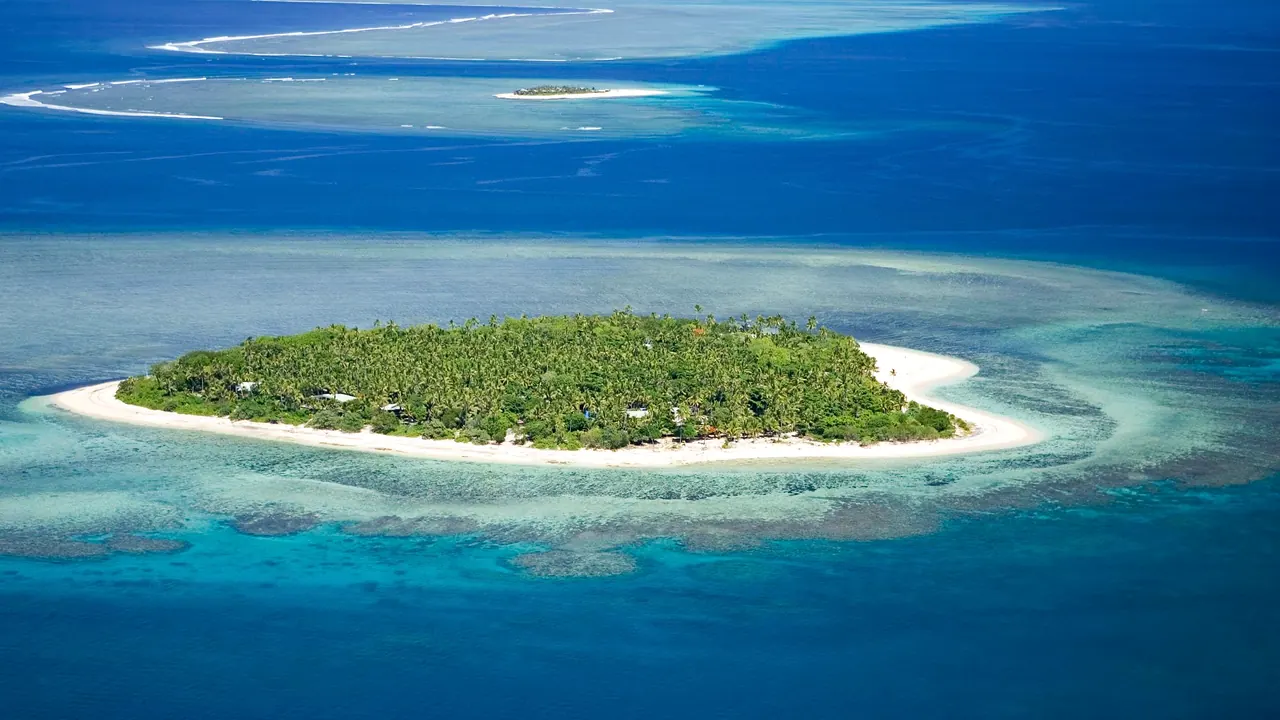
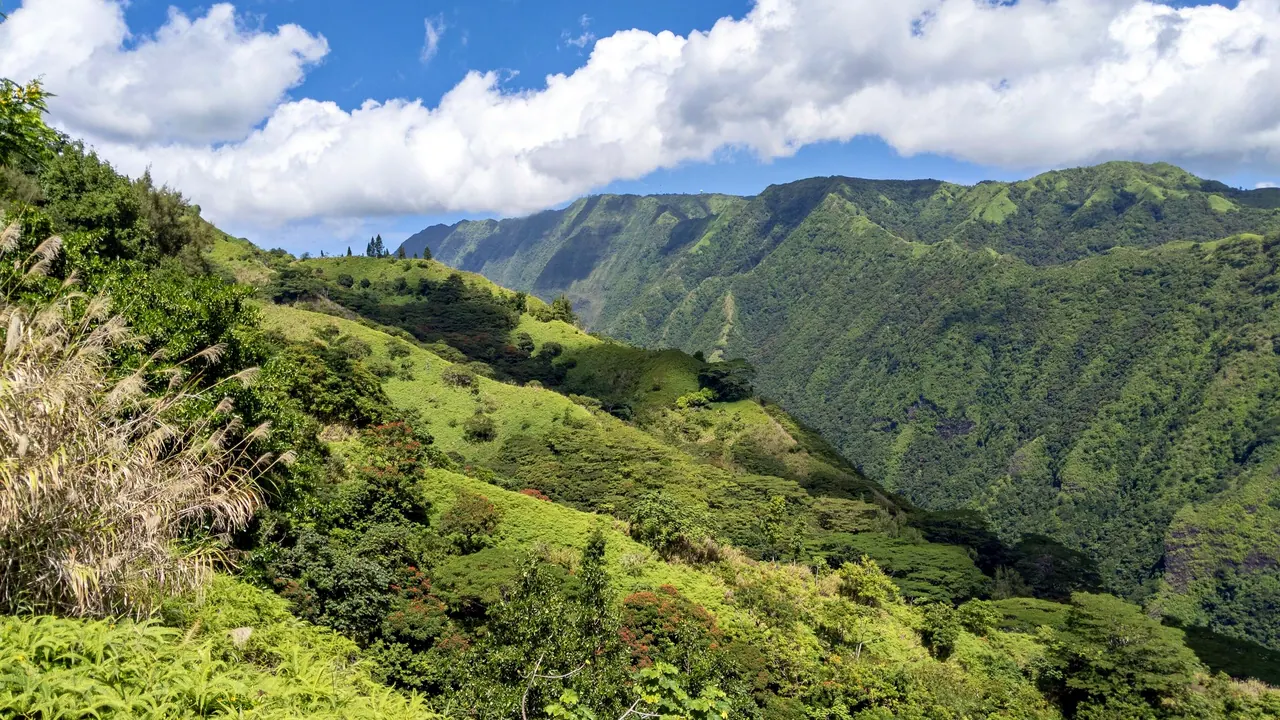
Photos: Mamanuca Islands by Tavyland, CC BY-SA 3.0, cropped; Tahiti by Matthew Dillon from Hollywood, CA, USA, CC BY 2.0, cropped.
Mamanuca Islands or Tahiti?
Our verdict in twelve categories, each scored against the same fixed benchmark cities, and the climate month by month, so you can choose for your trip.
Choose Mamanuca Islands for
- beaches
- families
- wellness
The Mamanucas suit a traveller who wants to unpack once and live on the sand. The lagoons here are calmer and the beaches whiter than anything on Tahiti's main island. Kids' clubs and resorts built around rest make it easy to switch off, whether you come with small children or as a couple on one of the adults-only outer islands. In return you eat at one resort and see almost nothing of history or towns.
Choose Tahiti for
- shopping
- live music and the arts
- food and drink
Tahiti is for the more restless visitor who wants the island itself to be part of the trip. Rainforest valleys, waterfalls and high ridges fill the interior, and Papeete has its waterfront food trucks, its market and black pearls. A proper museum covers Polynesian voyaging and tattoo, and Moorea is a short ferry ride away. The beaches are the weaker side, so plan your lagoon days for Moorea and expect a bigger bill.
Scoreboard
Twelve categories on one fixed scale from 0 to 100. The shaded stretch is the gap between the two.
Your match
Pick a travel style or drag the sliders, and both match scores follow your weighting.
Wins on beaches and families with your weighting.
Wins on shopping and live music and the arts with your weighting.
What matters to you?
Category by category
What the scores mean for a trip.
Beaches & swimming
For beaches, the Mamanucas are in another league. Almost every island is ringed with white coral sand and a shallow turquoise lagoon. You can choose between hilly Malolo Lailai and Mana, the long sunset beaches of Tokoriki and Matamanoa, and tiny islets you can walk round in minutes. The one thing to check is tides, which drain the lagoon to a reef flat for a few hours on some shores.
Tahiti's lagoon water is just as warm and clear, but the sand is not as good. The east and north coasts around Matavai Bay have black volcanic beaches, while the best pale sand is near Punaauia and at Plage de Maui on Tahiti Iti. The open coasts have surf and currents, which is why so many visitors save their beach days for Moorea.
Food & drink
The two places share a signature dish, raw fish in lime and coconut milk, called kokoda in Fiji and poisson cru on Tahiti. After that, Tahiti offers much more choice. Evenings at the roulottes on Place Vaiete, where you can have chow mein, crêpes or steak frites at shared tables, plus the Marché de Papeete and French bakeries in every village, give you real variety and a chance to eat among local people.
In the Mamanucas, most islands have a single resort, so you eat there, often on a meal plan, from a mostly international menu. The weekly lovo feast is the high point. For curry houses and markets you have to take the boat back to Nadi.
Culture & sights
Tahiti is ahead on culture, though neither is a destination for sights. A day or two covers the Musée de Tahiti et des Îles at Punaauia, with its strong collections on navigation, tapa and tattoo, the restored marae at Arahurahu and Pointe Venus, where Cook watched the transit of Venus.
The Mamanucas have no museums or monuments at all. Culture here means a respectful half-day visit to a village such as Yanuya or Malolo, with a sevusevu kava ceremony and, on Yanuya, the local clay pottery.
Nightlife
Neither is a place you choose for its evenings, but the kind of night on offer is different. In the Mamanucas the evening happens at your own resort. After dinner there is kava, a string band and fire dancing on the sand, and on the quieter family and couples' islands the bar is empty well before midnight. If you want a party, stay on one of the budget islands aimed at younger travellers, where DJs, drinking games and dancing on the beach come with the stay, though even there nothing runs into the small hours.
Tahiti offers a night in town rather than a beach party. On weekends, Papeete's small group of waterfront bars and clubs draws island residents and yacht crews off the harbour, so it suits someone who would rather drink among locals than among other guests. On weeknights, and anywhere outside the capital, it comes down to a quiet drink at your hotel.
Nature & outdoors
Both have world-famous surf, Cloudbreak in the Mamanucas and Teahupo'o on Tahiti Iti, and both offer diving with sharks. On land, though, Tahiti is far ahead. Its interior rises to jagged ridges above 2,000m, with rainforest valleys like Papenoo and Fautaua, waterfalls after rain, and humpback whales offshore from about July to October.
The Mamanucas' nature is almost all underwater: soft-coral walls, pinnacles, turtles and reef sharks. The islands themselves are small, dry and grassy, and the best walk is a short climb to a hilltop lookout over the rocky shape of Monuriki.
Day trips
Tahiti has the better day out in Moorea, half an hour away by ferry. You can drive round its bays, villages and pineapple plantations in a day. The road around Tahiti Iti to Teahupo'o and the boats to Tetiaroa add more outings.
From the Mamanucas, most trips are to sandbars, a neighbouring village or the southern Yasawas. The mainland sights, such as Nadi's Hindu temple or the Sabeto mud pools, take a good part of the day by boat, which is why most visitors stay on their island.
Good for families
The Mamanucas are much better set up for children. Several islands have kids' clubs run by Fijian staff, babysitting and lagoons shallow enough for toddlers. Malolo Lailai and Mana are only a short transfer away. The main drawback is that medical help beyond a resort nurse means a boat back to the mainland.
Tahiti is safe and friendly, with calm lagoons for first snorkels, but almost nothing is built for children. It suits older children more, who will enjoy waterfalls, outrigger canoes and whale-watching. Younger ones will be happiest at a resort with a pool.
Getting around
Getting around is limited in both, but in different ways. In the Mamanucas there are no roads or cars, and you can cross your island on foot in minutes. Every other journey depends on a catamaran or a resort boat, which can be choppy in the trade winds, so most people settle on one or two islands.
Tahiti has a single road round the coast, and the buses are too infrequent to rely on, so most visitors hire a car. Expect heavy traffic into Papeete at rush hour. On the plus side, ferries to Moorea leave often from the waterfront.
Shopping & style
Tahiti has one real thing to shop for: black pearls, sold loose or set by jewellers across Papeete. The upper floor of the market adds pareos, carvings, vanilla and monoi oil.
In the Mamanucas, shopping comes down to swimwear and sunscreen in the resort boutique and shell jewellery or woven mats laid out on village visits. Masi cloth and kava bowls wait for the Nadi handicraft market on the way home.
Affordability
Both are expensive, but Tahiti is the harder on the wallet. Almost everything is imported, from groceries to car hire, and the west-coast resorts cost far more again. Family-run pensions and the roulottes are the main ways to keep costs down.
The Mamanucas are still costly, as you buy rooms, meals and dives from the one resort on your island. Even so, the backpacker islands, with dorms and simple bures that include meals, make a basic stay more manageable than anything comparable on Tahiti. The adults-only outer islands are the exception at the luxury end.
Live music & performing arts
Tahiti has a living dance tradition with real stature. Ori Tahiti and its toere drums are at their best during the Heiva i Tahiti in July, when troupes and choirs compete for weeks in Papeete, and the Maison de la Culture hosts occasional concerts.
In the Mamanucas, performance means a resort meke with fire dancing, and string bands that play at dinner and sing guests off at the jetty. It is heartfelt, but you can't go to it as a separate night out.
Wellness & relaxation
The Mamanucas are better for doing nothing. Without traffic or roads, days slow to swims and hammocks. Tokoriki and Matamanoa, at the far end of the group, are adults-only and built around rest, and many spas sit in open bures over the water offering bobo massage with coconut oil.
Tahiti has its own massage, taurumi with tiare-scented monoi oil, in lagoon-facing spas around Punaauia. However, the west-coast road and Papeete are busy, and the quiet is in the villages of Tahiti Iti and the east coast.
When should you go?
Pick your month. The climate figures are measured averages, not a forecast.
Mamanuca Islands in July
Tahiti in July
Daytime high, °C
Rainfall in the month, mm
Where the figures come from
Mamanuca Islands's temperatures are measured 35 km from the centre, at Nandi.
Mamanuca Islands has no rain gauge within 25 km of the centre, so its rainfall comes from a gridded climate dataset read at the destination rather than from a gauge further away.
Temperature and rainfall are climate normals, averaged over the years shown. Mamanuca Islands: 1991-2020 normals, Nandi (35.3 km from centre). Tahiti: 1991-2020 normals, Tahiti-Faaa (5.3 km from centre).
Both are hot all year, with daytime highs of about 29 to 32°C and a sea warm enough to swim in every month, so the choice of month comes down to rain. In the Mamanucas the wet season is heaviest from January to March, at around 270mm a month, and carries on into April. From May to September the islands dry out, July is the driest month and the trade winds blow steadily. Sunshine stays fairly even through the year, and in December the Mamanucas are clearly sunnier than Tahiti.
Tahiti's rains come earlier, heaviest from December to February, and ease from March. April there is already much drier while the Mamanucas are still wet. July and August are its best months, with only about 43mm of rain and the brightest skies of the year, which also suits the hikes in the interior. Tahiti gets more sunshine than the Mamanucas for most of the year, by a wide margin in March and April, though not in December.
Which traveller are you?
For a beach and sun trip, the Mamanucas are the clear pick. You step from your room onto white coral sand above a shallow, calm lagoon. On Tahiti, many beaches are black volcanic sand, and the best swimming means taking the ferry to Moorea.
On an outdoors trip, Tahiti offers far more on land. It has ridge climbs like Mount Aorai, the Papenoo valley by 4x4, waterfalls and whales in season, as well as Teahupo'o. The Mamanucas match it underwater and in the surf, but their small, dry islands have little to explore.
On a culture and arts trip, Tahiti is the only real choice. The Musée de Tahiti et des Îles, the forest marae at Arahurahu and Pointe Venus give it real heritage, and the Heiva festival in July shows ori Tahiti at full strength. In the Mamanucas, culture means a village kava welcome.
Before you go
| Measure | Mamanuca Islands | Tahiti |
|---|---|---|
| Official language | English, Fijian, Fiji Hindi | French |
| Currency | Fiji Dollar (FJD) | CFP Franc (XPF) |
| Sockets | I240 V, 50 Hz | - |
| Driving side | Left | Right |
| Time zone | UTC+12 | UTC-10 |
| Emergency number | 000 or 911 | 112 |
| Main airport | Nadi International Airport (NAN)24 non-stop destinations | Fa'a'ā International Airport (PPT)30 non-stop destinations |
| Public holidays this year | - | 16 days |
By the numbers
| Measure | Mamanuca Islands | Tahiti |
|---|---|---|
| Population | - | 178,133 |
| People per km² | - | 171 |
| Swim season, months above 21 °C | 12 months | 12 months |
Where else could you go?
Every comparison below shares a destination with this one, so you can follow Mamanuca Islands or Tahiti somewhere new.
- Mooreavs Tahiti
- Yasawa Islandsvs Mamanuca Islands
- Bora Boravs Tahiti
- Cook Islandsvs Tahiti
- American Samoavs Tahiti
- Rarotongavs Mamanuca Islands