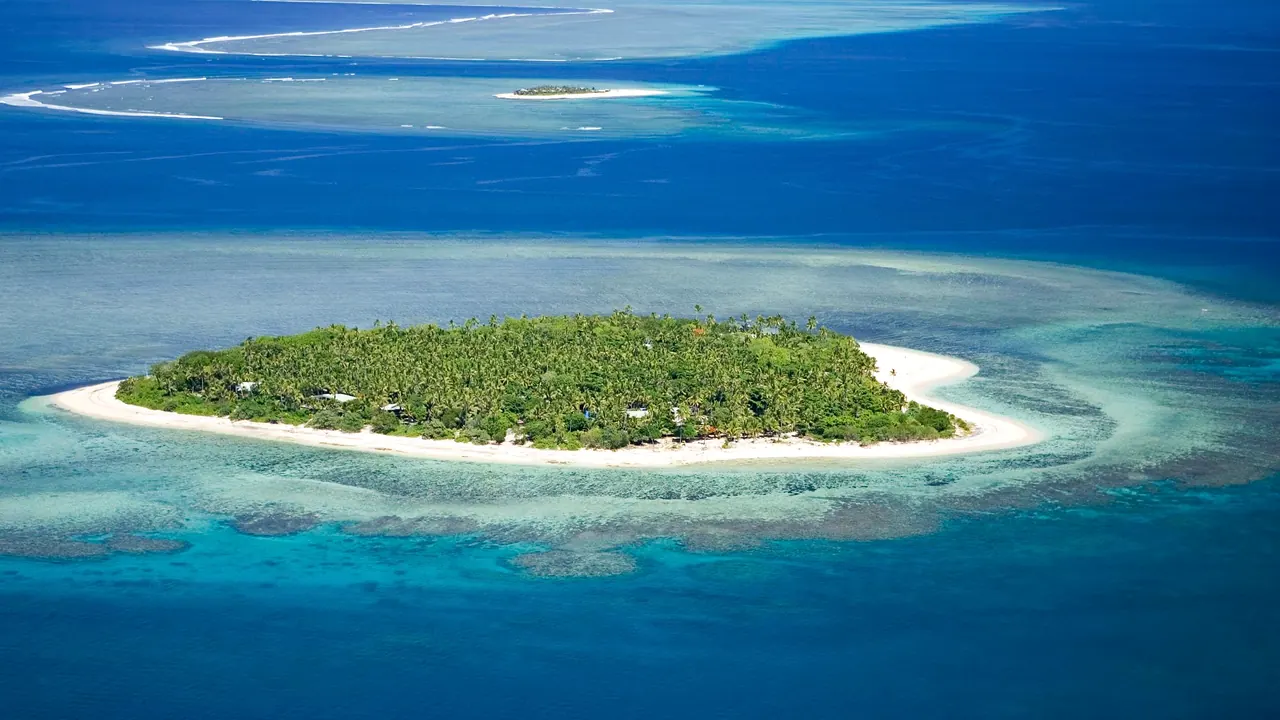
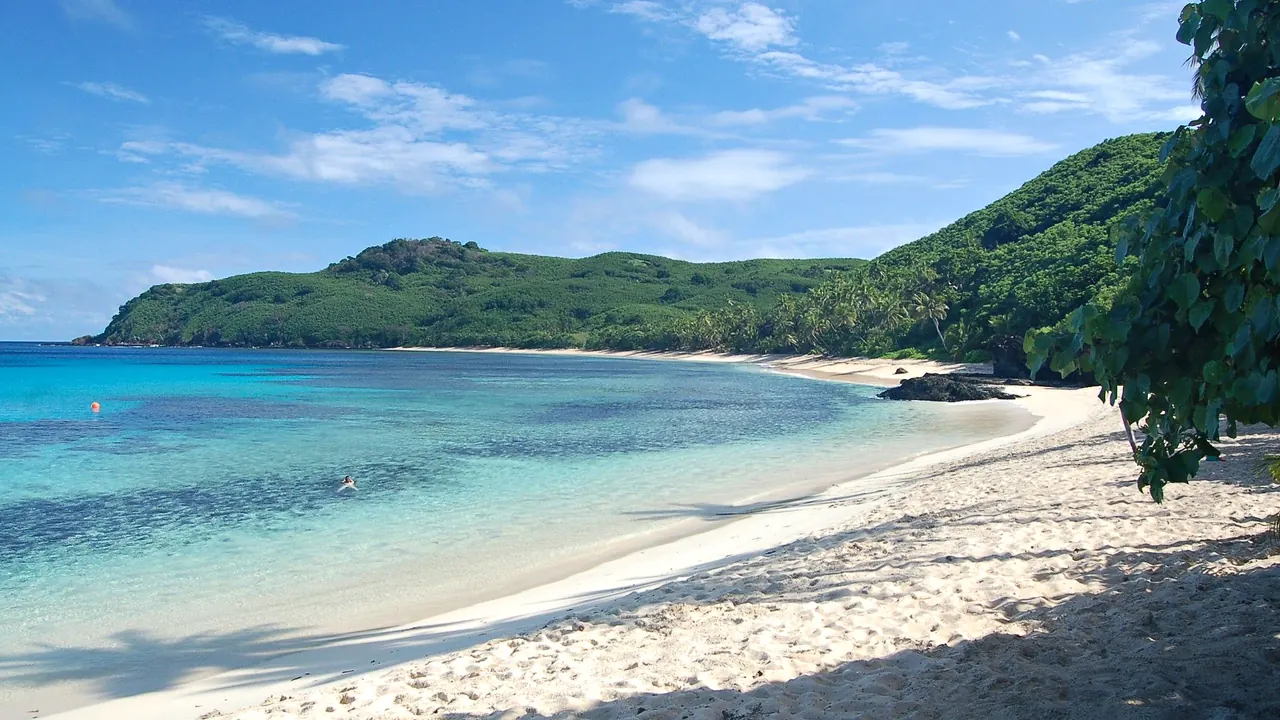
Photos: Mamanuca Islands by Tavyland, CC BY-SA 3.0, cropped; Yasawa Islands by msdstefan, Public domain.
Mamanuca Islands or Yasawa Islands?
Our verdict in twelve categories, each scored against the same fixed benchmark cities, and the climate month by month, so you can choose for your trip.
Choose Mamanuca Islands for
- families
- wellness
- nightlife
The Mamanucas suit travellers who want the South Pacific made easy. Transfers from Nadi are short, several islands are built around families with kids' clubs, the resorts have proper spas, the outer reef has world-class surf, and a few islands keep the evening going after dinner. They are the better choice for a first trip to Fiji, for young families and for anyone short on time.
Choose Yasawa Islands for
- prices
- live music and the arts
The Yasawas reward a slower, more remote journey. You hop up the chain on the daily catamaran, swim with manta rays and share beaches with a village rather than a crowd of resorts, and the simple bures make a long stay more affordable. Couples, backpackers and families with older children who don't need much laid on will get the most from them.
Scoreboard
Twelve categories on one fixed scale from 0 to 100. The shaded stretch is the gap between the two.
Your match
Pick a travel style or drag the sliders, and both match scores follow your weighting.
Wins on families and wellness with your weighting.
Wins on prices and live music and the arts with your weighting.
What matters to you?
Category by category
What the scores mean for a trip.
Beaches & swimming
Both chains offer the same essentials: pale sand outside your room, warm clear water and coral a few strokes from shore. What differs is the setting. The Mamanucas have more variety: hilly Malolo Lailai and Mana with several beaches to walk between, the sunset-facing beaches of Tokoriki and Matamanoa, and tiny coral islets you can walk round in minutes.
The Yasawas feel quieter and wilder. Their beaches are mostly coves rather than long strands, the Blue Lagoon between Nanuya Lailai and Nacula is the famous stretch, and the beaches on Naviti and Waya are often shared only with a nearby village. In both chains, low tide drains some lagoons down to a reef flat, so the side of the island you stay on matters.
Food & drink
Neither is a place to travel for food. In both you eat at your resort, usually on a meal plan, and kokoda and the weekly lovo feast are the Fijian highlights. The Mamanucas have the wider range: à la carte menus alongside the buffets, good fresh reef fish, and the curry houses and markets of Nadi close enough for a meal on the way in or out.
In the Yasawas the choice narrows further, from plain buffets at the budget places to set menus at the upmarket resorts, with no towns or shops to break the routine. It is worth bringing your own snacks from the mainland.
Culture & sights
Neither chain has museums or monuments, so in both the culture is a guided village visit with a sevusevu kava welcome, worth doing once. The extras differ. The Mamanucas have the clay pottery of Yanuya, while the Yasawas have the legends and faint carvings of the Sawa-i-Lau caves in the far north, though most people go there for the swim inside.
Nightlife
The Mamanucas have the livelier evenings, though they are still modest. Beyond the resort bar with its string band and fire show on the beach, a few budget islands put on DJs and dancing on the sand, and a floating bar out on the reef draws day-trippers in the afternoon.
In the Yasawas the evening is spent at your own resort, with a bowl of kava with the staff and perhaps a bonfire, and there is nowhere else to go once the boats stop. Most guests are in bed soon after dinner.
Nature & outdoors
Both are reef destinations. Above the water the islands are small, dry and grassy, with short hikes to lookouts. What sets them apart is the big encounter in the water. The Mamanucas have famous surf at Cloudbreak, Restaurants and the Namotu Left for experienced surfers, along with soft-coral walls and shark feeding dives close to most islands.
The Yasawas answer with manta rays feeding in the channel off Drawaqa and Naviti through the dry months, and with summit ridges on Waya, Nacula and Naviti that look out along the chain. In both, snorkelling straight off the beach is easy.
Day trips
From the Mamanucas the mainland is about an hour away by ferry, so Nadi's Hindu temple and handicraft market, the streets of Lautoka and the Sabeto mud pools can all be done in a day. So can sandbar cruises and a boat to the southern Yasawas. None of these is essential, but they are within reach.
The Yasawas are further out, and an outing usually means a boat to the next island, its village or the Sawa-i-Lau caves. Many visitors skip day trips and island-hop instead, changing base two or three times.
Good for families
For children the Mamanucas are the clear choice. Several islands are built around families, with kids' clubs, babysitting, children's menus and calm lagoons, and Malolo Lailai, Mana and the islands nearest Denarau keep the transfer short.
The Yasawas welcome children just as warmly, but little is built for them, and the long ferry ride with transfers by small boat is hard on toddlers. Medical care is a longer journey away. The Yasawas suit families with older, water-confident children who are happy with a simpler trip.
Getting around
Both chains are reached by catamaran from Port Denarau, and both have car-free islands you can cross on foot. The Mamanucas are closer, with crossings of between half an hour and about two hours, and a ferry loop makes moving between islands simpler.
The Yasawas depend on a single daily catamaran. It takes a few hours to reach the middle islands and longer to the north, and resort boats meet it offshore. Your island order has to fit around that timetable, and it is wise to leave a spare day before an international flight.
Shopping & style
There is almost nothing to buy in either. Resort shops sell sunscreen and sarongs, and village visits end at tables of shell jewellery, carvings and woven mats. The one difference is that the Mamanucas are close to Nadi, so its handicraft market, with masi cloth and kava bowls, is an easy stop on the way home. In the Yasawas you should buy what you need before you set out.
Affordability
Neither chain is cheap, since meal plans, boat fares and activities add up in both, but the Yasawas leave budget travellers more room. Several islands have simple bures and dorms with meals included, and staying longer on fewer islands keeps the cost of transfers down.
In the Mamanucas most islands are a single resort where everything is bought at island prices, and the adults-only outer islands are among the costliest places to sleep in the South Pacific. The backpacker islands still make a basic stay possible.
Live music & performing arts
Neither has theatres or concert venues, and both stage the meke and send guests off with farewell songs. The Mamanucas add fire dancing on the beach and guitar and ukulele bands at dinner. The Yasawas offer the more moving experience: Sunday services where village congregations sing in rich, unaccompanied harmony, which modestly dressed visitors are welcome to attend.
Wellness & relaxation
The Mamanucas are the better place to be pampered. Most resorts have a spa, some in bures over the water, and the adults-only islands of Tokoriki and Matamanoa are built entirely around rest. The backpacker and day-trip islands are less peaceful.
In the Yasawas treatments are simpler, often a massage in an open-air bure, with fuller spas only at the upmarket resorts in the north. What they offer instead is stillness: a patchy phone signal, no traffic and days that follow the daylight.
When should you go?
Pick your month. The climate figures are measured averages, not a forecast.
Mamanuca Islands in July
Yasawa Islands in July
Daytime high, °C
Rainfall in the month, mm
Where the figures come from
Mamanuca Islands's temperatures are measured 35 km from the centre, at Nandi.
Mamanuca Islands has no rain gauge within 25 km of the centre, so its rainfall comes from a gridded climate dataset read at the destination rather than from a gauge further away.
Yasawa Islands's temperatures are measured 89 km from the centre, at Nandi.
Yasawa Islands has no rain gauge within 25 km of the centre, so its rainfall comes from a gridded climate dataset read at the destination rather than from a gauge further away.
Temperature and rainfall are climate normals, averaged over the years shown. Mamanuca Islands: 1991-2020 normals, Nandi (35.3 km from centre). Yasawa Islands: 1991-2020 normals, Nandi (89.3 km from centre).
Both chains have almost the same climate. They are hot all year, with daytime highs between 29°C and 32°C, and the sea never drops below 26°C, so the water is always warm enough for a swim. The real difference through the year is rain. In both, the dry season from May to October is the best time to go. July is the driest month at around 50mm, August has the most sunshine, and the trade winds are steadier and the water clearer.
From December to March the wet season brings heavy downpours, peaking in March at close to 290mm in the Yasawas. The Yasawas turn wet earlier, with a much rainier December than the Mamanucas, but their October is noticeably drier. These figures are measured where most visitors stay, so expect some variation from island to island.
Which traveller are you?
On a family trip with young children, the Mamanucas are the easier choice. Days are filled with the pool, beach and snorkelling, Fijian staff readily take children under their wing, and the mainland is close if a child falls ill. The Yasawas better suit older, water-confident children.
For a relaxing and wellness trip, choose the Mamanucas, ideally an outer island away from the day boats. Hammocks, long sunsets and a Fijian bobo massage with coconut oil and local plants make an easy routine. The Yasawas offer quiet but few real treatments.
On a tight budget, the Yasawas give better value over a long stay. A simple resort with meals included, plus snacks and water carried from the mainland, keeps daily spending in check. In the Mamanucas you pay island prices for drinks, dives and transfers.
Before you go
| Measure | Mamanuca Islands | Yasawa Islands |
|---|---|---|
| Official language | English, Fijian, Fiji Hindi | English, Fijian, Fiji Hindi |
| Currency | Fiji Dollar (FJD) | Fiji Dollar (FJD) |
| Sockets | I240 V, 50 Hz | I240 V, 50 Hz |
| Driving side | Left | Left |
| Time zone | UTC+12 | UTC+12 |
| Emergency number | 000 or 911 | 000 or 911 |
| Main airport | Nadi International Airport (NAN)24 non-stop destinations | Nadi International Airport (NAN)24 non-stop destinations |
By the numbers
| Measure | Mamanuca Islands | Yasawa Islands |
|---|---|---|
| Swim season, months above 21 °C | 12 months | 12 months |
Where else could you go?
Every comparison below shares a destination with this one, so you can follow Mamanuca Islands or Yasawa Islands somewhere new.
- Aitutakivs Yasawa Islands
- Rarotongavs Yasawa Islands
- Rarotongavs Mamanuca Islands
- Bora Boravs Yasawa Islands
- Bora Boravs Mamanuca Islands
- Tahitivs Mamanuca Islands