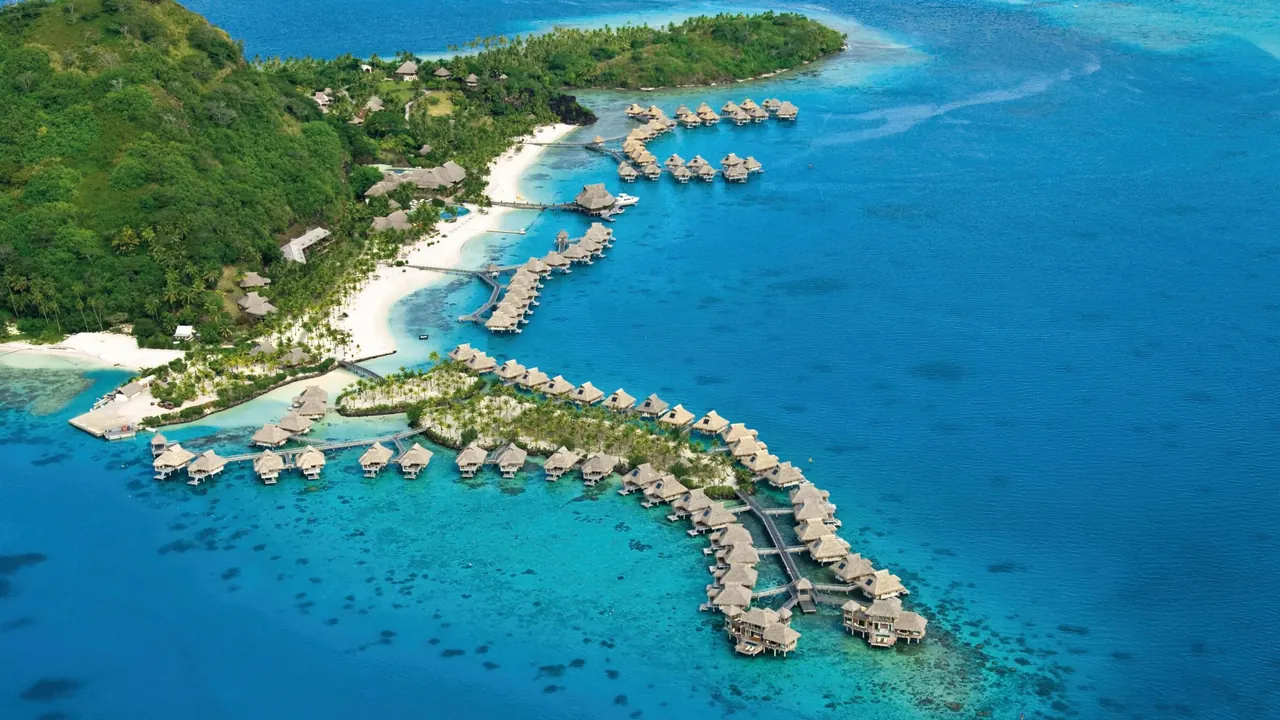
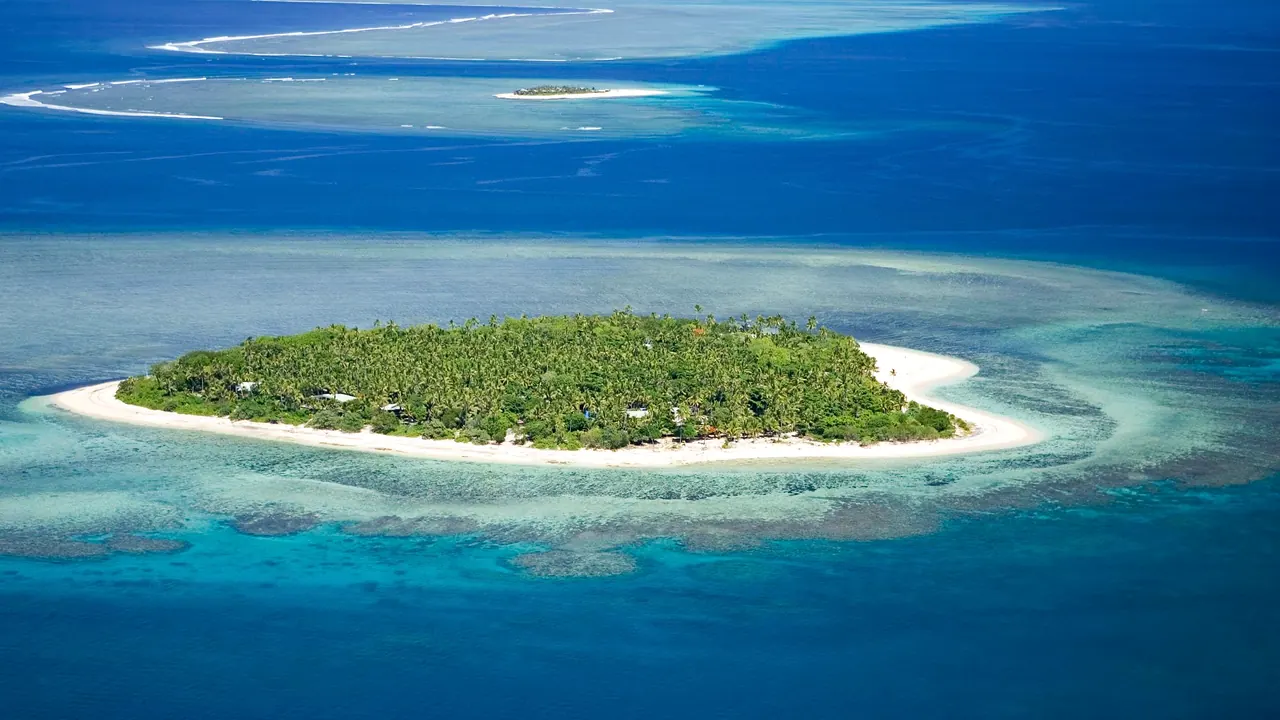
Photos: Bora Bora by Mauro Soares, CC BY-SA 3.0, cropped; Mamanuca Islands by Tavyland, CC BY-SA 3.0, cropped.
Bora Bora or Mamanuca Islands?
Our verdict in twelve categories, each scored against the same fixed benchmark cities, and the climate month by month, so you can choose for your trip.
Choose Bora Bora for
- shopping
- nature and the outdoors
- food and drink
Bora Bora is the choice for a couple planning a once-in-a-lifetime trip who want the view more than anything else: the dark volcanic peak of Mount Otemanu over a lagoon full of rays and reef sharks, an overwater bungalow, and evenings that end early and quietly. It asks a great deal of money and offers little to do beyond the water, but the scenery is the most dramatic of the two, and the black pearl showrooms of Vaitape give it a little more to browse.
Choose Mamanuca Islands for
- families
- prices
- nightlife
The Mamanuca Islands suit a wider range of people, and above all families. Several islands are built around children, with kids' clubs and shallow lagoons, and the group spans everything from backpacker islands with dormitories to adults-only retreats on the western edge. Evenings are livelier, the surf on the outer reef draws experienced surfers from around the world, and the mainland is a ferry ride away rather than a long flight.
Scoreboard
Twelve categories on one fixed scale from 0 to 100. The shaded stretch is the gap between the two.
Your match
Pick a travel style or drag the sliders, and both match scores follow your weighting.
Wins on shopping and nature and the outdoors with your weighting.
Wins on families and prices with your weighting.
What matters to you?
Category by category
What the scores mean for a trip.
Beaches & swimming
Both are about as good as warm-water swimming gets, and the difference is in how the day is spent. On Bora Bora the lagoon itself is the beach: most people swim from a bungalow deck or the sand of a resort motu, and Matira Point is the one long public beach on the main island.
In the Mamanucas you usually step from your room straight onto coral sand, and the islands differ more, from hilly Malolo Lailai and Mana with several beaches to tiny islets walked round in minutes. Tides drain some shores to a reef flat for a few hours, which Bora Bora's lagoon does not do.
Food & drink
Neither is a trip for food lovers, and both feed you mainly in resort dining rooms. Bora Bora has a slight edge because its main island has a coast road with snack counters and food trucks around Vaitape, where poisson cru tastes best and French cooking shapes the resort menus.
In the Mamanucas most islands hold a single resort, often on a meal plan, so there is nowhere else to walk to; the highlights are kokoda and the weekly lovo feast. The variety lies back on the mainland in Nadi's curry houses.
Culture & sights
Heritage is thin on both, and nobody should choose either for sights. Bora Bora offers a few things to look at on an island tour: restored marae platforms and Second World War coastal guns on the hills. The Mamanucas have no monuments at all, but village visits on Yanuya or Malolo, with a sevusevu kava welcome and local clay pottery, give a closer meeting with people living there now.
Nightlife
Bora Bora barely has a night out: a sunset cocktail, dinner, perhaps a bar-restaurant on the main island, then bed.
The Mamanucas give more choice. Resort bars have string bands, kava and fire shows, and the budget islands aimed at younger travellers put on DJs and dancing on the sand, with a floating bar on the reef by day. It still ends fairly early, but there is a social scene to pick.
Nature & outdoors
Bora Bora edges ahead on sheer scenery. Mount Otemanu rising from the lagoon is the picture people travel for, and the water holds stingrays, blacktip reef sharks, and lemon sharks and manta rays in the reef passes, with 4x4 tracks and a guided climb of Mount Pahia on land.
The Mamanucas are flatter and drier ashore, with short hikes to lookouts and the craggy outline of Monuriki. Their great asset is the outer reef surf at Cloudbreak and Restaurants, which Bora Bora cannot match for experienced surfers, along with soft-coral walls and shark dives.
Day trips
Most visitors to either stay put, but the Mamanucas give a little more reason to move. A ferry of about an hour reaches mainland Fiji, with Nadi's Hindu temple and market, the orchid gardens and the Sabeto mud pools, and day cruises go to sandbars and the southern Yasawas.
From Bora Bora the only options are Tahaa's vanilla and pearl farms, Raiatea's sacred marae at Taputapuatea and quiet Maupiti, all needing flights or organised boats to small villages.
Good for families
The Mamanucas are much the better family destination. Several islands, especially Malolo Lailai, Mana and those closest to Denarau, are built around children, and Fijian staff take them under their wing; short transfers help too.
Bora Bora has the calm, shallow water at Matira but little else for children, and its resorts and overwater bungalows are designed for couples. It works best for older children who already love snorkelling.
Getting around
Both depend on boats, but in different ways. Bora Bora's main island has a 32km coast road you can ride by bicycle or scooter, though staying on an outer motu leaves you reliant on the hotel shuttle. The Mamanuca islands have no roads at all and are crossed on foot in minutes, while moving between them means the catamaran loop from Port Denarau, which can be choppy in the trade winds.
Shopping & style
Bora Bora has one real thing to shop for, Tahitian black pearls, and showrooms around Vaitape to compare them, plus craft stalls on the quay. The Mamanucas have only resort boutiques and the shell jewellery and woven mats laid out on village visits, so anyone after masi cloth or kava bowls waits for Nadi's market on the way home.
Affordability
Neither is cheap, but Bora Bora sits in a price bracket of its own, with almost everything shipped in and lagoon tours, transfers and resort meals all adding up. Guesthouses and self-catering on the main island soften this only so far.
The Mamanucas are expensive too, especially on the adults-only outer islands, yet the backpacker islands with dormitories and meals included make a basic stay possible on a modest budget.
Live music & performing arts
Both offer resort dance shows and nothing in the way of theatres or concert halls. On Bora Bora it is Tahitian ori tahiti with drumming and fire dancing, at its best during the Heiva contests in Vaitape in July. In the Mamanucas it is the Fijian meke and the guitar and ukulele bands that play at dinner and sing guests off as the boats leave.
Wellness & relaxation
On Bora Bora, rest means your own resort's spa. The larger motu resorts have polished treatment rooms using monoi oil and tiare flowers, and the island adds quiet, not a wider wellness scene.
The Mamanucas take rest further. Tokoriki and Matamanoa, the adults-only islands at the western end, are built entirely around it, with Fijian bobo massage in open-sided bures and long sunset-facing beaches. Choose those outer islands rather than the busier backpacker and day-trip ones.
When should you go?
Pick your month. The climate figures are measured averages, not a forecast.
Bora Bora in July
Mamanuca Islands in July
Daytime high, °C
Rainfall in the month, mm
Where the figures come from
Mamanuca Islands's temperatures are measured 35 km from the centre, at Nandi.
Mamanuca Islands has no rain gauge within 25 km of the centre, so its rainfall comes from a gridded climate dataset read at the destination rather than from a gauge further away.
Temperature and rainfall are climate normals, averaged over the years shown. Bora Bora: 1991-2020 (sunshine 1981-2010) normals, Bora-Bora / Faanui (6.1 km from centre). Mamanuca Islands: 1991-2020 normals, Nandi (35.3 km from centre).
Both are hot all year, with daytime highs that barely move from about 29°C to 31°C, so the choice of month is really about rain. On Bora Bora the wet season peaks in December and January at over 260mm a month, and the driest, sunniest stretch runs from June to September, with August the brightest month. The lagoon stays warm enough for long swims in every month.
The Mamanucas follow a similar pattern but their wet season comes a little later, with February and March the wettest at around 274mm, while July is the driest month of either destination. Their dry season from May to October also brings the trade winds and the big surf swells. The sea there cools slightly more in August and September, to about 26°C, and the islands get fewer hours of sunshine than Bora Bora through most of the year.
Which traveller are you?
On a family trip with children, Bora Bora's long flight and couple-minded overwater bungalows make life harder. The Mamanuca Islands are far easier, with several islands running kids' clubs with Fijian staff, babysitting and children's menus, and short transfers from the mainland.
For a trip on a tight budget, Bora Bora stays expensive even in a family-run guesthouse with groceries from Vaitape. The Mamanucas are the only realistic choice of the two, as a few islands offer dormitories and simple bures with meals included.
For a beach and sun trip, both give superb warm-water swimming, so choose by style. Bora Bora suits a couple swimming off their own deck beneath Mount Otemanu. The Mamanucas put coral sand outside the door and offer many islands to choose between.
Before you go
| Measure | Bora Bora | Mamanuca Islands |
|---|---|---|
| Official language | French | English, Fijian, Fiji Hindi |
| Currency | CFP Franc (XPF) | Fiji Dollar (FJD) |
| Sockets | - | I240 V, 50 Hz |
| Driving side | Right | Left |
| Time zone | UTC-10 | UTC+12 |
| Emergency number | 112 | 000 or 911 |
| Main airport | Bora Bora Airport (BOB)9 non-stop destinations | Nadi International Airport (NAN)24 non-stop destinations |
| Public holidays this year | 16 days | - |
By the numbers
| Measure | Bora Bora | Mamanuca Islands |
|---|---|---|
| Population | 10,605 | - |
| People per km² | 347 | - |
| Swim season, months above 21 °C | 12 months | 12 months |
Where else could you go?
Every comparison below shares a destination with this one, so you can follow Bora Bora or Mamanuca Islands somewhere new.
- Yasawa Islandsvs Mamanuca Islands
- Mooreavs Bora Bora
- Tahitivs Bora Bora
- Aitutakivs Bora Bora
- Cook Islandsvs Bora Bora
- Rarotongavs Mamanuca Islands