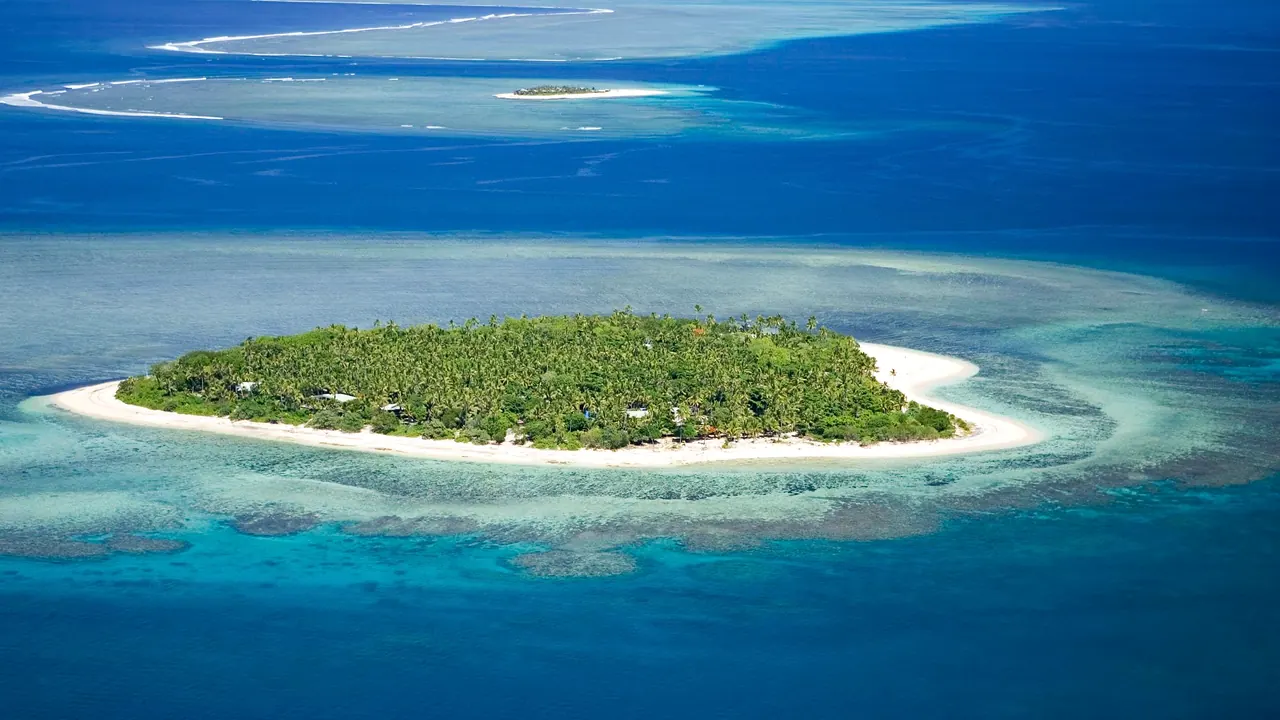
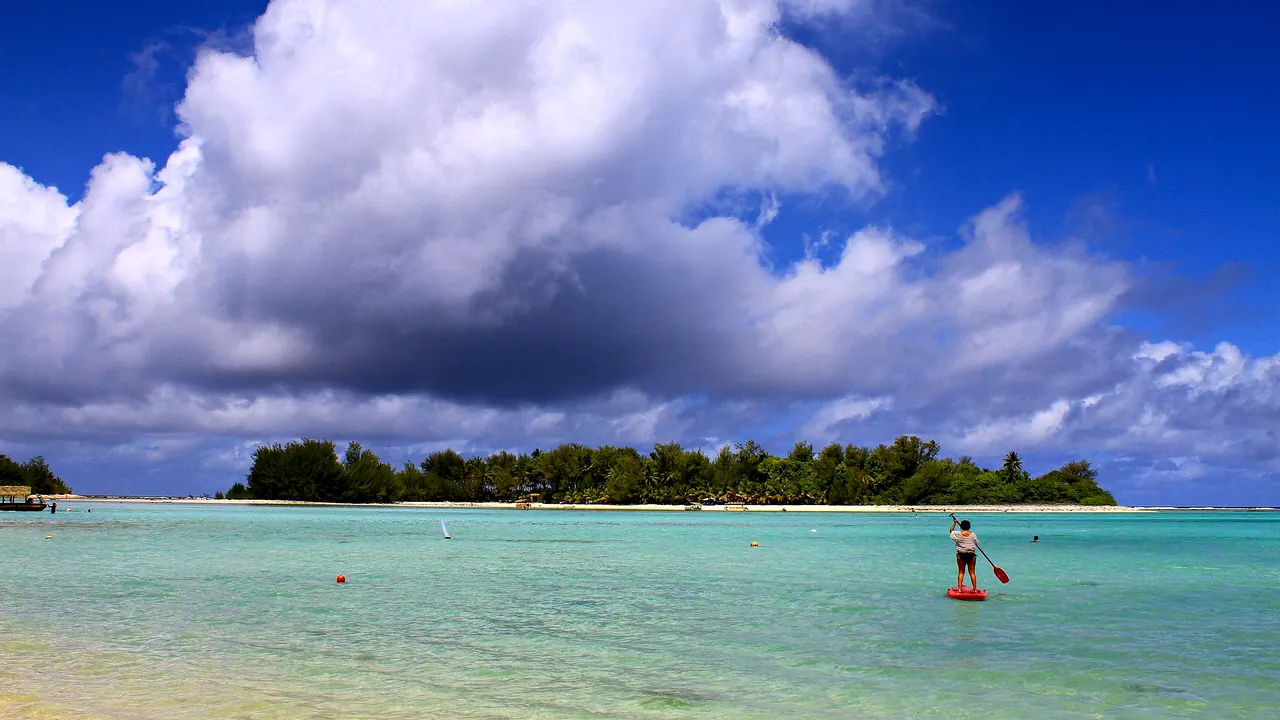
Photos: Mamanuca Islands by Tavyland, CC BY-SA 3.0, cropped; Rarotonga by Christopher Johnson from Tokyo, Japan, CC BY-SA 2.0, cropped.
Mamanuca Islands or Rarotonga?
Our verdict in twelve categories, each scored against the same fixed benchmark cities, and the climate month by month, so you can choose for your trip.
Choose Mamanuca Islands for
- wellness
- day trips
- families
The Mamanuca Islands suit a vacation spent in one place, on the sand. You pick an island to match the trip: a family island with a kids' club and a shallow lagoon, an adults-only hideaway like Tokoriki for rest, or a backpacker island for livelier nights. Then you hardly move. Surfers and divers get world-class reef on the doorstep. The price is a narrow resort menu and very little to see beyond the water.
Choose Rarotonga for
- live music and the arts
- getting around
- shopping
Rarotonga is better for travellers who like to roam a little. A ring road, a flag-down bus and a hired scooter put the whole island within easy reach. You can climb through rainforest to the Needle, shop the Saturday market in Avarua, hear Sunday hymns and watch Cook Islands drum dancing, then come back to the Muri lagoon. The beaches are slightly less dreamy and the water is a touch cooler, but there is more of an island to explore.
Scoreboard
Twelve categories on one fixed scale from 0 to 100. The shaded stretch is the gap between the two.
Your match
Pick a travel style or drag the sliders, and both match scores follow your weighting.
Too close to call, 1 point apart
Wins on wellness and day trips with your weighting.
Wins on live music and the arts and getting around with your weighting.
What matters to you?
Category by category
What the scores mean for a trip.
Beaches & swimming
The Mamanucas have the edge on beaches. Many resorts open straight onto white coral sand, and there are tiny islets you can walk round in minutes, as well as sandbars reached by day boat. On some shores the tide leaves only a shallow reef flat for part of the day, so choose your side of the island with care.
Rarotonga has a single lagoon running all the way round the island, so beach is never far away. Muri's wadeable motu and the snorkelling at Aroa are the highlights. The north and west coasts are rockier, though, the sea is a couple of degrees cooler, and the currents outside the reef are dangerous.
Food & drink
Neither destination is a food trip, but Rarotonga gives you more choice. You can eat ika mata and coconut buns at the Saturday Punanga Nui market, cook-at-the-stall dishes at the Muri night market, and a different beach café each day as you move round the island.
In the Mamanucas you are usually tied to one resort kitchen on a meal plan. Kokoda, the Fijian cousin of ika mata, and the weekly lovo feast are the best moments, but by the end of a week the buffet starts to feel repetitive.
Culture & sights
Rarotonga has more to see, though it adds up to a morning rather than a programme. In Avarua there is a small national museum and the coral-lime Cook Islands Christian Church, and inland lies the marae of Arai-te-Tonga, along the ancient Ara Metua road. In the Mamanucas, culture means a half-day visit to a village such as Yanuya for a kava welcome and its clay pottery, with no monuments at all.
Nightlife
The Mamanucas offer slightly more after dark, but only on certain islands. The backpacker islands put on DJs and dancing on the sand, and a floating bar on the reef draws a crowd in the afternoon. The family and couples' islands, though, are quiet by eleven.
Rarotonga has one night out a week. On Fridays the waterfront bars of Avarua fill up and a couple of places keep dancing late. On other evenings you watch the sunset on the west coast and go to bed early.
Nature & outdoors
The two are broadly level, but the outdoors means different things in each. In the Mamanucas almost everything happens in the water: experienced surfers come for Cloudbreak, and there are soft-coral walls and shark dives. On land there are only low, grassy islands with short climbs to lookouts.
Rarotonga has a proper interior, steep rainforest rising past 600m. The cross-island track to Te Rua Manga is a fine half-day walk. Humpback whales pass close to shore from about July to October, and when the trade winds blow you can kitesurf off Muri.
Day trips
The Mamanucas have more to do on a day out, though none of it is essential. You can cruise to a sandbar, visit a neighbouring village or take a boat to the southern Yasawas. On the mainland, about an hour away, are Nadi's Hindu temple and the Sabeto mud pools. Each of these trips takes up a good part of the day on boats.
Rarotonga has a single real day trip: the flight to Aitutaki for a lagoon cruise, which is memorable but costly. Beyond that, a day out means a lap of the island.
Good for families
The Mamanucas are better set up for children. Several islands are designed around families, with kids' clubs, babysitting and children's menus, and Malolo Lailai and Mana are short transfers from Denarau. The downsides are that some outer islands are adults-only and that a doctor means a boat back to the mainland.
Rarotonga suits small children because it is safe and calm, not because there is much laid on for them. Paddling at Muri, glass-bottom boats and island dance nights fill the days, but older children may get restless after a week.
Getting around
Rarotonga is much easier to explore. A 32km coastal road circles the island, with a bus running clockwise and anticlockwise that stops wherever you flag it down. A hired scooter or bicycle on the flat road gets you to any beach or trailhead.
In the Mamanucas you arrive by catamaran or seaplane from Port Denarau and then stay put. Your island has no roads and can be crossed on foot in minutes. Getting to the next island depends on the ferry loop or a resort boat, so most people stick to one or two islands.
Shopping & style
Rarotonga is the better place to shop, though it is still small. Avarua has specialist shops selling Cook Islands black pearls, and the Saturday market sells tivaevae quilts, pandanus hats and pareu. In the Mamanucas, shopping means sunscreen and sarongs from the resort boutique or shell jewellery at a village visit, so most people buy their crafts at the Nadi market on the way home.
Affordability
Both destinations are expensive, and in much the same way. The difference is how much control you have over spending. In the Mamanucas almost everything is bought from your one resort at island prices. The cheaper option is a backpacker island where simple bures come with meals included.
On Rarotonga you can cut costs yourself: rent a self-catering unit, eat at the markets, ride the bus and enjoy the lagoon and the walks for free.
Live music & performing arts
Rarotonga is clearly the place for live performance. Cook Islands dance, with its speed and thunderous log drums, is famous across the Pacific. Island nights put it on several evenings a week, the Sunday hymn singing is deeply moving, and teams from every island compete at Te Maeva Nui around early August. In the Mamanucas, performance means a resort meke with fire dancing, and the string band that sings you off the island.
Wellness & relaxation
The Mamanucas are the better place to switch off. There are no roads at all. Tokoriki and Matamanoa are adults-only islands built around rest, and spas set over the water offer bobo massage with coconut oil. The backpacker and day-trip islands are noisier, so choose your island with care.
Rarotonga relaxes you through its pace more than its treatments. It has no traffic lights, quiet places to stay around Muri and Titikaveka, modest day spas and some yoga on the beach.
When should you go?
Pick your month. The climate figures are measured averages, not a forecast.
Mamanuca Islands in July
Rarotonga in July
Daytime high, °C
Rainfall in the month, mm
Where the figures come from
Mamanuca Islands's temperatures are measured 35 km from the centre, at Nandi.
Mamanuca Islands has no rain gauge within 25 km of the centre, so its rainfall comes from a gridded climate dataset read at the destination rather than from a gauge further away.
Temperature and rainfall are climate normals, averaged over the years shown. Mamanuca Islands: 1991-2020 normals, Nandi (35.3 km from centre). Rarotonga: 1991-2020 normals, Rarotonga (10.8 km from centre).
The Mamanucas are hot all year, with daytime highs around 30°C in every month. The difference through the year is the rain. From January to March it is heavy, peaking near 274mm, while July is the driest month at about 51mm and the sunniest stretch comes in August. May to October is the best time to go, with drier weather, clear sea and steadier trade winds. The sea stays warm enough for long swims all year.
Rarotonga is a little cooler and wetter in its dry season. From June to September highs sit around 26°C, which makes the cross-island walk more comfortable than it would be in the Fijian heat. The sea drops to about 24°C, fresher than in the Mamanucas but still fine for snorkelling. Its rain is spread more evenly, with no month as dry as a Mamanuca July. The wet months from December to April are less extreme than Fiji's, and October is the pick for sun with little rain.
Which traveller are you?
On a family trip with young children, the Mamanucas make life easier. Some islands exist for families, with kids' clubs, babysitting and a calm lagoon a few steps from the room. Rarotonga is safe and gentle, but parents fill more of the days.
For a culture and arts trip, choose Rarotonga. The Mamanucas manage a village kava welcome and a resort meke. Rarotonga adds Avarua's small museum, stone marae inland, Sunday choirs and Cook Islands drum dancing. It is still modest, but a real step up.
On a relaxing and wellness trip, the Mamanucas win. On an adults-only island with no roads and a spa beside the lagoon, there is little to do but rest. Rarotonga is unhurried too, but its spas are simpler and the island keeps tempting you out.
Before you go
| Measure | Mamanuca Islands | Rarotonga |
|---|---|---|
| Official language | English, Fijian, Fiji Hindi | English, Cook Islands Maori |
| Currency | Fiji Dollar (FJD) | New Zealand Dollar (NZD) |
| Sockets | I240 V, 50 Hz | I240 V, 50 Hz |
| Driving side | Left | Left |
| Time zone | UTC+12 | UTC-10 |
| Emergency number | 000 or 911 | Police 999, ambulance 998, fire 996 |
| Main airport | Nadi International Airport (NAN)24 non-stop destinations | Rarotonga International Airport (RAR)7 non-stop destinations |
| Public holidays this year | - | 11 days |
By the numbers
| Measure | Mamanuca Islands | Rarotonga |
|---|---|---|
| Population | - | 10,572 |
| People per km² | - | 158 |
| Swim season, months above 21 °C | 12 months | 12 months |
Where else could you go?
Every comparison below shares a destination with this one, so you can follow Mamanuca Islands or Rarotonga somewhere new.
- Yasawa Islandsvs Mamanuca Islands
- Aitutakivs Rarotonga
- Mooreavs Rarotonga
- Yasawa Islandsvs Rarotonga
- Bora Boravs Mamanuca Islands
- Tahitivs Mamanuca Islands