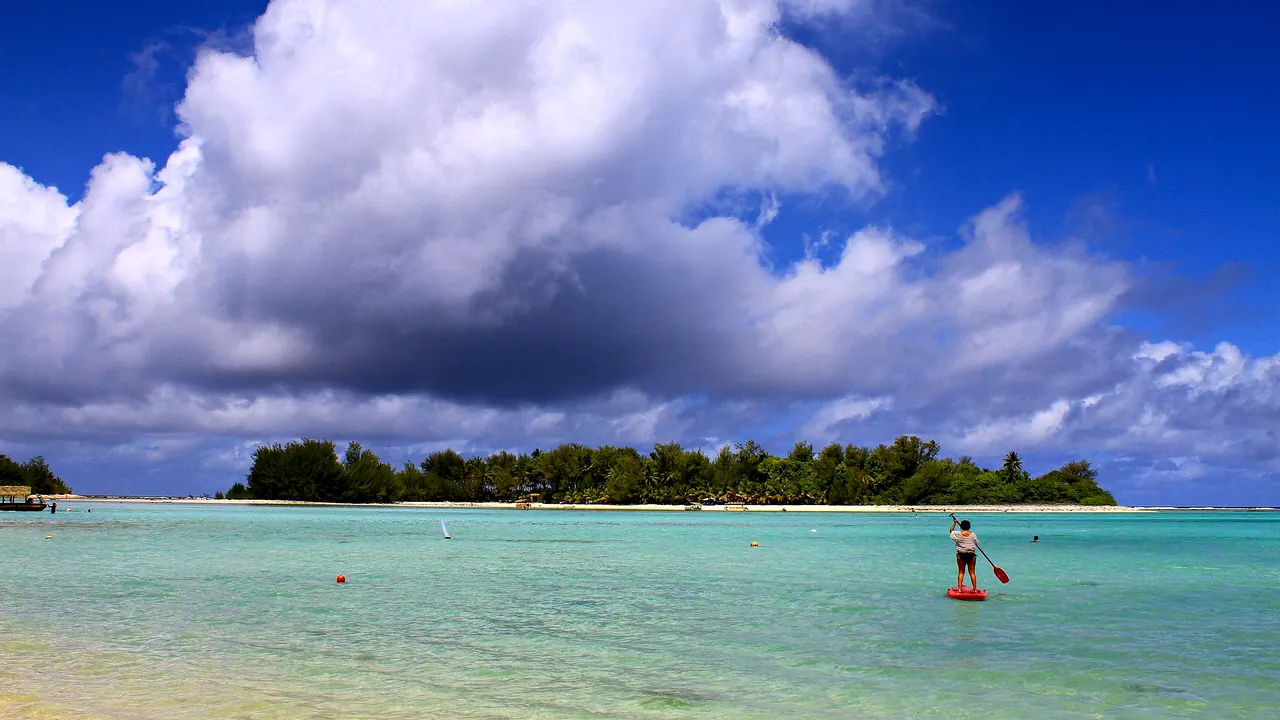
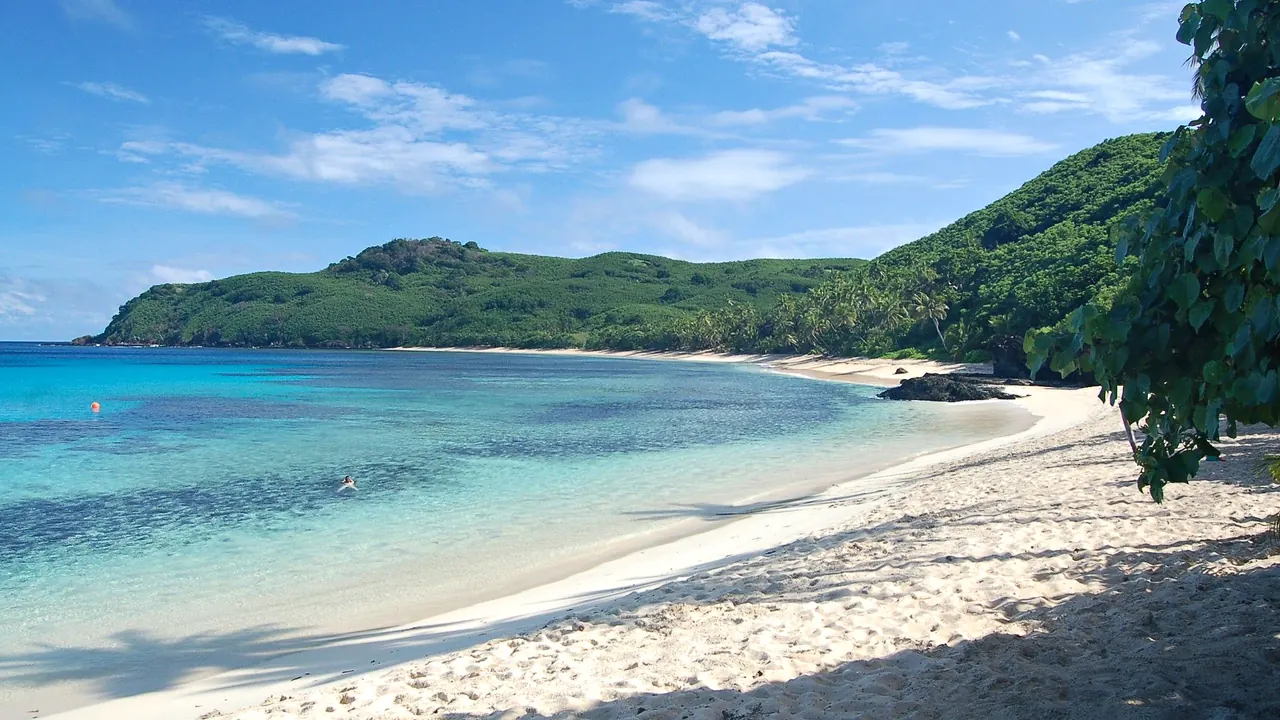
Photos: Rarotonga by Christopher Johnson from Tokyo, Japan, CC BY-SA 2.0, cropped; Yasawa Islands by msdstefan, Public domain.
Rarotonga or Yasawa Islands?
Our verdict in twelve categories, each scored against the same fixed benchmark cities, and the climate month by month, so you can choose for your trip.
Choose Rarotonga for
- getting around
- live music and the arts
- shopping
Rarotonga suits travellers who want a South Seas island that still feels lived in. It has one road round the coast, a bus you flag down, a Saturday market in Avarua, island nights of Cook Islands drumming and a cross-island walk through rainforest. It is the easier choice with young children, and the better one for anyone who likes to eat out, wander and switch beaches on a whim.
Choose Yasawa Islands for
- prices
- beaches
- nature and the outdoors
For pure beach and reef, the Yasawas are the stronger pick. Each stay comes with its own strip of sand on its own island, the water is a shade warmer, and in the drier months manta rays feed in the channels off Naviti. The price is that you live within your resort. Meals come on a plan, a daily boat is the only link to anywhere else, and there is little to do beyond swimming, snorkelling and a village visit. That suits couples and confident swimmers who want to switch off completely.
Scoreboard
Twelve categories on one fixed scale from 0 to 100. The shaded stretch is the gap between the two.
Your match
Pick a travel style or drag the sliders, and both match scores follow your weighting.
Wins on getting around and live music and the arts with your weighting.
Wins on prices and beaches with your weighting.
What matters to you?
Category by category
What the scores mean for a trip.
Beaches & swimming
Both islands are ringed by coral, but the Yasawas put a beach right outside wherever you stay. The water is a little warmer, and the quiet coves are shared with a village rather than backed by a road. The Blue Lagoon and the long beaches of Naviti and Waya are as good as Pacific swimming gets, though on some of them the tide decides how far out you can swim.
Rarotonga's lagoon runs all the way round the island, so a beach is never far away. Muri's wadeable motu and the snorkelling at the Aroa reserve are excellent. The trade-off is the coast road behind the sand, and rockier water on the north and west sides.
Food & drink
On Rarotonga you choose where to eat each day. On Saturday morning there is ika mata at the Punanga Nui market, in the evening there are cooked dishes at the Muri night market, and beach cafés and relaxed restaurants fill the gaps.
In the Yasawas you eat where you sleep, usually on a meal plan, so one resort kitchen feeds you for the whole stay. The Fijian highlights are the weekly lovo feast and a bowl of kokoda, and kava takes the place of Rarotonga's island-brewed beer.
Culture & sights
Rarotonga gives you real places to visit, which the Yasawas lack: the small national museum in Avarua, the coral-lime Cook Islands Christian Church with its missionary graves, and the marae of Arai-te-Tonga on the inland road. Together they fill an unhurried morning.
In the Yasawas, culture means a guided village visit with the sevusevu kava ceremony, which is worth doing once. There are also the Sawa-i-Lau caves, where people go more for the swim than for the faint carvings.
Nightlife
Friday in Avarua is the one real night out on either island. Locals and visitors move between the waterfront bars, and a couple of places stay open late for dancing. A Yasawa evening never leaves the resort: a drink at your own bar, kava with the staff or a bonfire at a backpacker place, and most people are asleep soon after dinner.
Nature & outdoors
Both offer reef and volcanic hills, but with the weight reversed. The Yasawas are about what lies under the water. Turtles and soft corals are right off the beach, and between about May and October manta rays feed in the channel off Drawaqa and Naviti.
Rarotonga's strength is its jagged, rainforest-covered interior. The cross-island track passes the Needle, guided climbs go up ridges such as Ikurangi, and humpback whales pass the reef in the same months as the Yasawa mantas. The grassy Yasawa summits are shorter climbs and more exposed to the midday sun.
Day trips
Neither works as a base for outings, and each makes up for it differently. From Rarotonga the one classic outing is a flight of under an hour to Aitutaki for a lagoon cruise and lunch on a sandbar. Otherwise you circle your own island. In the Yasawas most people move base between two or three islands instead, with short boat hops to a neighbouring beach, a village or the Sawa-i-Lau caves.
Good for families
Rarotonga is the gentler choice with small children. The lagoon at Muri and along the south coast is shallow and sheltered, and with the bus or a hire car every beach is a short ride away. Resorts with kids' clubs and family units are easy to find.
The Yasawas suit older, water-confident children better. Getting there means a long catamaran ride and transfers by small boat. The coral rubble calls for shoes and supervision, and medical care is back on the mainland. Some resorts are adults-only, so the choice of base matters more.
Getting around
Rarotonga is much simpler. A 32km coast road has buses running in each direction that stop when you flag them down, and the flat roads suit a scooter or bicycle.
The Yasawas have no roads at all. A single daily catamaran from Port Denarau links the chain, and anything faster means a costly seaplane or water taxi. Rough weather can hold up transfers, so leave a spare day before your flight home.
Shopping & style
Rarotonga gives you something real to shop for: Cook Islands black pearls from the specialist shops in Avarua, plus tivaevae quilts, pandanus hats and carvings at the Saturday market. In the Yasawas, shopping means the shell jewellery and woven mats laid out after a village visit and a resort shop selling sunscreen and sarongs. Bring whatever else you need from the mainland.
Affordability
see value
Live music & performing arts
Cook Islands dance, fast and driven by thundering log drums, gives Rarotonga the stronger stage. Island nights run several evenings a week, and around early August Te Maeva Nui brings teams from every island to compete. The Yasawas have a resort meke on lovo night and farewell songs from the staff. On both islands, though, the most moving music is the unaccompanied harmony of the Sunday church congregations.
Wellness & relaxation
How deep the quiet goes is the real difference. Rarotonga has small-island calm, with no traffic lights and early nights, and the Muri and Titikaveka coasts are the most peaceful places to stay.
The Yasawas go further still, with no roads, patchy phone signal and days that follow the light. On the treatment side the two are alike. Both offer coconut-oil massage in resort rooms and neither has a spa tradition of its own, though Rarotonga adds some yoga on the beach.
When should you go?
Pick your month. The climate figures are measured averages, not a forecast.
Rarotonga in July
Yasawa Islands in July
Daytime high, °C
Rainfall in the month, mm
Where the figures come from
Yasawa Islands's temperatures are measured 89 km from the centre, at Nandi.
Yasawa Islands has no rain gauge within 25 km of the centre, so its rainfall comes from a gridded climate dataset read at the destination rather than from a gauge further away.
Temperature and rainfall are climate normals, averaged over the years shown. Rarotonga: 1991-2020 normals, Rarotonga (10.8 km from centre). Yasawa Islands: 1991-2020 normals, Nandi (89.3 km from centre).
Rarotonga is the milder of the two, and warm enough for the beach all year, with the sea never below 24°C. From December to April it turns wet, with around 200mm of rain in most months, and the inland trails get muddy. June to October is clearly drier, and the midyear days are comfortable for the cross-island walk. The island's sunniest stretches are March and October to November, so October is the month that is both dry and bright.
The Yasawas run hotter all year, reaching 32°C in February, and their wet season is heavier, with close to 290mm in March. The dry season is sharper too, down to 50mm in July, and from July onwards the skies are the sunniest of either destination. May to October suits both: calmer, clearer water in the Yasawas, and the driest walking weather on Rarotonga.
Which traveller are you?
For a beach and sun trip, the Yasawas are the better pick. Every resort sits on its own stretch of sand, with warm, clear water and coral a few strokes out. From May to October the Blue Lagoon and the manta channels are at their calmest and sunniest.
On a family trip with young children, Rarotonga is far easier. Muri's lagoon is shallow and sheltered, a bus or hired car gets you to every beach, and you don't have to plan around long boat transfers or medical care back on the mainland.
On a culture and arts trip, Rarotonga has more to offer, if modestly. Island nights of Cook Islands drumming and dance, Te Maeva Nui in August, the marae on the inland road and the museum in Avarua outweigh a single Yasawa village visit.
Before you go
| Measure | Rarotonga | Yasawa Islands |
|---|---|---|
| Official language | English, Cook Islands Maori | English, Fijian, Fiji Hindi |
| Currency | New Zealand Dollar (NZD) | Fiji Dollar (FJD) |
| Sockets | I240 V, 50 Hz | I240 V, 50 Hz |
| Driving side | Left | Left |
| Time zone | UTC-10 | UTC+12 |
| Emergency number | Police 999, ambulance 998, fire 996 | 000 or 911 |
| Main airport | Rarotonga International Airport (RAR)7 non-stop destinations | Nadi International Airport (NAN)24 non-stop destinations |
| Public holidays this year | 11 days | - |
By the numbers
| Measure | Rarotonga | Yasawa Islands |
|---|---|---|
| Population | 10,572 | - |
| People per km² | 158 | - |
| Swim season, months above 21 °C | 12 months | 12 months |
Where else could you go?
Every comparison below shares a destination with this one, so you can follow Rarotonga or Yasawa Islands somewhere new.
- Mamanuca Islandsvs Yasawa Islands
- Aitutakivs Rarotonga
- Mooreavs Rarotonga
- Aitutakivs Yasawa Islands
- Mamanuca Islandsvs Rarotonga
- Bora Boravs Yasawa Islands