Fiji
Yasawa Islands
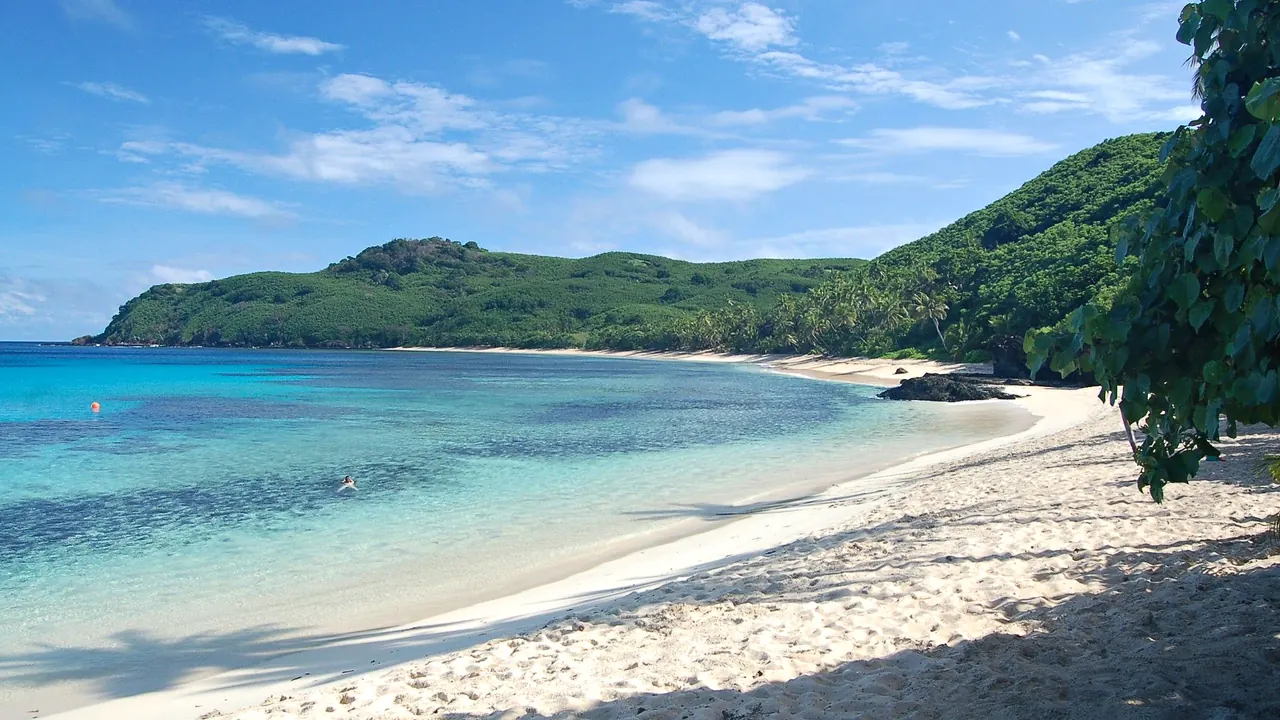
White sand and a turquoise lagoon on Waya
- Beaches92
- Nature & outdoors70
- Wellness & relaxation47
Photo: msdstefan, Public domain
Match
33
Every category weighted equally
- Beach & sun42
- Culture & arts23
- Food & nightlife24
- Family trip40
- Outdoors40
- Relax & unwind41
- Shopping & style24
- On a budget33
Yasawa Islands in twelve categories
Our verdict on each, scored 0 to 100 against the same fixed benchmark cities, so a score means the same thing on every page.
Beaches & swimming. Scores 92 out of 100.
Food & drink. Scores 18 out of 100.
Culture & sights. Scores 12 out of 100.
Nightlife. Scores 10 out of 100.
Nature & outdoors. Scores 70 out of 100.
Day trips. Scores 18 out of 100.
Good for families. Scores 40 out of 100.
Getting around. Scores 28 out of 100.
Shopping & style. Scores 6 out of 100.
Affordability. Scores 38 out of 100.
Live music & performing arts. Scores 12 out of 100.
Wellness & relaxation. Scores 47 out of 100.
Yasawa Islands category by category
Beaches & swimming
92Beach life is the point of the Yasawas. Almost every place to stay sits directly on its own stretch of pale sand, with clear, warm water between about 26°C and 29°C all year and coral a few strokes from shore. The best-known water is the Blue Lagoon between Nanuya Lailai and Nacula, but Naviti, Nacula and Waya all have long, quiet beaches, often shared only by guests and a nearby village.
The beaches are mostly coves rather than long strands, and on some the reef flat drains at low tide, so swimming depends on the tide. Water shoes help on coral rubble. The drier months from May to October bring calmer, clearer conditions; the wet season is hotter, with heavier showers.
Food & drink
18There is no food scene to speak of. Most visitors eat every meal where they stay, usually on a set meal plan, because there are no towns, restaurants or shops to go to instead. Cooking ranges from simple buffets at the budget places to careful set menus at the upmarket resorts.
The Fijian touches are the best of it: kokoda, raw fish cured in lime and coconut cream, and a lovo feast slow-cooked in an earth oven, which many resorts lay on one night a week. Kava, the peppery root drink shared in village ceremonies, is the local social drink. Bring any snacks you care about from the mainland.
Culture & sights
12The Yasawas have no museums, monuments or historic towns. Their heritage is lived rather than displayed: small villages of tin-roofed and thatched houses, a church at the centre of each, and customs such as the sevusevu, where visitors present kava to the chief before being welcomed. A guided village visit, with a sulu covering the knees and shoulders, is the main cultural outing and is worth doing once.
The limestone caves of Sawa-i-Lau, in the far north, carry old legends and faint carvings, though people go mostly for the swim inside.
Nightlife
10Evenings end early. A night out means the bar of your own resort, a bowl of kava passed around with the staff, and perhaps a few games or a bonfire at one of the budget places favoured by younger travellers. There is nowhere else to go once the boats stop, and most people are asleep soon after dinner, ready for an early swim.
Nature & outdoors
70The reefs are the main draw. Snorkelling straight off the beach is good across the chain, with soft corals, reef fish and turtles, and diving runs from several islands. Between roughly May and October manta rays feed in the channel off Drawaqa and Naviti, and swimming alongside them is the outing most visitors remember.
Above the water the islands are steep and grassy, the remains of old volcanoes, with short hikes to summit ridges on Waya, Nacula and Naviti that look out over the chain. Kayaking between bays and fishing trips with local boatmen fill the rest. The landscape is beautiful but small in scale, and the dry hills offer little shade at midday.
Day trips
18Days out mean a boat to a neighbouring island: another beach, a different village with its school and church, or the caves at Sawa-i-Lau in the north. Many visitors hop between two or three islands in one trip rather than making outings from a single base. There are no towns in the chain, and the nearest, Lautoka and Nadi on the main island, are a long boat ride away and better seen on the way in or out.
Good for families
40Families come for the simple things: warm, shallow water, snorkelling from the beach and a culture in which staff and villagers make a genuine fuss of children. Some resorts welcome children with family rooms and kids' activities, while others are adults-only, so the choice of base matters.
Against that, there is nothing built for children beyond the beach, reef flats and coral need shoes and supervision, and the sun is strong. Medical care means a boat or a seaplane back to the mainland, and the long ferry ride with transfers by small boat can be hard on young children. It suits families with older, water-confident children better than those with toddlers.
Getting around
28Access is by sea. A single daily catamaran runs from Port Denarau on the main island up the chain and back, taking a few hours to reach the middle islands and longer to the north, with resort boats meeting it offshore. Seaplanes and private water taxis are faster but costly. Weather can make transfers rough.
Once you arrive, each resort is a walkable patch of beach with no roads or cars, and moving between islands means fitting around the boat timetable or arranging a local boat. Plan the island order in advance and allow a spare day before an international flight.
Shopping & style
6There is almost nothing to buy. Village visits usually end at a table of shell jewellery, carvings and woven mats made by local women, and resort shops sell sunscreen, sarongs and basics at island prices. Bring what you need from the mainland.
Affordability
38The Yasawas are not a cheap place, even at the simple end. Basic bures and dorms exist on several islands, but meals must almost always be taken where you stay, usually on a daily meal plan, and the boat fares, transfers, drinks and activities such as diving or manta trips add up quickly. Everything arrives by boat, which shows in the price of a beer or a bottle of sunscreen.
Upmarket resorts in the north are priced as exclusive hideaways. Travellers on a budget do best by choosing a simple resort with a meal plan included, bringing snacks and water from the mainland, and staying longer on fewer islands.
Live music & performing arts
12There are no theatres or concert venues. Live performance means a meke, the traditional dance with chanting and drums, staged at resorts on lovo nights, and the guitar-and-harmony songs staff sing at farewells. The most moving music is in the village churches on Sunday morning, where congregations sing in rich, unaccompanied harmony, and visitors dressed modestly are welcome to attend.
Wellness & relaxation
47The Yasawas have no bathing tradition, thermal springs or spa culture of their own. Treatments mean the massage rooms at the resorts, from a simple open-air bure at the budget places to fuller spas at the upmarket resorts in the north. Fijian massage with coconut oil is the local style. It is pleasant, but nobody comes here for the treatments, and anyone wanting thermal pools, hammams or a structured spa programme will be disappointed.
What the islands do offer is quiet. There are no roads or traffic, the phone signal is often patchy, and days follow the light. For travellers who simply want to stop for a week, that stillness is the main way to rest here.
Where to stay in Yasawa Islands
The Yasawas have no towns, so choosing a base means choosing an island, and usually a single resort on its own beach where you will eat every meal. Waya, at the southern end, is the shortest boat ride from Port Denarau and suits walkers, with a ridge hike above its beaches and easy snorkelling off the sand. A little further up the chain, Drawaqa and Naviti sit beside the channel where manta rays feed from May to October. That makes them the natural first-visit base, and a good one for divers.
Further north, Nanuya Lailai and Nacula frame the Blue Lagoon, with clear, sheltered water and long, quiet beaches. They suit families with older, water-confident children and anyone who wants to swim and do little else. The far north has the more secluded upmarket resorts, some of them adults-only, and is closest to the caves at Sawa-i-Lau. It rewards a second visit or a quiet stay for couples.
Most visitors split a trip between two or three islands linked by the daily catamaran. Plan the order in advance, give each base several nights and allow a spare day on the main island before an international flight. On a budget, stay longer on fewer islands, at a simple resort with a meal plan included.
When should you go?
Pick a month to see what it is like. The climate figures are measured averages, not a forecast.
Yasawa Islands in July
Daytime high, °C
Rainfall in the month, mm
The whole year
Shaded against this destination’s own year: the deepest cell is its best month for that figure and the palest its weakest.
Where the figures come from
Yasawa Islands's temperatures are measured 89 km from the centre, at Nandi.
Yasawa Islands has no rain gauge within 25 km of the centre, so its rainfall comes from a gridded climate dataset read at the destination rather than from a gauge further away.
Temperature and rainfall are climate normals, averaged over the years shown. Yasawa Islands: 1991-2020 normals, Nandi (89.3 km from centre).
Before you go
| Measure | Yasawa Islands |
|---|---|
| Official language | English, Fijian, Fiji Hindi |
| Currency | Fiji Dollar (FJD) |
| Sockets | I240 V, 50 Hz |
| Driving side | Left |
| Time zone | UTC+12 |
| Emergency number | 000 or 911 |
| Main airport | Nadi International Airport (NAN)24 non-stop destinations |
By the numbers
| Measure | Yasawa Islands |
|---|---|
| Swim season, months above 21 °C | 12 months |
Compare Yasawa Islands with
Every comparison with a written verdict behind it.