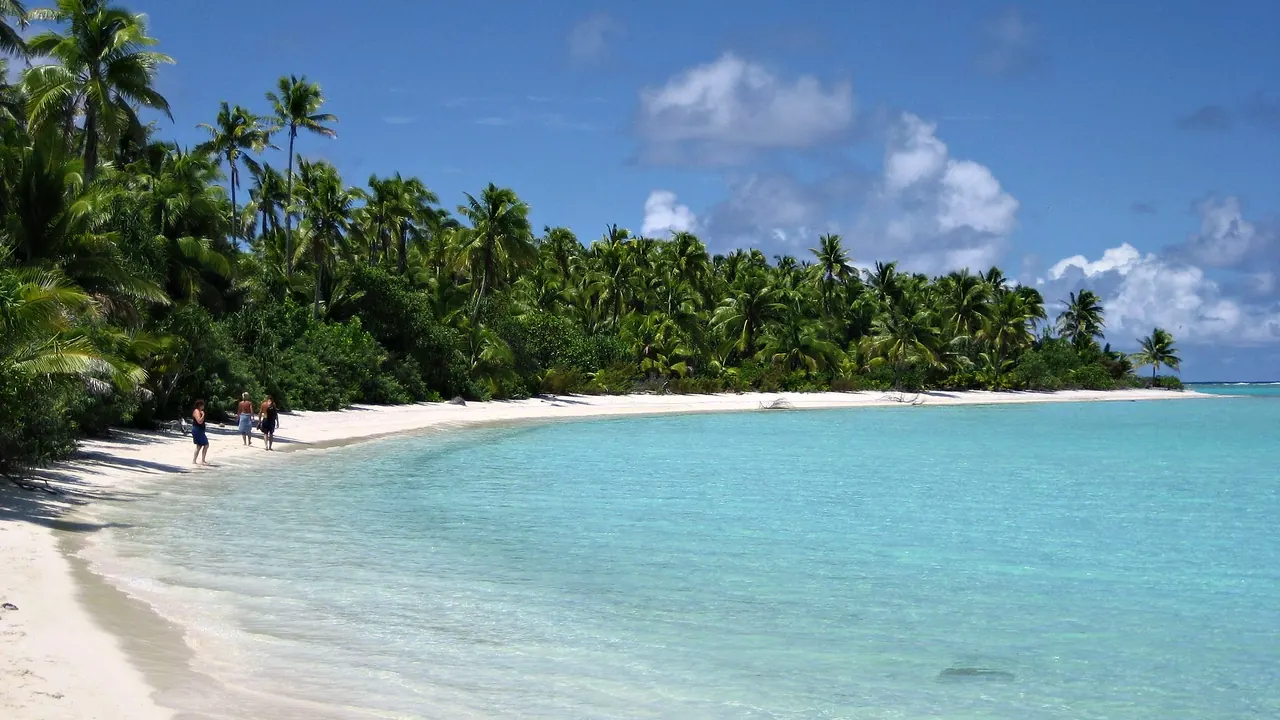
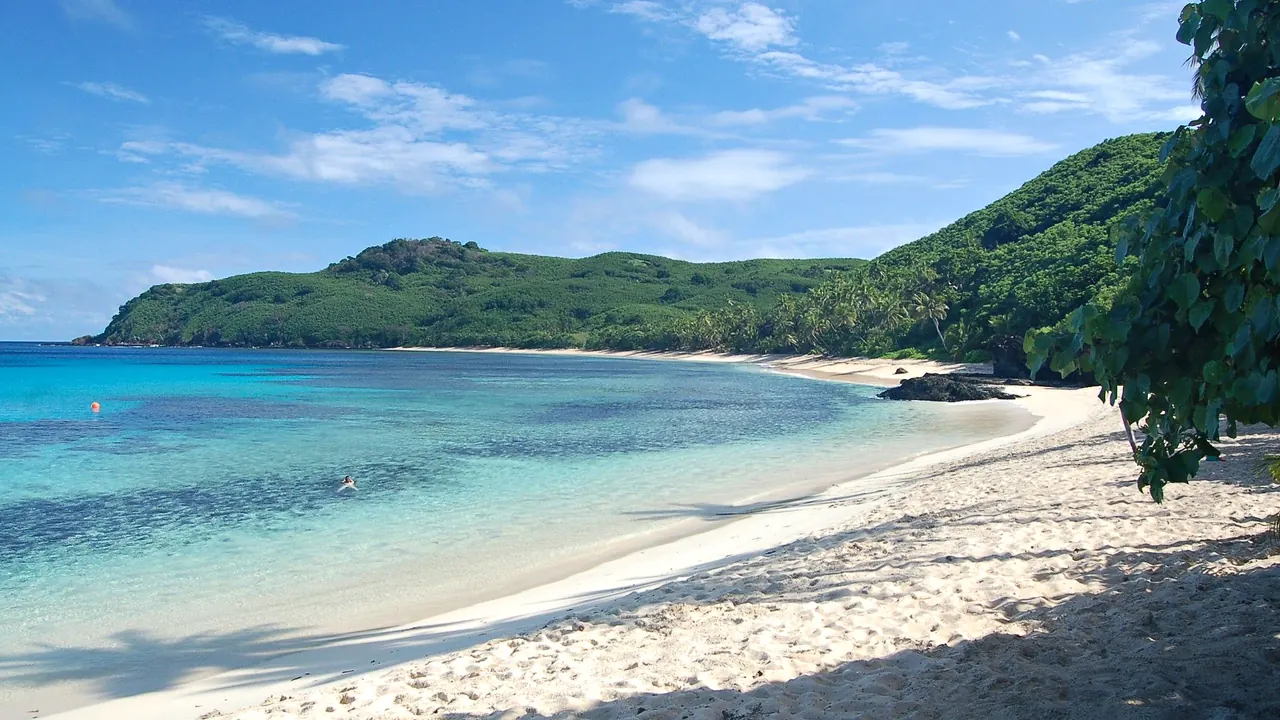
Photos: Aitutaki by Peter Gill / UK, CC BY 3.0, cropped; Yasawa Islands by msdstefan, Public domain.
Aitutaki or Yasawa Islands?
Our verdict in twelve categories, each scored against the same fixed benchmark cities, and the climate month by month, so you can choose for your trip.
Choose Aitutaki for
- getting around
- wellness
- live music and the arts
Aitutaki suits travellers who want one perfect lagoon and an easy, unhurried stay. You fly in, rent a scooter and divide the days between the motu, a hammock and a spa that looks onto the water. It is the gentler choice for climate and for getting around, and its island nights carry the stronger dance tradition. It costs more, though, and there is very little to do away from the water.
Choose Yasawa Islands for
- prices
- day trips
- nature and the outdoors
Pick the Yasawas if you would rather keep moving. You can hop between islands by boat, swim with manta rays in the dry season and walk volcanic ridges above the chain. Basic bures with meal plans make the Yasawas the better choice on a tighter budget, but the ferry timetable shapes the whole trip and the heat is fiercer.
Scoreboard
Twelve categories on one fixed scale from 0 to 100. The shaded stretch is the gap between the two.
Your match
Pick a travel style or drag the sliders, and both match scores follow your weighting.
Too close to call, level with your weighting
Wins on getting around and wellness with your weighting.
Wins on prices and day trips with your weighting.
What matters to you?
Category by category
What the scores mean for a trip.
Beaches & swimming
For swimming the two are level, and the difference is in the shape of the water. Aitutaki is one great lagoon, calm, shallow and sheltered almost everywhere. Its best sand is out on the motu, at One Foot Island and on the sandbars near Honeymoon Island, which you reach by cruise or kayak.
In the Yasawas the beaches are spread along a chain of islands, so the sand is usually right outside your bure: coves on Naviti, Nacula and Waya and the water of the Blue Lagoon. The sea there is a touch warmer, but some reef flats drain at low tide, so you swim around the tides. On Aitutaki that matters only in the shallowest spots.
Food & drink
Neither is a place to travel for food, and the dishes are close cousins. Aitutaki has ika mata and the Yasawas have kokoda, both raw fish in lime and coconut cream, and each serves an umu or lovo feast cooked in an earth oven once a week.
Aitutaki has slightly more choice, because a scooter takes you to the cafés and takeaways of Arutanga. In the Yasawas there is nowhere else to go, so the meal plan where you stay is what you eat all trip, with kava as the evening drink.
Culture & sights
Neither has museums or monuments, and in both the culture you meet is village life rather than sights. Aitutaki has a little more to point to: the coral-lime church in Arutanga, built in the 1820s, and the marae in the inland bush, which are best found with a guide.
In the Yasawas the main cultural outing is a guided village visit. You wear a sulu and present kava to the chief in the sevusevu. The caves at Sawa-i-Lau carry old legends too, though most people go there for the swim.
Nightlife
Both go quiet soon after dinner, so the choice is about the style of the evening. Aitutaki's liveliest nights are the resort island nights with dancing, and Sunday is kept almost entirely still. In the Yasawas an evening means your own resort's bar and kava with the staff, and at the budget places younger travellers like there may be games or a bonfire.
Nature & outdoors
The Yasawas have the edge outdoors. The main reasons are the manta rays that feed off Drawaqa and Naviti from about May to October, and the steep volcanic ridges on Waya, Nacula and Naviti with short summit hikes. Snorkelling from the beach and diving run the length of the chain.
Aitutaki's nature is almost all lagoon: coral gardens, giant clams and turtles. It also has two things the Yasawas lack, bonefish and giant trevally for fly fishers and trade-wind kitesurfing on the southern lagoon. The island itself is low, and the climb up Maungapu, about 124m high, is the only walk of note.
Day trips
Neither is a base for day trips in the usual sense, but the Yasawas give you more to do. A boat takes you to a neighbouring island for another beach, another village or the caves at Sawa-i-Lau, and many visitors simply move between two or three islands in one trip.
Aitutaki is a single island, and its one great outing is the lagoon cruise to the motu. Rarotonga is a flight away and needs a separate stay.
Good for families
For families the two come out even, and the appeal is the same: warm, shallow water, fish you can see from the shore and locals who make children welcome. Aitutaki is one small island with a road, which makes daily life simpler, but several resorts take adults only and family lodging is limited.
Some Yasawa resorts have family rooms and children's activities. On the other hand, medical care means a boat or seaplane back to the mainland, and the long ferry with small-boat transfers suits water-confident older children better than toddlers. Bring reef shoes for both.
Getting around
Aitutaki is far easier. A fifty-minute flight from Rarotonga lands you on an island you can cross in a quarter of an hour, with one road looping most of it, light traffic and scooters or bicycles to rent.
The Yasawas run on boats. A single daily catamaran from Port Denarau takes a few hours to reach the middle islands, and the seaplanes and water taxis that are faster cost much more. There are no roads at all, island hops have to fit the timetable and rough weather can disrupt transfers, so leave a spare day before an international flight.
Shopping & style
There is next to nothing to buy on either. Aitutaki has a few general stores in Arutanga, craft stalls with pareu and woven hats, and the odd seller of Cook Islands black pearls. In the Yasawas the shopping is the shell jewellery and woven mats laid out after village visits, plus basics in the resort shops. Stock up on Rarotonga or the Fijian mainland on the way in.
Affordability
The Yasawas are the cheaper of the two, though neither is cheap. Basic bures and dorms on several islands, with meals included in a daily plan, give budget travellers a workable option. Boat fares, drinks and paid outings such as manta trips still add up.
Aitutaki costs more across the board. Groceries and meals are priced well above what the setting suggests, and the lagoon resorts sit at the top of the market. Family-run guesthouses with kitchens and cheap scooter hire help, but the connecting flight and the cruises add up as well.
Live music & performing arts
Aitutaki has the stronger performance tradition. Its dancers are known across the Cook Islands for fast, athletic drum dancing, even though visitors mostly see it at resort dinner shows. The Yasawas offer a meke on lovo nights and the songs staff sing with guitars at farewells.
On Sunday both offer their most moving music: hymns in the old church at Arutanga, and unaccompanied harmonies in the Yasawa village churches. Neither has a theatre or a concert hall.
Wellness & relaxation
Aitutaki is the more restful of the two. The larger resorts have spas with treatment rooms facing the lagoon and offer coconut-oil massage and local plant remedies, and on Sunday the island almost stops.
The Yasawas are just as still, with no roads and a patchy phone signal, but treatments are simpler. They are often given in an open-air bure, and fuller spas are found only at the upmarket resorts in the north. Neither has thermal baths.
When should you go?
Pick your month. The climate figures are measured averages, not a forecast.
Aitutaki in July
Yasawa Islands in July
Daytime high, °C
Rainfall in the month, mm
Where the figures come from
Aitutaki has no weather station within reach, so its figures come from a gridded climate model rather than a measured record, and read a broad area rather than one spot.
Yasawa Islands's temperatures are measured 89 km from the centre, at Nandi.
Yasawa Islands has no rain gauge within 25 km of the centre, so its rainfall comes from a gridded climate dataset read at the destination rather than from a gauge further away.
Temperature and rainfall are climate normals, averaged over the years shown. Aitutaki: 2001-2020 normals, NASA POWER reanalysis grid, no weather station within 90 km. Yasawa Islands: 1991-2020 normals, Nandi (89.3 km from centre).
Both islands are at their best in the drier half of the year, from about June to September. Aitutaki is the milder of the two. From July to October the highs stay around 25°C and the sea near 26°C, so swimming is easy all year round. The rain comes mostly from December to March, which is also when the lagoon is warmest.
The Yasawas are hot all year, with highs reaching 32°C in the wet season, so there is little relief for walks on the hills at midday. January to March is very wet, at close to 290mm a month, before it dries out sharply to about 50mm in July. There is plenty of sunshine all year. August is the sunniest month, the second half of the year stays bright through to December, and February to April are the dullest months.
Which traveller are you?
On a trip on a tight budget, the Yasawas are the better fit. Simple bures and dorms with meals included keep the daily cost predictable. On Aitutaki, shipped-in groceries, resort prices and the extra connecting flight push up every part of the stay.
For a relaxing and wellness trip, Aitutaki is the stronger choice. Its resort spas look straight onto the lagoon, the single road makes getting about effortless and Sunday is almost silent. In the Yasawas you have to plan around boat transfers.
On an outdoors trip, choose the Yasawas. Manta rays off Drawaqa, reef snorkelling along a whole chain and ridge hikes on Waya and Naviti give more variety than low-lying Aitutaki. The exception is fly fishers, who come to Aitutaki for its bonefish.
Before you go
| Measure | Aitutaki | Yasawa Islands |
|---|---|---|
| Official language | English, Cook Islands Maori | English, Fijian, Fiji Hindi |
| Currency | New Zealand Dollar (NZD) | Fiji Dollar (FJD) |
| Sockets | I240 V, 50 Hz | I240 V, 50 Hz |
| Driving side | Left | Left |
| Time zone | UTC-10 | UTC+12 |
| Emergency number | Police 999, ambulance 998, fire 996 | 000 or 911 |
| Main airport | Aitutaki Airport (AIT) | Nadi International Airport (NAN)24 non-stop destinations |
| Public holidays this year | 11 days | - |
By the numbers
| Measure | Aitutaki | Yasawa Islands |
|---|---|---|
| Swim season, months above 21 °C | 12 months | 12 months |
Where else could you go?
Every comparison below shares a destination with this one, so you can follow Aitutaki or Yasawa Islands somewhere new.
- Mamanuca Islandsvs Yasawa Islands
- Rarotongavs Aitutaki
- Bora Boravs Aitutaki
- Rarotongavs Yasawa Islands
- Bora Boravs Yasawa Islands