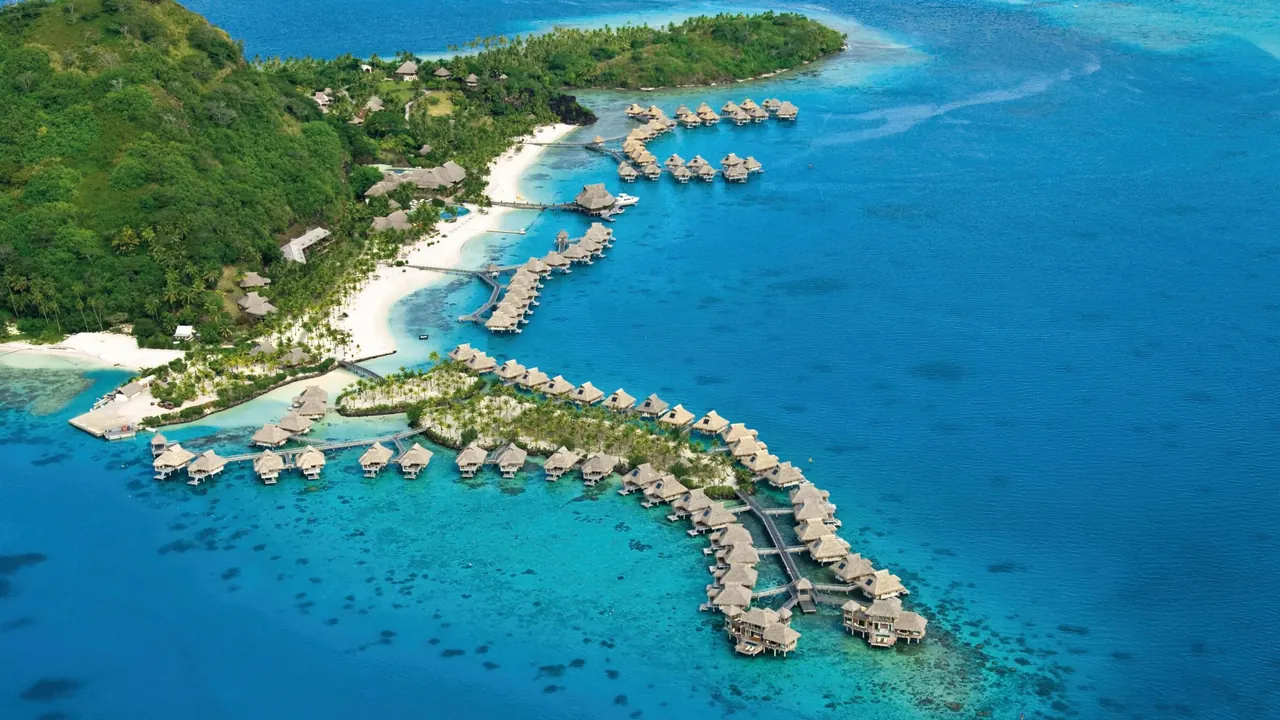
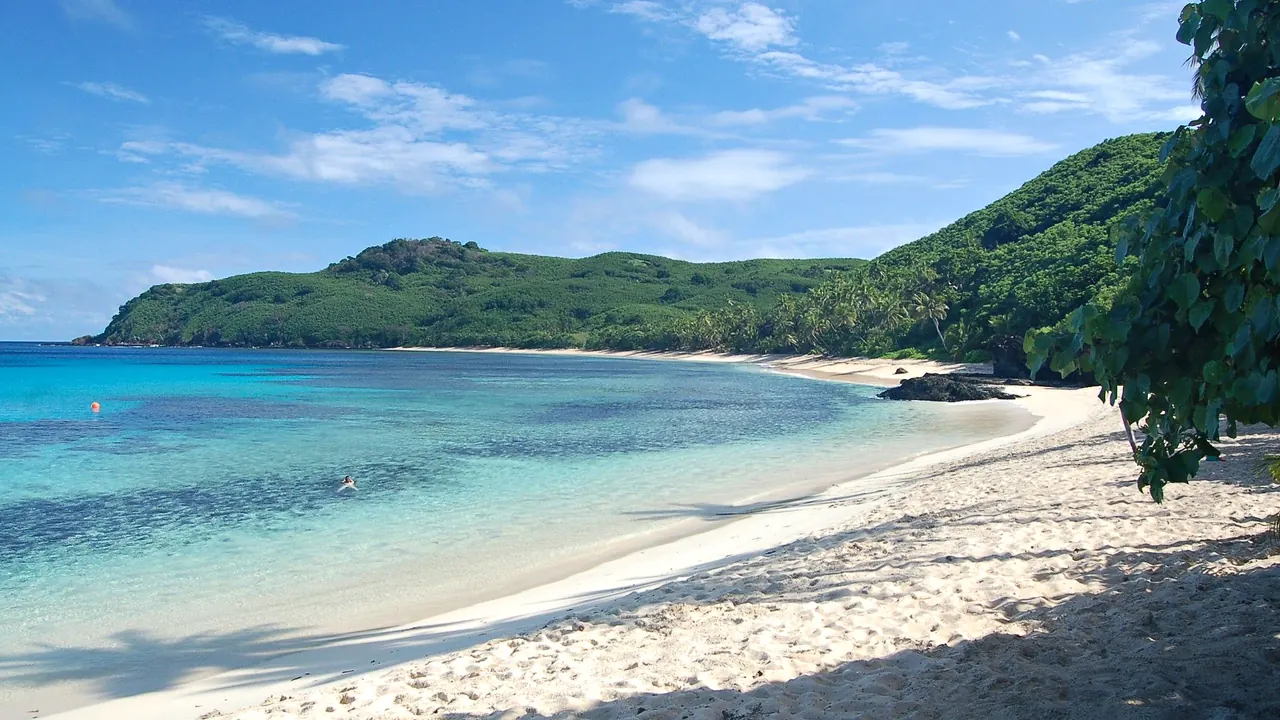
Photos: Bora Bora by Mauro Soares, CC BY-SA 3.0, cropped; Yasawa Islands by msdstefan, Public domain.
Bora Bora or Yasawa Islands?
Our verdict in twelve categories, each scored against the same fixed benchmark cities, and the climate month by month, so you can choose for your trip.
Choose Bora Bora for
- food and drink
- shopping
- wellness
Bora Bora is the choice when the setting itself is the reward: the jagged peak of Mount Otemanu above a reef-ringed lagoon, an overwater bungalow, a polished resort spa and French cooking with Polynesian touches at dinner. It suits couples with a generous budget who want comfort, calm and very little else to do.
Choose Yasawa Islands for
- prices
- families
- nightlife
Travellers who want the same warm water and reef for much less money should look to the Yasawas. Here you sleep beside your own cove in anything from a dorm or simple bure to a secluded resort, hop between islands on the daily catamaran, and spend evenings with kava and village life rather than room service. You need more patience with boats and you give up the polish, but the trip feels more personal.
Scoreboard
Twelve categories on one fixed scale from 0 to 100. The shaded stretch is the gap between the two.
Your match
Pick a travel style or drag the sliders, and both match scores follow your weighting.
Too close to call, level with your weighting
Wins on food and drink and shopping with your weighting.
Wins on prices and families with your weighting.
What matters to you?
Category by category
What the scores mean for a trip.
Beaches & swimming
For swimming there is little between them: the water is equally warm and clear in both places. The difference is in the setting. On Bora Bora you swim in the lagoon itself, climbing down a bungalow ladder or wading in from a resort motu. Matira Point is the long public strand, where waders can walk a long way out.
In the Yasawas the beach is a cove outside your door, often shared only with a village, and the coral is close enough to snorkel straight from the sand. Some reef flats drain at low tide, so your swims follow the tide and water shoes are worth packing.
Food & drink
Bora Bora eats better, though neither is a trip for food. Its resort kitchens cook French food with Polynesian touches, and poisson cru from the snack counters and food trucks around Vaitape gives you a reason to leave the hotel.
The Yasawas have nothing like that. With no towns or restaurants, you eat every meal where you stay, on a set plan. Kokoda and the weekly lovo feast are the highlights, and kava takes the place of a wine list.
Culture & sights
Neither is a place to go for sights, and both can be covered in a few hours. What differs is the kind of heritage. Bora Bora's is in physical remains you see on an island tour: restored marae and rusting American wartime guns above the lagoon.
The Yasawas have no monuments at all. Instead, a guided village visit with the sevusevu kava ceremony puts you among Fijian customs that are still lived, and a swim in the Sawa-i-Lau caves adds a touch of legend.
Nightlife
Both go quiet soon after dinner. On Bora Bora the evening means a sunset cocktail at a resort bar with lagoon views, or one of the few bar-restaurants on the main island where guests from different hotels mix. In the Yasawas it means kava with the staff, or a bonfire and games at the budget places that draw younger travellers. That makes for a more sociable night, though it ends just as early.
Nature & outdoors
Bora Bora has the more dramatic setting, with Otemanu's jagged peak rising from a lagoon of many blues. It also has more to do on the water: stingrays and blacktip sharks in the shallows, kitesurfing off the motu, and dives in the passes for lemon sharks and mantas. On land there is less, mainly 4x4 tracks and a guided climb of Mount Pahia.
The Yasawas are gentler but spread over more islands. You can snorkel from almost every beach, swim with mantas off Drawaqa and Naviti from May to October, and take short hikes up grassy ridges on Waya, Nacula and Naviti. Kayaking from bay to bay suits the small scale of the chain.
Day trips
Neither works well as a base for outings. Leaving Bora Bora means a flight or a boat, either to Tahaa's vanilla plantations and pearl farms, to the sacred marae of Taputapuatea on Raiatea, or to quiet Maupiti, and each needs planning. In the Yasawas a day out is a boat to the next island's beach and village, or north to the Sawa-i-Lau caves, and many travellers simply move along the chain rather than making trips from one base.
Good for families
Both suit families with older, water-confident children better than those with toddlers. Bora Bora's strength is Matira, where small children can paddle a long way out, but many resorts are built for couples and overwater decks need close watching.
In the Yasawas, staff and villagers make a real fuss of children, and some resorts offer family rooms. On the other hand, reef flats need shoes, medical care is a boat or seaplane ride away, and the ferry journey is long for young children.
Getting around
In both places boats decide most of your movements, but the islands differ once you land. Bora Bora has a coast road of about 32km around the main island, easy to cover by bicycle or scooter. Resorts on the motu still depend on hotel shuttles, though, and lagoon outings are mostly tours.
The Yasawas have no roads at all. You arrive on the single daily catamaran from Port Denarau, a ride of several hours, or by costly seaplane, and island-hopping follows that timetable, so you need to plan the order of islands in advance.
Shopping & style
Bora Bora at least has one thing worth buying: Tahitian black pearls, sold in showrooms around Vaitape and in the resorts. The stalls by the quay add pareos, carvings and monoi oil, and a morning covers the lot. The Yasawas offer even less, just a table of shell jewellery and woven mats after a village visit and a resort shop for sunscreen, so bring what you need from the mainland.
Affordability
This is where the two differ most. Bora Bora is among the most expensive places on earth to stay. Overwater bungalows, imported food, boat transfers and lagoon tours all cost a lot, and guesthouses or self-catering from Vaitape's grocery stores only soften the bill.
The Yasawas are not cheap either, because meal plans, boat fares and drinks add up. Still, their simple bures and dorms bring a stay within reach of travellers who could never consider Bora Bora. A basic resort with meals included, and a longer stay on fewer islands, keeps the cost manageable.
Live music & performing arts
Neither has a stage of any kind, and in both the dance you are most likely to see comes with dinner at your resort. Bora Bora's shows put more weight on spectacle, with fire and drums. If your dates are flexible, July adds the Heiva, when local troupes compete in Vaitape and the dancing is for the island rather than for hotel guests.
The Yasawas have no festival month to plan around, but their music turns up every week. On Sunday mornings the village churches fill with unaccompanied singing in harmony, and visitors in modest dress can join the congregation. Add the songs staff sing when guests leave, and the best of it here is part of ordinary life rather than a show.
Wellness & relaxation
Bora Bora is the better place to be pampered. Its larger motu resorts run polished spas, some with treatment rooms over the lagoon, offering Polynesian massage with monoi, coconut and tiare. In the Yasawas, massage is the Fijian style with coconut oil, given anywhere from an open-air bure at the budget places to fuller spas at the northern resorts.
The deeper rest is much the same in both: no traffic, no nightlife, and days set by the light. The Yasawas add a patchy phone signal, which some travellers will count as a benefit.
When should you go?
Pick your month. The climate figures are measured averages, not a forecast.
Bora Bora in July
Yasawa Islands in July
Daytime high, °C
Rainfall in the month, mm
Where the figures come from
Yasawa Islands's temperatures are measured 89 km from the centre, at Nandi.
Yasawa Islands has no rain gauge within 25 km of the centre, so its rainfall comes from a gridded climate dataset read at the destination rather than from a gauge further away.
Temperature and rainfall are climate normals, averaged over the years shown. Bora Bora: 1991-2020 (sunshine 1981-2010) normals, Bora-Bora / Faanui (6.1 km from centre). Yasawa Islands: 1991-2020 normals, Nandi (89.3 km from centre).
Both are hot all year, with daytime highs of about 29°C to 31°C and the Yasawas touching 32°C in February. The sea is warm enough to swim in every month, so the real question is rain. Around Bora Bora's resorts the driest stretch runs from June to October, with July and September at about 75mm. Rain builds through November, and December and January are the wettest months, both above 260mm. From January to October Bora Bora is also the sunnier of the two.
The Yasawas have a sharper divide. January to March are wetter there than on Bora Bora, and March is the wettest month in either place, though December is a little drier than Bora Bora's. The rain falls away quickly in May, and July is the driest month in either place. Both are at their best from May to October. Outside those months, April is usually drier on Bora Bora, while November is drier in the Yasawas, which also get more sun in the last two months of the year.
Which traveller are you?
On a trip on a tight budget, the Yasawas are the only realistic choice of the two. Simple bures and dorms with meals included keep a stay within reach, while Bora Bora stays expensive even in a family-run guesthouse with self-catering.
For a relaxing and wellness trip, Bora Bora wins if being looked after is part of the rest, with polished spas at its motu resorts. The Yasawas suit those who unwind best with simpler comforts and a patchy phone signal.
On an outdoors trip, Bora Bora suits travellers who want the most striking scenery and plenty of guided outings on one lagoon. The Yasawas suit those who would rather move from island to island, snorkelling off each beach and walking the hills.
Before you go
| Measure | Bora Bora | Yasawa Islands |
|---|---|---|
| Official language | French | English, Fijian, Fiji Hindi |
| Currency | CFP Franc (XPF) | Fiji Dollar (FJD) |
| Sockets | - | I240 V, 50 Hz |
| Driving side | Right | Left |
| Time zone | UTC-10 | UTC+12 |
| Emergency number | 112 | 000 or 911 |
| Main airport | Bora Bora Airport (BOB)9 non-stop destinations | Nadi International Airport (NAN)24 non-stop destinations |
| Public holidays this year | 16 days | - |
By the numbers
| Measure | Bora Bora | Yasawa Islands |
|---|---|---|
| Population | 10,605 | - |
| People per km² | 347 | - |
| Swim season, months above 21 °C | 12 months | 12 months |
Where else could you go?
Every comparison below shares a destination with this one, so you can follow Bora Bora or Yasawa Islands somewhere new.
- Mamanuca Islandsvs Yasawa Islands
- Mooreavs Bora Bora
- Tahitivs Bora Bora
- Aitutakivs Bora Bora
- Cook Islandsvs Bora Bora
- Aitutakivs Yasawa Islands