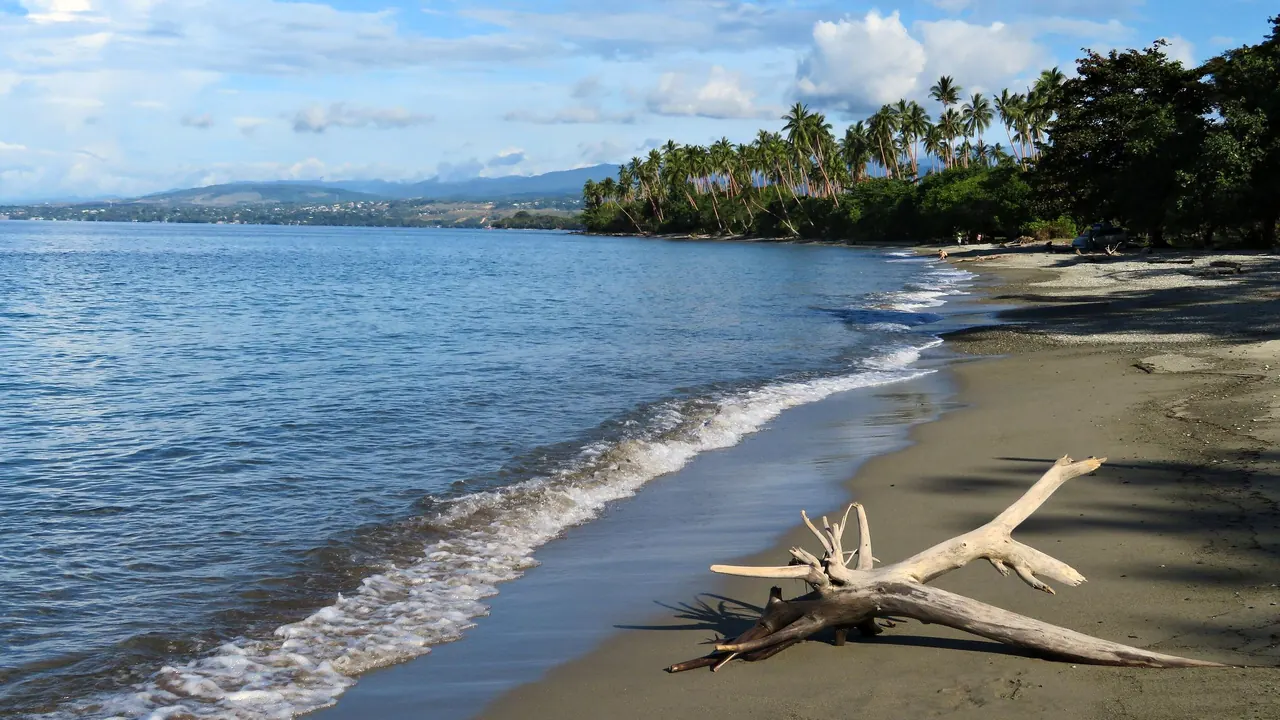
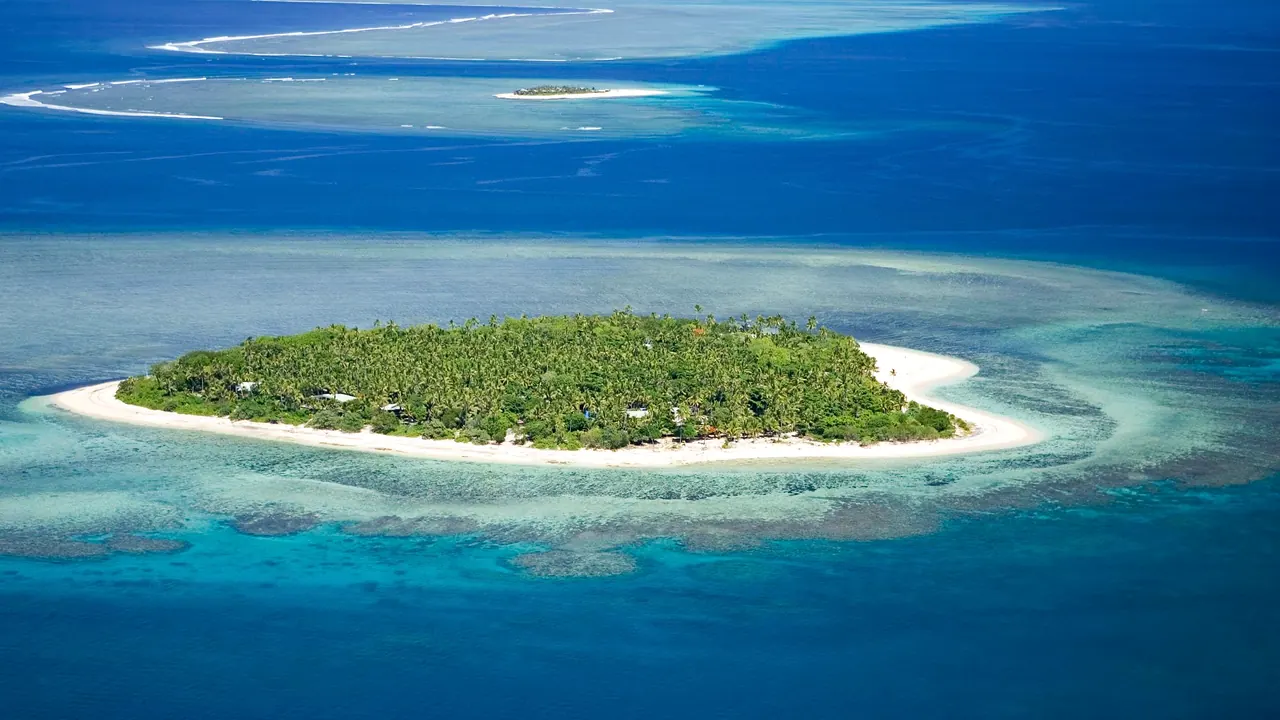
Photos: Honiara by Torbenbrinker, CC BY-SA 4.0, cropped; Mamanuca Islands by Tavyland, CC BY-SA 3.0, cropped.
Honiara or Mamanuca Islands?
Our verdict in twelve categories, each scored against the same fixed benchmark cities, and the climate month by month, so you can choose for your trip.
Choose Honiara for
- culture and sights
- shopping
- prices
Honiara suits the traveller with a purpose: someone who has read about the Guadalcanal campaign and wants to stand on Bloody Ridge, look over Iron Bottom Sound and dive the wrecks lying in it. It is a working capital, hot and plain, with few comforts and little for children, and it serves best as a few days of history and diving before moving on to the outer islands.
Choose Mamanuca Islands for
- families
- wellness
- beaches
For a vacation built around sand, lagoon and rest, the Mamanuca Islands are the clear choice. You walk from your room onto white coral beaches, children have kids' clubs and shallow water, couples have adults-only islands, and experienced surfers have some of the Pacific's best-known reef breaks. What you give up is history, variety at the table and any sense of a town.
Scoreboard
Twelve categories on one fixed scale from 0 to 100. The shaded stretch is the gap between the two.
Your match
Pick a travel style or drag the sliders, and both match scores follow your weighting.
Wins on culture and sights and shopping with your weighting.
Wins on families and wellness with your weighting.
What matters to you?
Category by category
What the scores mean for a trip.
Beaches & swimming
This is where the two part company most sharply. Honiara's waterfront is a working harbour, and the swimming lies out along the western road, where Bonegi's dark sand lets you snorkel over sunken transport ships, with quieter grey coves towards Cape Esperance. Facilities are thin, some landowners ask a custom fee, and crocodiles rule out river mouths.
The Mamanucas are the picture people fly to the South Pacific for: white coral sand on nearly every island, turquoise lagoons safe for weak swimmers, sunset beaches on Tokoriki and Matamanoa, and sandbars reached by day boat. The only catch is the tide, which drains the lagoon on some shores for a few hours.
Food & drink
Neither is a place to travel for food, but the limits differ. In Honiara you can at least wander the Central Market for root crops, betel nut and the morning's tuna, and choose between Chinese-run eateries and waterfront grills, though village dishes such as cassava pudding are rarely on a menu.
On the Mamanucas you eat wherever you sleep, usually on a meal plan of buffet and imported fare, with kokoda and the weekly lovo feast as the Fijian highlights. Good reef fish redeems it, but a week grows repetitive with no market or street to escape to.
Culture & sights
Honiara has the stronger draw, and almost all of it is the war of 1942 and 1943: the memorial above Iron Bottom Sound, Bloody Ridge, the Japanese Peace Memorial on Mount Austen and wreckage rusting in the bush. The small National Museum adds carving and custom money, though most sites need a taxi or a guide.
The Mamanucas have no monuments or museums at all. Culture there means a respectful half-day in a village such as Yanuya or Malolo, with a sevusevu kava welcome and a look at the church and school.
Nightlife
Evenings are livelier on the Mamanucas, if only modestly. Resort bars bring string bands, kava and fire shows, and a few backpacker islands run DJ nights and dancing on the sand, though the couples' and family islands are asleep by eleven.
Honiara offers a sunset drink at a hotel or waterfront bar and a handful of weekend clubs playing reggae and island pop. The streets are dark and best not walked at night, so every outing involves a taxi.
Nature & outdoors
Both are strongest underwater, but in different ways. Honiara's waters are a wartime graveyard of ships, submarines and aircraft, some shallow enough to dive from shore, and behind the town rise Guadalcanal's forested mountains, with guided jungle walks to the Mataniko and Tenaru falls.
The Mamanucas trade the jungle for reef: soft-coral walls, shark dives, turtles, and world-famous surf at Cloudbreak and Restaurants for experienced riders. On land there are only short climbs on dry, grassy islands, with Monuriki's volcanic outline the finest view.
Day trips
Both need a boat for most outings, but the Mamanucas make it easier. Sandbar cruises, neighbouring villages and the southern Yasawas are routine trips, and the mainland around Nadi adds a Hindu temple, the Sabeto mud pools and orchid gardens, even if many visitors never leave their island.
From Honiara the worthwhile trip is Tulagi, the old protectorate capital, or a full day on volcanic Savo with its hot springs and megapode birds. With no reliable schedules, both mean chartering a boat, though Vilu's open-air war museum is an easy drive.
Good for families
The Mamanucas are far easier with children. Several islands are designed for families, with kids' clubs run by Fijian staff, children's menus and calm shallows, and Malolo Lailai and Mana sit close to the mainland. Medical help beyond a resort nurse still means a boat ride.
Honiara has nothing aimed at children, and malaria, heat, missing pavements and basic hospitals weigh more with little ones. Older children might enjoy snorkelling the Bonegi wrecks, but most families go straight to an island resort.
Getting around
Honiara is a town of one long road, with numbered minibuses and plentiful taxis along Mendana Avenue, but traffic jams, heat and broken pavements make even short walks tiring, and the battlefields and western beaches need a driver.
The Mamanucas are simpler once you arrive: a catamaran from Port Denarau, then an island you can cross on foot in minutes, with no cars at all. Island-hopping depends on the ferry loop and choppy trade-wind crossings, so most visitors settle on one or two islands.
Shopping & style
Honiara has the more interesting souvenirs. The Central Market and stalls near the museum sell carvings inlaid with nautilus shell, woven baskets and strands of Malaita shell money, though beyond them there are only Chinatown's general stores.
On the Mamanucas shopping stops at resort boutiques with swimwear and sarongs and a few mats and shell jewellery laid out on village visits. Visitors after masi cloth or kava bowls wait for Nadi's market on the way home.
Affordability
Honiara is the cheaper of the two, although neither is a budget destination. The gap is clearest at the bottom end. A plain guesthouse in town leaves you free to eat from the market stalls, ride the minibuses along the main road for small change and spend the afternoon at the war memorials for almost nothing. The cheapest Mamanuca bed, a backpacker dormitory or bure with meals included, still comes with the catamaran from Port Denarau, and every drink and activity is bought on the island.
Further up the range the difference widens. Comfort in Honiara costs more than it is worth, and diving and boat charters are expensive, but you can still leave the hotel for an ordinary meal in town. On the Mamanucas there is nowhere else to go, so the meal plan, the bar, the transfers and the dive boat are all paid to the same resort. The adults-only outer islands are among the dearest places to stay anywhere in the Pacific.
Live music & performing arts
Neither has a theatre or a concert hall, and both offer music rooted in custom. In Honiara the famous bamboo panpipe ensembles of Malaita and custom dancing appear mainly at festivals or through a guide, so an ordinary week may bring only a hotel band.
On the Mamanucas it comes to you: a meke of song and dance with fire dancers at the resort, and guitar and ukulele players at dinner who sing the farewell song as the boat leaves.
Wellness & relaxation
For rest, the Mamanucas are in a different league. With no roads or traffic, days slip into swims, hammocks and sunsets, most resorts have a spa offering Fijian bobo massage, and Tokoriki and Matamanoa are adults-only islands made for quiet.
Honiara is hot, dusty and congested along its one road, and a hotel massage is about as far as wellness goes. The calm of the Solomon Islands lies out in the villages and outer islands, beyond the capital.
When should you go?
Pick your month. The climate figures are measured averages, not a forecast.
Honiara in July
Mamanuca Islands in July
Daytime high, °C
Rainfall in the month, mm
Where the figures come from
Mamanuca Islands's temperatures are measured 35 km from the centre, at Nandi.
Mamanuca Islands has no rain gauge within 25 km of the centre, so its rainfall comes from a gridded climate dataset read at the destination rather than from a gauge further away.
Temperature and rainfall are climate normals, averaged over the years shown. Honiara: 1992-2020, 12 years observed (rainfall 1961-1990) normals, Honiara (2.6 km from centre). Mamanuca Islands: 1991-2020 normals, Nandi (35.3 km from centre).
Neither destination ever cools down. Honiara sits at about 32°C in every month, so walking the streets is tiring at midday all year, and the difference between seasons is the rain: very heavy from January to March, when roads to the battlefields and falls turn to mud, and much lighter from May to September. The Mamanucas run a little cooler in the middle of the year, with highs near 29°C, and the sea is warm enough for long swims in every month in both places.
The best season is the same in both, roughly May to October. The Mamanucas are driest in July, at about 51mm, and sunniest in August, which is also when the surf breaks are working. Their wettest stretch, February and March, is noticeably gentler than Honiara's peak of around 348mm in January.
Which traveller are you?
On a beach and sun trip, the Mamanuca Islands win easily. White sand begins at the door, the lagoons are calm and clear, and snorkelling starts off the beach, while Honiara's own shore is harbour and river mouths and its swimming means a drive west to Bonegi.
On a family trip with children, choose the Mamanucas. Islands such as Malolo Lailai and Mana have kids' clubs, babysitting and safe shallow water, whereas Honiara offers no parks or playgrounds, has malaria and basic medical care, and is hard going with a pushchair.
For a culture trip centred on history, Honiara is the one to pick. The Guadalcanal battlefields, the American Memorial on Skyline Ridge and the National Museum's custom money and canoes tell a real story, while the Mamanucas offer only village kava welcomes and pottery on Yanuya.
Before you go
| Measure | Honiara | Mamanuca Islands |
|---|---|---|
| Official language | English | English, Fijian, Fiji Hindi |
| Currency | Solomon Islands Dollar (SBD) | Fiji Dollar (FJD) |
| Sockets | GI220 V, 50 Hz | I240 V, 50 Hz |
| Driving side | Left | Left |
| Time zone | UTC+11 | UTC+12 |
| Emergency number | Police 999, ambulance 911, fire 988 | 000 or 911 |
| Elevation | 29 m | - |
| Main airport | Honiara International Airport (HIR)12 km from centre3 non-stop destinations | Nadi International Airport (NAN)24 non-stop destinations |
| Public holidays this year | 9 days | - |
By the numbers
| Measure | Honiara | Mamanuca Islands |
|---|---|---|
| Population | 84,520 | - |
| People per km² | 3,842 | - |
| Museums within 10 km | 1 | - |
| UNESCO World Heritage sites within 50 km | 0 | - |
| Swim season, months above 21 °C | 12 months | 12 months |
Where else could you go?
Every comparison below shares a destination with this one, so you can follow Honiara or Mamanuca Islands somewhere new.
- Yasawa Islandsvs Mamanuca Islands
- Nuku'alofavs Mamanuca Islands
- Port Vilavs Mamanuca Islands
- Port Vilavs Honiara
- Port Moresbyvs Honiara
- Rarotongavs Mamanuca Islands