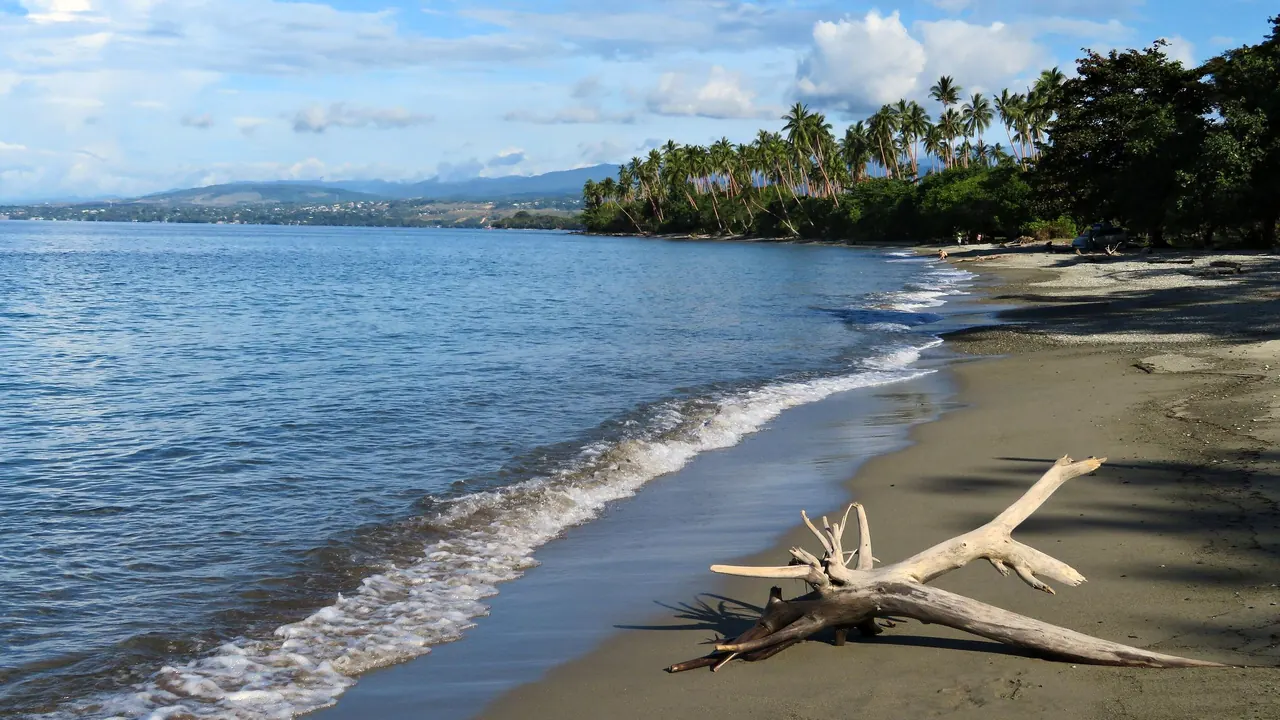
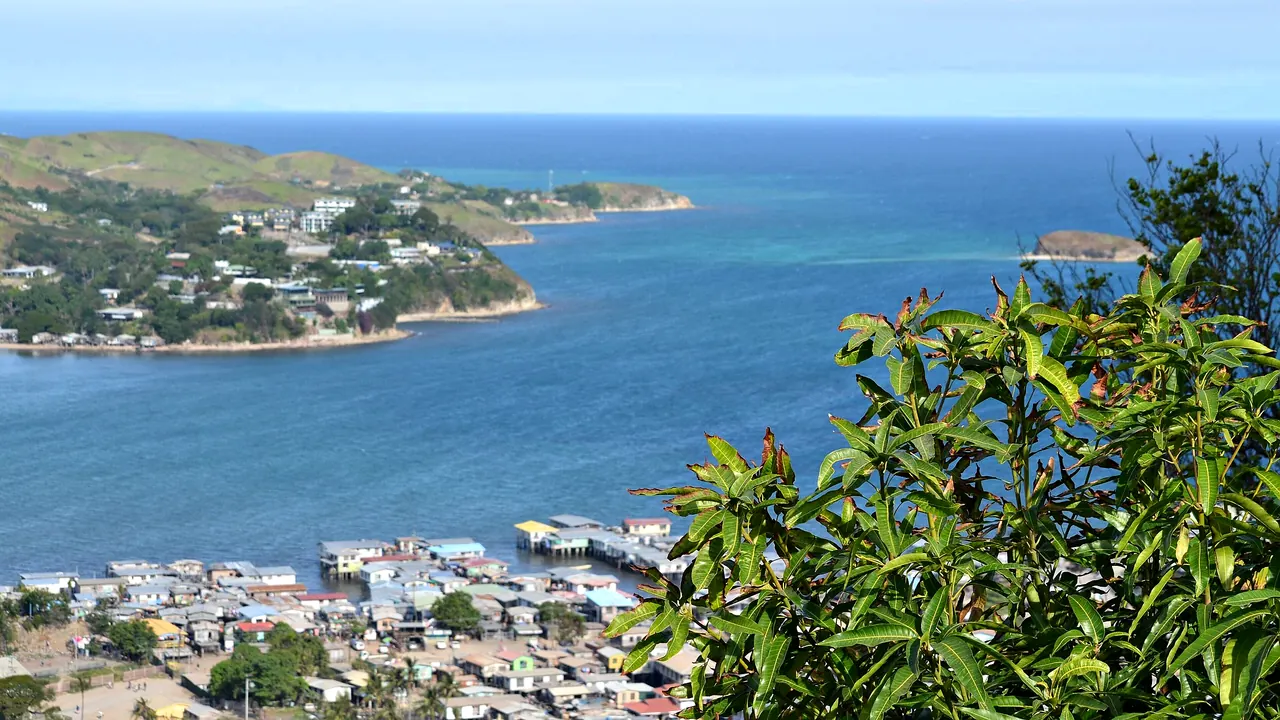
Photos: Honiara by Torbenbrinker, CC BY-SA 4.0, cropped; Port Moresby by eGuide Travel, CC BY 2.0, cropped.
Honiara or Port Moresby?
Our verdict in twelve categories, each scored against the same fixed benchmark cities, and the climate month by month, so you can choose for your trip.
Choose Honiara for
- prices
- getting around
- nature and the outdoors
Honiara is the better pick for divers and for anyone drawn by the Guadalcanal campaign. Wrecks lie in shallow water off the coast road, the ridges above town hold the battlefield memorials, and the town's single main road with minibuses and taxis makes it easier, and cheaper, to handle on your own.
Choose Port Moresby for
- shopping
- families
- wellness
Port Moresby makes more sense for travellers interested in Melanesian art and craft, or who are passing through on business. Its national collection of masks and spirit boards, the bilums and Sepik carvings on sale, and the birds of paradise at Varirata are the rewards. Expect a stay arranged around drivers and hotels, which costs more and leaves less room for wandering.
Scoreboard
Twelve categories on one fixed scale from 0 to 100. The shaded stretch is the gap between the two.
Your match
Pick a travel style or drag the sliders, and both match scores follow your weighting.
Wins on prices and getting around with your weighting.
Wins on shopping and families with your weighting.
What matters to you?
Category by category
What the scores mean for a trip.
Beaches & swimming
Neither town is a place to swim off the waterfront, but Honiara puts real swimming within a drive. West along the coast road, the dark sand at Bonegi leads straight out to sunken transport ships you can snorkel over, and quiet grey-sand coves at Tambea and Cape Esperance lie further on. Facilities are thin, some landowners ask a custom fee, and crocodiles rule out river mouths.
Port Moresby's Ela Beach is for a stroll and a picnic rather than a swim. The clear water is out by boat from Bootless Bay, at Loloata and the reef islet of Daugo, where you can snorkel from the sand. It is lovely, but it takes a planned outing rather than a spontaneous afternoon.
Food & drink
The two are equally limited for eating out. The difference lies in where the good food is. In Honiara it is the Central Market on Mendana Avenue and the morning's tuna, served raw or seared in a few places, alongside Chinese-run eateries and cold Solbrew.
Port Moresby eats mostly in hotel dining rooms, with grilled reef fish at business prices. The Koki fish market over the water and highland coffee are its local treats, and earth-oven mumu appears mainly at celebrations.
Culture & sights
Both capitals offer a day or two of sights, but they have different strengths. Honiara is essentially a battlefield. Skyline Ridge looks over Iron Bottom Sound, and Bloody Ridge, Mount Austen and rusting guns in the bush draw readers of Pacific war history. Its museum is small, and most sites need a taxi or a guide.
Port Moresby is stronger on art and ethnography. The National Museum and Art Gallery in Waigani holds masks, spirit boards and canoe prows from across the country. Parliament House, built like a Sepik spirit house, is the more striking building of the two parliaments, and the stilt village of Hanuabada adds a living tradition. Bomana War Cemetery covers the wartime story, here through Kokoda.
Nightlife
Nights out are short and quiet in both. Honiara at least has a handful of clubs playing reggae and island pop at weekends, plus sunset drinks on the waterfront, with taxis to and from. Port Moresby's evenings stay inside hotel bars, lounges and members' venues, reached by arranged car.
Nature & outdoors
Honiara has the edge, mostly because of what lies under water. Iron Bottom Sound and the coast to the west are full of ships, submarines and aircraft, some shallow enough to dive from the shore, and the reefs are healthy. On land, guided walks climb the Mataniko River to its gorge and bat cave, and the country's highest mountains rise inland. Heavy rains from December to April turn tracks to mud.
Port Moresby's nature mostly takes a drive. Varirata National Park on the Sogeri Plateau has forest trails and early-morning birds of paradise, and Owers' Corner lets you step onto the Kokoda Track. Bootless Bay offers reefs and wrecks, though the hills around the city stay dry and brown for much of the year.
Day trips
Outings are scarce from both. From Honiara, they mostly mean crossing water: a boat to Tulagi, the old protectorate capital, or a chartered run to volcanic Savo with its hot springs and megapode birds. The war museum at Vilu is the easy road option.
Port Moresby's classic outing is by road, up the Sogeri road past Bomana and the war memorials to the Kokoda trailhead. Beyond that there is a boat to Bootless Bay, and the rest of the country needs a flight.
Good for families
Neither city suits a family vacation. Port Moresby does have one proper children's outing in its Nature Park, where tree kangaroos and cassowaries live along shaded walkways, and hotel pools fill in the gaps. Honiara has no equivalent, and its malaria and basic medical care weigh on parents of young children. Older children may still love snorkelling the Bonegi wrecks.
Getting around
Honiara is far easier to manage on your own. Everything lines up along one coastal road served by numbered minibuses and plentiful taxis, and the stretch from the market to the museum can be walked by day, despite broken pavements and heat.
Port Moresby is spread across separate districts, Town, Boroko, Waigani and the airport suburbs, with nothing designed for walking. The PMV buses are not practical for visitors, so every movement means a shuttle or a pre-arranged driver.
Shopping & style
Port Moresby offers more to buy. Bilums looped by hand in bright patterns and a deep choice of Sepik carvings and masks turn up at the craft markets near Ela Beach and in hotel shops, and the Waigani malls cover everyday needs.
Honiara's offering is smaller but distinctive. Look for carvings inlaid with nautilus shell and strands of Malaitan shell money at the Central Market and stalls near the museum. Beyond those, it has only Chinatown's general stores.
Affordability
Neither is cheap, but Honiara is clearly easier on the wallet. Simple guesthouses, small minibus fares, free memorials and market food keep a careful trip in check, even if comfort pushes it into the mid range.
Port Moresby prices itself for mining, aid and government travellers. Hotel meals cost what they would in a large Western city, and drivers add a steady extra that cannot be avoided.
Live music & performing arts
Honiara's sound is the bamboo panpipe, played by ensembles from Malaita alongside custom dancing in shell ornaments and body paint, though you usually hear it only at cultural shows and national celebrations or by asking a guide to arrange a performance. Port Moresby's high point is the Hiri Moale festival around Independence, when canoe races, dancing and the crowning of the Hiri queen honour the Motu trading voyages, and sing-sing groups in feathers and shells come to its cultural shows. On an ordinary week, both come down to a local band at a hotel.
Wellness & relaxation
Honiara's calm lies far off, in the villages and outer islands where days follow the light and the tide, while Port Moresby has an island night in Bootless Bay just a short boat ride away. In Honiara itself, the hot, traffic-choked main road offers little rest beyond a massage at one of the larger hotels. Port Moresby adds an afternoon by a hotel pool, though every outing there still has to be arranged by car.
When should you go?
Pick your month. The climate figures are measured averages, not a forecast.
Honiara in July
Port Moresby in July
Daytime high, °C
Rainfall in the month, mm
Where the figures come from
Port Moresby has no weather station within reach, so its figures come from a gridded climate model rather than a measured record, and read a broad area rather than one spot.
Temperature and rainfall are climate normals, averaged over the years shown. Honiara: 1992-2020, 12 years observed (rainfall 1961-1990) normals, Honiara (2.6 km from centre). Port Moresby: 2001-2020 normals, NASA POWER reanalysis grid, no weather station within 90 km.
Neither city has a cool season. Honiara stays at about 32°C every month, while Port Moresby runs a few degrees milder and dips to around 27°C in July and August. Both are wettest early in the year. Honiara is soaked from January to March, while Port Moresby is wettest in March. From May to September Honiara is noticeably drier, though it still gets regular showers, and that is the easier time for jungle walks on its muddy tracks.
Port Moresby has a much clearer dry season. From July to October hardly any rain falls, and July sees about 25mm. That makes these months the most comfortable for getting out to Varirata or the bays. The sea around Honiara stays bath-warm all year. Off Port Moresby it cools to about 25°C in August and September, which still feels pleasant but is fresher than the Solomon Islands coast.
Which traveller are you?
On an outdoors trip, Honiara is the stronger base. You can dive wartime wrecks straight from the shore at Bonegi and in Iron Bottom Sound, and guided jungle walks lead to the Mataniko and Tenaru falls, with Guadalcanal's high interior rising behind town.
On a tight budget, choose Honiara. Comfortable hotels are still pricey, but simple guesthouses, cheap market food, low minibus fares and free memorials keep costs down. Port Moresby charges business-city rates and adds the unavoidable cost of hiring drivers.
For a shopping trip, Port Moresby has more to bring home. The craft markets near Ela Beach and the hotel shops offer bilums and a good choice of Sepik masks and carvings. Honiara's handicrafts are fine, but the range is narrower.
Before you go
| Measure | Honiara | Port Moresby |
|---|---|---|
| Official language | English | English, Hiri Motu, Tok Pisin, Papua New Guinean Sign Language |
| Currency | Solomon Islands Dollar (SBD) | Kina (PGK) |
| Sockets | GI220 V, 50 Hz | I240 V, 50 Hz |
| Driving side | Left | Left |
| Time zone | UTC+11 | UTC+10 |
| Emergency number | Police 999, ambulance 911, fire 988 | Police 112, ambulance 111, fire 110 |
| Elevation | 29 m | 74 m |
| Main airport | Honiara International Airport (HIR)12 km from centre3 non-stop destinations | Port Moresby Jacksons International Airport (POM)9 km from centre27 non-stop destinations |
| Public holidays this year | 9 days | 11 days |
By the numbers
| Measure | Honiara | Port Moresby |
|---|---|---|
| Population | 84,520 | 317,374 |
| People per km² | 3,842 | 1,322 |
| Museums within 10 km | 1 | 1 |
| UNESCO World Heritage sites within 50 km | 0 | 0 |
| Swim season, months above 21 °C | 12 months | 12 months |
Where else could you go?
Every comparison below shares a destination with this one, so you can follow Honiara or Port Moresby somewhere new.
- Mount Hagenvs Port Moresby
- Cairnsvs Port Moresby
- Port Vilavs Honiara
- Mamanuca Islandsvs Honiara
- Port Vilavs Port Moresby
- Apiavs Honiara