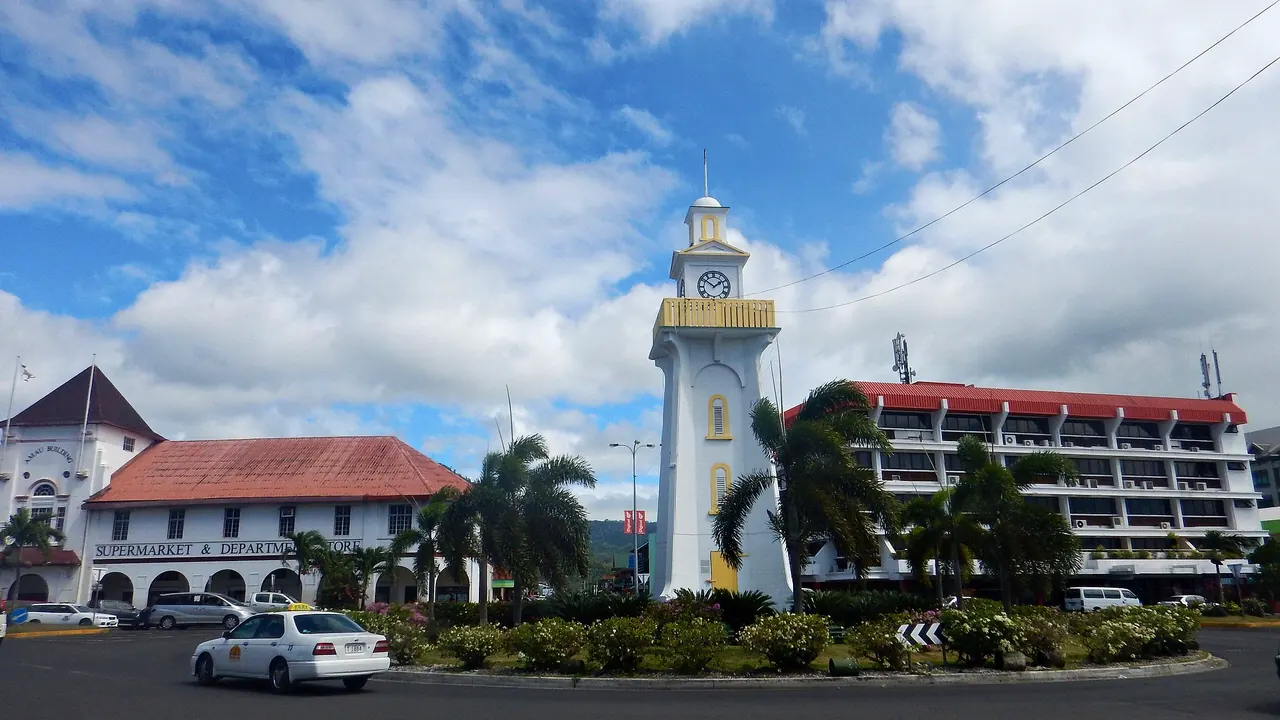
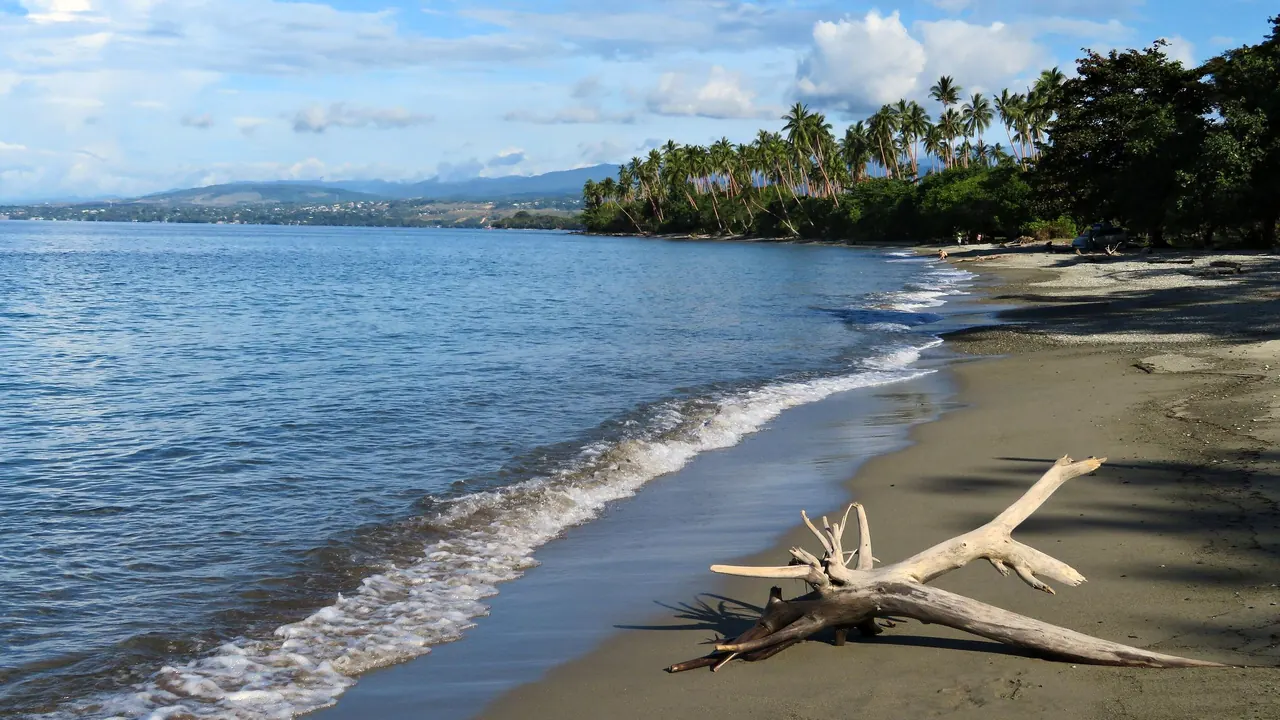
Photos: Apia by Rickard Törnblad, CC BY-SA 4.0, cropped; Honiara by Torbenbrinker, CC BY-SA 4.0, cropped.
Apia or Honiara?
Our verdict in twelve categories, each scored against the same fixed benchmark cities, and the climate month by month, so you can choose for your trip.
Choose Apia for
- wellness
- families
- live music and the arts
Apia suits travellers who want an easy-going island base: families, couples looking to slow down, and anyone happy with rainforest walks, waterfall pools and a few nights in a beach fale on Upolu's south coast. Fa'a Samoa goes on all around you, fiafia nights and Sunday hymns supply the music, and a stay on local terms costs relatively little.
Choose Honiara for
- culture and sights
- day trips
Honiara asks more of its visitors and suits a narrower group. Divers come for the warships and aircraft in Iron Bottom Sound, some of them close enough to reach from the beach, and readers of Second World War history come for the Guadalcanal battlefields on the ridges above town. It is a poor fit for small children or a restful break, and it costs more than it looks.
Scoreboard
Twelve categories on one fixed scale from 0 to 100. The shaded stretch is the gap between the two.
Your match
Pick a travel style or drag the sliders, and both match scores follow your weighting.
Wins on wellness and families with your weighting.
Wins on culture and sights and day trips with your weighting.
What matters to you?
Category by category
What the scores mean for a trip.
Beaches & swimming
Neither town is good for swimming. Apia faces a reef flat and a port, and Honiara faces a built-up harbour shore, so in both the good water is out of town. The difference is what you find when you get there. From Apia, an hour or more of winding road brings you to the white sand and turquoise lagoons of Lalomanu and Matareva, with beach fales to sleep in, and Palolo Deep gives you a snorkel without leaving town.
Honiara's beaches lie west along the coast road and have dark or grey sand. Bonegi is the highlight, where you can snorkel over sunken wartime transports straight from the shore. Facilities are few, landowners may ask a custom fee, and crocodiles mean you should stay away from river mouths.
Food & drink
Both towns offer plain cooking based on the market, so neither will carry a food-focused trip. In Apia, Samoan dishes are easier to find: oka in coconut cream, palusami and koko Samoa all turn up, and some guesthouses share the Sunday umu meal. In Honiara, the morning's tuna at the Central Market is the best thing to eat, while village cooking such as cassava pudding mostly reaches visitors at cultural events, and menus elsewhere rely on imported food.
Culture & sights
The two capitals have about the same amount to see, but the subjects are very different. Apia's sights are literary and Samoan: Robert Louis Stevenson's house at Vailima and his hilltop tomb on Mount Vaea, the chiefs' tombs on Mulinu'u, and fa'a Samoa lived openly in the fale villages around town.
Honiara is above all a Second World War battlefield, with memorials on Skyline Ridge and Mount Austen looking over Iron Bottom Sound and wrecked guns in the bush. The small National Museum adds custom money and canoes, but most sites need a taxi or a guide.
Nightlife
Apia is the livelier of the two, though only just: a run of bars on Beach Road, harbour-view hotel bars and a couple of clubs where locals dance at weekends over Vailima beer, before Sunday falls silent. Honiara amounts to a sunset drink by the water and the odd reggae night, and because the streets are dark you will take a taxi to and from it.
Nature & outdoors
Both islands are steep, green and volcanic, with reefs offshore, so the difference lies in where the best of it is. Upolu's outdoors starts right from Apia: the Mount Vaea trail climbs from town, the Cross Island Road reaches the Lanoto'o crater lake, and O Le Pupu-Pu'e and the To Sua trench are easy stops on a drive round the island, with humpback whales passing in winter.
Guadalcanal has the higher mountains, but walks such as the one to Mataniko Falls cross customary land and need a guide and the landowners' permission. Its strength is underwater, where healthy reefs and wartime wrecks make it one of the stand-out dive areas of the Pacific.
Day trips
Both towns are thin on excursions, and the trips they do offer are by sea rather than to other towns. From Apia, a boat crosses to car-free Manono and a ferry runs to Savai'i, though Savai'i is better with a night there. Honiara's best outings are history and wildlife: Tulagi, the old protectorate capital across the strait, and Savo's hot springs and megapode birds. Boats there run to no fixed schedule, so most trips need a charter.
Good for families
This is one of the clearest gaps between them. Apia is small, relaxed and safe, Samoans make children welcome in markets and churches alike, and natural pools at Palolo Deep and Piula, along with waterfalls and beach fales, fill the days well, as long as you bring repellent against dengue.
Honiara is hard going with children. There are no pavements to speak of for a pushchair, malaria is present and medical care is basic. Older children may enjoy snorkelling the Bonegi wrecks, but most families go straight on to an island resort.
Getting around
Apia is the easier town to get around. Its centre is a short, walkable stretch of Beach Road, taxis are cheap, and the painted wooden buses run out to the villages, though they thin out on Sundays. Hiring a car for the island needs a temporary local licence.
Honiara is strung out along a single main road that often jams. Pavements are broken or missing, so even walking in the centre is awkward. Minibuses work for the main road, but the battlefields and Bonegi usually mean a taxi, a driver or a tour.
Shopping & style
In both towns, crafts are the only shopping worth doing, and neither has fashion or design. Apia's waterfront flea market is good for siapo bark cloth, kava bowls and lavalava wraps, with coconut oil and cocoa at the produce market. Honiara's best pieces are carvings inlaid with nautilus shell and strands of Malaita shell money, sold at the Central Market and stalls near the museum.
Affordability
Apia goes noticeably further on a modest budget. Its south-coast beach fales, with meals included, are some of the cheapest places to sleep by the sea in the Pacific, and buses and market food cost little, although resorts and imported goods are expensive.
In Honiara, good hotels are scarce and overpriced for what they offer, and the diving and boat charters that bring most people there add a good deal. The market and minibuses are cheap, but anything comfortable makes it a mid-priced trip.
Live music & performing arts
Apia gives visitors far more chances to see performance. Hotels hold weekly fiafia nights with slap dancing and the fire knife dance, Sunday services fill the streets with unaccompanied harmony, and the Teuila Festival in September brings choir contests and longboat races. Honiara's Malaita panpipe ensembles and custom dancing are remarkable, but you usually see them only at a festival or a show arranged through a guide.
Wellness & relaxation
Apia is much better for unwinding. Fofō, the Samoan coconut-oil massage, is easy to find, and the slow pace and quiet Sundays suit a break from routine, especially if you stay at a coastal fale rather than in town. Honiara's calm is out in the villages and outer islands, and the hot, traffic-choked capital is somewhere to pass through on the way.
When should you go?
Pick your month. The climate figures are measured averages, not a forecast.
Apia in July
Honiara in July
Daytime high, °C
Rainfall in the month, mm
Temperature and rainfall are climate normals, averaged over the years shown. Apia: 1998-2025 (sunshine 1981-2010, rainfall 1991-2020) normals, Faleolo Intl / Apia (18.1 km from centre). Honiara: 1992-2020, 12 years observed (rainfall 1961-1990) normals, Honiara (2.6 km from centre).
Neither city has a cool season. Daytime highs sit around 31°C to 32°C every month in both, so walking the streets is sweaty all year and best done early, and the sea stays warm enough to swim in at any time. Rain is the real difference. Apia's wet season is the heavier one, with February bringing about 427mm, while the drier months from June to September are also its sunniest, peaking in August.
Honiara follows a similar pattern but with a shorter, gentler wet spell. January brings around 348mm, and from May to September the rain drops to roughly 92mm to 117mm a month, which is the best window for diving, hikes and battlefield trips before the roads turn to mud. For either town, the southern winter is the time to go.
Which traveller are you?
On a family trip with children, Apia is the sensible pick. Young children fit easily into everyday island life there, and outdoor days need little planning. Honiara is hard going with small ones, and families mostly treat it as a stop on the way elsewhere.
For a relaxing and wellness trip, choose Apia. Samoa's own massage tradition and unhurried rhythm give a rest some substance, especially from a base on the coast. Honiara has almost nothing for this kind of break, and the restful Solomon Islands lie well beyond the capital.
For a diving trip, Apia's clear lagoons make good snorkelling, but Honiara is the one to choose. Warships, submarines and aircraft from the 1942 campaign lie in the sound off the town, and the shallowest of them can be reached straight from the shore.
Before you go
| Measure | Apia | Honiara |
|---|---|---|
| Official language | English, Samoan | English |
| Currency | Tala (WST) | Solomon Islands Dollar (SBD) |
| Sockets | I230 V, 50 Hz | GI220 V, 50 Hz |
| Driving side | Left | Left |
| Time zone | UTC+13 | UTC+11 |
| Emergency number | 999 | Police 999, ambulance 911, fire 988 |
| Elevation | 2 m | 29 m |
| Main airport | Faleolo International Airport (APW)19 km from centre6 non-stop destinations | Honiara International Airport (HIR)12 km from centre3 non-stop destinations |
| Public holidays this year | 11 days | 9 days |
By the numbers
| Measure | Apia | Honiara |
|---|---|---|
| Population | 37,708 | 84,520 |
| People per km² | 305 | 3,842 |
| Museums within 10 km | 4 | 1 |
| UNESCO World Heritage sites within 50 km | 0 | 0 |
| Swim season, months above 21 °C | 12 months | 12 months |
Where else could you go?
Every comparison below shares a destination with this one, so you can follow Apia or Honiara somewhere new.
- Nuku'alofavs Apia
- Funafutivs Apia
- Port Vilavs Honiara
- Port Moresbyvs Honiara
- Rarotongavs Apia
- Mamanuca Islandsvs Honiara