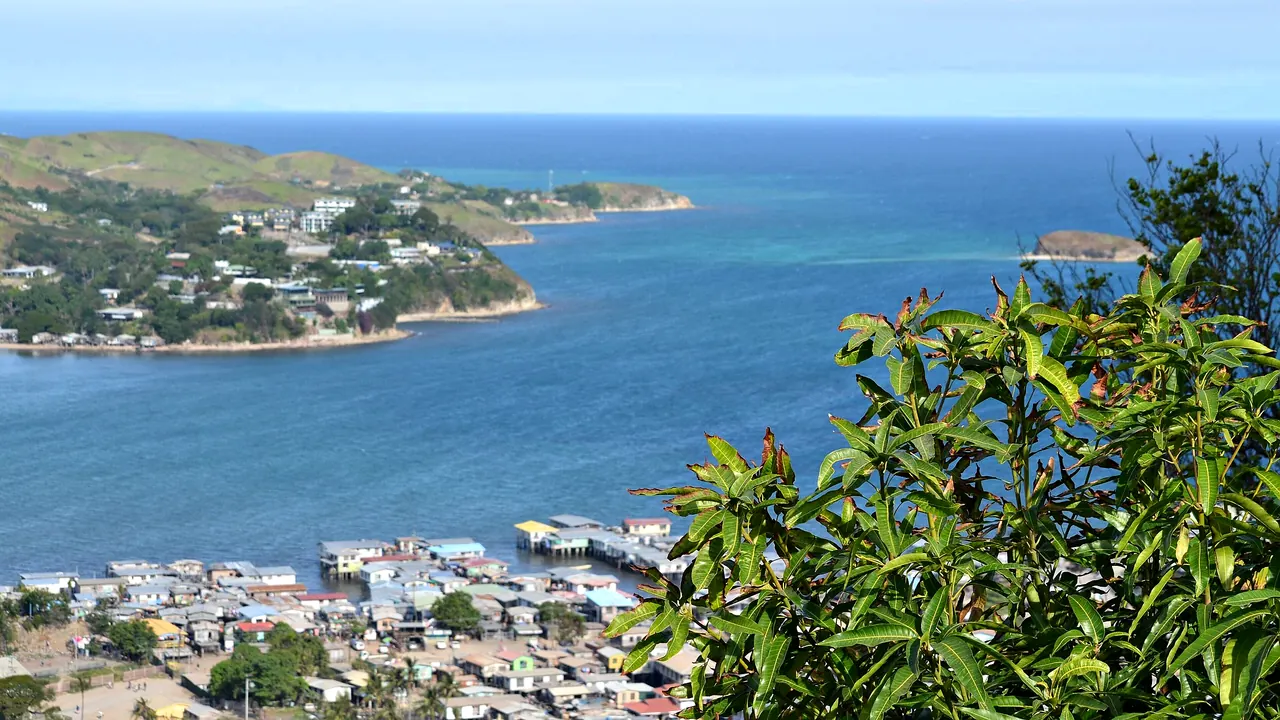
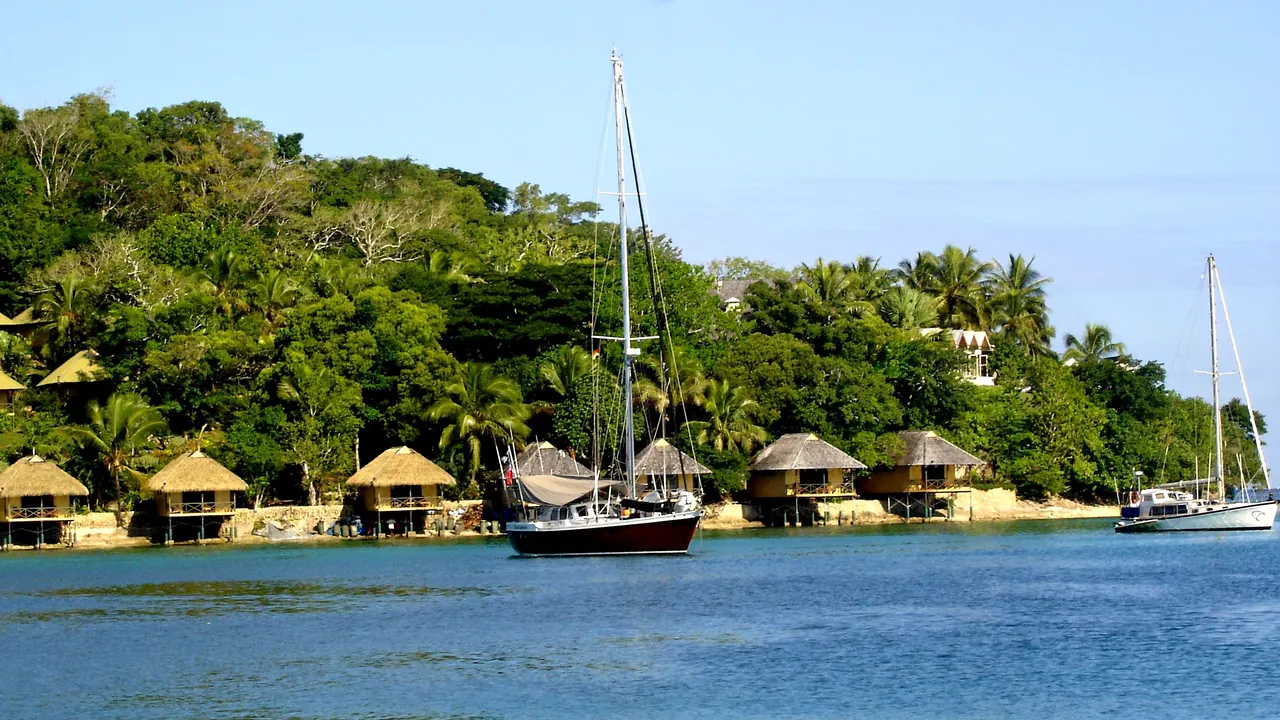
Photos: Port Moresby by eGuide Travel, CC BY 2.0, cropped; Port Vila by Phillip Capper from Wellington, New Zealand, CC BY 2.0, cropped.
Port Moresby or Port Vila?
Our verdict in twelve categories, each scored against the same fixed benchmark cities, and the climate month by month, so you can choose for your trip.
Choose Port Moresby for
- culture and sights
- shopping
Port Moresby suits a traveller with a reason to be there: business, a connection to the Kokoda campaign, or a serious interest in Papua New Guinea's cultures. The National Museum and Art Gallery and the Sepik-style Parliament House in Waigani give it more to see than its neighbour. Expect a hotel-based stay with a driver for every outing, though, and few chances to wander or unwind.
Choose Port Vila for
- getting around
- beaches
- wellness
For a proper vacation, Port Vila is the easier and more rewarding choice. Its lagoons and reef islands sit a short boat ride from town, families settle easily into lagoon resorts, and the compact centre and wave-down minibuses let you move about freely. It is the place to slow down, swim and snorkel rather than to sightsee.
Scoreboard
Twelve categories on one fixed scale from 0 to 100. The shaded stretch is the gap between the two.
Your match
Pick a travel style or drag the sliders, and both match scores follow your weighting.
Wins on culture and sights and shopping with your weighting.
Wins on getting around and beaches with your weighting.
What matters to you?
Category by category
What the scores mean for a trip.
Beaches & swimming
Neither town swims well from its own waterfront. Port Moresby's Ela Beach is for strolling and picnics, and decent swimming means a boat from Bootless Bay to Loloata or the reef island of Daugo, a day you plan in advance.
Port Vila puts the water at the centre of a stay. Lagoons and small islands such as Iririki, Erakor and Hideaway Island, with its marine reserve, are minutes away, and snorkelling off the shore is routine. The beaches are small coves with coral underfoot rather than long strands, so pack reef shoes.
Food & drink
Neither is a place to travel for food, but Port Vila gives you more to explore on your own. In Port Moresby, most meals are eaten in hotel dining rooms. Mumu cooked in an earth oven turns up at celebrations rather than on menus, so Koki fish market and the highland coffee are the best local tastes.
Port Vila has a French streak, with morning baguettes and pastries, waterfront plates of lobster and Santo beef, and lap lap at the harbour market stalls. At dusk there is kava in a nakamal. The range is still narrow, and a week covers it.
Culture & sights
Port Moresby has more to see, mostly in Waigani. The National Museum and Art Gallery holds carvings and ceremonial objects from across a country of hundreds of cultures, and Parliament House next door is built in the form of a Sepik spirit house. Add Bomana War Cemetery and Hanuabada's stilt houses, and you have a solid two days.
Port Vila's case rests on the Vanuatu Cultural Centre, with its slit drums and sand-drawing displays. Beyond a few colonial buildings and churches, the town itself offers little. Its most memorable cultural encounters happen in the villages outside town.
Nightlife
Both cities go to bed early, but Port Vila at least lets you go out. Port Moresby's evenings happen inside hotels, on harbour-view terraces or at an occasional members' club night, and you travel to and from them by arranged car.
In Port Vila you can start with a shell of kava in a dim nakamal at sunset, then move on to the waterfront bars where yachties gather, or to the casino. A couple of dance spots liven up at weekends.
Nature & outdoors
Port Vila has the stronger outdoors, and it is mostly on the water. Coral gardens, drop-offs and wrecks are a short boat ride from the harbour, and the lagoons suit kayaking and paddleboarding. Inland, the Mele Cascades and the freshwater pools near Eton make easy outings.
Port Moresby is the better pick for walking in rainforest. Varirata National Park offers birds of paradise at dawn, and Owers' Corner gives a first taste of the Kokoda Track. Bootless Bay has good diving too, but most outings need a guide or driver.
Day trips
With no road out of the capital, Port Moresby's outings come down to the Sogeri road and Bootless Bay. The road leads past Bomana and the war memorials to the Kokoda trailhead, and the bay has island resorts. Anything further means a flight.
Port Vila offers a little more variety. Chief Roi Mata's Domain, a UNESCO-listed chiefly landscape, is under an hour's drive away and visited with local guides. Small boats also cross to the village islands of Pele, Nguna and Lelepa.
Good for families
Port Moresby is hard work with children. The Nature Park, with its tree kangaroos and cassowaries, is the only real outing, and the rest of the stay is hotel pools and car journeys.
Port Vila works well on resort terms. Calm lagoons, kids' clubs and easy snorkelling at Hideaway Island keep children busy, and local people are warm towards them. There are no attractions built for children, medical care is basic, and mosquitoes need care.
Getting around
This is where the two differ most in daily life. Port Moresby is spread across separate districts, Town, Boroko, Waigani and the airport suburbs, and none of it is walkable. Every move is a hotel shuttle or a booked driver, planned ahead.
Port Vila's harbour front can be explored on foot, although the streets behind it climb steeply. For anything further, you flag down a B-plate minibus, which drops you at your door. Only a full circuit of Efate needs a hire car or a tour.
Shopping & style
Both are thin for shopping, and what is worth buying is local craft. Port Moresby is the better place for carvings: bilum string bags and Sepik masks turn up at the craft markets near Ela Beach, while the Waigani malls sell only everyday goods.
Port Vila's harbour stalls sell pandanus baskets, miniature tam-tam drums and shell jewellery. Its best souvenirs are things to eat, drink or use, such as Tanna coffee, kava powder, coconut oil and sandalwood products.
Affordability
Port Moresby costs far more than Port Vila. Its hotels are priced for mining, aid and government travellers, hotel meals cost what they would in a Western city, and you pay for a driver on every outing because walking and buses are not realistic options.
Port Vila is not cheap either. Almost everything is imported, and the resort rates and dive trips soon add up. Still, it is easier to spend less there. Shared minibuses, market food stalls, kava evenings and simple guesthouses in town all bring the daily cost down.
Live music & performing arts
Neither has a theatre or concert scene, and music in both means traditional performance and string bands. Port Moresby's highlight is an occasion rather than a routine: the Hiri Moale festival around Independence, with canoe races and sing-sing groups in feathers and body paint.
In Port Vila, music is more part of daily life. String bands play at markets and church events, cultural villages put on custom dances, and a long-running annual festival brings in Pacific bands.
Wellness & relaxation
Port Vila is far easier to relax in. The town runs on island time, Sundays are nearly silent, and a lagoon resort with a hammock and a sunset kava is restful in itself. Resort and town day spas offer coconut-oil massages.
In Port Moresby, unwinding is limited to a hotel massage or an afternoon by the pool. Having to arrange a car for every outing keeps the pace tense, and only a night on an island in Bootless Bay really slows it down.
When should you go?
Pick your month. The climate figures are measured averages, not a forecast.
Port Moresby in July
Port Vila in July
Daytime high, °C
Rainfall in the month, mm
Where the figures come from
Port Moresby has no weather station within reach, so its figures come from a gridded climate model rather than a measured record, and read a broad area rather than one spot.
Temperature and rainfall are climate normals, averaged over the years shown. Port Moresby: 2001-2020 normals, NASA POWER reanalysis grid, no weather station within 90 km. Port Vila: 1991-2020 normals, Bauerfield Efate (4.1 km from centre).
Both cities are hot all year and the sea is warm enough for swimming in every month, so the season comes down to rain. Port Moresby has the clearer dry season. From June to November the rain is light, with July the driest month at about 25mm. December to April is wet, and March is the wettest month. The daytime heat changes very little through the year, so the streets are never cool for walking, but they are never much hotter either.
Port Vila is wetter than Port Moresby in every month and a little hotter in its summer, when highs reach 31°C. Heavy rain falls from December to May and peaks at about 334mm in March, which is also the cyclone season. July to September is its kindest stretch, with rain under 100mm a month and slightly milder heat. The middle of the year is the best time for both, though Port Moresby stays the drier of the two.
Which traveller are you?
On a beach and sun trip, Port Vila is the clear pick. Iririki, Erakor and Hideaway Island are a short hop away and you can snorkel straight off the sand, while swimming from Port Moresby means a planned boat outing to Bootless Bay.
For a culture and arts trip, Port Moresby has more to offer. The National Museum's masks and spirit boards, Parliament House, the Bomana War Cemetery and the stilt village of Hanuabada fill two days. Port Vila has one fine museum and little else.
On a family trip with children, Port Vila works far better. Lagoon resorts offer calm, shallow water, kayaks and kids' clubs, and the town is small and relaxed. In Port Moresby, families are mostly confined to hotels, with the Nature Park as the one real outing.
Before you go
| Measure | Port Moresby | Port Vila |
|---|---|---|
| Official language | English, Hiri Motu, Tok Pisin, Papua New Guinean Sign Language | French, English, Bislama |
| Currency | Kina (PGK) | Vatu (VUV) |
| Sockets | I240 V, 50 Hz | CGI220 V, 50 Hz |
| Driving side | Left | Right |
| Time zone | UTC+10 | UTC+11 |
| Emergency number | Police 112, ambulance 111, fire 110 | 112 |
| Elevation | 74 m | 59 m |
| Main airport | Port Moresby Jacksons International Airport (POM)9 km from centre27 non-stop destinations | Bauerfield International Airport (VLI)4 km from centre9 non-stop destinations |
| Public holidays this year | 11 days | 14 days |
By the numbers
| Measure | Port Moresby | Port Vila |
|---|---|---|
| Population | 317,374 | 49,034 |
| People per km² | 1,322 | 2,078 |
| Museums within 10 km | 1 | 2 |
| UNESCO World Heritage sites within 50 km | 0 | 1 |
| Swim season, months above 21 °C | 12 months | 12 months |
Where else could you go?
Every comparison below shares a destination with this one, so you can follow Port Moresby or Port Vila somewhere new.
- Mount Hagenvs Port Moresby
- New Caledoniavs Port Vila
- Cairnsvs Port Moresby
- Mamanuca Islandsvs Port Vila
- Honiaravs Port Vila
- Honiaravs Port Moresby