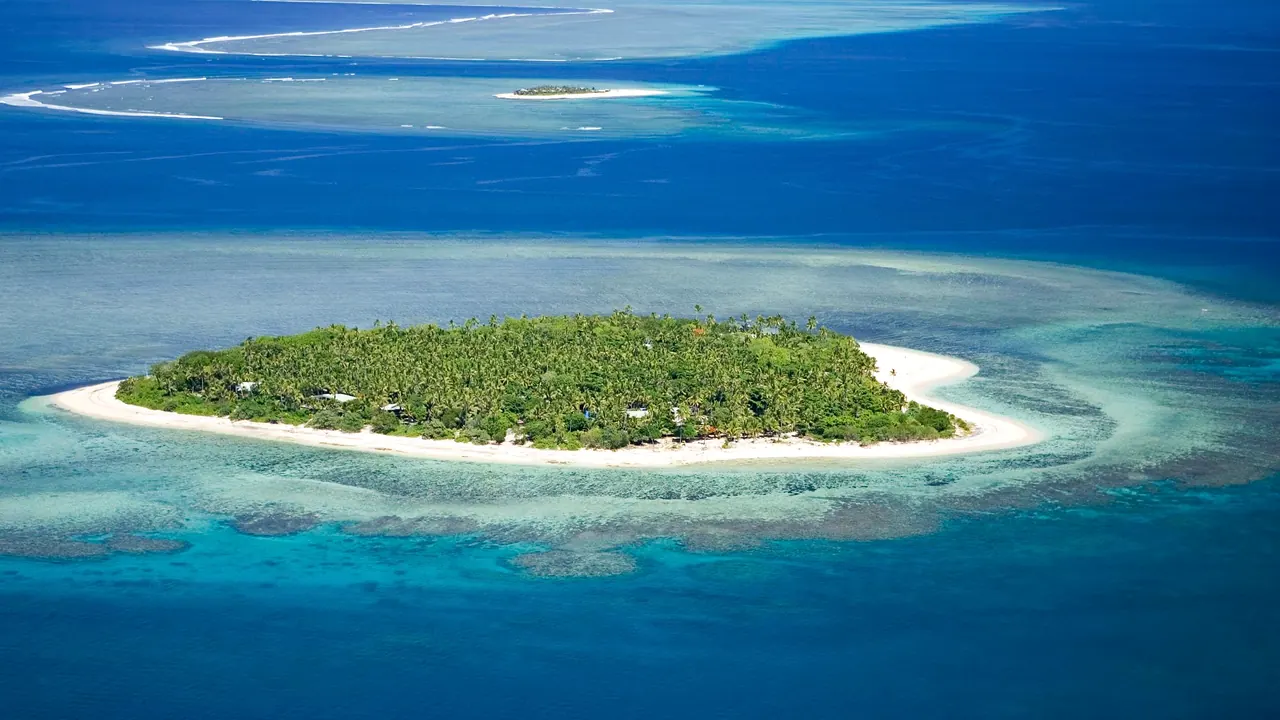
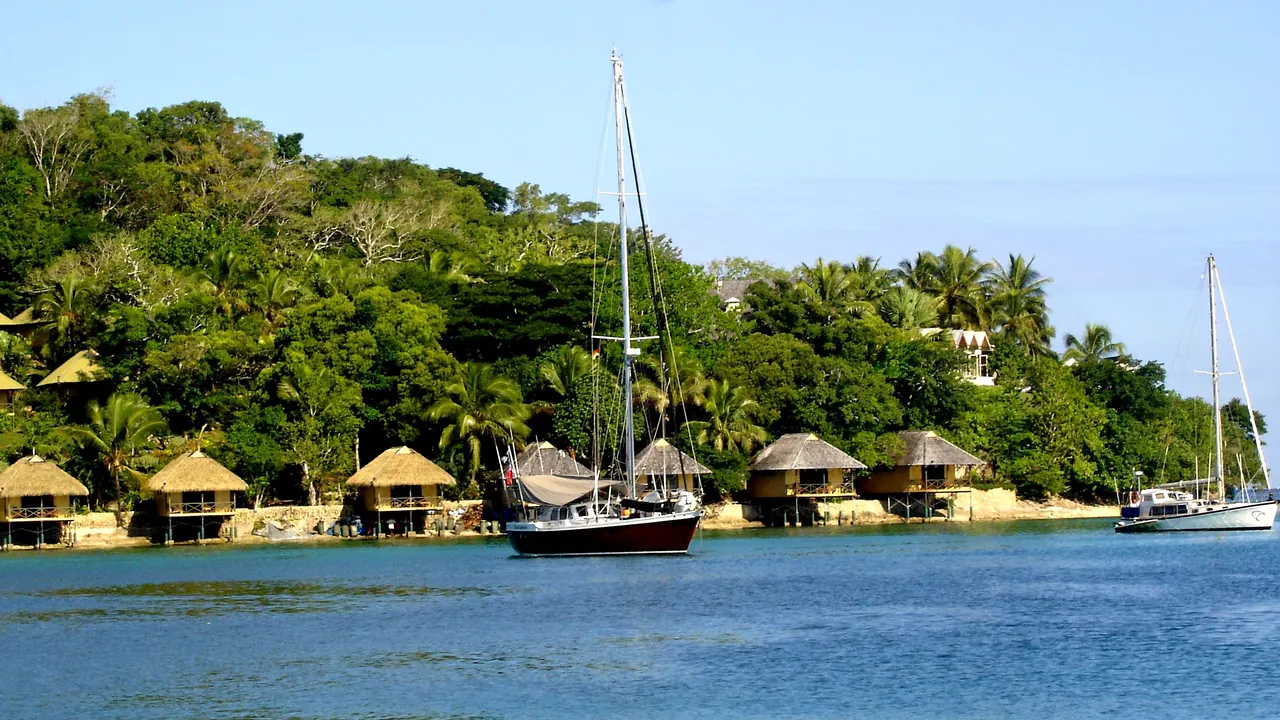
Photos: Mamanuca Islands by Tavyland, CC BY-SA 3.0, cropped; Port Vila by Phillip Capper from Wellington, New Zealand, CC BY 2.0, cropped.
Mamanuca Islands or Port Vila?
Our verdict in twelve categories, each scored against the same fixed benchmark cities, and the climate month by month, so you can choose for your trip.
Choose Mamanuca Islands for
- families
- beaches
- wellness
The Mamanucas are for a real island vacation: choose an island, walk from your room onto white coral sand, and spend the days on lagoon swims, snorkelling and sunsets. Families get kids' clubs and shallow water. Couples get adults-only outer islands built around rest, and experienced surfers get the reef breaks at the edge of the group. The trade-off is that everything, meals included, comes from one resort, and there is little to see or eat beyond it.
Choose Port Vila for
- food and drink
- shopping
- culture and sights
Port Vila suits travellers who would rather stay in a small capital than on a single resort island. It has a harbour market, French-style bakeries, the national museum and minibuses that take you anywhere in town, and the Mele Cascades and Chief Roi Mata's Domain are both within a drive. Its beaches are small coves and lagoons rather than postcard sand. In return, costs fall for anyone happy to eat at market stalls and sleep in a town guesthouse.
Scoreboard
Twelve categories on one fixed scale from 0 to 100. The shaded stretch is the gap between the two.
Your match
Pick a travel style or drag the sliders, and both match scores follow your weighting.
Too close to call, 2 points apart
Wins on families and beaches with your weighting.
Wins on food and drink and shopping with your weighting.
What matters to you?
Category by category
What the scores mean for a trip.
Beaches & swimming
The Mamanucas win clearly. Almost every island is ringed with white coral sand and a calm lagoon, and you step from your room onto the beach. The choice runs from hilly Malolo Lailai and Mana to the long sunset-facing beaches of Tokoriki and Matamanoa, and to tiny islets you can walk round in minutes. The one catch is the tide, which on some shores drains the lagoon to a reef flat for a few hours.
Port Vila has no beach in town. To swim you take a boat to Iririki or Erakor or to the marine reserve off Hideaway Island, or head along the quieter coast towards Pango and Eton. The beaches there are narrow coves with coral underfoot, and many belong to resorts. The water is just as warm and clear, but here the beach is somewhere you travel to, not something outside your door.
Food & drink
Port Vila has more to eat simply because it has a town to eat in. There are baguettes from French-style bakeries in the morning, grilled reef fish and Santo beef on the waterfront, lap lap at the harbour market stalls, and coffee from Tanna. The range is still small, and a week covers it.
In the Mamanucas you eat where you sleep, usually on a meal plan, from a mostly imported international menu. Kokoda and the weekly lovo feast are the meals to look forward to. With no other kitchen on the island, though, the food gets repetitive sooner.
Culture & sights
Neither place is a heritage destination, but Port Vila has the one real sight of the two: the Vanuatu Cultural Centre and National Museum, with its slit drums, masks and sand-drawing displays. Add a few colonial buildings and the custom villages near town, and it gives a curious visitor more to do. In the Mamanucas, culture means a sevusevu kava welcome at villages such as Yanuya or Malolo, a look at the church and school, and Yanuya's clay pottery. These are pleasant visits, but nothing to plan a day around.
Nightlife
Both go to bed early, but the evenings feel different. In the Mamanucas the night stays at the resort, with a string band and a fire show on the beach. The exception is the budget islands, where younger travellers dance on the sand to DJs, and the floating bar on the reef is an afternoon outing. Port Vila's evenings begin at dusk in dim kava nakamals and move on to waterfront bars full of yachties and expatriates, a casino, and a couple of dance spots that get busy at weekends.
Nature & outdoors
Both places are mostly about the water. The difference is what lies beyond it. The Mamanucas have famous surf at Cloudbreak, Restaurants and the Namotu Left for experienced riders, plus soft-coral walls and shark dives. The islands themselves are small and grassy, with short climbs to lookouts and the craggy outline of Monuriki.
Efate has wrecks and drop-offs close to the harbour and a green interior as well. A drive round the island takes in the Mele Cascades falling through rainforest and the clear freshwater pools near Eton. Surfers should pick Fiji, and anyone who wants waterfalls and forest should pick Vanuatu.
Day trips
Neither is a strong base for outings, and the trips are different in kind. From the Mamanucas everything goes by boat: sandbars, uninhabited islets, a neighbouring village or the southern Yasawas. The mainland sights, Nadi's Hindu temple, the Sabeto mud pools and the orchid gardens, take an hour or more by ferry. Port Vila's outings go by road or small boat to Chief Roi Mata's Domain on the northwest coast, a UNESCO-listed site visited with local guides, and to the village islands of Pele, Nguna and Lelepa.
Good for families
The Mamanucas are the easier choice with children. Several islands are run around families, with kids' clubs, babysitting, children's menus and shallow lagoons, and Malolo Lailai, Mana and the islands nearest Denarau keep transfers short. Check before booking, because some outer islands take adults only.
Port Vila works for a lagoon resort stay, with calm water and good snorkelling for children at Hideaway Island, but less is set up for families. Mosquitoes need care, and the hot, wet summer is hard going. Neither place has zoos or theme parks, and in both, serious medical care is a journey away.
Getting around
Getting to the Mamanucas means a catamaran from Port Denarau, half an hour to about two hours, or a seaplane or helicopter. Once there, you can cross your island on foot in minutes. Moving between islands depends on ferries and resort boats over water that can be choppy, so most people stay on one or two.
Port Vila is easier to move around. The harbour front is walkable, though the town climbs steeply behind it. Shared minibuses with a B on the plate drop you at your door, and taxis, resort boats or a hire car cover the rest of Efate.
Shopping & style
Port Vila has the better shopping of the two, though only by island standards. The harbour handicraft stalls sell pandanus baskets, carvings and miniature tam-tam drums from across the islands, and the main street has a few duty-free stores. Tanna coffee, kava powder and sandalwood are the best things to take home.
In the Mamanucas there are only resort boutiques selling swimwear and sunscreen, plus the woven mats and shell jewellery laid out during village visits. Most people wait for Nadi's market on the way home to buy crafts.
Affordability
Both are expensive, but Port Vila gives you more ways to spend less. Market food stalls, shared minibuses, kava nakamals and simple guesthouses in town cut the daily cost for anyone who skips the resorts. Imported groceries and dive trips stay dear.
In the Mamanucas almost every island is a single resort, so rooms, meals, drinks and activities all come from one place at island prices, and transfers add more on top. The backpacker islands, with dormitories and meals included, make a basic stay possible. The adults-only outer islands are at the costly end of the South Pacific.
Live music & performing arts
Neither has a theatre or concert hall, so live performance in both means guitar-and-ukulele string bands and resort dance shows. The Mamanucas put on the meke with fire dancing on the beach, and the bands sing guests off as their boats leave. Port Vila also has custom dance at cultural villages, string bands at markets and church events, and a long-standing annual festival of local and Pacific bands.
Wellness & relaxation
The Mamanucas are the more restful choice. With no roads or traffic, the days settle into swims, hammocks and sunsets, and the adults-only islands of Tokoriki and Matamanoa are built around rest. Most resorts have a spa, often in open-sided bures over the water, offering Fijian bobo massage with coconut oil.
Port Vila is calm for a capital, with almost silent Sundays and hammocks at the lagoon resorts, and it has a few day spas in town. Still, you are staying in a town with minibuses and a market. Neither place has thermal springs or a bathing tradition.
When should you go?
Pick your month. The climate figures are measured averages, not a forecast.
Mamanuca Islands in July
Port Vila in July
Daytime high, °C
Rainfall in the month, mm
Where the figures come from
Mamanuca Islands's temperatures are measured 35 km from the centre, at Nandi.
Mamanuca Islands has no rain gauge within 25 km of the centre, so its rainfall comes from a gridded climate dataset read at the destination rather than from a gauge further away.
Temperature and rainfall are climate normals, averaged over the years shown. Mamanuca Islands: 1991-2020 normals, Nandi (35.3 km from centre). Port Vila: 1991-2020 normals, Bauerfield Efate (4.1 km from centre).
Both stay hot all year, and the sea is warm enough to swim in every month, never cooler than about 26°C. The difference is rain. Around the resort islands west of Nadi, the Mamanucas are wettest from January to March. From May to September they turn dry and sunny, with July getting only about 51mm and August the sunniest month. Daytime highs hardly change through the year and stay around 29°C even in the coolest months.
Port Vila is wetter in most months, and its rains go on for longer. March is the heaviest month at around 334mm, and April and May are still wet. Only July to September is reliably drier, and in September the town actually gets slightly less rain than the Mamanucas. Its winter is a little cooler, with highs near 27°C from June to August, which is the easiest weather for walking its steep streets. In both places the dry middle of the year is the time to go, but the Mamanucas' dry season starts earlier and lasts longer.
Which traveller are you?
On a beach and sun trip, the Mamanucas are the clear choice. You wake beside white coral sand and a calm turquoise lagoon, snorkel straight from the shore, and can pick between hilly islands with several beaches or tiny islets. In Port Vila, swimming means narrow coves reached by boat.
On a family trip with young children, the Mamanucas again come out ahead. Malolo Lailai, Mana and the islands nearest Denarau have kids' clubs, babysitting and shallow lagoons, all a short transfer away. Port Vila's lagoon resorts work for families but have less set up for children.
For a trip on a tight budget, Port Vila is the safer choice. Market food stalls, shared minibuses and simple guesthouses in town keep daily costs down. In the Mamanucas almost everything is bought from a single resort, apart from a few backpacker islands where meals are included.
Before you go
| Measure | Mamanuca Islands | Port Vila |
|---|---|---|
| Official language | English, Fijian, Fiji Hindi | French, English, Bislama |
| Currency | Fiji Dollar (FJD) | Vatu (VUV) |
| Sockets | I240 V, 50 Hz | CGI220 V, 50 Hz |
| Driving side | Left | Right |
| Time zone | UTC+12 | UTC+11 |
| Emergency number | 000 or 911 | 112 |
| Elevation | - | 59 m |
| Main airport | Nadi International Airport (NAN)24 non-stop destinations | Bauerfield International Airport (VLI)4 km from centre9 non-stop destinations |
| Public holidays this year | - | 14 days |
By the numbers
| Measure | Mamanuca Islands | Port Vila |
|---|---|---|
| Population | - | 49,034 |
| People per km² | - | 2,078 |
| Museums within 10 km | - | 2 |
| UNESCO World Heritage sites within 50 km | - | 1 |
| Swim season, months above 21 °C | 12 months | 12 months |
Where else could you go?
Every comparison below shares a destination with this one, so you can follow Mamanuca Islands or Port Vila somewhere new.
- Yasawa Islandsvs Mamanuca Islands
- New Caledoniavs Port Vila
- Nuku'alofavs Mamanuca Islands
- Honiaravs Port Vila
- Nuku'alofavs Port Vila
- Honiaravs Mamanuca Islands