Photos: Funafuti by mrlins, CC BY 2.0, cropped; Nauru by Sean Kelleher, CC BY-SA 2.0, cropped.
Funafuti or Nauru?
Our verdict in twelve categories, each scored against the same fixed benchmark cities, and the climate month by month, so you can choose for your trip.
Choose Funafuti for
- nature and the outdoors
- beaches
- prices
Funafuti suits a traveller who wants water above all: a vast, warm lagoon, boat days out to the uninhabited islets of the conservation area, snorkelling over coral heads where green turtles feed. Life on Fongafale also has more to join in with, from evening games on the runway to fatele dancing and Sunday church singing, and your money goes a little further. Come ready for constant heat and heavy rain.
Choose Nauru for
- getting around
- culture and sights
Pick Nauru if the strangeness of the place is the point. The mined-out limestone pinnacles of Topside, the Japanese guns on Command Ridge and the phosphate cantilevers at Aiwo tell a harder, odder story than anything on Funafuti, and a hire car takes you round all of it on one ring road. It is drier and slightly less hot, and the deep water off the reef draws anglers, but the beach plays only a small part in a stay here.
Scoreboard
Twelve categories on one fixed scale from 0 to 100. The shaded stretch is the gap between the two.
Your match
Pick a travel style or drag the sliders, and both match scores follow your weighting.
Wins on nature and the outdoors and beaches with your weighting.
Wins on getting around and culture and sights with your weighting.
What matters to you?
Category by category
What the scores mean for a trip.
Beaches & swimming
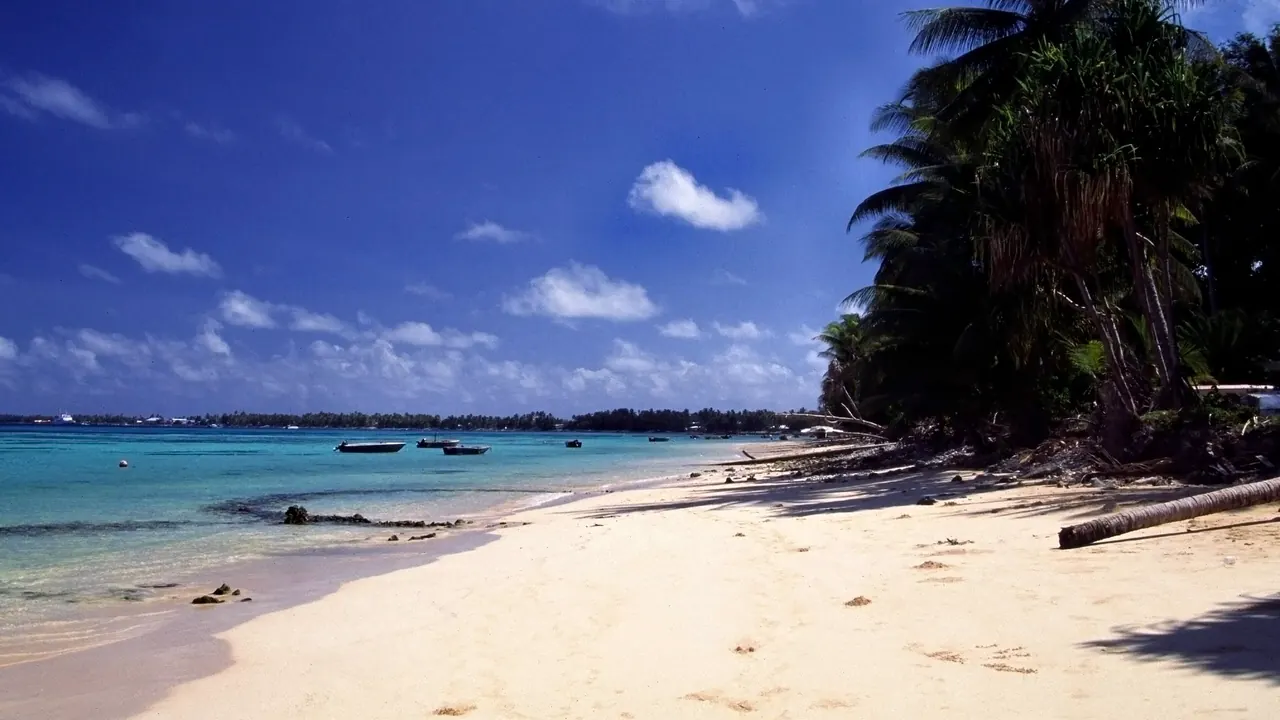
Funafuti has much the better water. Its huge lagoon is calm and swimmable from the Fongafale shore near Vaiaku, though it is not always clean by the settlement. The real beaches lie across it on the islets of the conservation area, where white coral sand runs into clear shallows. Getting there takes a half or full day out by hired boat, but it is the one place on either island where you can spend a whole day on the sand.
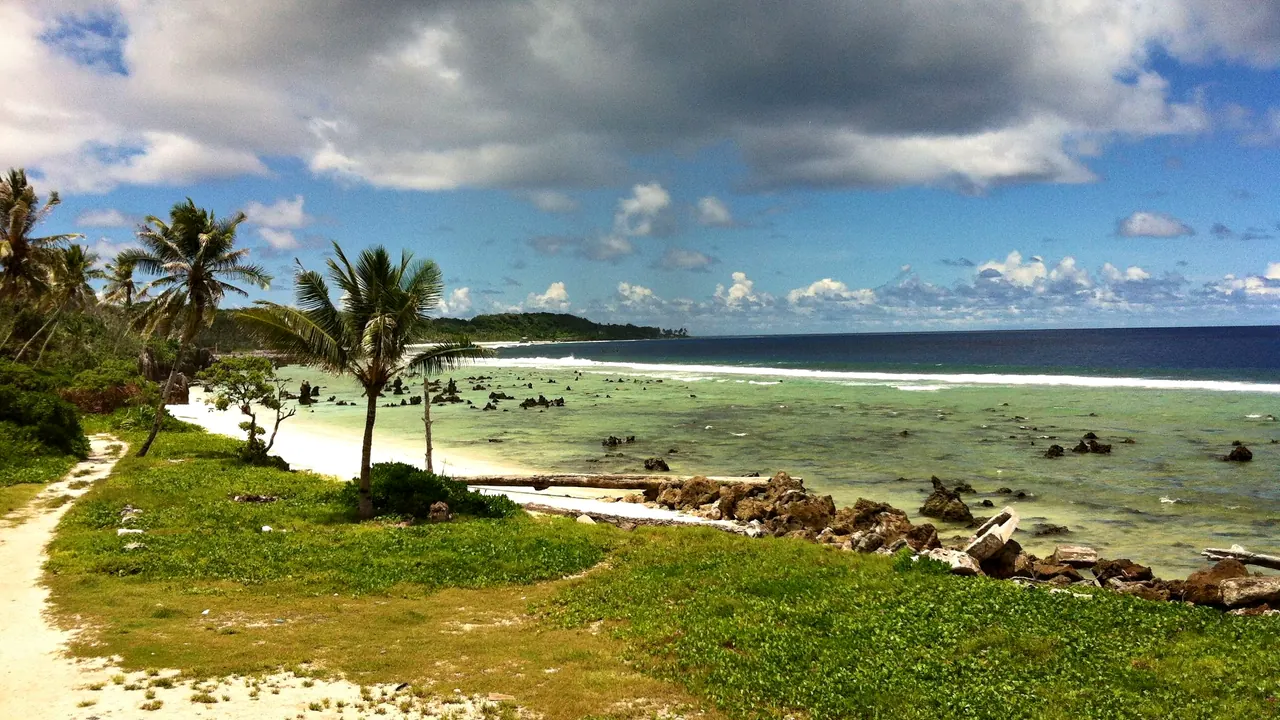
Nauru has Anibare Bay, a lovely curve of white sand to look at. The reef edge drops sharply into strong currents, though, so most swimming happens in the sheltered boat harbours at Anibare and Aiwo, or in rock pools on the reef flat at low tide. It makes a pleasant dip but not a beach day.
Food & drink
Neither is a place to travel for food. Both have the same few Chinese-run eateries and stores of imported tins and frozen goods, and in both the fresh tuna and reef fish are the best thing you will eat. The difference is in what lies beyond the menu. On Funafuti, a community feast or your guesthouse may bring pulaka, breadfruit and kaleve, the sweet coconut toddy. On Nauru, raw fish in coconut and a hotel dining room are about as far as it goes.
Culture & sights
Both islands have little to see, and either can be covered in a day or less. What they show differs, though. Funafuti's interest is mostly living community life, seen in the open-sided maneapa meeting houses, with a wartime runway from 1943 and a marker for the coral drilling that tested Darwin's theory of how atolls form.
Nauru's story is written into the land instead: Japanese guns and a command post on Command Ridge, the old Japanese jail, the phosphate cantilevers at Aiwo and the mined-out plateau of Topside. It is the bleaker and more striking of the two.
Nightlife
Evenings are quiet and early in both. Funafuti has slightly more life after dark: people gather on the runway and the lagoon front as the heat fades, a couple of simple bars open, and a weekend dance may run late, although Sunday stops everything. On Nauru, a drink at a hotel bar is usually the whole night.
Nature & outdoors
Funafuti's nature is small but genuinely beautiful: a ring of narrow coral islets around a lagoon some 18km across, with turtles, nesting seabirds and coral heads to snorkel in the conservation area on the western rim. You can walk deserted islets, though everything is arranged through locals and there are no trails.
Nauru's landscape is strange more than lovely. The best outing on land is a scramble among Topside's grey limestone pinnacles, with palm-ringed Buada Lagoon as a gentler scene. Its strength is the deep water just off the reef, good for fishing and some wall diving, but an outdoor-minded visitor runs out of things to do faster than on Funafuti.
Day trips
Neither has day trips in any real sense. Funafuti at least has its lagoon, and a boat out to the uninhabited islets makes a fine day, while Tuvalu's other atolls are many hours away by irregular ship. Nauru is a lone island with no ferries, so every outing is a stop on the same coastal road.
Good for families
Funafuti is somewhat kinder to children. Visiting families are welcomed into the evening volleyball and football on the runway, and the calm lagoon makes easy swimming. Shade is scarce, medical care is basic and the journey through Fiji is long, so it suits older, adventurous children.
Nauru offers splashing with local families in the sheltered boat harbours and not much else. The strong currents beyond the reef mean small children need watching, and with few shops for baby supplies a family would manage a few days by making its own fun.
Getting around
Nauru is the easier island to cover. One ring road of about 19km links everything, with a spur up to Topside, and a hire car or scooter arranged through your hotel goes round the whole circuit in under half an hour.
Funafuti's main islet is a 12km strip with a walkable core around Vaiaku and a motorbike or bicycle for the far ends. Its best places lie across the lagoon, though, and each trip there means finding a boat.
Shopping & style
There is almost nothing to buy in either. Funafuti does have one real souvenir: pandanus mats, fans, baskets and shell necklaces made by women's groups and sold near the airport, along with Tuvalu's collectable stamps. Nauru's general stores sell only groceries and household goods, so you come home with photographs and a passport stamp.
Affordability
Both are costly for what you get, and reaching either is the largest expense. Funafuti comes out a little cheaper. Its simple guesthouses are overpriced for their standard, but scooters and plain meals stay modest, and the boat charter across the lagoon costs less when shared.
On Nauru, the couple of hotels and few lodges leave no cheaper option to fall back on, and imported goods are priced to match. Takeaway meals are reasonable, the sights are free and car hire is the main extra.
Live music & performing arts
Funafuti has a living tradition you may actually come across, though neither island has a stage or a venue. Fatele, sung around a box drum that gets faster and faster while dancers move, fills the maneapa at weddings, church events and national days. Sunday morning church singing is open to anyone.
On Nauru, traditional song and dance appear only at community events and national celebrations such as Independence Day and Constitution Day, with nothing to see on an ordinary evening.
Wellness & relaxation
Funafuti slows you down more gently. Its days are set by heat and tide, Sunday is kept as a day of rest, and sunset under a breadfruit tree by the lagoon is the island's own way of unwinding, though the heat never lets up.
Nauru's calm comes from having little to do: no traffic, no crowds and nothing to book, which suits a few quiet days with a book. It has less to soften the days, though, and its hotels are basic. On both islands, anyone hoping for spas or treatments will find none.
When should you go?
Pick your month. The climate figures are measured averages, not a forecast.
Funafuti in July
Nauru in July
Daytime high, °C
Rainfall in the month, mm
Where the figures come from
Nauru has no weather station within reach, so its figures come from a gridded climate model rather than a measured record, and read a broad area rather than one spot.
Temperature and rainfall are climate normals, averaged over the years shown. Funafuti: 1991-2020 normals, Funafuti (2.1 km from centre). Nauru: 2001-2020 normals, NASA POWER reanalysis grid, no weather station within 90 km.
Both sit close to the equator, so there is no cool season and no month too cold for anything, and in both the sea stays as warm as a bath all year. Funafuti is the hotter and far wetter of the two, with daytime highs around 32°C every month and heavy rain throughout, worst from December to March, when a month can bring 368mm. June to September is the least wet stretch and also the sunniest, with August the brightest month. Whatever the month, the midday heat makes walking Fongafale hard work, so swim and explore early or late.
Nauru, measured on its coast, runs a few degrees cooler at around 29°C and gets roughly half of Funafuti's rain. Its wettest months are also December to March, at about 200mm, and it is driest from May to October, when the ring road and the scramble over Topside are least likely to be washed out by downpours. On both islands the middle of the year is the better time to go.
Which traveller are you?
On a beach and sun trip, Funafuti is the clear choice. You can swim in its sheltered lagoon straight off the main islet, and a boat across it reaches white coral sand on empty islets. Nauru mostly offers dips in its boat harbours behind a steep reef.
For a trip on a tight budget, Funafuti stretches money slightly further. Both are expensive to reach and rooms cost a lot for what you get, but scooters and fish-and-rice meals stay modest on Funafuti. Nauru has no cheaper level of lodging at all.
For deep-sea anglers, Nauru has the edge. The ocean drops into very deep water just off its reef, bringing tuna and marlin close to shore. On Funafuti, fishing trips are rare and have to be arranged through locals.
Before you go
| Measure | Funafuti | Nauru |
|---|---|---|
| Official language | English, Tuvaluan | English, Nauruan |
| Currency | Australian Dollar (AUD) | Australian Dollar (AUD) |
| Sockets | I220 V, 50 Hz | I240 V, 50 Hz |
| Driving side | Left | Left |
| Time zone | UTC+12 | UTC+12 |
| Emergency number | 911 | Police 110, ambulance 111, fire 112 |
| Elevation | 7 m | - |
| Main airport | Funafuti International Airport (FUN)0 km from centre2 non-stop destinations | Nauru International Airport (INU)7 non-stop destinations |
| Public holidays this year | 11 days | 13 days |
By the numbers
| Measure | Funafuti | Nauru |
|---|---|---|
| Population | 6,025 | 13,650 |
| People per km² | 2,510 | 644 |
| Museums within 10 km | 0 | - |
| UNESCO World Heritage sites within 50 km | 0 | - |
| Swim season, months above 21 °C | 12 months | 12 months |
Where else could you go?
Every comparison below shares a destination with this one, so you can follow Funafuti or Nauru somewhere new.