Photos: Koror by ito1117, CC BY-SA 3.0, cropped; Nauru by Sean Kelleher, CC BY-SA 2.0, cropped.
Koror or Nauru?
Our verdict in twelve categories, each scored against the same fixed benchmark cities, and the climate month by month, so you can choose for your trip.
Choose Koror for
- nature and the outdoors
- beaches
- day trips
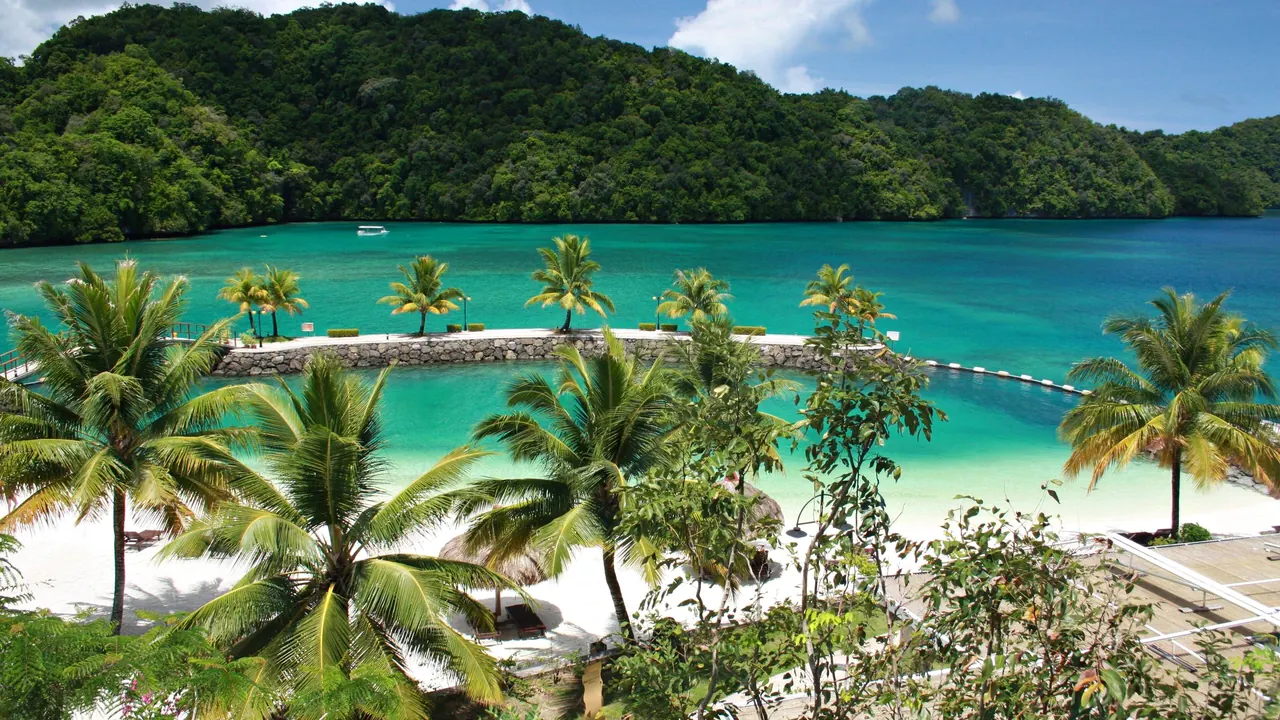
Koror is the clear choice for almost any trip built around the sea. It is the base for the Rock Islands, with some of the Pacific's finest diving at walls such as Blue Corner, kayaking among jungle-covered limestone islets, swimming in marine lakes and boat days out to Peleliu. Food, spas and evenings are modest, but there is enough to fill a week, and the tour operators do the organising.
Choose Nauru for
- getting around
- prices
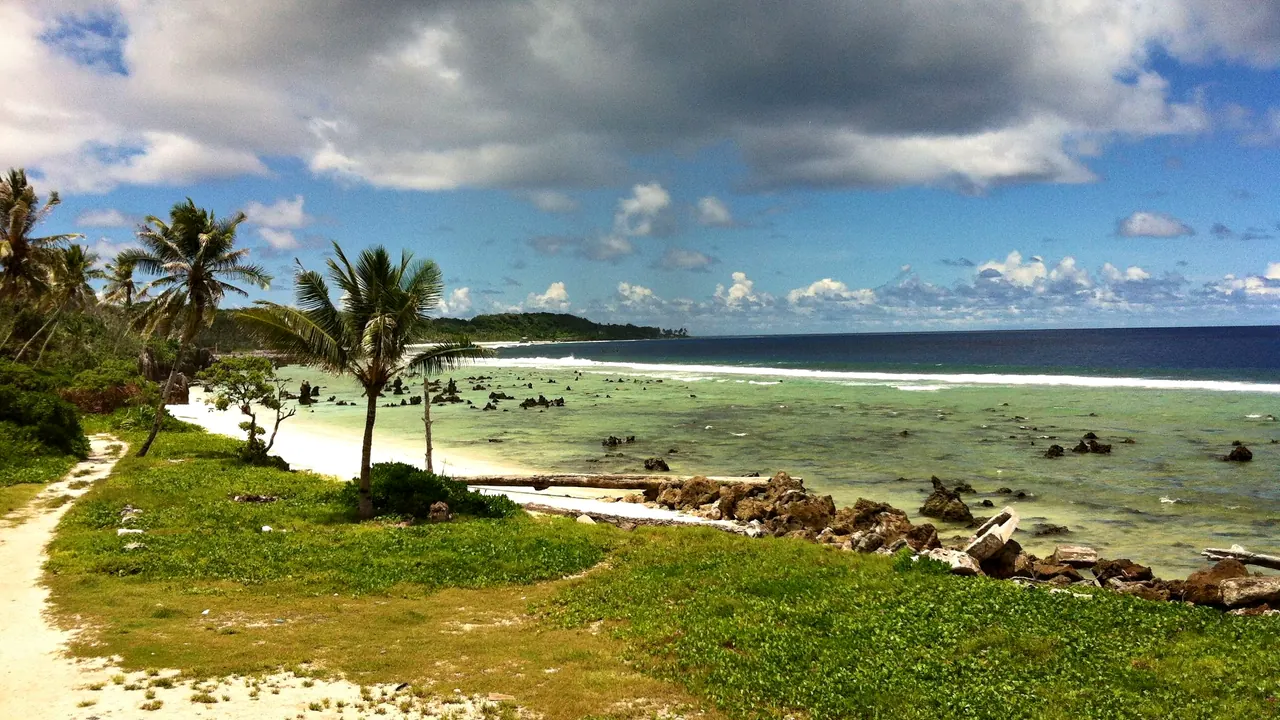
Nauru suits a different traveller: someone curious to see one of the least visited countries on earth and content with very little to do once there. Its interest is its strangeness: the mined-out pinnacles of Topside, the wartime guns on Command Ridge and the phosphate cantilevers at Aiwo. It also has a stillness that needs no effort. Plan on a few days rather than a full vacation, and come for the quiet rather than the beaches.
Scoreboard
Twelve categories on one fixed scale from 0 to 100. The shaded stretch is the gap between the two.
Your match
Pick a travel style or drag the sliders, and both match scores follow your weighting.
Wins on nature and the outdoors and beaches with your weighting.
Wins on getting around and prices with your weighting.
What matters to you?
Category by category
What the scores mean for a trip.
Beaches & swimming
Neither place has the easy walk down to the sand, but Koror's beaches are much the better reason to go. Its sand lies out in the Rock Islands, small white coves under limestone cliffs reached by boat. The water there is calm and clear, and you can swim straight off the boat onto a reef.
Nauru's coast is a raised coral reef flat. Anibare Bay is a fine sight, but beyond the reef the seabed drops away and the currents run strong, so most swimming happens in the sheltered boat harbours at Anibare and Aiwo or in rock pools at low tide. It is good for a dip, not for a day on the beach.
Food & drink
Koror eats better, mostly thanks to its Japanese heritage. Sashimi, bento and noodle counters sit alongside Filipino, Korean and Thai diners, and taro, coconut crab and reef fish turn up on some menus. Imports still keep the choice narrow.
On Nauru the options come down to Chinese-run takeaways, a hotel dining room and stores of tinned and frozen goods. The one thing worth seeking out is fresh tuna from the deep water offshore, sometimes served raw in coconut.
Culture & sights
You can see either in a day, so the real difference is the story each tells and how it is told. Koror has proper museums. The Belau National Museum, the oldest in Micronesia, traces four colonial periods and has a bai meeting house with painted storyboards in its grounds, and the Etpison Museum adds shell money and carvings.
Nauru has only a modest display. Its sights are outdoors and stark: Japanese guns and a command post on Command Ridge, the old Japanese jail, the phosphate cantilevers at Aiwo and the scarred interior of Topside. Here you see wartime and mining history on the ground rather than read about it in a gallery.
Nightlife
Koror has slightly more going on after dark: a few bars on the main street, resort bars by the water and karaoke rooms at weekends, though early dive starts keep nights short. On Nauru it stops at a drink in a hotel bar and the odd weekend gathering. You would not plan evenings around either.
Nature & outdoors
This is where the two differ most. Koror sits at the edge of the Rock Islands Southern Lagoon, hundreds of jungle-topped limestone islets. It has dive sites such as Blue Corner and German Channel, kayak routes, Jellyfish Lake and the Milky Way lagoon, with Babeldaob's mangrove rivers and the Ngardmau waterfall across the bridge.
Nauru is a small raised coral island. It has the eerie limestone pinnacles of Topside, the palm-ringed Buada Lagoon, frigatebirds, deep-sea fishing for tuna and marlin and some diving along the reef wall. An active visitor gets through it in a couple of days, while Koror could keep the same person busy for weeks.
Day trips
Koror has two proper outings. About an hour by speedboat takes you to Peleliu, with tanks, bunkers and aircraft wrecks from one of the hardest battles of the Pacific War. Or you can spend a day with a driver on Babeldaob, seeing the Badrulchau monoliths, the bai houses at Airai and the domed capitol at Melekeok.
Nauru has none. It is a lone island with no nearby neighbours and no ferries, so everything worth seeing lies on the ring road, and going anywhere else means a flight.
Good for families
Koror gives children more, especially older ones who swim well. They can snorkel in warm, calm lagoons, watch for turtles from tour boats and visit the aquarium at the coral reef research centre. Long boat days, heat and downpours make it harder going with toddlers.
Nauru is just as quiet and friendly, but the sheltered boat harbours are all it really has for children. It has few playgrounds, scarce baby supplies and only basic medical care, and the strong currents past the reef need watching, so a short stay is the sensible limit.
Getting around
Nauru is the easier of the two to get round, simply because it is so small. One ring road of about 19km, plus a spur up to Topside, can be driven in under half an hour with no traffic. A hire car or scooter arranged through your hotel covers everything, though taxis are few and there are no buses.
Koror has no public transport either. It strings out along one main road over causeways, and it is too hot and wet for comfortable walking. Taxis are easy to find, though, and the dive and tour operators collect you for the boat trips that take up most days.
Shopping & style
Koror at least has one thing worth taking home, the carved Palauan storyboard, sold by local carvers and small craft shops, along with T-shirts and shell jewellery. Nauru has only general stores selling imported groceries, and its souvenirs come down to photographs and a passport stamp. Neither is a place to go for shopping.
Affordability
Both are expensive, and for the same basic reasons: few hotels and nearly everything imported. The money goes in different places, though. In Koror the rooms are dear, the dives, boat tours and Rock Islands permits that fill the days add up fast, and there is an environmental fee on arrival.
On Nauru most of the cost is in getting there on limited flights and in rooms of a fairly basic standard. Once you arrive there is little to spend money on beyond takeaway meals and a hire car, and the sights cost nothing.
Live music & performing arts
Neither has a theatre, a concert hall or regular live music. Koror gives a slightly better chance of seeing something, since resorts sometimes put on dance evenings and Palauan chant and dance appear at festivals. On Nauru, traditional song and dance belong to community events and national days such as Independence Day, so seeing them depends on when you are there.
Wellness & relaxation
Koror offers more ways to unwind. A few resort hotels have spas offering massage and treatments made with coconut and local plants, and there are hotel pools and the slow rhythm of days on the water and early nights.
Nauru has no spas or retreats, and its hotels are basic, so relaxing there simply means stillness: no crowds, nothing to book and plenty of time to read. That suits someone after pure quiet, but not anyone hoping for treatments.
When should you go?
Pick your month. The climate figures are measured averages, not a forecast.
Koror in July
Nauru in July
Daytime high, °C
Rainfall in the month, mm
Where the figures come from
Nauru has no weather station within reach, so its figures come from a gridded climate model rather than a measured record, and read a broad area rather than one spot.
Temperature and rainfall are climate normals, averaged over the years shown. Koror: 1991-2020 normals, Babelthuap Island, Babelthuap/Koror Airport (6.4 km from centre). Nauru: 2001-2020 normals, NASA POWER reanalysis grid, no weather station within 90 km.
Koror is hot and humid in every month, with daytime highs around 31°C and a lagoon close to 29°C, so swimming and diving work all year. What changes is the rain. February to April is the drier stretch, with March the sunniest month, while June to August is the wettest, and July brings more than 400mm in heavy bursts. Walking the town is sticky whenever you go.
Nauru runs a degree or two cooler, with highs near 29°C and the sea the same warmth all year. Its rain follows a different pattern from Koror's. May to October is the drier half, with around 110mm a month, and the wetter months run from December to March. Nauru gets less rain than Koror in almost every month, and much less in the middle of the year, which is exactly when Koror is at its wettest.
Which traveller are you?
On an outdoors trip, Koror wins by a long way. Its reefs, channels and drop-offs bring sharks, mantas and turtles for divers of every level, and the Rock Islands add kayaking and marine lakes. Nauru has Topside's pinnacles, some deep-sea fishing and little else.
For a beach and sun trip, Koror is the better bet, though every beach day starts with a boat. Its white coves under limestone cliffs and its calm lagoon beat Nauru's reef flat, where strong currents keep most swimming to the boat harbours.
On a family trip with children, Koror has more to offer if the children swim well, with turtles to spot, warm lagoons to snorkel and a reef aquarium. On Nauru, splashing in a harbour is about all there is, so parents would have to make their own entertainment.
Before you go
| Measure | Koror | Nauru |
|---|---|---|
| Official language | English, Japanese, Palauan | English, Nauruan |
| Currency | US Dollar (USD) | Australian Dollar (AUD) |
| Sockets | AB120 V, 60 Hz | I240 V, 50 Hz |
| Driving side | Right | Left |
| Time zone | UTC+9 | UTC+12 |
| Emergency number | 911 | Police 110, ambulance 111, fire 112 |
| Elevation | 22 m | - |
| Main airport | Roman Tmetuchl International Airport (ROR)7 km from centre7 non-stop destinations | Nauru International Airport (INU)7 non-stop destinations |
| Public holidays this year | 11 days | 13 days |
By the numbers
| Measure | Koror | Nauru |
|---|---|---|
| Population | 8,744 | 13,650 |
| People per km² | - | 644 |
| Museums within 10 km | 2 | - |
| UNESCO World Heritage sites within 50 km | 1 | - |
| Swim season, months above 21 °C | 12 months | 12 months |
Where else could you go?
Every comparison below shares a destination with this one, so you can follow Koror or Nauru somewhere new.