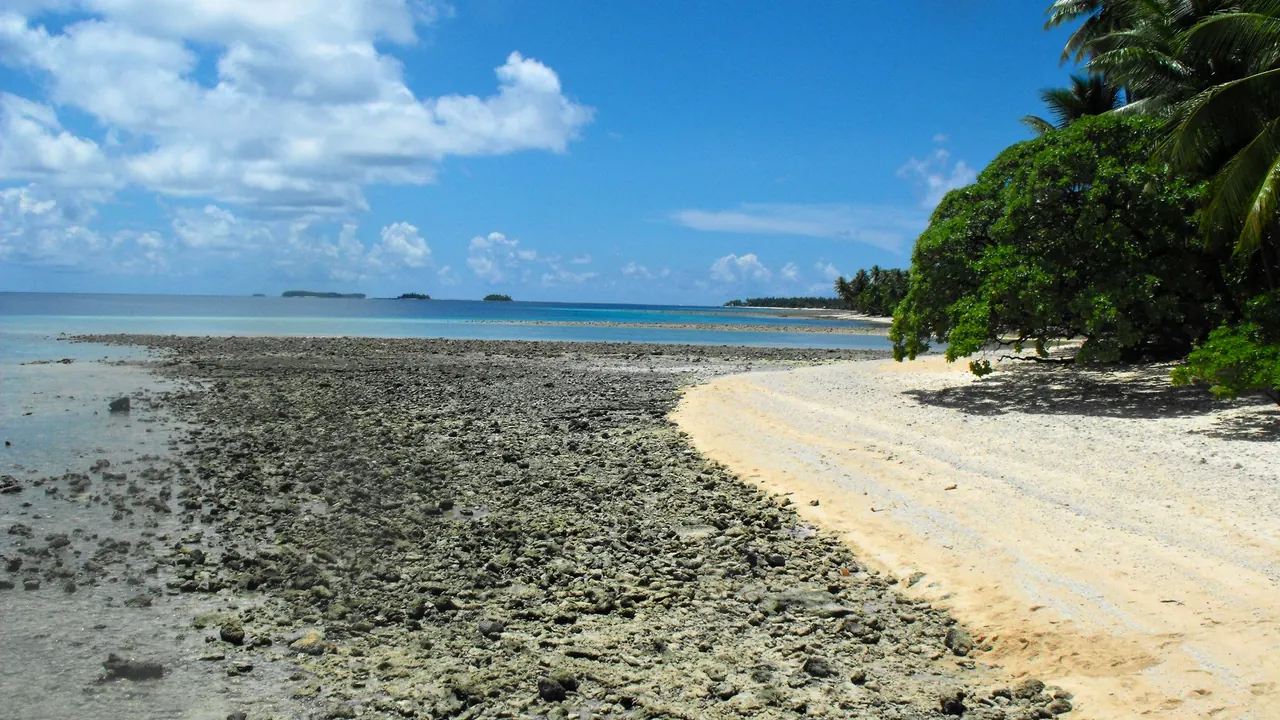
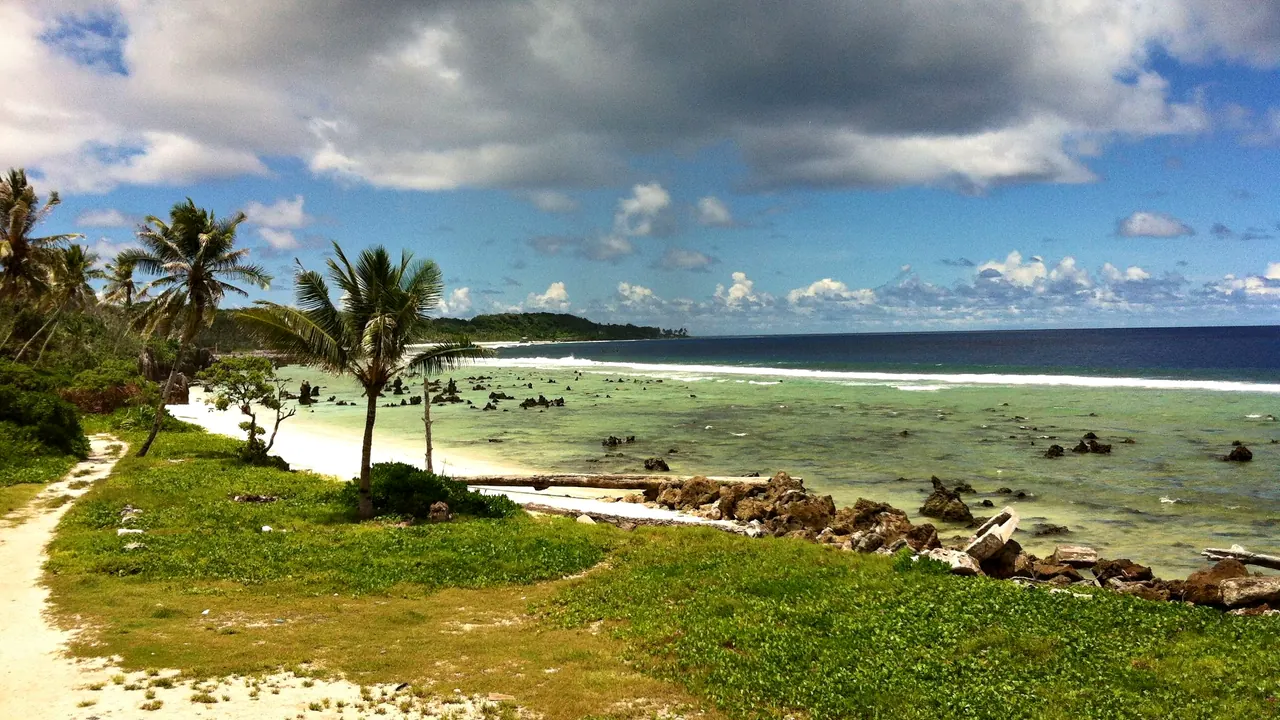
Photos: Majuro by Cliff Hansen, CC BY-SA 4.0, cropped; Nauru by Sean Kelleher, CC BY-SA 2.0, cropped.
Majuro or Nauru?
Our verdict in twelve categories, each scored against the same fixed benchmark cities, and the climate month by month, so you can choose for your trip.
Choose Majuro for
- nature and the outdoors
- beaches
- day trips
Majuro suits travellers who want the water to be the point of the trip. Its huge lagoon, the shaded sand at Laura and boat days to empty islets such as Eneko give it a real beach and snorkelling side. The outer reefs, wartime wrecks and sportfishing give divers and anglers enough to fill a week. It also has a little more around the edges: woven handicraft to take home, a long drive down the atoll and a boat across to Arno.
Choose Nauru for
Nauru does not lead in any category we score.
Nauru is for the traveller drawn by its oddness rather than its comforts. A single 19km ring road, the grey limestone pinnacles of mined-out Topside and the Japanese guns on Command Ridge make a compact, strange island that can be seen in a day and then simply sat in. You swim in harbours cut through the reef rather than off beaches, there is nowhere else to go, and what you get in return is complete stillness.
Scoreboard
Twelve categories on one fixed scale from 0 to 100. The shaded stretch is the gap between the two.
Your match
Pick a travel style or drag the sliders, and both match scores follow your weighting.
Wins on nature and the outdoors and beaches with your weighting.
Has no clear advantage with the weighting you have chosen.
What matters to you?
Category by category
What the scores mean for a trip.
Beaches & swimming
Majuro has the better water by some distance. The lagoon is calm and clear, and an hour's drive takes you to shaded sand at Laura. The uninhabited islets across the lagoon offer white sand, palms and shallow reef to swim over, though you have to bring everything yourself.
Nauru looks the part at Anibare Bay. But the reef flat and the sharp drop beyond it, with strong currents, mean open swimming is only for calm days and needs care. In practice a dip means the boat harbours cut through the reef at Anibare and Aiwo, or wading in rock pools at low tide.
Food & drink
Neither is a place to travel to for food, and there is little between them. Both rely on imported goods and on fish from the deep water offshore, but Majuro gives a clearer taste of island cooking: tuna sashimi, plus breadfruit, pandanus and taro eaten at church and community events. On Nauru you eat mostly at Chinese-run takeaways around the ring road, and raw fish in coconut is the one local dish most visitors meet.
Culture & sights
Both are thin on sights, but the stories they tell are different. Majuro's Alele Museum is about seafaring, with stick charts for reading swells, outrigger canoes and woven work. The Capitol, the Peace Park and the legacy of the Bikini and Enewetak tests fill out the picture.
Nauru has no real museum and tells its history through what is left on the ground: Japanese guns and a command post on Command Ridge, the old jail, the phosphate cantilevers at Aiwo and the scarred plateau of Topside. In Majuro you meet the culture in villages and churches. On Nauru you mostly look at it.
Nightlife
Evenings are quiet in both, and neither has a club. Majuro at least has a few hotel and local bars where expatriates and visiting fishermen gather, with the odd karaoke night. On Nauru a night out means a drink at a hotel or restaurant, then an early night.
Nature & outdoors
Majuro's outdoors is all water, and there is a great deal of it: outer reefs, drop-offs and wartime wrecks for divers, a lagoon for kayaks and sailing boats, and tuna, wahoo and marlin offshore. On land it is flat and built up, with the palms and taro pits around Laura the quiet exception.
Nauru is smaller and stranger. Scrambling among Topside's limestone pinnacles is unlike anything on an atoll, and Buada Lagoon is a gentle inland hollow. But the sea offers only fishing and some diving along the reef wall, and there are no trails, so an active visitor is done within a few days.
Day trips
Majuro has a couple of outings, which is more than Nauru can offer. The drive to Laura fills a day, and when the weather allows, a hired boat can cross to Arno Atoll to see village life on the outer islands. Nauru is a lone island with no neighbours or ferries, and everything worth seeing is already on its ring road, so leaving means a flight.
Good for families
Neither is set up for children, and the differences lie in the water and the hazards. Majuro's lagoon gives calm, shallow swimming and boat trips, but fast traffic on the single road, stray dogs and limited medical care make it hard going with little ones. Nauru is quieter, and children can splash in the harbours alongside local families, but shops and medical care are basic and the currents beyond the reef mean watching children closely.
Getting around
Both are built along a single road, which keeps things easy, but you get around in different ways. Majuro's road runs about 50km along the atoll and shared taxis drive up and down it constantly, so in town you just wave one down. Laura is easier by hired car, and the lagoon islets need a boat.
Nauru's loop is much shorter, under half an hour by car with no traffic. With no buses for visitors and few taxis, though, you depend on a hire car, a scooter or lifts.
Shopping & style
Majuro has one reason to shop that Nauru lacks: Marshallese handicraft. Woven pandanus baskets, fans, mats and replica stick charts are sold through handicraft outlets, the museum and community events. Nauru has only general stores, and most visitors take home photographs rather than souvenirs.
Affordability
Both are costly for what they offer: rooms are few and priced above their standard, and almost everything is imported. Majuro is slightly easier on the budget day to day thanks to its shared taxis, though boat hire, diving and fishing add up quickly. Nauru's takeaways are reasonably priced and its sights are free, but you will almost certainly need a hire car, and there is no cheaper level of lodging.
Live music & performing arts
Neither has anything you can book. Majuro's best is the hymn singing in its churches, which is open to any visitor, with traditional dances on national days. Nauru's song and dance appear at Independence Day, Constitution Day and community events, and otherwise not at all.
Wellness & relaxation
Neither has spas, so relaxing here means slowing down. Majuro offers better surroundings for it: afternoons by the lagoon, sunsets, and the calm of Laura or an islet once you leave the crowded town, plus the occasional massage. On Nauru you do not need to leave anywhere, since the whole island is quiet, but there are no treatments and little scenery to unwind in.
When should you go?
Pick your month. The climate figures are measured averages, not a forecast.
Majuro in July
Nauru in July
Daytime high, °C
Rainfall in the month, mm
Where the figures come from
Nauru has no weather station within reach, so its figures come from a gridded climate model rather than a measured record, and read a broad area rather than one spot.
Temperature and rainfall are climate normals, averaged over the years shown. Majuro: 1991-2020 normals, Majuro Atoll, Marshall Islands Int. Airp. (11.1 km from centre). Nauru: 2001-2020 normals, NASA POWER reanalysis grid, no weather station within 90 km.
Both are hot all year, with daytime highs a degree or so either side of 29°C and the sea warm enough to swim in every month, so the choice comes down to rain. Majuro is the wetter of the two and gets wetter as the year goes on. January to March are its least rainy months, which fits the steadier trade winds of its dry season and the calmer water for boat days, while September to November bring well over 300mm a month. Sunshine holds up best from March to August and drops from October to December. Walking around the town of Delap-Uliga-Djarrit is hot and sticky in any month, so it is best done early or late in the day.
Nauru, measured on its coast, is drier than Majuro in every month of the year. Its wettest spell runs from December to March, at close to 200mm a month, which is still a little less than Majuro gets in its driest months. From May to October it dries out to roughly 115mm. That is the most comfortable time for scrambling on Topside or walking the coast road, and also when the gap between the two is widest. Early in the year the difference is small, but from May onwards Nauru is clearly the drier choice.
Which traveller are you?
On a beach and sun trip, Majuro is the clear choice. Its lagoon is calm and clear, Laura has shaded sand, and a boat reaches white-sand islets like Eneko. On Nauru, swimming comes down to sheltered boat harbours and rock pools on the reef flat.
For an outdoors trip built around the sea, Majuro offers far more: healthy outer reefs, drop-offs and wartime wreckage for divers, a 40km lagoon for kayaking and sailing, and serious sportfishing. Nauru has deep-sea fishing and a reef wall, but an active visitor soon runs out of things to do.
On a culture and arts trip, the two are evenly matched and differ in subject. Majuro's Alele Museum explains stick-chart navigation and canoe-building. Nauru tells the story of war and phosphate through the guns on Command Ridge, the cantilevers at Aiwo and the mined plateau of Topside.
Before you go
| Measure | Majuro | Nauru |
|---|---|---|
| Official language | English, Marshallese | English, Nauruan |
| Currency | US Dollar (USD) | Australian Dollar (AUD) |
| Sockets | - | I240 V, 50 Hz |
| Driving side | Right | Left |
| Time zone | UTC+12 | UTC+12 |
| Emergency number | 911 | Police 110, ambulance 111, fire 112 |
| Elevation | 3 m | - |
| Main airport | Marshall Islands International Airport (MAJ)12 km from centre10 non-stop destinations | Nauru International Airport (INU)7 non-stop destinations |
| Public holidays this year | 11 days | 13 days |
By the numbers
| Measure | Majuro | Nauru |
|---|---|---|
| Population | 30,000 | 13,650 |
| People per km² | 3,093 | 644 |
| Museums within 10 km | 1 | - |
| UNESCO World Heritage sites within 50 km | 0 | - |
| Swim season, months above 21 °C | 12 months | 12 months |
Where else could you go?
Every comparison below shares a destination with this one, so you can follow Majuro or Nauru somewhere new.