Photos: Funafuti by mrlins, CC BY 2.0, cropped; Majuro by Cliff Hansen, CC BY-SA 4.0, cropped.
Funafuti or Majuro?
Our verdict in twelve categories, each scored against the same fixed benchmark cities, and the climate month by month, so you can choose for your trip.
Choose Funafuti for
- prices
- live music and the arts
- families
Funafuti suits the traveller who wants the remote atoll at its quietest and most intimate. Fongafale is small enough that the lagoon is never far from your guesthouse, evenings revolve around families playing on the runway, and the islets of the Conservation Area give you turtles, seabirds and empty sand. Come for stillness and community life, and accept that there is very little to organise a day around.
Choose Majuro for
- getting around
- day trips
- shopping
Majuro gives a little more structure to a stay. The Alele Museum and the history of the nuclear tests give you something real to learn, outer-reef diving and sportfishing are run seriously, and shared taxis make the one long road easy to use. It is the better pick if you want activities on the water and a town with a few more services, and can live with a more crowded, untidy centre.
Scoreboard
Twelve categories on one fixed scale from 0 to 100. The shaded stretch is the gap between the two.
Your match
Pick a travel style or drag the sliders, and both match scores follow your weighting.
Too close to call, 2 points apart
Wins on prices and live music and the arts with your weighting.
Wins on getting around and day trips with your weighting.
What matters to you?
Category by category
What the scores mean for a trip.
Beaches & swimming
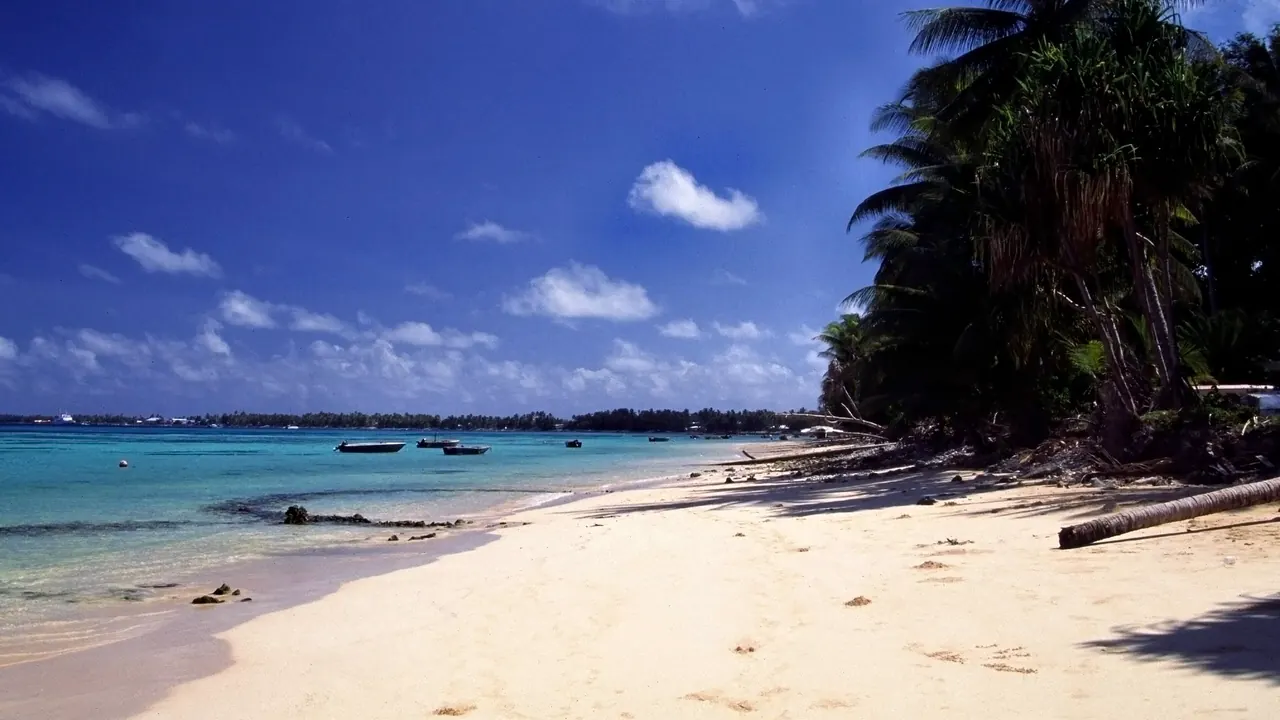
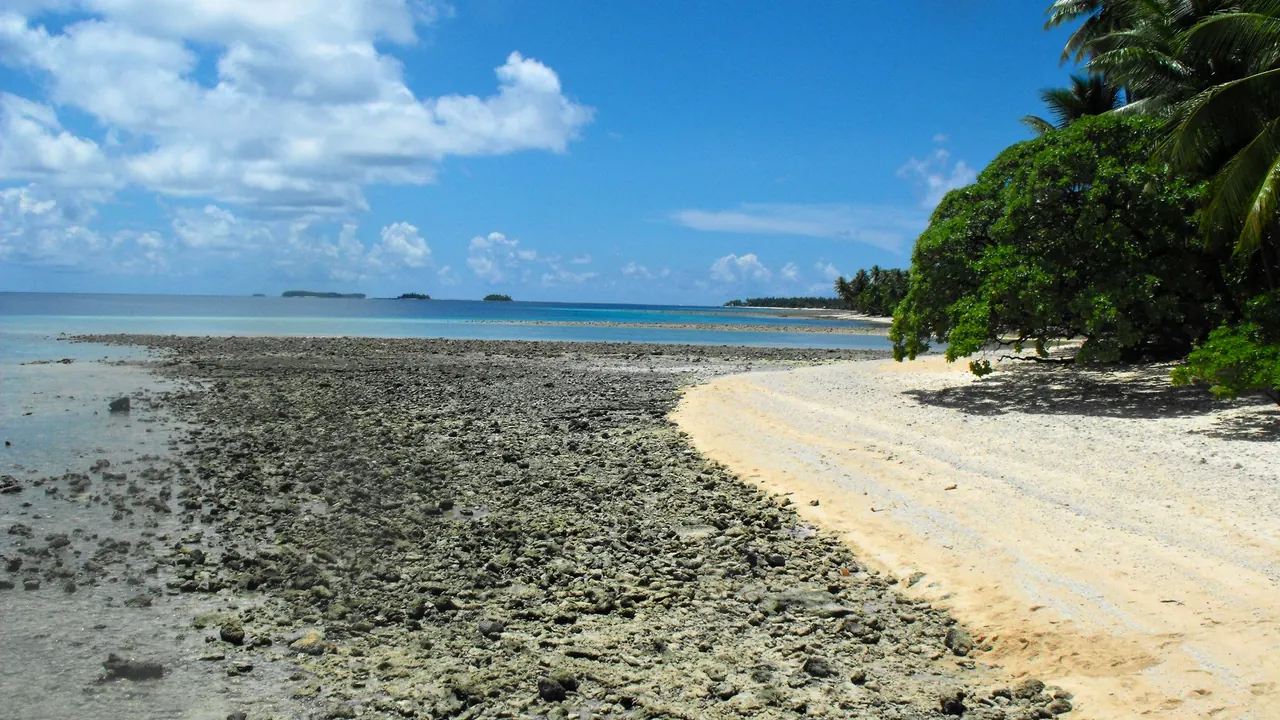
The swimming is much the same in quality, and in both places the best sand lies on uninhabited islets you reach by boat: the Conservation Area islets off Funafuti, Eneko and its neighbours off Majuro. What differs is how close the water is. On Fongafale you can swim off the lagoon shore near Vaiaku or join the children jumping from the wharf in the evening, though the water by the settlement is not always clean.
Majuro's town shore is built up and nobody swims there, so the everyday beach is at Laura, an hour's drive down the road. Neither atoll has sunbeds or beach bars, so bring your own shade and water wherever you go.
Food & drink
Both are thin on food, and neither has markets or street food to explore. Majuro has a slightly wider set of tables in its hotel dining rooms and Asian-run kitchens, and fresh tuna served as sashimi is the meal to look for.
Funafuti's eating out is a handful of simple restaurants and takeaway counters, but it has a clearer local taste if you can get at it: pulaka grown in pits, breadfruit and coconut at a community feast or from your guesthouse, and kaleve, the sweet coconut-sap toddy. In both places the best food comes through church and community events rather than menus.
Culture & sights
Majuro has a little more to show. The Alele Museum explains Marshallese navigation through stick charts and outrigger canoes, and the story of the Bikini and Enewetak nuclear tests gives a visit real weight. The Capitol and the Peace Park war memorial round out a short morning.
Funafuti has no museum of that kind. Its sights are the open-sided maneapa meeting houses, the runway American forces built in 1943 with its wartime borrow pits, and the marker for the 1890s coral drilling that tested Darwin's theory of atolls. It is fascinating in its way, but it all fits into a morning's stroll.
Nightlife
Neither has a nightlife worth travelling for, but the quiet takes different forms. In Funafuti the evening happens outdoors, with people gathering on the runway and lagoon front as the heat fades and, at weekends, a dance that may run late. In Majuro it happens in hotel bars and small local bars, sometimes with karaoke, among expatriates, aid workers and fishermen. Expect Sundays to shut down almost completely on Funafuti.
Nature & outdoors
Both are low coral rings with nothing to hike, so the interest lies in the water. Majuro's edge is that it is set up for using it. Its healthy outer reefs, drop-offs and wartime wreckage draw divers, the 40km lagoon suits kayaking and sailing, and sportfishing for wahoo and marlin is a serious pursuit.
Funafuti's appeal is wilder and more protected. Its Conservation Area shelters nesting seabirds and feeding green turtles, and a hired boat lets you snorkel coral heads and walk deserted islets. Organised trips are rare, though, so you arrange everything through locals.
Day trips
Majuro at least offers a couple of outings. The drive to Laura at the western tip makes a pleasant half day, and in good weather a hired boat can take you across to Arno Atoll to see outer-island village life.
Funafuti has nothing equivalent. The other atolls of Tuvalu are many hours away by an irregular ship, and the lagoon islets, lovely as they are, are uninhabited nature rather than places to visit.
Good for families
Neither is built for children, and both have basic medical care and strong sun, but Funafuti is the easier of the two to manage day to day. Traffic is light, crime is rare, and local families take over the runway each evening for volleyball and football that visiting children are welcomed into.
Majuro's culture is just as warm towards children, but the narrow road carries fast traffic and stray dogs are a nuisance. It works for families happy with snorkelling and boat days. In both cases older, adventurous children will get far more out of the trip than toddlers.
Getting around
Majuro is easier to get around without your own wheels. Shared taxis run up and down its single road all day and stop for anyone who waves, so short hops in town are simple, and a hired car or long taxi ride takes you out to Laura.
On Fongafale there are no buses and few taxis. The core around the airfield at Vaiaku is compact enough to walk outside the midday heat, but most visitors rent a motorbike or bicycle to reach the ends of the 12km islet. On both atolls the lagoon islets mean a boat.
Shopping & style
There is little to buy in either place, but Majuro gives you a bit more worth taking home. Its finely woven pandanus and coconut-fibre baskets, fans and replica navigation stick charts are sold through handicraft outlets, the museum and at community events. In Funafuti the choice comes down to mats, fans and shell necklaces from the women's groups near the airport, plus Tuvalu's postage stamps for collectors.
Affordability
Both are expensive for what you get, mostly because so much food is imported and getting there at all takes up most of the budget. Funafuti is slightly easier day to day, with a scooter and a plate of fish and rice staying modest, though its few guesthouses charge a lot for their standard.
In Majuro the shared taxis are the clear bargain. Diving, fishing and boat hire add up fast there. On Funafuti the lagoon boat is a private charter, so it is worth sharing it with other visitors.
Live music & performing arts
Funafuti has the stronger living tradition. Fatele, in which singers around a box drum keep speeding up the rhythm while dancers move, is performed in the maneapa at weddings, church events and Independence Day. You see it by chance or by invitation, never with a ticket.
Majuro's traditional dances surface on national days and at community celebrations, but less predictably. In both places the most reliable music is Sunday hymn singing, which anyone can walk in and hear.
Wellness & relaxation
Neither has spas or a bathing tradition, so rest comes from the slow pace in both. The difference is where you find it. On Funafuti the calm covers the whole islet, with heat and tide setting the day and Sunday kept as a day of rest.
Majuro's town is crowded and untidy, so the peace there lies out at Laura or on a lagoon islet. On the other hand you can at least find the occasional massage.
When should you go?
Pick your month. The climate figures are measured averages, not a forecast.
Funafuti in July
Majuro in July
Daytime high, °C
Rainfall in the month, mm
Temperature and rainfall are climate normals, averaged over the years shown. Funafuti: 1991-2020 normals, Funafuti (2.1 km from centre). Majuro: 1991-2020 normals, Majuro Atoll, Marshall Islands Int. Airp. (11.1 km from centre).
Neither atoll has a cool season. Funafuti sits at about 32°C every month and Majuro at about 30°C, so the lagoon is warm enough for swimming all year in both, and in both places midday is too hot for walking far. The difference lies in the rain, which falls at opposite times of year. Funafuti is wettest from December to March, peaking around 368mm in January, and drier and sunnier from June to September.
Majuro runs the other way. January to March is its driest and brightest stretch, at around 200mm a month, while rain builds through the year to a peak of about 334mm in October and November. If you can choose freely, go to Funafuti in the southern winter months and to Majuro early in the year. The sea is a touch warmer off Funafuti, though both lagoons feel like bathwater.
Which traveller are you?
On a family trip with children, Funafuti is the easier base. Guesthouse, shops and lagoon are all a short walk apart, so the days need little planning. Majuro asks more of parents, because almost every outing there starts with a ride along the road.
For an outdoors trip, choose Majuro if you want to dive, fish or sail with people who run it properly. Go early in the year, when the water is calmest. Funafuti suits the self-reliant, who are happy with a boat, a mask and empty islets.
On a relaxing and wellness trip, Funafuti is the place to do nothing at all. There is no town to escape, so the stillness starts at your door. Majuro suits you only if you want a few more services and don't mind travelling out to find quiet.
Before you go
| Measure | Funafuti | Majuro |
|---|---|---|
| Official language | English, Tuvaluan | English, Marshallese |
| Currency | Australian Dollar (AUD) | US Dollar (USD) |
| Sockets | I220 V, 50 Hz | - |
| Driving side | Left | Right |
| Time zone | UTC+12 | UTC+12 |
| Emergency number | 911 | 911 |
| Elevation | 7 m | 3 m |
| Main airport | Funafuti International Airport (FUN)0 km from centre2 non-stop destinations | Marshall Islands International Airport (MAJ)12 km from centre10 non-stop destinations |
| Public holidays this year | 11 days | 11 days |
By the numbers
| Measure | Funafuti | Majuro |
|---|---|---|
| Population | 6,025 | 30,000 |
| People per km² | 2,510 | 3,093 |
| Museums within 10 km | 0 | 1 |
| UNESCO World Heritage sites within 50 km | 0 | 0 |
| Swim season, months above 21 °C | 12 months | 12 months |
Where else could you go?
Every comparison below shares a destination with this one, so you can follow Funafuti or Majuro somewhere new.