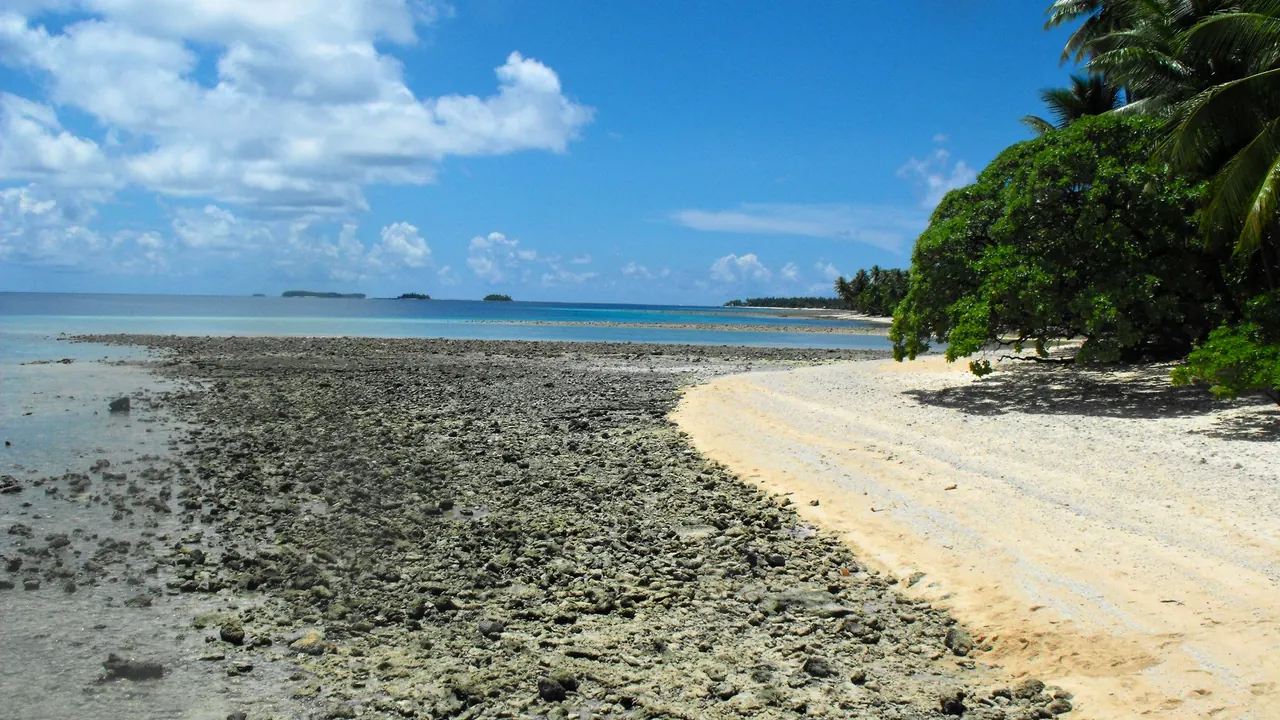
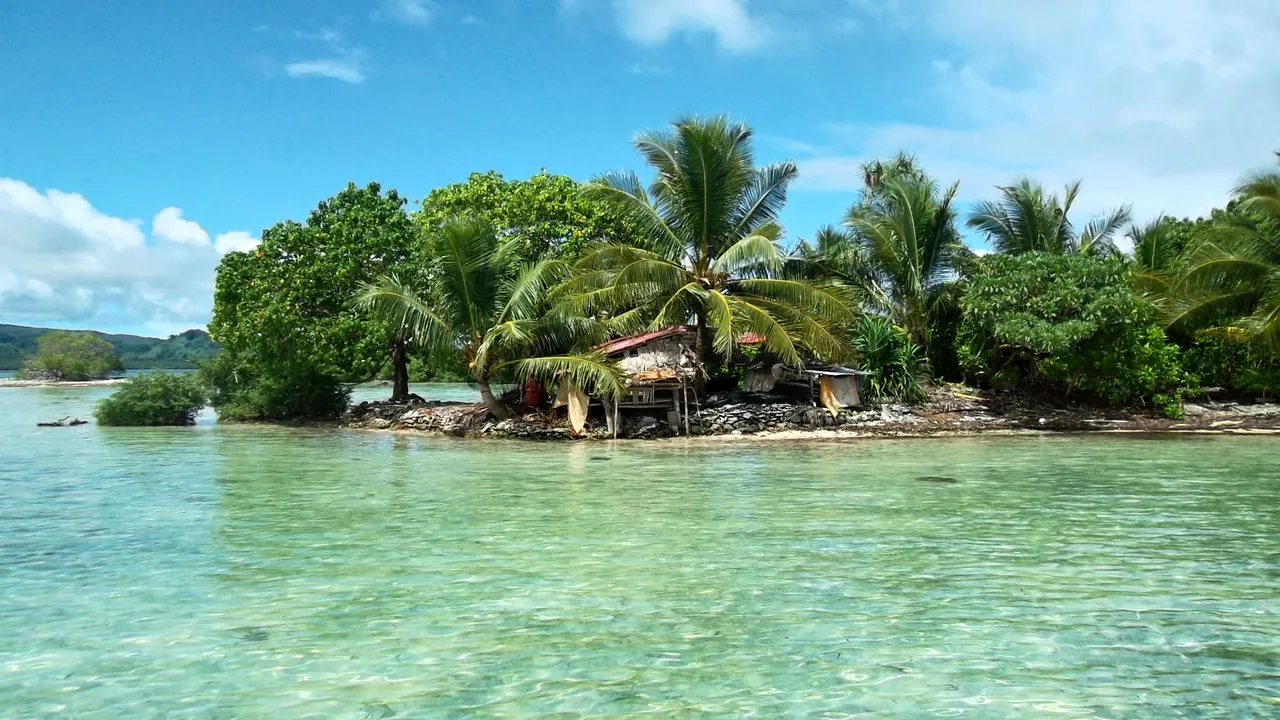
Photos: Majuro by Cliff Hansen, CC BY-SA 4.0, cropped; Pohnpei by Patrick Nunn, CC BY-SA 4.0, cropped.
Majuro or Pohnpei?
Our verdict in twelve categories, each scored against the same fixed benchmark cities, and the climate month by month, so you can choose for your trip.
Choose Majuro for
- beaches
- getting around
- shopping
Majuro suits a traveller who mostly wants to be in warm, calm lagoon water. Of the two it has the easier swimming, with shaded sand at Laura that you can drive to and white-sand islets such as Eneko a short boat ride away. It is also the brighter and drier of the pair, and one road with shared taxis makes it simple to get about. There is little to see on land, so it works best as a slow stay spent on and in the water.
Choose Pohnpei for
- nature and the outdoors
- culture and sights
- prices
Choose Pohnpei for landscape and history. It is a high, green volcanic island with cloud forest, waterfalls and mantas on the outer reef, and it has Nan Madol, a basalt ruin that a flat atoll has nothing to match. The trade-off is that the main island has no swimming beach, rain and cloud are heavier all year, and almost everything offshore means booking a boat.
Scoreboard
Twelve categories on one fixed scale from 0 to 100. The shaded stretch is the gap between the two.
Your match
Pick a travel style or drag the sliders, and both match scores follow your weighting.
Wins on beaches and getting around with your weighting.
Wins on nature and the outdoors and culture and sights with your weighting.
What matters to you?
Category by category
What the scores mean for a trip.
Beaches & swimming
Majuro has the easier swimming of the two. The town shore is built up, but Laura at the end of the road has shaded lagoon sand you can drive to. Boats run out to uninhabited islets such as Eneko, with white sand, palms and shallow reef water.
Pohnpei's main island has mangrove and reef flat rather than beaches, and Kolonia looks out on mud and seagrass. Its sandy islets on the barrier reef and at Ant and Pakin are lovely and usually empty, but each visit is a planned boat outing that depends on tides and weather. The water is equally warm at both.
Food & drink
Neither is a place to travel for food. Both rely on imported supplies and a few simple kitchens, and on both the best thing you will eat is tuna caught that morning and served as sashimi. The difference is in the detail. Kolonia's restaurants carry a Japanese influence and use the island's own black pepper, and sakau is there to try, while in Majuro the most memorable meals tend to come at church and community events rather than in the hotel dining rooms and Asian-run kitchens.
Culture & sights
Pohnpei has the one major sight between the two. Nan Madol is a UNESCO site of nearly a hundred basalt islets on the reef off the southeast coast, explored on foot among walls and mangrove-choked channels. The Spanish fort wall, the German bell tower and the gun emplacements on Sokehs Island are enough for a second day.
Majuro's heritage is smaller and more sombre. The Alele Museum, with its stick charts and outrigger canoes, is actually a better museum than anything on Pohnpei, and it sits alongside the Peace Park and the weighty history of the nuclear tests on Bikini and Enewetak. Beyond those, Marshallese culture is met in villages and churches rather than at sights.
Nightlife
Both islands go quiet after dark, and neither has clubs. In Majuro an evening means a beer in a hotel or small local bar among expatriates, aid workers and fishermen, sometimes with karaoke. On Pohnpei social life happens in roadside sakau bars, where kava is passed round in coconut shells and the mood is drowsy rather than lively.
Nature & outdoors
This is where Pohnpei pulls well ahead. It is a high volcanic island with cloud forest rising to almost 800m and waterfalls such as Kepirohi and Sahwartik at the end of short, muddy walks. You can climb Sokehs Rock, take longer guided hikes inland, see mantas at Ant and Pakin, kayak through mangrove channels and surf the reef break at Palikir Pass.
Majuro is a flat atoll, with nothing to climb and a densely built strip around the town. Its outdoors is on the water: outer-reef drop-offs, wartime wreckage, sailing on a lagoon about 40km long, and serious sportfishing for tuna, wahoo and marlin.
Day trips
Neither lets you range far. From Majuro there is the drive to Laura, or a hired boat to Arno Atoll to see outer-island village life. From Kolonia there is a half-day on Sokehs Island or a boat to Ant and Pakin, where the water is the reason to go. On both, the rest of the country is a flight away.
Good for families
Children are warmly welcomed on both islands and neither has anything built for them, so the choice comes down to which kind of hard work suits you. Majuro has calm, shallow lagoon water and a beach you can reach by car, set against heat, a fast narrow road and stray dogs. Pohnpei suits older, adventurous children with waterfall pools and atoll snorkelling, but it has no swimming beach on the main island, heavy rain and, like Majuro, only basic healthcare.
Getting around
Majuro is the simpler of the two. One road runs about 50km along the atoll, and shared taxis on it pick up anyone who waves. Only the trip out to Laura or to the lagoon islets calls for a hired car or a boat.
Pohnpei has no public transport beyond shared taxis around Kolonia, so for the ring road you need a hire car or a driver arranged by your lodging, and Nan Madol is about an hour from town. The reef islets, atolls, dive sites and surf break all need boats booked in advance, which shapes the whole stay.
Shopping & style
Shopping is thin on both islands, and the thing worth buying on either is woven handicraft such as baskets and fans. Majuro adds replica navigation stick charts, sold at the museum and craft outlets. Pohnpei adds carvings and packets of its prized black and white pepper.
Affordability
Neither is cheap, and on both the long flight in is a large part of the cost. Pohnpei is the easier on the wallet: simple local meals, shared taxis and free waterfalls keep day-to-day spending down, even if diving and atoll trips add up.
Majuro's few hotels charge well above what their simple standard would suggest, and because almost everything is imported, groceries and meals cost more than you would expect. The shared taxis are about the only real saving.
Live music & performing arts
Neither has a theatre or any scheduled live music, so what you hear depends on luck. In Majuro the thing to look for is hymn singing in Marshallese at church. On Pohnpei it is traditional dance and chanting at feasts, and the slow ritual of a sakau ceremony.
Wellness & relaxation
Neither island has spas, and an occasional massage is about all the pampering on offer, so rest here means a slow pace. Pohnpei feels a little calmer throughout, with few cars, no crowds and evenings of sakau. Majuro's town is crowded and untidy, and you find quiet by heading out to Laura or a lagoon islet.
When should you go?
Pick your month. The climate figures are measured averages, not a forecast.
Majuro in July
Pohnpei in July
Daytime high, °C
Rainfall in the month, mm
Temperature and rainfall are climate normals, averaged over the years shown. Majuro: 1991-2020 normals, Majuro Atoll, Marshall Islands Int. Airp. (11.1 km from centre). Pohnpei: 1991-2020 normals, Pohnpei Island, Pohnpei Int. Airp. (2.2 km from centre).
Both lie close to the equator, with daytime highs around 30°C in every month and sea warm enough for swimming all year, so neither has a cool season or a closed season for the water. The real difference is rain and sun. Majuro is the drier and much sunnier of the two. January to March is its driest stretch, at around 200mm of rain a month, and the trade winds of those months also calm the water for boat trips. March is its sunniest month, and the long run of bright weather lasts through to August. October and November bring the most rain, and November and December the least sun.
Pohnpei, measured around Kolonia, is wetter than Majuro in every month and gets only about two-thirds of its sunshine. The rain peaks in May at close to 480mm. February is the least wet month, and the stretch from November to March is also when the Palikir Pass surf is best. On both islands the humid midday heat makes walking tiring, so go out in the early morning or late afternoon.
Which traveller are you?
On a beach and sun trip, Majuro is the clear choice. You can drive to lagoon sand at Laura, take a boat to white-sand islets such as Eneko, and expect far more sunshine through the year than on Pohnpei, whose main island is fringed by mangrove.
For a culture and arts trip, go to Pohnpei for Nan Madol, the basalt island city built on its reef, along with the Spanish, German and Japanese traces in and around Kolonia. Majuro's Alele Museum is worth an hour, but the atoll has little else to visit.
On an outdoors trip, Pohnpei gives you far more: waterfall walks, the climb up Sokehs Rock, guided cloud-forest hikes, mantas at Ant and Pakin, and a famous reef break for surfers. Majuro is flat, so it offers reef diving and sportfishing but nothing to hike.
Before you go
| Measure | Majuro | Pohnpei |
|---|---|---|
| Official language | English, Marshallese | English |
| Currency | US Dollar (USD) | US Dollar (USD) |
| Sockets | - | AB120 V, 60 Hz |
| Driving side | Right | Right |
| Time zone | UTC+12 | UTC+11 |
| Emergency number | 911 | 911 |
| Elevation | 3 m | - |
| Main airport | Marshall Islands International Airport (MAJ)12 km from centre10 non-stop destinations | Pohnpei International Airport (PNI)7 non-stop destinations |
| Public holidays this year | 11 days | 8 days |
By the numbers
| Measure | Majuro | Pohnpei |
|---|---|---|
| Population | 30,000 | 26,102 |
| People per km² | 3,093 | 70 |
| Museums within 10 km | 1 | - |
| UNESCO World Heritage sites within 50 km | 0 | - |
| Swim season, months above 21 °C | 12 months | 12 months |
Where else could you go?
Every comparison below shares a destination with this one, so you can follow Majuro or Pohnpei somewhere new.
- Tarawavs Majuro
- Chuuk Lagoonvs Pohnpei
- Nauruvs Majuro
- Guamvs Pohnpei
- Funafutivs Majuro
- Chuuk Lagoonvs Majuro