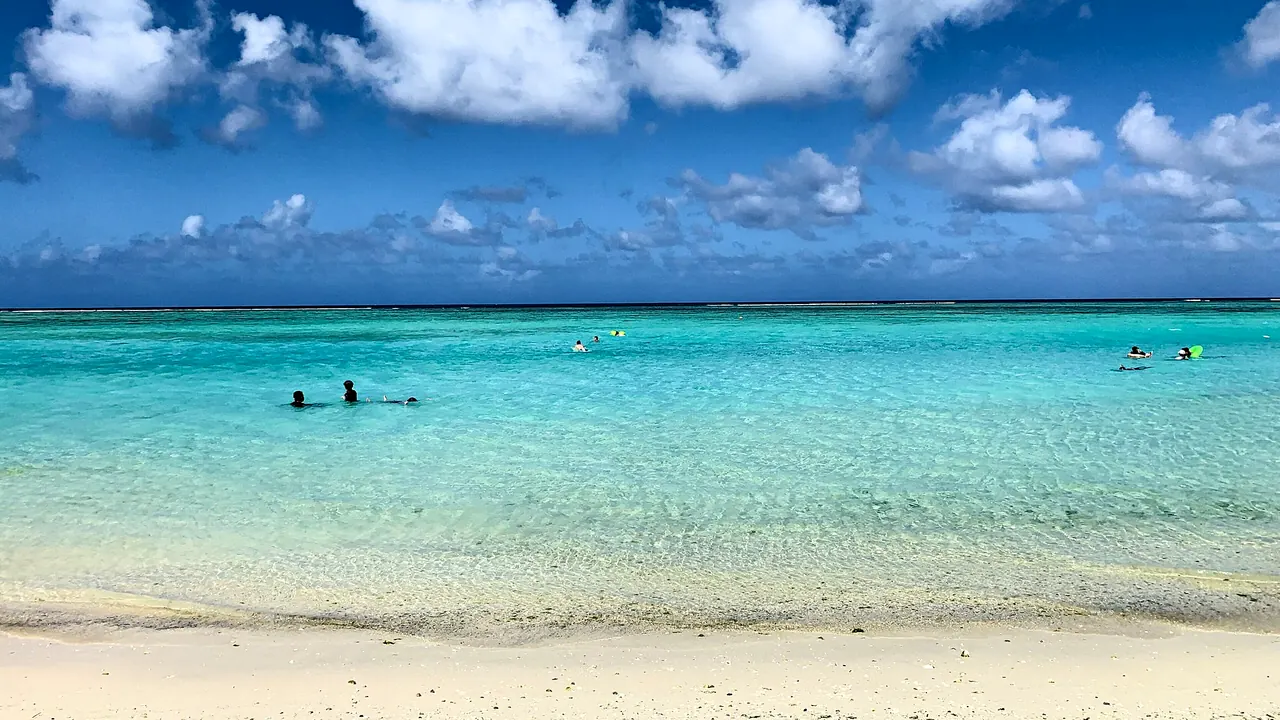
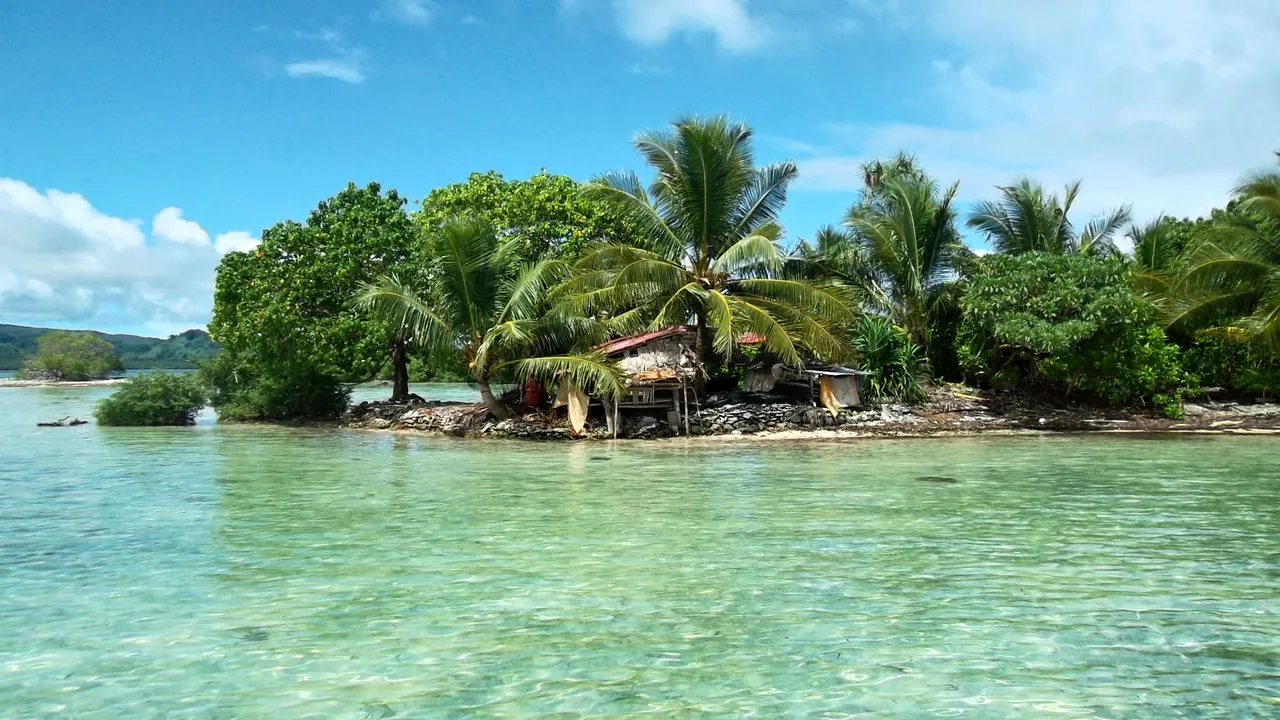
Photos: Guam by Daniel Ramirez from Honolulu, USA, CC BY 2.0, cropped; Pohnpei by Patrick Nunn, CC BY-SA 4.0, cropped.
Guam or Pohnpei?
Our verdict in twelve categories, each scored against the same fixed benchmark cities, and the climate month by month, so you can choose for your trip.
Choose Guam for
- beaches
- families
- shopping
Guam suits the traveller who wants an easy tropical beach vacation where everything is close at hand. Tumon Bay gives you sand, a calm reef lagoon, resort pools, duty-free shopping and the evening bars all along one stretch of road, and the rest of the island is a short drive on good roads. It is the clear choice with young children, or for anyone who wants to swim every day without planning ahead. What you give up is wildness: the land feels tamed and the forests are oddly silent.
Choose Pohnpei for
- nature and the outdoors
- prices
- culture and sights
Pohnpei is for people who find the point of a trip in the reef and the rainforest rather than the sun lounger. Manta rays, near-empty atolls, waterfalls in a cloud-forest interior and the basalt ruins of Nan Madol make it far more unusual than Guam, but it asks more of you. There is no beach on the main island, every outing on the water needs a boat, the rain is heavy all year and the evenings are very quiet. Adventurous adults and divers will get the most from it.
Scoreboard
Twelve categories on one fixed scale from 0 to 100. The shaded stretch is the gap between the two.
Your match
Pick a travel style or drag the sliders, and both match scores follow your weighting.
Wins on beaches and families with your weighting.
Wins on nature and the outdoors and prices with your weighting.
What matters to you?
Category by category
What the scores mean for a trip.
Beaches & swimming
This is Guam's biggest advantage. Tumon Bay has a long curve of coral sand behind a sheltering reef, so you can walk out of the hotel into calm, clear water, with Ypao Beach for picnics and Gun Beach for snorkelling. Agat, the Cocos Island lagoon and the Inarajan rock pools add quieter options.
Pohnpei's main shore is mangrove, mud and seagrass, and there is no beach near Kolonia at all. The sand is out on the barrier-reef islets and the atolls, where the water is just as warm and almost empty, but each swim is a boat trip that depends on tides and weather, so you get a few memorable half-days rather than a beach every day.
Food & drink
Guam has more to offer at the table, mostly thanks to Chamorro cooking: red rice, lemon-cured kelaguen, finadene sauce and smoky fiesta barbecue, all easiest to try at the weekly Chamorro Village night market in Hagåtña. Tumon adds ramen, Korean barbecue and American chains, which are convenient but not much more.
Pohnpei's eating is limited to a few simple places in Kolonia, with no market or street food. Its one real draw is fish caught that day, especially yellowfin tuna served as sashimi, a reminder of the Japanese period, along with breadfruit, taro and the island's own pepper. Sakau is a ritual drink rather than part of a meal out.
Culture & sights
Pohnpei has the one sight on either island worth travelling for: Nan Madol, a UNESCO-listed city of basalt-walled islets on the reef, half taken over by mangrove and unlike anything else in the Pacific. Besides that there are a few Spanish, German and Japanese traces in Kolonia, plus Sokehs Island and its 1910 rebellion.
Guam has more layers but nothing on that scale. There are latte stones in Hagåtña, the Spanish plaza, the cathedral, and Fort Soledad above Umatac, and the war sites at Asan and Agat are moving. The Guam Museum ties it all together, which Pohnpei cannot match, but on both islands the history fills a day or two.
Nightlife
Guam at least has a strip to go out on. Pale San Vitores Road in Tumon has hotel lounges, sports bars, karaoke and a couple of dance clubs that stay open late at weekends, though it is the same small scene every night. Pohnpei's evenings revolve around roadside sakau bars, where the kava makes the mood drowsy rather than lively, and with no clubs and early dive starts, most visitors are asleep by ten.
Nature & outdoors
Pohnpei is the more remarkable island outdoors. Its volcanic interior rises into cloud forest close to 800m high, and the constant rain feeds waterfalls such as Kepirohi and Sahwartik. Sokehs Rock gives the classic view over the lagoon. Offshore you get manta cleaning stations, reef sharks and healthy coral at Ant and Pakin, mangrove kayaking and a world-class right-hand break at Palikir Pass.
Guam's best outdoors is also underwater, with the Blue Hole, the coral walls and the two wartime wrecks lying side by side in Apra Harbor. On land, the cliffs at Two Lovers Point, the Ritidian refuge and the southern ridges around Mount Lamlam make for pleasant walks, but the forests have lost most of their birds to introduced snakes.
Day trips
Neither island is a base for excursions, and on both the outings stay close to home. On Guam it is a road trip: a loop through the southern villages of Umatac, Merizo and Inarajan, with Rota and Saipan better kept for an overnight flight. On Pohnpei the outings go by water, by boat to Ant and Pakin atolls or across to Sokehs Island, and the rest of the country is a flight away.
Good for families
Guam is much the better choice for children. The Tumon lagoon is shallow and calm, the resort hotels have pools, slides and kids' clubs, and the beach, food and shops are all on one strip. The Fish Eye observatory at Piti and dolphin boats fill a morning or two, though with no theme park or aquarium a stay is mostly sand and water.
Pohnpei suits only older, adventurous children. Islanders welcome them warmly, and a waterfall pool or an atoll snorkel can be the high point of the trip, but there is no swimming beach on the main island, nothing built for families, heavy rain and only basic healthcare.
Getting around
Guam is easier to get around. Hotel shuttles link Tumon with the shopping areas and Hagåtña, and with a hire car the whole 50km island is open on good, quiet roads. Pohnpei has no public transport, just a single road round the coast, shared taxis in Kolonia and drivers arranged by your lodging, and about an hour's drive to Nan Madol. What really slows you down there is the water, since every dive, atoll and surf session needs a boat booked ahead.
Shopping & style
Shopping is a real draw on Guam, especially for visitors from Asia. With no sales tax, there is a large duty-free gallery and luxury boutiques in Tumon, and big American malls and an outlet centre in Tamuning and Dededo, though there is little local craft. Pohnpei has only everyday stores in Kolonia. The things worth bringing home are woven baskets, carvings and packets of the island's prized black and white pepper.
Affordability
Neither is cheap, but Pohnpei is a little easier on the daily budget. Simple local meals, shared taxis and free waterfalls keep its costs down, although the guesthouses charge like a Western resort town, and the dives and boat trips that are the reason to come add up quickly. Getting there is also a long island-hopping flight.
Guam costs about what an expensive beach resort costs. Tumon hotels are priced like developed-world resorts, food and groceries cost more than on the American mainland, and you will usually need a hire car. The night market and the lack of sales tax help only a little.
Live music & performing arts
Guam has a little more live performance to find, though none of it is worth planning a trip around. Hotel dinner shows put on Chamorro and Pacific Island dance, parish fiestas bring music to the villages, and a small symphony and the university theatre stage the odd production. Pohnpei has no stage at all, so you catch traditional dance and chanting at feasts and church celebrations, or the slow, measured rhythm of a sakau ceremony.
Wellness & relaxation
Rest on Guam comes in a resort: most Tumon hotels have a spa, and massage shops line the main road, so a few easy days of being looked after are simple to arrange. Pohnpei offers almost no pampering beyond an occasional hotel massage. Its calm comes from the island itself, with few cars, no crowds, days set by the tides and rain, and drowsy evenings over sakau, which suits someone who relaxes through stillness rather than treatments.
When should you go?
Pick your month. The climate figures are measured averages, not a forecast.
Guam in July
Pohnpei in July
Daytime high, °C
Rainfall in the month, mm
Temperature and rainfall are climate normals, averaged over the years shown. Guam: 1991-2020 normals, Agana, Guam International Airport (3.1 km from centre). Pohnpei: 1991-2020 normals, Pohnpei Island, Pohnpei Int. Airp. (2.2 km from centre).
Both islands are hot all year, with daytime highs at 30°C to 32°C in every month and warm lagoon water throughout, so the real difference is rain. Guam has a proper dry season from January to June, when it is at its sunniest and the driest month, March, gets about 70mm. That is the time for beach days and drives round the island. From July the wet season and typhoon risk set in, peaking in August at around 445mm, and the second half of the year brings more days indoors.
Pohnpei has no dry season to speak of. Even its lightest month, February, sees about 259mm, and May reaches roughly 479mm, with cloudier skies than Guam all year. The early months, January to February, are slightly kinder and match the best surf season, but on Pohnpei you plan around the showers rather than wait for them to stop. For reliable sunshine, Guam in the first half of the year is the far safer choice.
Which traveller are you?
For a beach and sun trip, Guam wins easily. Tumon Bay's pale coral sand and calm lagoon are right outside the resort hotels, and the dry months are reliably sunny. Pohnpei's swimming means a boat out to reef islets, and the rain is relentless.
On a family trip with young children, Guam is far easier. A shallow lagoon, hotels built around pools and kids' clubs, short distances and the underwater observatory at Piti all suit small children. Pohnpei has nothing built for them, only basic healthcare and no swimming beach.
On an outdoors trip, Pohnpei is the stronger island. Manta rays and healthy coral at Ant and Pakin, cloud-forest waterfalls, mangrove kayaking and the Palikir Pass surf break all go further than Guam's wreck dives and short southern hikes.
Before you go
| Measure | Guam | Pohnpei |
|---|---|---|
| Official language | English, Chamorro | English |
| Currency | US Dollar (USD) | US Dollar (USD) |
| Sockets | AB110 V, 60 Hz | AB120 V, 60 Hz |
| Driving side | Right | Right |
| Time zone | UTC+10 | UTC+11 |
| Emergency number | 911 | 911 |
| Main airport | Antonio B. Won Pat International Airport (GUM)18 non-stop destinations | Pohnpei International Airport (PNI)7 non-stop destinations |
| Public holidays this year | - | 8 days |
By the numbers
| Measure | Guam | Pohnpei |
|---|---|---|
| Population | 153,836 | 26,102 |
| People per km² | 283 | 70 |
| Swim season, months above 21 °C | 12 months | 12 months |
Where else could you go?
Every comparison below shares a destination with this one, so you can follow Guam or Pohnpei somewhere new.