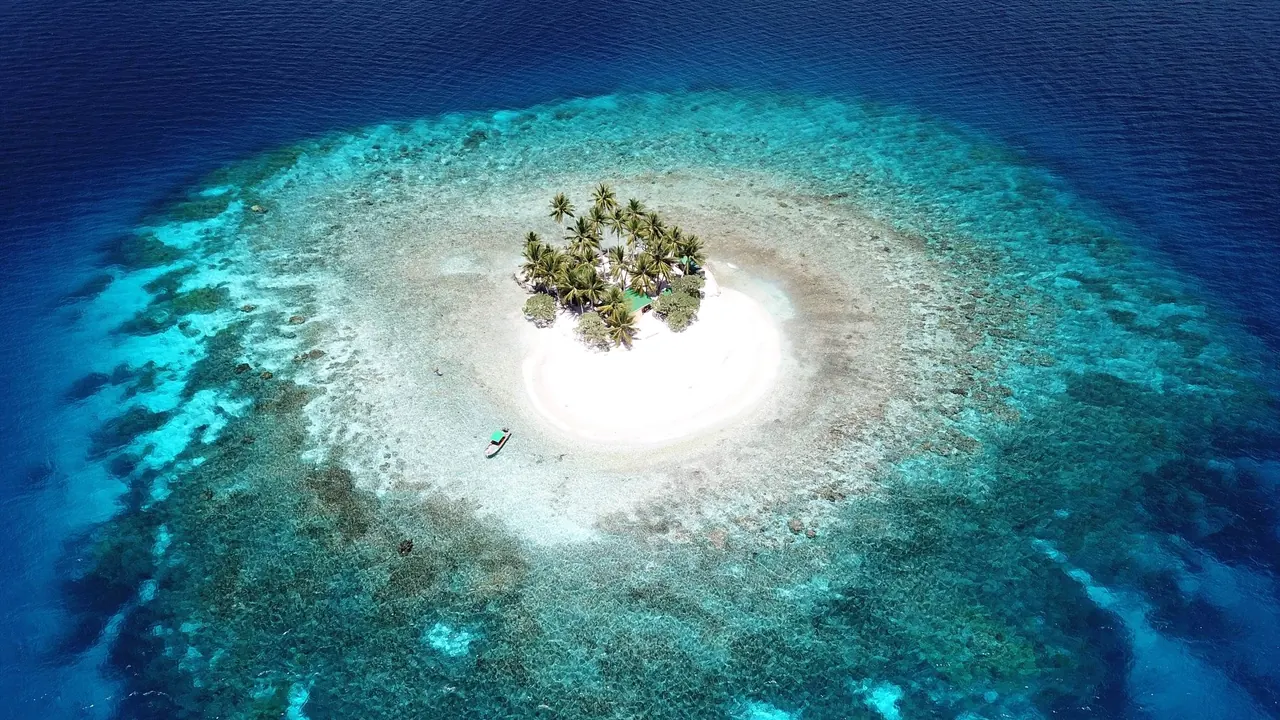
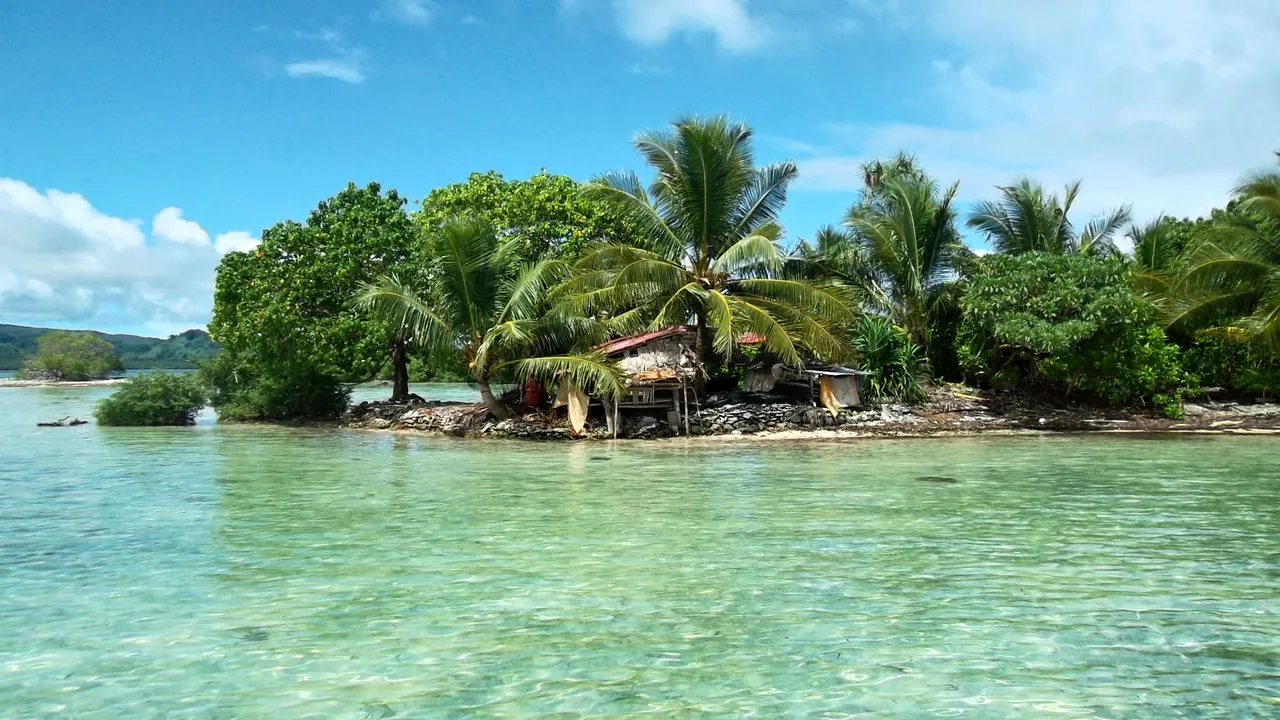
Photos: Chuuk Lagoon by Motoki Kurabayashi, CC BY-SA 4.0, cropped; Pohnpei by Patrick Nunn, CC BY-SA 4.0, cropped.
Chuuk Lagoon or Pohnpei?
Our verdict in twelve categories, each scored against the same fixed benchmark cities, and the climate month by month, so you can choose for your trip.
Choose Chuuk Lagoon for
- beaches
- nature and the outdoors
- day trips
Chuuk Lagoon is for the diver who wants one thing and wants it done superbly. The sunken Japanese fleet on the lagoon floor, with its holds of trucks and aircraft parts under coral, is the reason to make the long journey, and the dive hotels and liveaboards on Weno are built around it. Little else is on offer, on land or after dark, so a non-diving partner will run out of things to do within a couple of days.
Choose Pohnpei for
- culture and sights
- wellness
- getting around
Pohnpei gives a broader island trip. Its reef diving and manta rays are strong but less singular, and in return you get Nan Madol's basalt ruins, waterfalls in the rainforest, a surf break, sakau evenings in Kolonia and a road around the island that you can drive yourself. It suits travellers who want to mix days on the water with days on land, and couples where only one of you dives.
Scoreboard
Twelve categories on one fixed scale from 0 to 100. The shaded stretch is the gap between the two.
Your match
Pick a travel style or drag the sliders, and both match scores follow your weighting.
Wins on beaches and nature and the outdoors with your weighting.
Wins on culture and sights and wellness with your weighting.
What matters to you?
Category by category
What the scores mean for a trip.
Beaches & swimming
Neither island is built for beach days, but Chuuk Lagoon comes closer. The reef islets around its rim are palm-topped bars of white coral sand with snorkelling off the shore, and a boat picnic to one is part of most stays, even though Weno's own shore is rocky and fringed with mangrove.
Pohnpei's sandy spots are fewer and further off. The islets on its barrier reef and the atolls of Ant and Pakin need a planned half-day by boat, timed to tides and weather, and Kolonia looks out on mud and seagrass.
Food & drink
Pohnpei eats somewhat better. Kolonia has a few simple restaurants, and yellowfin sashimi, Japanese-influenced plates and the island's own black pepper give meals some character.
On Chuuk Lagoon you mostly eat at your dive hotel or on the boat, with imported rice and tinned goods filling the gaps between the reef fish. Pohnpei also has sakau, the pounded pepper-root drink, which is a ritual worth trying rather than a pleasure.
Culture & sights
Pohnpei has a site worth crossing an ocean for: Nan Madol, a UNESCO-listed city of nearly a hundred basalt islets off the southeast coast, which you walk among channels and mangrove. Kolonia's fort wall, bell tower and the Sokehs gun positions fill another day.
Chuuk Lagoon's history is almost all underwater. On land there are the cave guns and the Sapuk lighthouse on Weno, plus the old Japanese building used by the mission school, and there is no historic town to explore.
Nightlife
Both are early-to-bed islands, so this should not decide your trip. Pohnpei at least offers a social evening, sitting with locals over coconut shells of kava in a roadside sakau bar. In Chuuk Lagoon the evening means hotel dinner and logging dives, and alcohol is restricted in parts of the state.
Nature & outdoors
Both are first-rate for nature, with Chuuk Lagoon a little ahead because its sunken fleet is a world-class dive found nowhere else. The wrecks are diveable all year in sheltered water, and the reef passes add sharks and pelagic fish. On land, though, the green volcanic islands give you only a few rough walks.
Pohnpei has more on land and more variety. There is cloud forest rising to almost 800m, waterfalls such as Kepirohi and Sahwartik, and the climb up Sokehs Rock. Offshore you get manta cleaning stations, mangrove kayaking and the Palikir Pass reef break for experienced surfers.
Day trips
Every outing from Chuuk Lagoon goes by boat. That gives it a slightly wider choice, with the Japanese base ruins on Tonoas, the villages of Fefen and Uman, and the picnic islets. On Pohnpei the options are Sokehs Island and the atolls of Ant and Pakin, and the rest of the country is a flight away.
Good for families
Pohnpei is the easier of two hard choices for children. Waterfall pools and a road you can drive give a family more to do, and children are welcomed everywhere, though heavy rain and basic healthcare still call for patience.
Chuuk Lagoon really only works for older children who snorkel confidently, or for certified teenage divers who can visit the shallower wrecks. For younger ones there is little beyond the calm water.
Getting around
Pohnpei is easier to get around on your own. A paved road circles the island, so with a hire car you can reach Nan Madol or the waterfalls at your own pace, and Kolonia is small enough to walk between downpours.
Weno's roads in Chuuk Lagoon are rough and potholed, with only shared taxis and hotel vans. Everything else depends on the small boats your hotel or dive operator books, which runs smoothly on a dive package and slowly without one.
Shopping & style
Bring what you need to either island. The souvenirs differ: Chuuk Lagoon has carved love sticks and shell work, while Pohnpei adds woven fans and baskets plus packets of its prized black and white pepper.
Affordability
Neither island is cheap to reach, and on both the long Pacific flights take a large share of the budget. Once on Chuuk Lagoon, the simple hotels on Weno are moderately priced, but nearly every day means paying for a dive boat, and the liveaboards that most wreck divers choose are a serious outlay.
Pohnpei leaves more room to save. Its better guesthouses charge resort-town rates, but the waterfalls cost nothing, shared taxis around Kolonia are cheap and simple local meals help. You can fill whole days without booking a boat each time.
Live music & performing arts
There is no stage of any kind on either island, so treat any performance as luck. You might catch Pohnpeian chanting at a feast or church celebration, or Chuukese dances at a community event or hotel evening, and on Pohnpei a sakau ceremony has its own rhythm.
Wellness & relaxation
Chuuk Lagoon is hard to switch off in. There are no spas, and a massage depends on what your hotel can arrange. A dive week of several boat dives a day keeps you busy, not rested, and the calm is mostly found away from Weno, on the outer islets.
Pohnpei is better for slowing down, though pampering there is limited to the odd massage at one of the hotels. The weather and the tides decide what each day holds, few cars use the island's one road, and you rarely share a viewpoint or waterfall with a crowd. An evening sakau leaves a pleasant numbness. It suits a traveller who finds rest in quiet and an unhurried pace rather than in treatments.
When should you go?
Pick your month. The climate figures are measured averages, not a forecast.
Chuuk Lagoon in July
Pohnpei in July
Daytime high, °C
Rainfall in the month, mm
Temperature and rainfall are climate normals, averaged over the years shown. Chuuk Lagoon: 1991-2020 normals, Weno Island, Chuuk Int. Airp. (1.4 km from centre). Pohnpei: 1991-2020 normals, Pohnpei Island, Pohnpei Int. Airp. (2.2 km from centre).
Neither island has a cool season or a dry one. Daytime highs sit around 30°C to 32°C all year at both, and the lagoon water stays at 28°C to 30°C, so swimming and diving are possible in any month. What changes is the rain. Around Weno it is wettest from June to September and lightest in February, at roughly 227mm. That is still a lot, but showers tend to come and go, and March brings the most sunshine.
Pohnpei is the wetter of the two by a clear margin, with Kolonia taking over 400mm in several months and a peak in May. Its sunniest stretch is July, and December is the dullest month. Late winter suits both islands best for weather. On Pohnpei that also falls inside the November to March surf season at Palikir Pass. For walking in the heat, mornings are best at either.
Which traveller are you?
For divers drawn to wrecks, Chuuk Lagoon has no rival. More than fifty Pacific War ships and many aircraft lie in warm, sheltered water, from shallow wrecks for recreational divers to deep ones for technical divers. Pohnpei's reefs and mantas are a different kind of dive.
On a culture and arts trip, Pohnpei is the clear choice. Nan Madol's walled islets of stacked basalt are among the Pacific's great ancient sites, and Kolonia adds Spanish, German and Japanese traces. Chuuk's heritage is wartime guns and bunkers, seen in a morning.
On a relaxing and wellness trip, Pohnpei suits better, though neither has spas. Its days follow the tides and rain, the roads are quiet and evenings end over sakau. Weno is an untidy working town, and a Chuuk diving schedule starts early.
Before you go
| Measure | Chuuk Lagoon | Pohnpei |
|---|---|---|
| Official language | English | English |
| Currency | US Dollar (USD) | US Dollar (USD) |
| Sockets | AB120 V, 60 Hz | AB120 V, 60 Hz |
| Driving side | Right | Right |
| Time zone | UTC+10 | UTC+11 |
| Emergency number | 911 | 911 |
| Main airport | Chuuk International Airport (TKK)7 non-stop destinations | Pohnpei International Airport (PNI)7 non-stop destinations |
| Public holidays this year | 8 days | 8 days |
By the numbers
| Measure | Chuuk Lagoon | Pohnpei |
|---|---|---|
| Population | 41,745 | 26,102 |
| People per km² | 448 | 70 |
| Swim season, months above 21 °C | 12 months | 12 months |
Where else could you go?
Every comparison below shares a destination with this one, so you can follow Chuuk Lagoon or Pohnpei somewhere new.
- Guamvs Chuuk Lagoon
- Majurovs Pohnpei
- Yapvs Chuuk Lagoon
- Guamvs Pohnpei
- Kororvs Chuuk Lagoon
- Majurovs Chuuk Lagoon