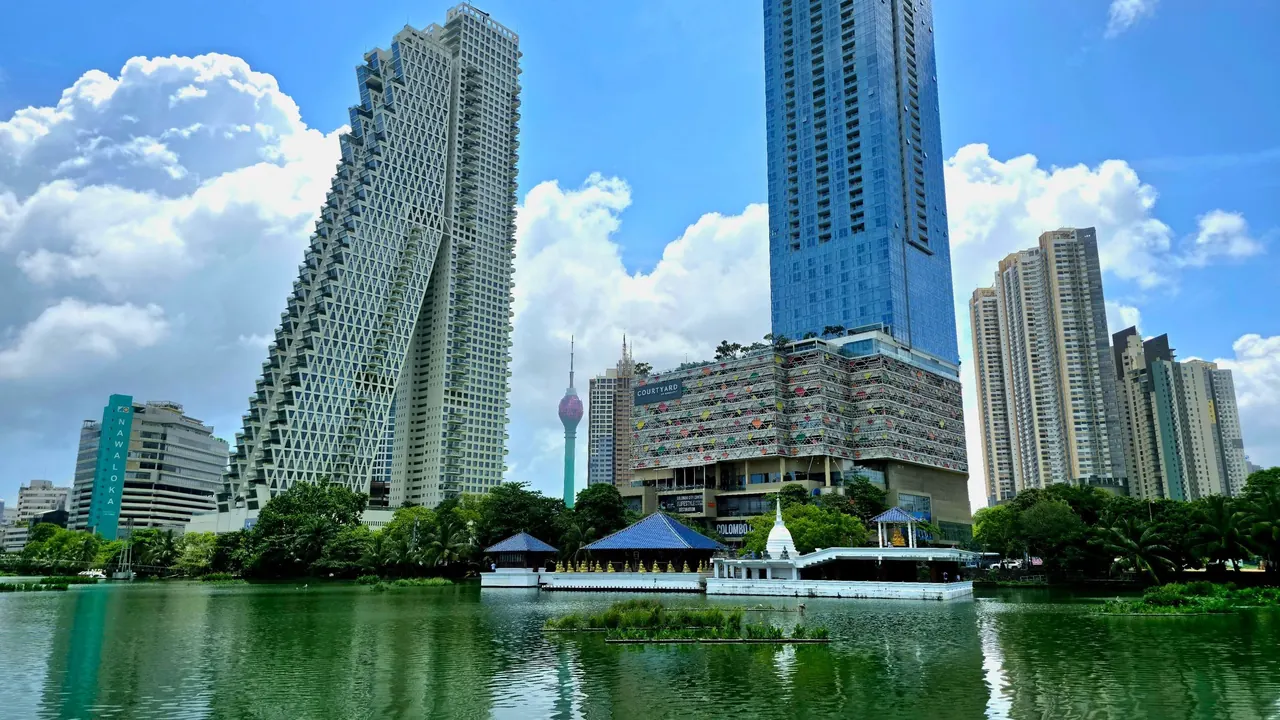
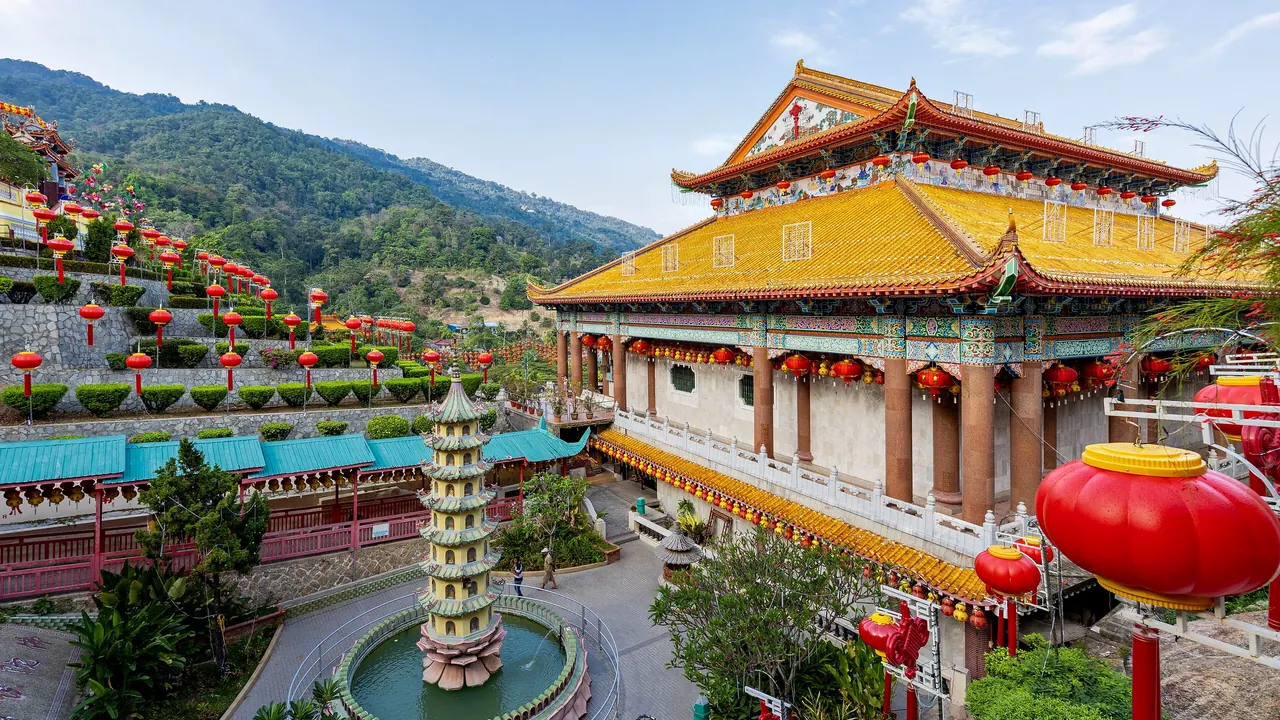
Photos: Colombo by Mohamed Ansaf, Pexels License; Penang by Supanut Arunoprayote, CC BY 4.0, cropped.
Colombo or Penang?
Our verdict in twelve categories, each scored against the same fixed benchmark cities, and the climate month by month, so you can choose for your trip.
Choose Colombo for
- beaches
- wellness
- day trips
Colombo suits travellers who are starting a wider Sri Lanka journey and want a short, comfortable stop on the way. It gives you proper Ayurveda, sand within reach at Mount Lavinia and Negombo in the calm months, and an easy day out to the fort town of Galle. Most people stay a night or two and then head for the south coast or the hill country.
Choose Penang for
- nature and the outdoors
- culture and sights
- families
Penang works as a destination in its own right, especially if you want to eat well and walk a lot. George Town's shophouse streets, clan houses and hawker stalls can fill several days. Penang Hill and the national park add rainforest walks, and the resorts at Batu Ferringhi make it the easier choice for families.
Scoreboard
Twelve categories on one fixed scale from 0 to 100. The shaded stretch is the gap between the two.
Your match
Pick a travel style or drag the sliders, and both match scores follow your weighting.
Wins on beaches and wellness with your weighting.
Wins on nature and the outdoors and culture and sights with your weighting.
What matters to you?
Category by category
What the scores mean for a trip.
Beaches & swimming
Neither is a true beach destination, but Colombo has more usable sand within reach. Mount Lavinia is on the city's southern edge, Negombo's longer hotel beach is about an hour north, and Bentota lies further south. The catch is the open surf, which is only pleasant from about December to April.
Penang's resort strip at Batu Ferringhi is often cloudy, and jellyfish turn up at times, so many visitors end up in the pool. The nicer coves, Monkey Beach and Kerachut, are a forest walk or a boat ride away and have few facilities.
Food & drink
Penang is the stronger food destination, and for many visitors the food is the reason to go. Hokkien, Teochew, Malay, Tamil and Nyonya cooking all meet in its hawker centres and old coffee shops. You can eat char kway teow, assam laksa and nasi kandar in a single evening on Gurney Drive.
Colombo eats very well too, but its range is narrower: rice and curry spreads, hoppers, late-night kottu and the Burgher speciality lamprais. Its strengths are lagoon crab, tea and short eats from the bakeries.
Culture & sights
George Town gives Penang the advantage. The whole old town is the sight: a UNESCO-listed grid of shophouses, the Khoo Kongsi, the clan jetties and Harmony Street's mix of temples, mosques and churches, best taken slowly over two or three days. Kek Lok Si adds a monumental temple outside town.
Colombo is a working port city, though it does have the better single museum. The National Museum holds the country's royal regalia, while Penang's museums are small. Add Gangaramaya, Bawa's Seema Malaka and the striped mosque in Pettah, and Colombo fills a day or two.
Nightlife
Neither place is somewhere you go for the nights out, and they are much the same in scale. The difference is in style. Colombo's evenings are dressier: hotel bars, rooftop lounges over the ocean, a few clubs in Colombo 3, casinos, and dance floors that fill mainly at weekends. Bars close on the monthly Poya full-moon days.
Penang's nightlife is more casual and street-level. There are backpacker bars around Love Lane and Chulia Street, cocktail bars in restored shophouses and later venues on Upper Penang Road. Many nights end at a hawker stall instead.
Nature & outdoors
Penang has far more on its doorstep. Rainforest still covers much of the island. Penang Hill rises straight above George Town, with cooler air and a canopy walkway at the top. The national park has trails to a lighthouse, a meromictic lake and turtle beaches, and the Balik Pulau side is quiet orchard country for cycling.
Colombo is flat and built up. Its outdoor options are the wetland parks on its eastern edge for birdwatching and boat trips through the Muthurajawela marsh. The island's rainforest and tea hills are an overnight trip away.
Day trips
Colombo has the slightly better day out. Galle's ramparted Dutch fort is about two hours down the coast by railway or expressway, and you can stop at the Bawa gardens near Bentota or the mask carvers of Ambalangoda on the way. Negombo's canal and fish markets are closer still. Kandy is better kept for an overnight stay.
From Penang, the best outing is Ipoh, about two hours by train from Butterworth, with its cave temples and its own food. Taiping and Kuala Kangsar pair well in a day, but Langkawi is too far to do justice.
Good for families
Penang is much easier with children. Families base themselves at Batu Ferringhi for the pools, and Teluk Bahang's water park, butterfly park and spice garden are nearby. The Penang Hill funicular, the monkeys in the Botanic Gardens and George Town's interactive museums fill the other days.
Colombo welcomes children warmly but has little built for them beyond the zoo at Dehiwala, kites on Galle Face Green and a ride on the coastal train. Its sea is often too rough for small swimmers, and both places are hard going with a pushchair.
Getting around
Penang is the easier place to move around, mainly because George Town's heritage core is compact. You can cover it on foot, by bicycle or by trishaw, and cheap ride-hailing or the slow island buses take you out to Batu Ferringhi. A scooter or hired car suits the road over the hills to Balik Pulau.
Colombo has no metro, and its sights are spread out. Most journeys are by app-booked tuk-tuk through heavy traffic on Galle Road, with walking pleasant only along Galle Face, Beira Lake and parts of Fort. Its one real asset is the coastal railway south.
Shopping & style
There is little to choose between them overall, but you would shop for different things. In Colombo, the draws are the Pettah bazaar, where each street sticks to one trade, design shops in colonial villas in Colombo 3 and 7 selling handloom cotton and batik, and Ceylon tea, cinnamon and gems to take home.
Penang's better buys are in George Town's antique and curio shops and the small studios making Peranakan beadwork. Little India sells gold and fabric, and Chowrasta market sells nutmeg. The malls are practical, not a reason to go.
Affordability
Both are equally cheap, and in both the money goes furthest at local eating houses and hawker stalls, with fares that barely register. The costs rise in different places. In Colombo, the seafront hotels and seafood restaurants charge close to international rates, imported drink is heavily taxed and some temples and museums charge foreigners more.
In Penang, most temples, clan houses and street sights are free or close to it. The extra spending goes on boutique heritage hotels, the beach resorts and beer.
Live music & performing arts
Both are thin on live performance, so it is rarely worth planning a trip around it. Colombo at least has permanent stages: Nelum Pokuna, the Lionel Wendt and occasional symphony concerts. Kandyan dance, with its drumming and acrobatic leaps, is staged for visitors.
Penang's best moments depend on the calendar. The George Town Festival fills the heritage streets for a few weeks, temple festivals bring Chinese street opera and puppet shows, and Chinese New Year brings lion dances.
Wellness & relaxation
Colombo has the more serious wellness offer, built on Ayurveda. Clinics across the city offer warm-oil massage, shirodhara, herbal steam and prescribed courses, and the week-long residential retreats at Beruwala and Bentota are close by.
Penang's wellness is lighter and more casual: cheap reflexology and Chinese or Malay massage on almost every street, pool days at the north coast resorts, and cool air on Penang Hill. Neither city centre feels restful.
When should you go?
Pick your month. The climate figures are measured averages, not a forecast.
Colombo in July
Penang in July
Daytime high, °C
Rainfall in the month, mm
Temperature and rainfall are climate normals, averaged over the years shown. Colombo: 1991-2020 normals, Colombo (3 km from centre). Penang: 1991-2020 (sunshine 1981-2010) normals, Penang / Bayan Lepas (14.5 km from centre).
Both places are hot all year, with daytime highs of 30°C to 33°C in every month. Sightseeing on foot is most comfortable early in the morning or towards evening. Colombo is at its best from January to March, when rain is lightest (February has only 76mm), the sunshine peaks and the west coast sea is calm enough to swim. The southwest monsoon arrives around April and May and churns up the sea. July and August are quieter but still showery, and then a second, heavier wet spell builds to a peak in October, at 349mm.
In Penang, around George Town and the north coast, January and February are the driest and sunniest months, and December is also fairly settled. From there the rain builds through the year to its heaviest in September and October, at 335mm in October, and those months are also the cloudiest. The sea stays warm all year off both coasts. So winter suits both places best. If you are going in mid-year, Colombo's July and August are slightly kinder than Penang's increasingly wet August.
Which traveller are you?
On a culture and arts trip, choose Penang. George Town is a UNESCO-listed old town of carved clan houses, stilt villages and Peranakan mansions, all close enough to see on foot. Colombo has a strong National Museum, but its great ancient sites are far inland.
For an outdoors trip, Penang is the clear pick. You can ride the funicular or walk the jungle trails up Penang Hill, hike the coastal paths in the national park and cycle among the orchards of Balik Pulau. Colombo offers wetland birdwatching, and little more without a long drive.
On a relaxing and wellness trip, Colombo has the edge because of Ayurveda, a genuine local medicine practised in clinics across the city. Treatments include warm-oil massage, shirodhara and full prescribed courses, and there are residential retreats down the coast. Penang's wellness is mostly cheap reflexology and resort spas.
Before you go
| Measure | Colombo | Penang |
|---|---|---|
| Official language | Tamil, Sinhala | Malay |
| Currency | Sri Lanka Rupee (LKR) | Malaysian Ringgit (MYR) |
| Sockets | GM230 V, 50 Hz | G240 V, 50 Hz |
| Driving side | Left | Left |
| Time zone | UTC+5:30 | UTC+8 |
| Emergency number | Police 119, ambulance 110, fire 110 | 999 |
| Elevation | 1 m | - |
| Main airport | Bandaranaike International Colombo Airport (CMB)28 km from centre57 non-stop destinations | Penang International Airport (PEN)32 non-stop destinations |
By the numbers
| Measure | Colombo | Penang |
|---|---|---|
| Population | 647,557 | 794,313 |
| People per km² | 17,361 | - |
| Museums within 10 km | 10 | - |
| UNESCO World Heritage sites within 50 km | 0 | - |
| Swim season, months above 21 °C | 12 months | 12 months |
Where else could you go?
Every comparison below shares a destination with this one, so you can follow Colombo or Penang somewhere new.
- Kandyvs Colombo
- Gallevs Colombo
- Langkawivs Penang
- Ellavs Colombo
- Koh Lipevs Penang
- Perhentian Islandsvs Penang