Malaysia
Penang
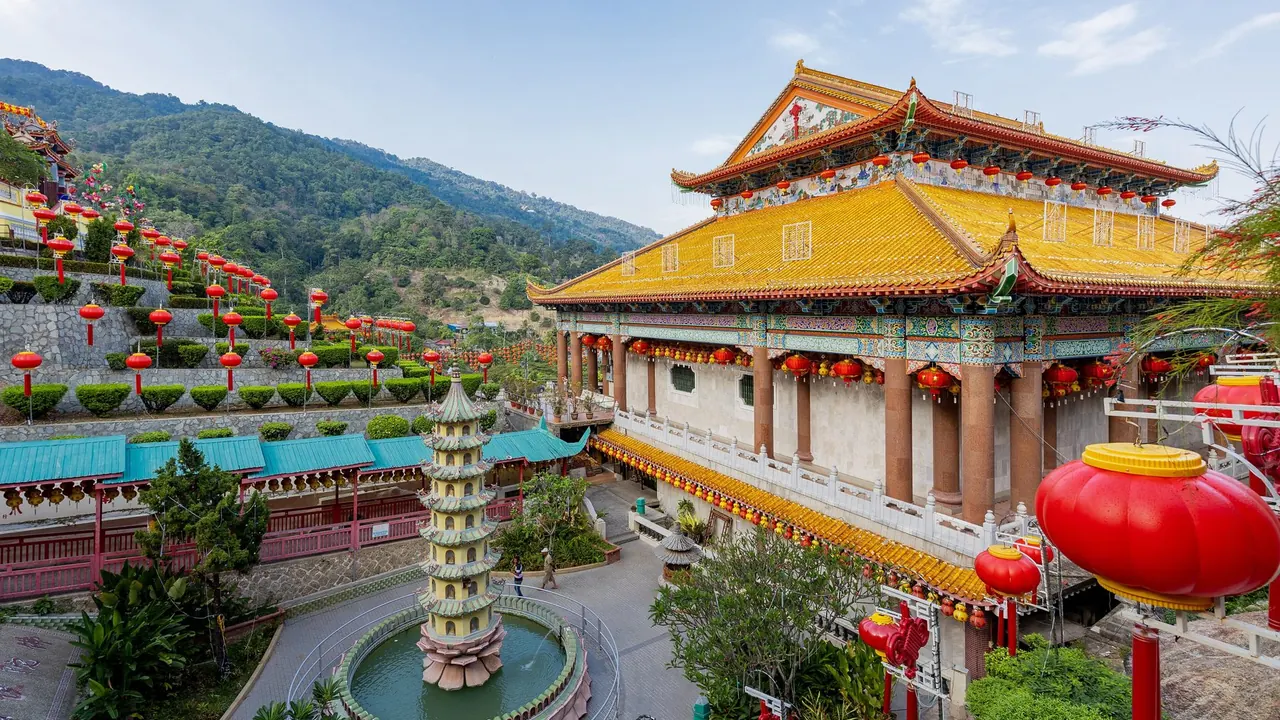
Kek Lok Si temple on the hillside
- Food & drink86
- Affordable cities78
- Culture & sights70
Photo: Supanut Arunoprayote, CC BY 4.0, cropped
Match
52
Every category weighted equally
- Beach & sun53
- Culture & arts53
- Food & nightlife53
- Family trip54
- Outdoors53
- Relax & unwind53
- Shopping & style52
- On a budget55
Penang in twelve categories
Our verdict on each, scored 0 to 100 against the same fixed benchmark cities, so a score means the same thing on every page.
Beaches & swimming. Scores 44 out of 100.
Food & drink. Scores 86 out of 100.
Culture & sights. Scores 70 out of 100.
Nightlife. Scores 40 out of 100.
Nature & outdoors. Scores 55 out of 100.
Day trips. Scores 42 out of 100.
Good for families. Scores 52 out of 100.
Getting around. Scores 40 out of 100.
Shopping & style. Scores 42 out of 100.
Affordability. Scores 78 out of 100.
Live music & performing arts. Scores 30 out of 100.
Wellness & relaxation. Scores 42 out of 100.
Penang category by category
Beaches & swimming
44The sea around Penang is warm all year, around 29°C, but the island's beaches are pleasant rather than memorable. The main strip is Batu Ferringhi on the north coast, about forty minutes by bus or car from George Town. It is a long sandy bay lined with resort hotels, water-sports stalls and a night market. The water there is often cloudy, and jellyfish turn up at certain times of year, so many visitors end up swimming in the hotel pool.
Quieter, cleaner sand lies further west in Penang National Park, where Monkey Beach and Kerachut can be reached on foot through the forest or by boat from Teluk Bahang. George Town has no beach of its own. Beach life fits into a stay here as an afternoon or a resort extension, not the reason to come.
Food & drink
86Food is the main reason many people come to Penang. The island's cooking mixes Hokkien Chinese, Malay, Tamil Muslim and Peranakan (Nyonya) traditions, and much of it comes from single-dish hawker stalls that have made the same thing for decades. The classics are smoky char kway teow fried over charcoal, sour fish-based assam laksa, Hokkien prawn mee, curry mee, nasi kandar rice heaped with curries, and cendol eaten on the pavement.
You eat in open-air hawker centres along Gurney Drive and the waterfront, at kopitiam coffee shops in George Town, and in Little India for banana-leaf meals and teh tarik. Nyonya restaurants serve slow-cooked Peranakan dishes. Breakfast is serious business here, and some favourite stalls sell out by noon. The scene is mostly casual. Fine dining exists but is small, and alcohol plays a minor part.
Culture & sights
70George Town is a UNESCO-listed trading port of long rows of two-storey shophouses, built by Chinese, Indian, Malay, Arab and European merchants over two centuries. Its interest lies less in single monuments than in the whole townscape: Chinese clan houses such as the richly carved Khoo Kongsi, the indigo Cheong Fatt Tze Mansion, the Pinang Peranakan Mansion, the wooden clan jetties on stilts, and Kapitan Keling Mosque, Sri Mahamariamman Temple and St George's Church within a few streets of each other.
At the colonial end are Fort Cornwallis and the Esplanade, and murals and wrought-iron caricatures dot the lanes. Kek Lok Si at Air Itam is one of the largest Buddhist temple complexes in Southeast Asia. Museums are small, and two or three days covers the main sights.
Nightlife
40Evenings in Penang mostly revolve around eating late at hawker centres, and the drinking scene is small. Backpacker bars spill onto the street around Chulia Street and Love Lane in George Town. Upper Penang Road has a short strip of louder bars and a couple of clubs, and some converted shophouses hold cocktail bars. Batu Ferringhi offers beach bars and resort lounges. It is easy-going and fun for a drink or two, but it winds down earlier than a big city, and drinks are expensive by local standards because of alcohol taxes.
Nature & outdoors
55Penang is a hilly, forested island, and green space is never far from the city. A funicular climbs Penang Hill, a ridge about 800m high with cooler air, wide views over George Town and the strait, and the Habitat canopy walks through old rainforest. Hikers can walk up instead from the Botanic Gardens, where long-tailed macaques and dusky leaf monkeys live along the paths.
On the island's northwest corner, Penang National Park has jungle trails along the coast to a lighthouse, a meromictic lake and a turtle hatchery beach. The hilly interior around Balik Pulau has durian and nutmeg orchards and quiet roads for cycling. The heat and humidity make early morning the best time to be out. There are no real mountains or big wilderness within easy reach.
Day trips
42Most visitors spend their whole stay on the island, and the mainland has a short list of outings. The best is Ipoh, about two hours south by road or train from Butterworth. It has its own colonial old town, cave temples set in limestone cliffs and a well-known food culture. Taiping, about an hour and a half away, is a quiet old mining town with lake gardens. Kuala Kangsar has the royal Ubudiah Mosque and the Perak sultanate's palaces. Closer to home, the Bujang Valley holds the remains of an early Hindu-Buddhist trading kingdom. Langkawi is a separate trip of a few days, not a day out.
Good for families
52Penang works best with children if you split the stay between George Town and a resort at Batu Ferringhi, where pools and sand make the afternoons easy. Teluk Bahang has an outdoor adventure and water park and a large tropical butterfly and insect park. The funicular up Penang Hill and the forest walkways at the top are a hit with most ages. In town, children tend to enjoy hunting the street murals and the playful trick-art and toy museums.
The local culture is warm towards children, and hawker food gives fussy eaters plenty of choice. The difficulties are practical: George Town's five-foot ways are broken and uneven, traffic is heavy, the midday heat is hard on little ones, and there are no big zoo or aquarium attractions.
Getting around
40George Town's heritage core is compact enough to walk, and a free shuttle bus loops through it. Walking is still slow going, though. The covered five-foot ways under the shophouses are broken by steps and parked motorbikes, and the heat drains you by midday. Trishaws and rental bicycles are pleasant for short hops.
Beyond the old town, Rapid Penang buses reach Batu Ferringhi, Penang Hill, Kek Lok Si and the national park, but they are slow in heavy traffic. Most visitors rely on cheap ride-hailing apps instead. There is no metro or tram, the road to the north coast often jams, and the airport and the mainland ferry and bridges are some way from the sights. A car is not needed, but distances on the island take longer than they look.
Shopping & style
42Shopping in Penang splits into two worlds. Large air-conditioned malls along Gurney Drive and near the bridge at Bayan Lepas cover international chains and electronics, with little you could not find elsewhere. More rewarding is the old town. Chowrasta Market sells nutmeg products, dried fruit and local snacks.
Little India has saris, spices and gold jewellery, and Campbell Street and the surrounding lanes hold traditional trades such as joss-stick makers, rattan weavers and signboard carvers. Small shophouse boutiques sell batik, Peranakan beadwork and local design pieces, and the night markets at Batu Ferringhi are mostly souvenirs and copies. It is enjoyable browsing, but not a shopping destination.
Affordability
78Penang is an inexpensive place to travel. Hawker meals are cheap even at the most famous stalls. Buses and ride-hailing cost very little, and most temples and clan houses charge only small entry fees or none at all. Comfortable mid-range hotels and guesthouses in George Town are good value. Spending rises if you choose a restored shophouse boutique hotel or a beachfront resort at Batu Ferringhi, and alcohol is heavily taxed, so evenings with drinks cost far more than evenings with food.
Live music & performing arts
30Penang's performance life is small and mostly tied to its calendar. The George Town Festival brings theatre, dance and music into old warehouses and shophouses for several weeks each year, and the performing arts centre at Straits Quay stages local theatre and concerts. The richest experiences are traditional and happen in the street: Chinese opera and getai stages during the Hungry Ghost month, Thaipusam processions, and lion dances at Chinese New Year. Outside these festivals, live music means a few bar bands and acoustic nights, and there is no resident opera or orchestra.
Wellness & relaxation
42Penang has no bathing tradition of its own, but it is an easy place to slow down. Foot reflexology and traditional Chinese and Malay massage are inexpensive and easy to find around George Town. The beach resorts at Batu Ferringhi have full-service spas, and a few heritage hotels have quiet courtyard pools. The old town's pace helps too: long breakfasts in coffee shops, afternoons sheltering from the heat, and cooler evenings on Penang Hill. The trouble is the heat and traffic noise in town, so for real rest most visitors split the stay with a few days by the sea.
When should you go?
Pick a month to see what it is like. The climate figures are measured averages, not a forecast.
Penang in July
Daytime high, °C
Rainfall in the month, mm
The whole year
Shaded against this city’s own year: the deepest cell is its best month for that figure and the palest its weakest.
Temperature and rainfall are climate normals, averaged over the years shown. Penang: 1991-2020 normals, Penang / Bayan Lepas (14.5 km from centre).
Before you go
| Measure | Penang |
|---|---|
| Official language | Malay |
| Currency | Malaysian Ringgit (MYR) |
| Sockets | G240 V, 50 Hz |
| Driving side | Left |
| Time zone | UTC+8 |
| Emergency number | 999 |
| Elevation | 4 m |
| Main airport | Penang International Airport (PEN)14 km from centre32 non-stop destinations |
By the numbers
| Measure | Penang |
|---|---|
| City population | 794,313 |
| Museums within 10 km | 9 |
| UNESCO World Heritage sites within 50 km | 1 |
| Swim season, months above 21 °C | 12 months |
Compare Penang with
Every comparison with a written verdict behind it.